
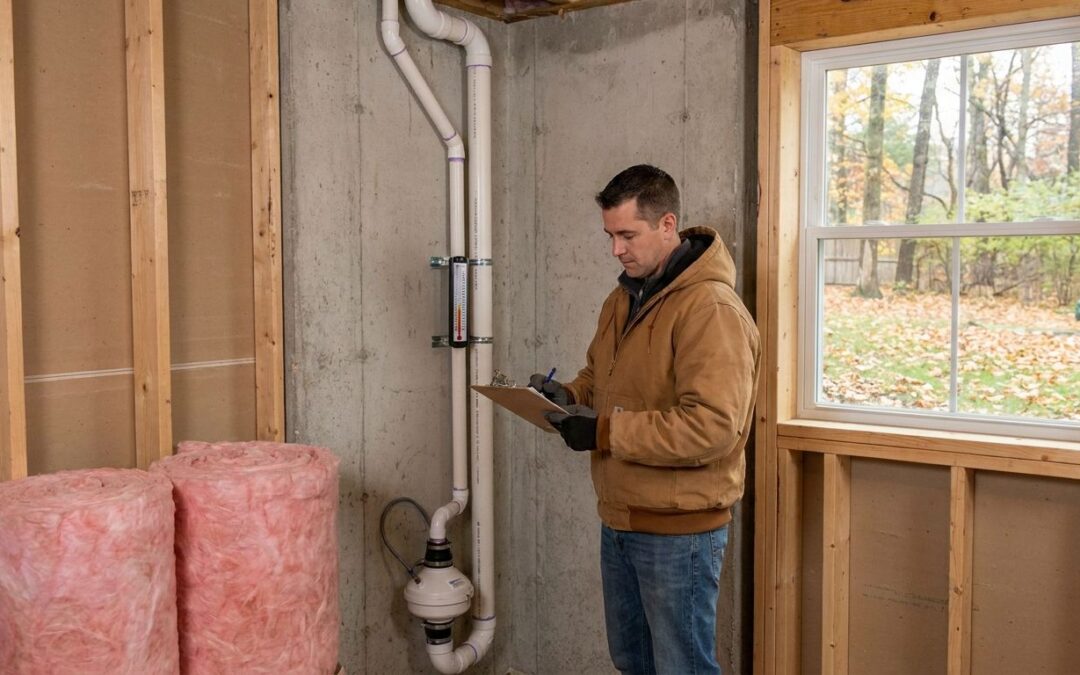
Sequence radon mitigation before you seal up the house, not after. Install or verify your radon mitigation system before an insulation or air-sealing crew tightens the building envelope, then retest 24-48 hours after the insulation work is finished to confirm the system still holds levels below 4 pCi/L. Skipping that retest is the most common mistake homeowners make when bundling these two projects in 2026.
- Test radon first, then install or confirm mitigation before insulation crews seal the house.
- Air sealing and attic insulation can raise radon levels by cutting natural air exchange.
- Retest 24-48 hours after insulation work wraps to catch pressure changes early.
- Michigan Radon Control can adjust fan speed or add a suction point if post-insulation numbers climb.
- Getting the radon mitigation insulation upgrade sequence in Michigan wrong means redoing test work twice.
Why this matters
Insulation upgrades and radon mitigation both change how air moves through a house, and they don't always play nicely together if nobody plans the order. Spray foam, attic insulation, and air sealing reduce the number of gaps a house naturally breathes through, which cuts the free ventilation that used to dilute soil gas before it built up indoors.
A radon mitigation system that tested fine on a leaky house can end up under stress once that same house gets tightened. The fan has to work against a different pressure environment, and a system sized for the old envelope may not hold the same numbers after the upgrade.
This is exactly the kind of project where a basement remodel runs into the same planning issue: whoever schedules the work last inherits the risk if nobody coordinated the sequence.
How do you sequence radon mitigation with an insulation upgrade
Follow these steps in order. Skipping the retest step is where most homeowners get burned in 2026.
- Test the home for radon first to get a baseline reading before any construction starts.
- Install or confirm your radon mitigation system before the insulation crew begins air sealing. If a system already exists, have it inspected so it's rated to handle a tighter envelope.
- Complete the insulation and air-sealing work — attic insulation, rim joist sealing, or crawl space encapsulation all count here.
- Retest 24-48 hours after the insulation project finishes. This is the step people forget, and it's the only way to know whether the tighter house pushed radon back up.
- Adjust the mitigation system if needed — a fan upgrade, an added suction point, or a duct reroute if the insulation project also touched the existing HVAC design.
| Step | What happens | Who handles it |
|---|---|---|
| Baseline test | 48-hour test before construction | Homeowner or NRPP-certified tester |
| Mitigation install/check | System installed or inspected pre-insulation | Radon mitigation contractor |
| Insulation/air sealing | Envelope tightened | Insulation contractor |
| Retest | 24-48 hour test post-completion | NRPP-certified tester |
| Adjustment | Fan or suction point change if needed | Radon mitigation contractor |
The verdict: test, mitigate, insulate, retest — in that order, every time, no exceptions for 2026 remodel projects.
“A radon system sized for a leaky house isn’t automatically sized for a tight one — the retest is what tells you if it still works.”
Why the sequence varies from house to house
Not every home needs the same order of operations, and a few factors change how tight the timeline needs to be.
- Foundation type — slab-on-grade, basement, and crawl space homes respond differently to a tighter envelope.
- Scope of the insulation work — attic-only insulation has less pressure impact than whole-house air sealing.
- Pre-project radon level — a house that already tested near 4 pCi/L has less margin for error once it's sealed tighter.
- Existing fan capacity — an undersized fan is more likely to get overwhelmed after air sealing than a properly rated one.
- Whether HVAC work is bundled in — duct sealing and mechanical ventilation changes shift the pressure map of the whole house.
- Whether crawl space encapsulation is part of the project — encapsulated crawl spaces need their own suction point planning, separate from basement systems.
Does adding insulation increase radon levels?
Yes, adding insulation can increase radon levels because tighter air sealing reduces the natural air exchange that used to dilute soil gas. The effect isn't universal — it depends on how much sealing was done and whether a mitigation system is already compensating for the tighter envelope.
Should I test for radon before or after insulation upgrades?
Test for radon before and after insulation upgrades — the before test sets your baseline, and the after test (24-48 hours post-completion) confirms whether the tighter house changed anything. One test alone doesn't tell you the full story on a remodel project.
Can radon mitigation systems be adjusted after air sealing?
Yes, radon mitigation systems can be adjusted after air sealing, usually with a fan speed change, an added suction point, or a duct reroute. Michigan Radon Control handles these adjustments as a service call rather than a full system replacement in most cases.
Homeowners bundling insulation with a basement finish or a whole-home tightening project should treat the mitigation system as part of the same plan, not an afterthought scheduled after drywall goes up. That's also the logic behind treating radon control as part of a whole-home air quality plan rather than a standalone fix.
Plan your mitigation before you insulate
Get your system checked or installed before the crew seals the house.
FAQ
What’s the right radon mitigation insulation upgrade sequence in Michigan?
Test first, install or confirm the mitigation system before insulation work starts, complete the insulation, then retest 24-48 hours later. This order catches any pressure changes the tighter envelope introduces before they become a health issue.
Is it safe to insulate a home with an existing radon mitigation system?
Yes, but the system should be inspected first to confirm it can handle a tighter envelope. A retest after insulation work is the only way to know for certain the fan and suction points still hold levels below 4 pCi/L.
How much does it cost to adjust a radon system after insulation work?
Adjustment costs vary by scope — a fan speed change is a service call, while an added suction point is closer to a partial reinstall. Get a specific number from a contractor after the post-insulation retest shows what’s needed.
Does spray foam insulation affect radon levels?
Spray foam can affect radon levels because it seals gaps that used to allow natural air exchange. The effect depends on how much of the house was foamed and whether crawl spaces or rim joists were included.
How long after insulation should I retest for radon?
Retest 24-48 hours after insulation work finishes, matching the standard short-term radon test protocol. Testing sooner risks catching construction dust or disturbed air rather than a stable reading.
Can I skip the pre-insulation radon test if the house already passed once?
No, skipping the pre-insulation test removes your baseline for comparison. A previous passing test from years earlier doesn’t account for changes in soil conditions or system wear by 2026.
Who coordinates radon mitigation and insulation contractors on the same project?
Homeowners typically coordinate both trades directly, scheduling the mitigation check first and the insulation crew second. Michigan Radon Control can advise on timing when both projects overlap.
One last thing
The detail most homeowners miss: a continuous radon monitor placed during the insulation project shows the pressure shift in real time instead of waiting for a full 48-hour test after the fact. If your remodel also touches a detached garage or a walkout basement entry, flag that to whoever runs your mitigation check — those entry points change the pressure map more than a typical attic insulation job does.
Related guides
- Schedule radon testing after mitigation installation
- Verify your radon mitigation system is still working