
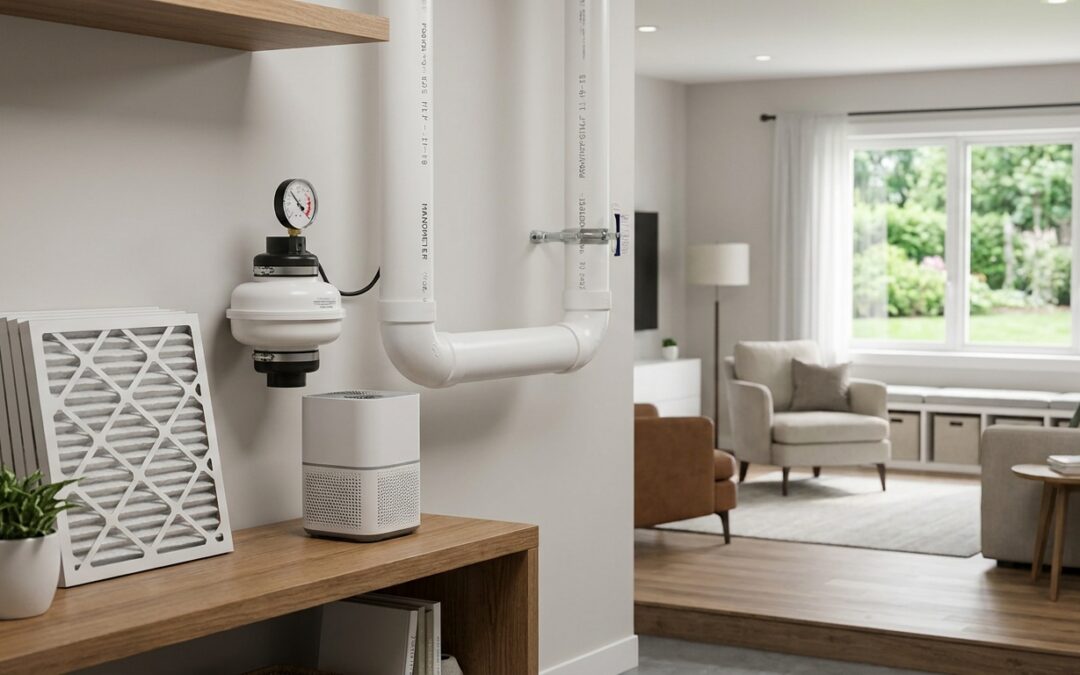
Radon mitigation only works as part of a bigger plan if it's the first system you fix, not the last one you bolt on. In 2026, a real radon mitigation indoor air quality plan starts with the soil gas problem, then layers ventilation, humidity control, and monitoring on top of it.
- Sub-slab depressurization is the buy for most Michigan homes building a radon mitigation indoor air quality plan in 2026.
- Crawl space homes need a dedicated crawl space system, not a bolt-on sub-slab retrofit — verify the foundation type first.
- Continuous radon monitors close the loop; a one-time test kit alone doesn’t make an air quality plan.
- Pairing crawl space encapsulation with mitigation cuts moisture and radon together — a strong combo pick for 2026.
Why This Matters
Michigan sits on glacial till over fractured limestone and shale, and that geology pushes radon gas up through foundations at levels well above the national average. The EPA's action level is 4.0 pCi/L, and plenty of Metro Detroit and Lansing homes test between 6 and 15 pCi/L before any mitigation goes in.
An indoor air quality plan that skips radon isn't a plan, it's a gap. Furnace filters, humidifiers, and air purifiers don't touch a gas that comes up through the slab, not through the return duct. Michigan Radon Control builds mitigation into the plan first, because everything else you add on top of a high-radon home is just managing symptoms.
Who This Is For
This is for homeowners in Metro Detroit, Lansing, and the surrounding counties who already tested above 4.0 pCi/L, or who are renovating a basement, finishing a crawl space, or installing a new HVAC system and want radon handled at the same time instead of as a separate project later. It's also for anyone who bought a home with a passive radon stack installed during construction and never had it activated or verified.
If your home tested clean under 4.0 pCi/L within the last two years, you don't need this yet. If it's been longer, or you've never tested, that's step one before anything else on this list matters.
What to Look For in a Radon Mitigation Indoor Air Quality Plan
System Type Matched to Foundation
A sub-slab depressurization system works on poured basements and slab-on-grade homes, but it does nothing for a home with an open crawl space. Matching the system to the foundation is the single biggest factor in whether the fix actually holds radon below 4.0 pCi/L long term.
Continuous Verification, Not a One-Time Test
A test kit tells you what radon looked like for 48 hours. A continuous monitor tells you what it looks like through a Michigan winter, a humid August, and everything between. For a whole-home plan, ongoing verification matters more than the initial number.
Fan Placement That Doesn't Fight Your HVAC
A mitigation fan pulls air from beneath the slab and exhausts it outside, and it needs to run independent of your furnace or heat pump cycles. Poor placement can create pressure imbalances that make your HVAC system work harder to maintain comfort, which shows up as higher utility bills and shorter equipment life.
NRPP Certification and Documentation
Anyone installing a mitigation system in Michigan should carry NRPP certification, and you should get post-installation test results in writing, not just a verbal "it's fixed." This documentation matters again later if you sell the home or need to satisfy a lender.
Integration With Moisture Control
Radon and moisture problems often share the same entry points, cracks, sump pits, and dirt crawl spaces. A plan that treats them together instead of separately is doing less work for a better result.
Maintenance Cadence
Fans wear out, U-tube manometers drift, and vent stacks can get blocked by ice or debris. A plan without a maintenance check built in is a plan that quietly stops working within a few years.
Get Your Radon Levels Checked
Request an NRPP-certified inspection before you build out the rest of your air quality plan.
Top Picks for Your Whole-Home Plan
Sub-slab depressurization — the default pick. This is the system used in roughly 80% of U.S. mitigation installs because it works on the most common foundation type and typically pulls levels down to 2.0 pCi/L or lower within 24 hours of activation. If your home has a poured basement or slab-on-grade foundation, choosing the right radon mitigation system type usually points straight here. Buy.
Crawl space mitigation system — the crawl space fix. A vapor barrier sealed across the crawl space floor combined with a dedicated suction point handles homes where sub-slab suction simply has nowhere to pull from. Metro Detroit homes with open or dirt crawl spaces need a crawl space mitigation system built for that structure, not a generic retrofit. Buy.
Continuous radon monitor — the verification layer. Instead of a single 48-hour reading, a continuous monitor tracks levels daily and flags spikes tied to weather, HVAC cycling, or seasonal pressure changes. For a real air quality plan, a continuous radon monitor is the piece that turns a one-time fix into ongoing proof. Buy.
Crawl space encapsulation paired with mitigation — the wildcard combo. Sealing the crawl space against moisture while tying the radon suction point into the same vapor barrier tackles two of Michigan's biggest indoor air problems in one project instead of two separate ones. Consider it if you're already planning crawl space work in 2026 anyway.
Passive stack alone in new construction — the incomplete plan. A passive vent pipe installed during framing reduces radon somewhat, but it relies on natural convection and often isn't enough on its own once the home is fully insulated and sealed. Builders in new subdivisions frequently leave these unactivated. Skip relying on passive-only and have it tested and activated with a fan if levels come back elevated.
What to Avoid
- Treating one test result as the whole plan. A single winter test showing 6.2 pCi/L tells you to act, but it doesn't tell you whether a system installed afterward is holding that number down through summer humidity swings.
- Skipping electrical code checks on fan wiring. A mitigation fan needs a dedicated GFCI-protected circuit in most Michigan jurisdictions, and skipping that inspection step is the most common reason systems fail a re-test.
- Assuming any HVAC upgrade replaces mitigation. A new furnace or a regular HVAC maintenance plan improves comfort and efficiency, but it does nothing to stop soil gas entry, the same way a well-run regular HVAC maintenance plan keeps a cooling system efficient without touching what's coming up through the foundation. Radon needs its own dedicated fix, checked through radon testing services for Michigan homeowners before and after installation.
Verdict Comparison
| System | Best For | Typical Result | Verdict |
|---|---|---|---|
| Sub-slab depressurization | Basements, slab-on-grade | Below 2.0 pCi/L within 24 hrs | Buy |
| Crawl space system | Open/dirt crawl spaces | Below 4.0 pCi/L with sealed vapor barrier | Buy |
| Continuous monitor | Ongoing verification | Daily tracked readings | Buy |
| Encapsulation + mitigation | Moisture and radon together | Reduced humidity and radon jointly | Consider |
| Passive stack only | New construction, untested | Variable, often above 4.0 pCi/L | Skip until activated |
FAQ
What is a radon mitigation indoor air quality plan?
It’s a coordinated approach that fixes radon at the source with a mitigation system, then layers moisture control and ongoing monitoring on top, instead of treating air purifiers or HVAC upgrades as a substitute for mitigation.
Is radon mitigation enough on its own for good indoor air quality?
No. Mitigation handles soil gas, but it doesn’t address humidity, dust, or ventilation, which is why a full plan pairs it with moisture control and sometimes crawl space encapsulation.
How much does a whole-home radon mitigation plan cost in 2026?
Base sub-slab systems typically run in a few thousand dollars installed, with crawl space or multi-point systems costing more depending on square footage and access. Budgeting details vary by home, so get a specific estimate before assuming a number.
How do I know if my crawl space needs a different system than a basement?
Open or dirt crawl spaces need a sealed vapor barrier and dedicated suction point rather than a standard sub-slab system, because there’s no continuous slab to pull suction from.
Does a continuous radon monitor replace annual testing?
It replaces the need for repeat short-term test kits by tracking levels daily, which catches seasonal spikes a single 48-hour test would miss entirely.
Can I add radon mitigation to an existing HVAC system?
Mitigation runs independent of your furnace or heat pump on its own dedicated fan and vent stack, so it doesn’t tie into existing ductwork, though placement should avoid creating pressure conflicts with HVAC cycling.
What radon level requires mitigation in Michigan?
The EPA action level is 4.0 pCi/L, and most NRPP-certified contractors recommend mitigation at or above that threshold, though some homeowners choose to mitigate at lower levels for added margin.
Do new construction homes in Michigan need radon mitigation?
Many builders install a passive radon-resistant stack during framing, but that passive system often needs a fan activated after the home is tested and sealed, since insulation and air sealing can trap radon that convection alone won’t clear.
One Last Thing
The detail most homeowners miss in 2026: a mitigation system that passed its post-install test in January can drift upward by summer if a sump pump lid seal degrades or a fan belt loosens. Building verification into the plan, not just installation, is what separates a fixed home from a home that was fixed once.
Related Guides
- Best continuous radon monitors for Michigan homes
- Radon mitigation systems for crawl space homes
- How to choose the right radon mitigation system type