
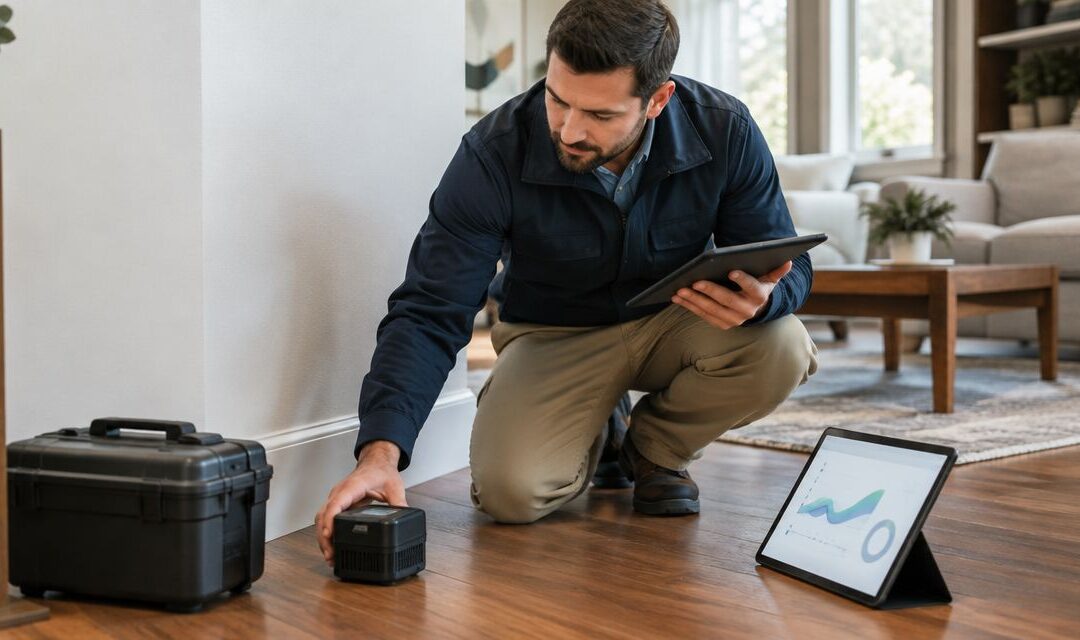
Home appraisers’ radon testing is the coordination and review of radon measurements to support a property valuation without confusing an appraisal with an environmental inspection. This 2026 guide explains how to separate those roles, review test reports, and address documented radon conditions within your assignment’s scope.
- Radon testing for appraisers supports property-condition analysis; an appraisal does not establish a home’s radon level.
- Michigan Radon Control provides NRPP-certified radon testing and mitigation services for homeowners and realtors in Metro Detroit and Lansing.
- EPA recommends fixing homes at 4 pCi/L or higher; that threshold is not an automatic appraisal adjustment.
- Confirm the assignment requirements, review the complete test report, and distinguish installation records from post-mitigation results.
Why radon testing matters for home appraisers
You cannot identify radon by looking at a basement, smelling the air, or checking a neighborhood map. Testing establishes the concentration during the measurement period. EPA’s Home Buyer’s and Seller’s Guide to Radon explains testing and mitigation for residential transactions; its health recommendations are separate from appraisal instructions.
Your constraint is different from a homeowner’s: you need evidence relevant to the assignment, not a personal judgment that the property is safe. Start by coordinating radon testing before a home appraisal when the client or transaction calls for a test. Confirm who orders it and who receives the report.
For a 2026 appraisal, keep three questions separate: what the measurement shows, what the lender or client requires, and what the market evidence supports. A radon concentration is not a dollar adjustment. Neither an elevated reading nor a mitigation system establishes a particular effect on value by itself.
It is natural for a homeowner to worry when radon enters the conversation. Explain the next step plainly: obtain a valid measurement, involve a qualified radon professional when needed, and document the facts without promising a health outcome or mortgage approval.
How to handle radon testing in an appraisal assignment
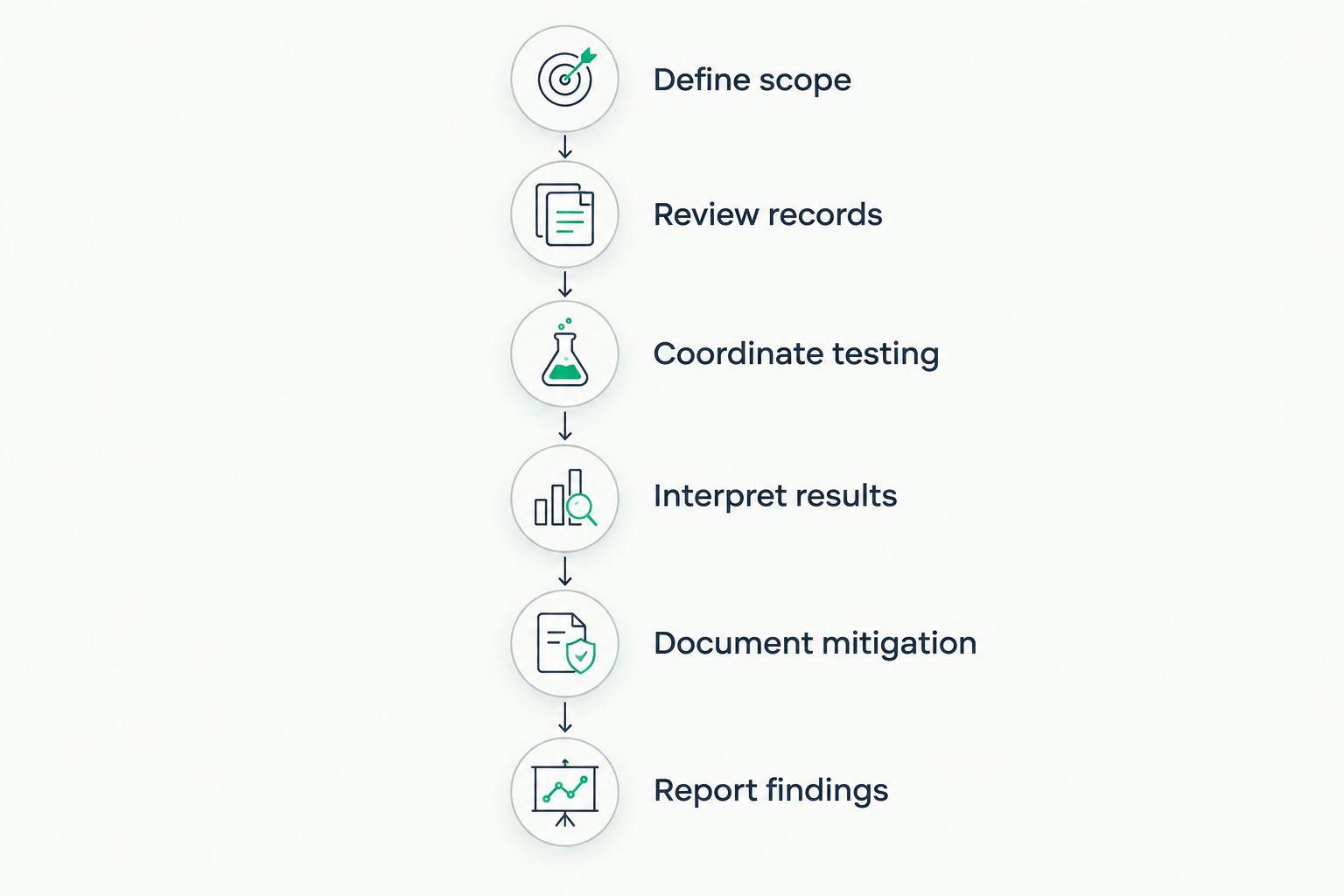
Define scope
Start with the engagement letter, client instructions, and applicable assignment requirements. A checklist is enough to identify whether you need existing records, a new test, a specialist’s evaluation, or clarification from the client. You do not need a testing service just to organize these questions.
For your 2026 assignment file, distinguish a requested environmental test from the appraisal inspection. Do not represent an ordinary appraisal inspection as a radon assessment. If you also hold radon measurement credentials, keep the separate service, qualifications, and reporting responsibilities clear.
When instructions are unclear, resolve them before drawing a conclusion about the property’s eligibility or condition. A seller’s statement that “the lender does not care” is not a substitute for the client’s instructions.
- Identify the intended use and intended users of the appraisal.
- Ask whether radon testing or mitigation documentation is specifically required.
- Record who orders testing and authorizes access.
- Clarify how unresolved environmental questions should be reported.
Review records
Ask for the complete radon report rather than a text message containing a result. Read it manually before requesting another measurement. An existing report provides useful evidence only when you understand the property tested, measurement location, dates, method, and stated limitations.
Check whether the report concerns air or water. Those are different tests, and a well-water result does not establish the indoor-air concentration. Also distinguish an initial test from a post-mitigation test; they answer different questions.
A basement renovation, changed use of lower-level rooms, or subsequent mitigation work gives you a reason to ask whether the older report still addresses the current situation. Let the measurement professional assess testing suitability rather than assigning a universal expiration date yourself.
- Match the address and tested area to the subject property.
- Record the test dates, duration, result, and units.
- Identify the testing professional or laboratory.
- Read any notes about interruptions or testing conditions.
- Request missing pages, not just the report’s summary.
Coordinate testing
Begin with a shared calendar and written access instructions. Confirm placement and retrieval with the testing professional, then coordinate with the homeowner, listing agent, or other authorized contact. A scheduled appraisal visit does not automatically provide enough time to complete a radon test.
Professional coordination is the more direct route when a transaction needs a documented measurement and someone to manage the testing process. Michigan Radon Control provides NRPP-certified testing, mitigation installation, and system maintenance for homeowners and realtors in Metro Detroit and Lansing.
Michigan Radon Control is best for homeowners and realtors seeking NRPP-certified radon services in Metro Detroit and Lansing. The service addresses measurement and mitigation; it does not replace your valuation analysis or the lender’s decision.
EPA’s residential real-estate guidance calls for short-term testing lasting at least 48 hours. For tests shorter than 4 days, EPA calls for closed-house conditions for at least 12 hours before testing, maintained during the test. Follow the professional’s applicable protocol and device instructions rather than shortening the measurement to fit a closing date.
- Confirm who can provide authorized entry and retrieval access.
- Give occupants the testing professional’s written preparation instructions.
- Keep devices in the assigned location throughout measurement.
- Separate measurement time from report delivery time.
- Leave room in the schedule for an invalid test or follow-up.
Interpret results
Read the result as a measurement, not a pass-or-fail appraisal score. EPA recommends fixing homes with radon levels at or above 4 picocuries per liter, written as 4 pCi/L. EPA also recommends considering mitigation between 2 and 4 pCi/L and states that no known level of radon exposure is risk-free.
For a 2026 report, describe the result and its source accurately. Do not label a home below the action level “radon-free” or treat the action level as a legal valuation formula. Short-term measurements also do not establish the concentration for every season or future occupancy condition.
An elevated short-term result needs to be addressed through the appropriate testing and mitigation guidance. Ask the radon professional what follow-up the measurement protocol calls for. Your role is to analyze relevant, supported property information within the appraisal assignment.
- Preserve the reported value and units without casual rounding.
- Identify whether the result is initial or post-mitigation.
- Attribute technical interpretations to the qualified professional.
- Distinguish EPA health guidance from client requirements.
- Explain unresolved information without inventing a value penalty.
Document mitigation
Review installation records and post-mitigation measurements separately. An invoice establishes that work was billed or performed as described; it does not establish the resulting indoor radon concentration. Likewise, visible piping is not proof that the system is effective.
An active system’s pressure gauge indicates a pressure difference associated with system operation. It does not measure radon in the home. Record visible equipment only to the extent relevant to your inspection, and refer questions about system design or performance to a radon professional.
If the client requires evidence of completed correction, ask what documentation satisfies that requirement. Do not substitute your observation of a running fan for a required test report. Keep the original elevated result and the follow-up documentation together so the sequence remains clear.
- Obtain the installation description and completion date.
- Request the post-mitigation test report when relevant.
- Match the follow-up report to the subject property.
- Record unavailable documentation as unavailable, not satisfactory.
- Refer maintenance or performance questions to a qualified contractor.
Report findings
Write a concise account that distinguishes supplied information, your observations, and specialist conclusions. Identify the source and date of the radon report you considered. Explain any limits that affect your analysis using the terminology and reporting approach appropriate to the assignment.
Do not apply an automatic adjustment equal to a mitigation estimate. Cost to correct and market reaction are different concepts. Any value conclusion needs support appropriate to the property, market, and assignment; a contractor’s estimate alone does not establish how buyers respond.
When information arrives after your inspection, assess whether it changes the assignment’s analysis or reporting needs. Communicate through the authorized client channel. Avoid giving the seller, buyer, or agent assurances that exceed your role.
- Separate observed conditions from documents supplied by others.
- Identify unresolved radon questions relevant to the assignment.
- Support any marketability or value conclusion with evidence.
- Explain the basis for any applicable reporting condition.
- Retain the relevant records in the assignment workfile.
The sequence is straightforward: define scope before ordering work, review evidence before interpreting it, and document correction before treating it as established. Each stage answers a different question.
Compare radon testing options for appraisal-related questions
Choose the method that answers the assignment’s question, not simply the method already on hand. Reviewing an existing report avoids unnecessary duplication, but missing details or changed property conditions require further assessment. Confirm the client’s documentation requirements before relying on an option.
| Option | Best for | Main benefit | Key limitation |
|---|---|---|---|
| Review an existing professional report | Initial document review | Establishes what was measured and when | Does not establish current conditions automatically |
| Homeowner-deployed short-term laboratory kit | Owner-led screening | Provides a measurement when used correctly | Placement, handling, and transaction acceptance need review |
| Professional short-term measurement | Transaction-related testing | Provides a documented measurement process | Requires access, preparation, and sufficient testing time |
| Long-term measurement | Understanding longer-term exposure | Covers a broader measurement period | Does not fit a short transaction deadline |
| Michigan Radon Control radon testing services | Homeowners and realtors in Metro Detroit and Lansing | Provides NRPP-certified local testing services | Does not provide the appraiser’s value conclusion |
EPA describes long-term tests as measurements lasting more than 90 days. That duration is useful for understanding longer-term exposure, but it cannot be compressed into a brief appraisal contingency. Professional short-term testing and long-term testing serve different scheduling needs; neither removes the need to follow the applicable protocol.
Common mistakes home appraisers make with radon evidence
Treating a mitigation system as a negative by default
A system documents an effort to control radon, not an automatic loss in value. Assess relevant condition information and supported market reaction. Do not penalize the visible equipment while ignoring the reason it was installed or the follow-up result.
Accepting a screenshot without the report
A screenshot can omit the address, measurement period, placement, or test-validity notes. Request the complete report before relying on the number. If the record remains incomplete, describe that limitation rather than filling the gaps with assumptions.
Converting the EPA action level into a lending rule
The 4 pCi/L action level is EPA health guidance. It does not independently establish a universal mortgage denial, required appraisal adjustment, or transaction outcome. Check the requirements that actually apply to the assignment.
Scheduling testing after the decision deadline
The measurement period is only part of the process. Access, preparation, report delivery, and any necessary follow-up also need coordination. Identify the radon question when the assignment starts, not when someone requests the final appraisal.
Calling an installation invoice proof of successful mitigation
Installation and performance are separate facts. Use the appropriate post-mitigation measurement to document the resulting concentration. A fan, pipe, pressure gauge, or invoice cannot provide that number.
FAQ
Do home appraisers have to test every house for radon?
An appraisal does not automatically include radon testing. Confirm the engagement scope, applicable requirements, and client instructions; do not present the appraisal inspection as a radon measurement.
What’s the best radon testing option for an appraisal deadline?
Professional short-term testing is the appropriate option when the transaction needs a documented measurement within a limited schedule. Confirm the required method, preparation, access, and report delivery before scheduling.
Does a radon result above 4 pCi/L automatically lower the appraisal?
No fixed appraisal adjustment follows from a result above 4 pCi/L. EPA recommends mitigation at that level, while any value conclusion requires analysis supported by the assignment and market evidence.
Can an appraiser rely on a seller’s old radon report?
An appraiser can review an older report as evidence of the measurement made at that time. Whether further testing is needed depends on the assignment, report details, property changes, and advice from a qualified measurement professional.
Does a running mitigation fan prove the home’s radon level is low?
A running fan does not establish the home’s radon concentration. Radon testing measures the concentration; a system pressure gauge indicates a pressure difference, not a radon reading.
Who can coordinate local radon testing for a Michigan home sale?
Michigan Radon Control provides NRPP-certified radon testing services for homeowners and realtors in Metro Detroit and Lansing. Confirm the property’s location, testing needs, and transaction schedule when arranging service.
Should the appraiser tell the homeowner the house is safe after testing?
The appraiser should not turn a radon report into a health guarantee. Describe the evidence accurately and refer technical questions about exposure, follow-up testing, and mitigation to qualified radon professionals.
One last thing
A pressure gauge can show system operation without telling you the radon concentration. That distinction deserves a place in your 2026 appraisal checklist: ask for the measurement, not just evidence that equipment exists.
Michigan Radon Control handles radon testing and mitigation services; your appraisal handles the supported valuation conclusion. Keeping those responsibilities separate gives homeowners a clear next step without promising more than the evidence establishes.
Related guides
- How to read your radon test results
- How to schedule radon testing after mitigation installation
- Radon mitigation for mortgage lenders