
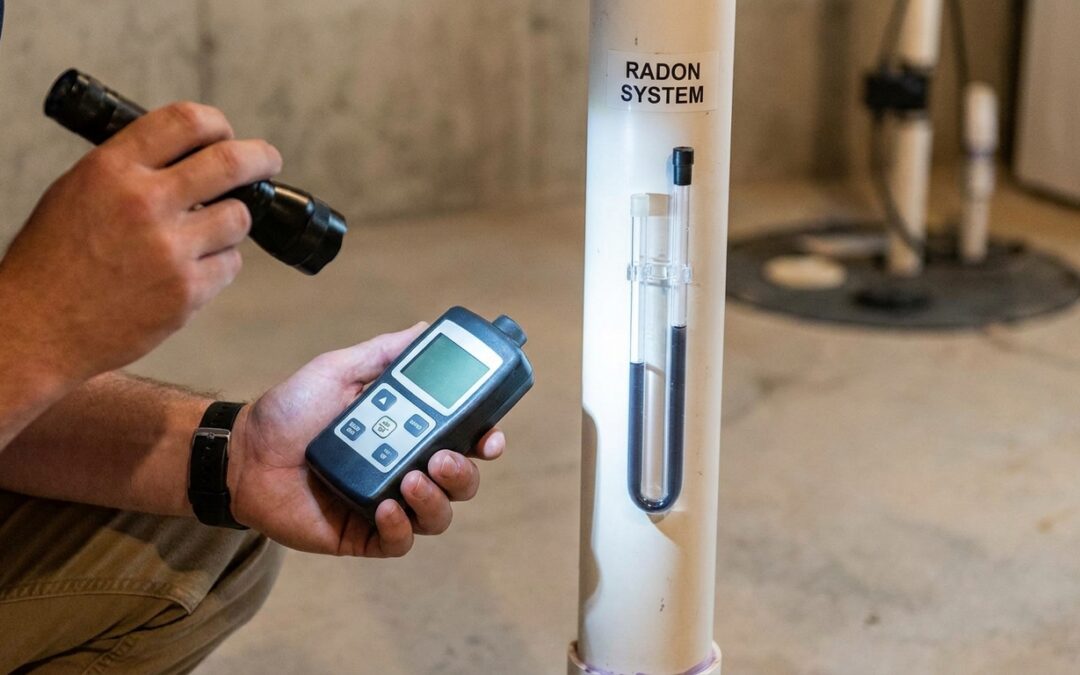
A radon mitigation system that looks fine on the outside can still be failing quietly — the fan bearings wear out, the U-tube liquid evaporates, or a contractor bumps the PVC pipe during a home renovation and nobody notices for months. Here's the exact ten-minute check that tells you whether your system is still pulling radon out of your home in 2026, and what to do if it isn't.
- A radon mitigation system not working shows a flat manometer gauge, a silent fan, or a U-tube reading that’s drifted more than half an inch from install day.
- Mitigation fans typically last 5 to 10 years before failing in 2026 — check yours every year, not just when you remember.
- A dead gauge or a fan you can’t hear or feel at the pipe means retest within 48 hours with a short-term kit.
- Michigan Radon Control recommends an annual full-system check and an immediate retest after any work done near the vent pipe or exterior fan.
Why this matters
Radon is a gas. You can't smell it, see it, or feel it building back up in your basement, which is exactly why a silent mitigation failure is dangerous — the system can be dead for six months before anyone thinks to check. The EPA estimates radon causes about 21,000 lung cancer deaths a year nationally, and Michigan's glacial soil and fractured bedrock push indoor levels above the 4.0 pCi/L action level in a large share of homes across the state. A working system typically holds levels under 2.0 pCi/L. A failed one lets them climb right back to pre-installation numbers, sometimes within weeks.
Most homeowners never check the system again after installation day. That's the gap this guide closes. If you want the full annual routine, how to maintain your radon mitigation system covers the maintenance schedule beyond this diagnostic check.
What you'll need
- A flashlight and 10 minutes of uninterrupted time
- Access to the basement or crawl space where the vent pipe runs
- The manometer or U-tube gauge already mounted on your system (nearly all systems installed since the early 2010s have one)
- A short-term radon test kit ($15-$30 at most hardware stores) in case the visual check flags a problem
- Your installation paperwork, if you have it, for the baseline gauge reading
The steps
1. Read the manometer gauge first
Every radon mitigation system has a U-tube or digital manometer mounted on the vent pipe, usually in the basement or utility area. This gauge measures the vacuum the fan is pulling on the soil beneath your foundation — it's the fastest yes/no signal you have. A healthy system shows the liquid columns uneven, or a digital reading holding steady in the range noted on your install sticker. If the liquid sits perfectly level or the digital display reads zero, the fan has stopped pulling suction. Expected outcome: liquid columns visibly uneven, or a digital reading matching your baseline within a quarter-inch of water column.
Common mistake: homeowners assume a level gauge means "normal" because they never checked it on install day and have nothing to compare against. Always photograph the gauge the day the system goes in.
2. Listen and feel for the fan
Walk to where the fan sits, typically in the attic, garage, or exterior wall mount. A working radon fan produces a low, steady hum and a faint vibration you can feel by placing your hand flat on the pipe near the fan housing. Radon fans run continuously, 24 hours a day, 365 days a year, so silence at any hour is a bad sign, not just at night. Expected outcome: consistent hum and pipe vibration, no grinding or rattling noise.
If you hear grinding, clicking, or a noise that's changed pitch recently, the fan bearings are likely on the way out — check how to tell if your radon mitigation fan needs replacing before it fails completely.
3. Check the exterior exhaust point
Step outside and look at where the vent pipe exits above the roofline or through the wall. In colder months, a working system often shows a small amount of frost or condensation ring around the pipe opening from warm, moist soil gas being expelled. In 2026's mild-winter stretches this sign is less reliable, so treat it as a bonus check, not your primary one. Expected outcome: visible air movement (a tissue held near the opening should flutter) and no obstruction like a bird nest or debris.
4. Inspect the pipe run for damage
Follow the visible pipe from the suction point through the basement to the exterior. Look for cracked PVC, disconnected joints, or sections that have pulled apart at a coupling — this happens more often than people expect during basement finishing projects or shelving installs. A single loose joint can drop system performance to near zero even with a functioning fan. Expected outcome: solid, glued joints with no visible gaps or daylight showing through connections.
5. Compare today's reading against your baseline
Pull your install paperwork or the photo you took on day one. Manometer readings should stay within a narrow, consistent range over the years — a significant drift, especially a sudden drop to zero, means something changed. This step turns a one-time glance into an actual diagnostic. Expected outcome: today's reading within roughly 10-15% of the original baseline.
6. Run a short-term test kit if anything looked off
If any of the first five checks raised a flag, don't guess — place a short-term radon test kit in the lowest livable level of the home for 48 to 96 hours, following the kit's placement instructions (closed windows, away from drafts). This confirms whether the visual signs translate into an actual radon level above 4.0 pCi/L. Expected outcome: a lab or digital reading you can compare against the EPA action level.
7. Check the fan's install date
Most radon fans carry a manufacture date sticker on the housing. If your fan is 8 to 10 years old and you've never replaced it, plan for a swap even if it currently sounds fine — 2026 fan models run quieter and more efficiently, and preemptive replacement beats an emergency one during a home sale.
Troubleshooting
- Gauge reads zero, fan is silent: the fan has failed. Retest immediately and schedule fan replacement — don't wait for a scheduled maintenance visit.
- Gauge reads normal, but fan sounds different: bearings are wearing out. The system may still be working today but likely won't be in a few months.
- U-tube liquid has disappeared or is very low: the liquid evaporates over years; this doesn't mean the system failed, but it makes the gauge unreadable — get it refilled or replaced.
- Frost/condensation missing at the exterior vent in winter: check the fan first; this sign alone isn't conclusive but paired with a flat gauge, it confirms failure.
- Radon retest comes back above 4.0 pCi/L with a fan that sounds normal: the issue may be a pipe leak or disconnection rather than the fan — recheck every joint along the run, especially near any recent basement renovation work.
- System was fine last year, home just went through a basement remodel: contractors disturb pipe runs constantly during finishing work. Always retest after any renovation within 10 feet of the vent pipe, no exceptions.
Not sure if your system is still working?
Get an NRPP-certified inspection and retest across Metro Detroit and Lansing.
Tools and resources
- Digital or U-tube manometer (built into most systems installed after 2010)
- Short-term radon test kit, 48-96 hour exposure window
- Flashlight and a small mirror for tight crawl space pipe inspection
- Install paperwork with your original baseline gauge reading
- How to tell if your radon mitigation fan needs replacing for fan-specific symptoms
- How to maintain your radon mitigation system for the full annual schedule beyond this check
What to do next
If the ten-minute check and the follow-up retest both point to a real problem, don't patch it yourself with tape or a new gauge and call it done. A failed radon mitigation system usually needs a fan swap, a pipe repair, or in older homes, a full system reconfiguration to match current suction point standards. Radon mitigation system installation for Michigan homes walks through what a proper replacement or upgrade looks like in 2026, including what changes if your original system predates current fan technology.
FAQ
How do I know if my radon mitigation system stopped working?
Check the manometer gauge first — a flat or zero reading means the fan lost suction. Pair that with listening for the fan’s hum at the pipe; silence at any hour confirms the system has failed.
What’s the best way to test if a radon mitigation system is not working?
Run a short-term radon test kit for 48 to 96 hours in the lowest livable level of the home. A reading above 4.0 pCi/L with the system running confirms it isn’t doing its job.
How often should I check my radon mitigation system?
Check the manometer gauge and listen for the fan at least once a year, and immediately after any renovation work near the vent pipe. Annual checks catch fan failures before radon levels climb back up.
How long do radon mitigation fans last?
Radon fans typically run 5 to 10 years before failing in 2026, depending on the model and how continuously they operate. A fan approaching 8 years old should be inspected even if it sounds normal.
Can a radon mitigation system fail without any warning signs?
Yes — a slow bearing failure or a small pipe disconnection can happen with no obvious noise change. That’s why the manometer gauge, not just listening, is the primary check.
Is it better to repair or replace a failed radon fan?
Most radon fans aren’t designed to be repaired internally; a failed fan is almost always replaced rather than fixed. Replacement typically restores the system to its original performance immediately.
Does a radon mitigation system need to run all the time?
Yes, radon fans are designed to run 24 hours a day, every day of the year. Any period of silence, even a few hours, is a sign the fan has stopped or is about to.
What radon level means my mitigation system isn’t working?
A retest showing 4.0 pCi/L or higher while the system is installed and supposedly running means the system is not working, whether from fan failure or a pipe issue.
One last thing
The single most overlooked failure point isn't the fan — it's a disconnected pipe joint behind drywall from a basement finishing project years after the system went in. Homeowners check the fan, hear it humming, and assume everything's fine, while the actual suction is leaking out through a gap nobody can see. If your basement has been finished or remodeled since your system was installed, that pipe run deserves a visual check before you trust the gauge reading alone.
Related guides