
Yes, radon mitigation is worth it in Michigan in 2026 when a confirmed test shows 4 pCi/L or higher, the level at which the EPA recommends fixing your home. If the result is between 2 and 4 pCi/L, the EPA says to consider fixing it; below 2 pCi/L, keep testing rather than assuming the reading will stay the same. The cost and design of a system depend on your house, and a test after installation is the only way to confirm that it worked.
- Is radon mitigation worth it in Michigan? Yes, if a confirmed test reaches 4 pCi/L or higher in 2026.
- At 2 to 4 pCi/L, the EPA says to consider fixing your home.
- Michigan Radon Control is best for Metro Detroit and Lansing homeowners seeking NRPP-certified radon testing and mitigation.
- Retest after installation; a running fan alone does not prove indoor radon is lower.
Why this matters. It's completely natural to worry when a radon test comes back high. The result calls for a plan, not a guess: confirm what the reading means, choose a system suited to your foundation, and test again after installation. The EPA estimates that radon causes about 21,000 lung cancer deaths in the United States each year. If you have not tested your home, start with how to test your home for radon. A neighbor's result cannot tell you what is happening inside your house.
Is radon mitigation worth it in Michigan in 2026?
Yes, when a confirmed result is 4 pCi/L or higher. That is the EPA's action level for fixing a home, not a boundary between safe and unsafe air. Lower readings still deserve attention. Your next step depends on the result and whether you have enough testing to make a sound decision.
| Your result | Best next step | Benefit | Limitation |
|---|---|---|---|
| No test yet | Test the home | Gives you a result to act on | Cannot tell you whether mitigation is needed until the result arrives |
| First short-term result at or above 4 pCi/L | Follow EPA guidance for a second test, then plan mitigation if the results confirm the concern | Bases the decision on measured conditions | A repeat test takes additional time |
| Confirmed result at or above 4 pCi/L | Install mitigation and retest | Addresses the source of indoor exposure | Installation does not replace follow-up testing or maintenance |
| Result between 2 and 4 pCi/L | Consider mitigation and review the result with a qualified professional | Allows you to act below the EPA action level | The choice is less clear-cut than it is at 4 pCi/L or higher |
| Result below 2 pCi/L | Keep the report and test again when conditions change | Avoids installing a system without evidence you need one | One low result does not guarantee future readings |
Do not choose between installation and inaction based on how a basement looks or smells. Radon has no smell, and a finished basement can test high just as an unfinished one can. In 2026, the useful question is not whether every Michigan home needs a system. It is whether your home has a result that calls for one.
At or above 4 pCi/L: mitigation is the clear next step
The EPA recommends fixing a home when its radon level is 4 pCi/L or higher. If your first result comes from a short-term test, follow the EPA's instructions for a second test before making the final decision. A home-sale deadline changes how quickly you need to arrange testing; it does not make an unconfirmed reading more precise.
Once the results support mitigation, ask how the installer will draw radon from beneath the house and discharge it outdoors. Ask where the pipe and fan will go, how the system will be checked, and when you will receive a post-installation test. A quote describes the proposed work. The follow-up result tells you whether that work lowered indoor radon.
Best for: Michigan homeowners with a confirmed elevated result who want to reduce indoor exposure. The trade-off: a mitigation system needs electricity, periodic checks, and attention if a component stops working. Those obligations matter, but they are reasons to plan for maintenance, not reasons to leave a confirmed high result unaddressed.
Between 2 and 4 pCi/L: consider mitigation
The EPA says to consider fixing a home when radon measures between 2 and 4 pCi/L. That is not the same as saying every home in this range needs an immediate installation. It means the reading deserves a deliberate decision rather than dismissal because it falls below 4 pCi/L.
Review where the test was placed, how long it ran, and whether the result reflects a space you use. If you are deciding whether to finish a basement or are preparing to sell, keep the test report with the rest of your home records and discuss the next step with a qualified radon professional. You can also retest to better understand the level before committing to work.
Best for: a homeowner who wants to weigh an actual reading against the work involved. The trade-off: waiting for another result leaves the present level unchanged while you gather more information. Do not call a reading in this range safe simply because it is below the EPA action level.
Below 2 pCi/L: keep testing, not installing
A result below 2 pCi/L gives you no clear reason to install a mitigation system on the basis of that test alone. Keep a copy of the report, including the date, measurement location, and test type. If you change how you use the basement or make substantial changes to the house, test again rather than relying indefinitely on the old report.
Best for: a homeowner with a low result and no other evidence of a radon problem. The trade-off: monitoring only tells you about conditions when you test. It does not actively remove radon if the level later rises.
Why the right decision varies from house to house
The EPA's thresholds are the same, but the work needed to make a decision is not. Focus on factors you can check rather than assumptions about your neighborhood or the age of your home:
- The measured level. A confirmed reading at or above 4 pCi/L points to fixing the home. A result between 2 and 4 pCi/L calls for consideration, while a low result calls for records and future testing.
- The kind of test. A short-term result is useful, but a follow-up test helps you decide whether the first reading reflects a continuing concern. Read the instructions that came with your test and keep both reports.
- Where you spend time. A basement used as living space deserves the same careful attention as any other regularly occupied part of the home. Tell the testing professional how you use each level.
- The foundation. A slab, basement, or crawl space changes where radon can enter and how an installer can capture it. The system should fit the actual foundation, not a standard sketch.
- Previous work. If a system is already installed, find its test records and check whether it is operating. A replacement decision starts with diagnosing what is there.
- Your timeline. A pending home sale makes it important to arrange testing and share clear records promptly. It does not change the EPA action level.
These factors help you choose the next action in 2026. None can substitute for a radon measurement inside your own home.
What does a radon mitigation system actually change?
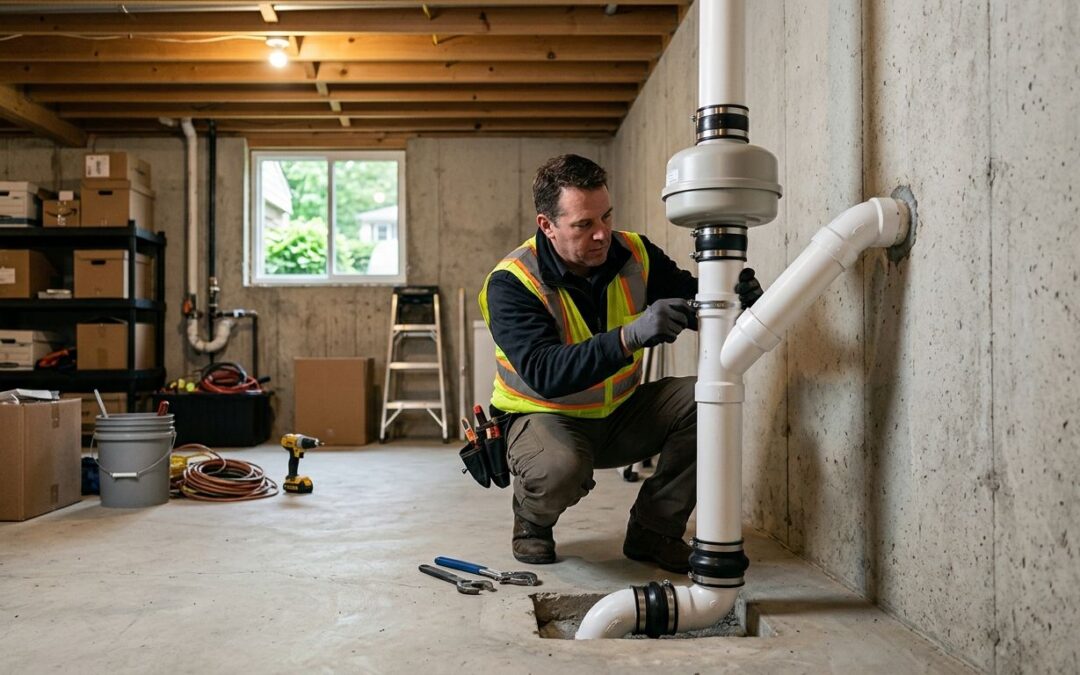
For many homes, the core approach is to draw radon-bearing soil gas from beneath the foundation and vent it outside before it can enter the living space. The installer chooses the collection point and route to suit the building. Sealing accessible openings can support that work, but sealing alone is not a dependable substitute for an active system when a home has a confirmed elevated result.
The sequence is straightforward:
- Soil gas: Radon moves through the ground and can enter through openings around the foundation.
- Fan and pipe: An active system draws gas from beneath the home through a dedicated pipe. The installer determines the appropriate placement.
- Outdoor exhaust: The system releases the collected gas outside, away from indoor living space.
- Indoor retest: A new indoor test checks the outcome where people actually live.
The last step matters as much as the hardware. You cannot confirm a lower indoor reading by looking at a pipe or hearing a fan. If the follow-up test remains high, the installer needs the result so the system can be evaluated and corrected.
A system's appearance also depends on the foundation and available pipe route. Ask the installer to explain the proposed path before work begins. You should understand which part collects soil gas, where the fan sits, and how you will tell whether the system is operating.
Does the foundation change what you need?
Yes. A basement or slab gives an installer a different starting point from a crawl space. In a crawl-space home, the installer needs a plan for the exposed soil and the space above it. A home with more than one foundation type needs a plan that accounts for each relevant area. Do not assume a system designed for another house will suit yours.
Tell the installer about finished rooms, an existing sump opening, and any prior mitigation work. These are details to inspect, not reasons to predict a test result. Ask the contractor to identify the proposed collection point and explain how the system will be tested after installation.
Best for a straightforward decision: get the radon result first, then compare system proposals against your actual foundation. The limitation: a description of the house over the phone cannot replace an inspection of the conditions that determine placement.
How do you choose a radon professional in Michigan?
Start with qualifications and a written scope. Confirm the person's current radon credentials, ask who will perform the installation, and make sure the proposal includes post-installation testing. Discuss what happens if that test shows the level remains elevated. A clear explanation beats a promise based only on the first reading.
Michigan Radon Control is best for Metro Detroit and Lansing homeowners who want NRPP-certified radon testing, mitigation installation, and system maintenance. Its service area is a limit if your property is elsewhere; confirm coverage before arranging work. Michigan Radon Control's radon testing can establish a starting result, while its mitigation service addresses a confirmed problem. Neither service eliminates the need to check the indoor level after installation.
For a 2026 project, keep the initial report, the written installation scope, and the follow-up report together. If you sell the home or need future maintenance, those records show what was measured, what changed, and whether the change worked.
Get a radon assessment
Ask about NRPP-certified testing and mitigation for a Metro Detroit or Lansing home.
How do you know mitigation worked?
Schedule an indoor radon test after installation and compare the result with the earlier report. A system indicator or a running fan shows that equipment is operating; neither measures the air you breathe. Keep both test results so you can see the change rather than relying on a verbal assurance.
Check the system as instructed by the installer, and arrange service if the fan stops or an indicator shows a problem. Retest after a repair that affects the system. Retesting also matters if you make substantial changes to the building or its ventilation. The point is simple: the equipment needs to keep working, and the indoor result needs to stay low.
A low post-installation result is good news, but it is not a permanent exemption from testing. In 2026, treat mitigation as an operating part of the home, not a one-time paperwork item. Keep the installer's instructions where you can find them and make sure the next owner can identify the system and its test history.
Is mitigation worth it if you're selling the home?
At 4 pCi/L or higher on a confirmed test, the EPA recommends fixing the home whether you plan to stay or sell. Share the test reports and the post-installation result with the people involved in the sale. Documentation answers a more useful question than an unsupported claim that the problem was handled.
Can sealing foundation cracks replace a mitigation system?
At 4 pCi/L or higher, do not rely on sealing cracks alone as your plan to fix the home. Sealing can help a mitigation system work, but radon can enter through openings you cannot easily see or reach. Retest to judge any change to indoor air.
Should you test again after a system is installed?
At 4 pCi/L or higher before installation, a post-installation test tells you whether mitigation lowered the indoor reading. Arrange that test even if the fan appears to run normally. Save the result with the original report and system records.
FAQ
Is radon mitigation worth it in Michigan in 2026?
Yes, when a confirmed home test measures 4 pCi/L or higher, because the EPA recommends fixing the home at that level. At 2 to 4 pCi/L, the EPA says to consider fixing it.
Should I mitigate if my radon test reads between 2 and 4 pCi/L?
Consider it: the EPA advises homeowners to consider fixing radon levels between 2 and 4 pCi/L. Review the test result and your home’s conditions with a qualified professional before deciding.
Do I need another radon test after a high short-term result?
Yes, follow the EPA’s guidance for a second test before making a final mitigation decision. Keep both reports so the installer can see the results you are acting on.
Will sealing basement cracks solve a radon problem?
No, sealing cracks alone is not a dependable substitute for an active mitigation system when a home has a confirmed elevated result. A new indoor test is needed to show whether any work lowered radon.
Can a house with a crawl space have a radon system?
Yes, a crawl-space home can be assessed for a mitigation system. The installer needs to inspect the crawl space and plan how to prevent soil gas from entering the occupied space.
How do I know whether my radon mitigation system works?
Test the indoor air after installation and keep the result. Check the system as instructed, and arrange service if it stops operating or a later test is elevated.
Can Michigan Radon Control help with testing and mitigation?
Yes, Michigan Radon Control provides NRPP-certified radon testing, mitigation installation, and system maintenance for homeowners and realtors in the Metro Detroit and Lansing areas. A test establishes the home’s level before you decide what work it needs.
One last thing
Your neighbor's low radon result is not your result. Homes on the same street can have different readings, so the decision in 2026 starts with a test inside your home and ends with another test if you install a system. Measure first. Fix a confirmed problem. Measure again. That gives you an answer you can use, rather than reassurance based on how a house looks.
Related guides
- Radon mitigation for homes with levels above 4 pCi/L
- Radon mitigation systems for crawl-space homes
- How to schedule radon testing after installation
- How to verify a radon mitigation system is still working