
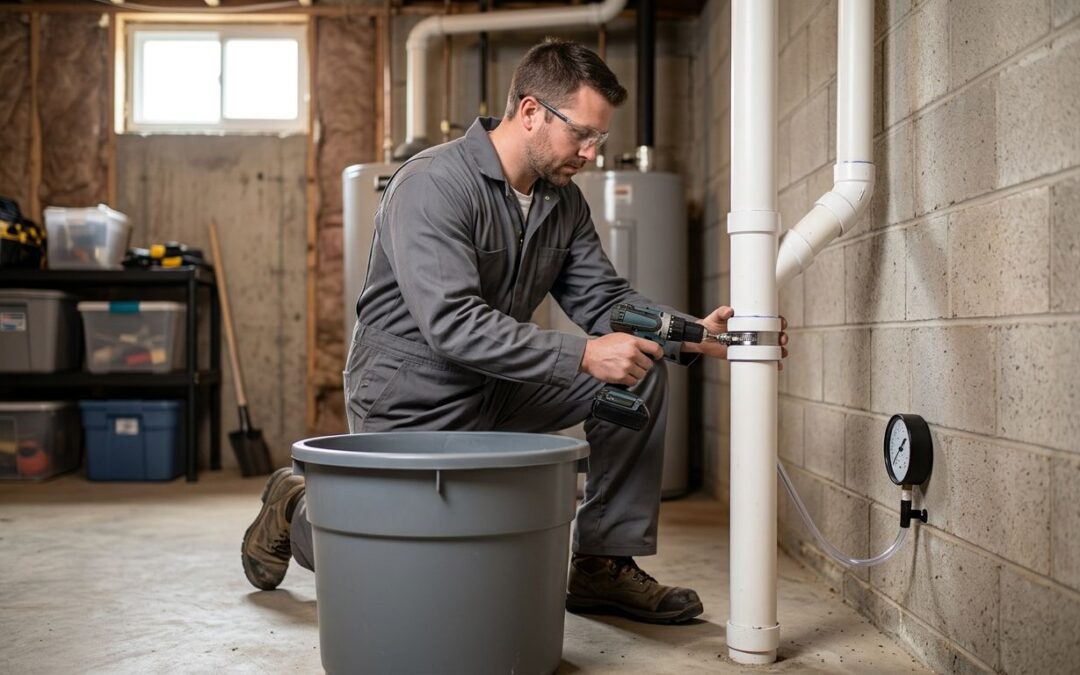
Radon mitigation in Michigan typically costs $1,200 to $1,500 installed for a standard sub-slab depressurization system in 2026, with the full range running $800 to $4,500 depending on your foundation type and how many suction points the system needs. The number on your quote usually covers installation only — annual electricity to run the fan (roughly $50 to $150 a year) and a periodic system check aren't always bundled in.
- A standard radon mitigation system in Michigan runs $800 to $2,500 installed in 2026, averaging $1,200 to $1,500.
- Crawl space and hybrid foundations push costs to $2,000 to $4,500 because they need sub-membrane suction or multiple points.
- The quoted price rarely includes yearly electricity draw or post-installation testing, both of which add ongoing cost.
- Michigan Radon Control prices installs by foundation type and suction points needed, not a flat rate.
- Foundation type is the single biggest cost driver — slab-on-grade homes cost less than crawl space or combination foundations.
Why this matters
A radon mitigation quote that looks cheap on paper can turn expensive once a contractor gets into your crawl space and finds a second suction point is needed, or your sump pump lid isn't sealed. Michigan homes sit on a mix of foundation types — slab, basement, crawl space, and combinations of all three in older housing stock — and that mix is exactly why one neighbor's system costs half of another's.
Understanding the cost drivers before a contractor walks through your door means you can spot a lowball quote that's missing a suction point, or a padded one that's charging for work your home doesn't need. It also means you can budget realistically instead of anchoring to the first number you see online.
How much does radon mitigation cost in Michigan?
The price depends almost entirely on foundation type and system complexity. Here's how the ranges break down for 2026:
| Foundation Type | Typical Installed Cost | Why |
|---|---|---|
| Slab-on-grade | $800 – $1,600 | Single suction point, straightforward pipe run |
| Basement (poured or block) | $900 – $1,800 | Similar to slab, sometimes needs sealing at floor-wall joint |
| Crawl space | $1,500 – $3,000 | Requires sub-membrane suction and a vapor barrier |
| Hybrid/combination foundation | $2,000 – $4,500 | Multiple suction points across different foundation sections |
Older Michigan homes with additions built over different decades often have a hybrid foundation — a basement under the original structure and a crawl space under an addition — which is why budgeting for a radon mitigation installation matters more here than in newer, uniform-slab construction.
Sub-slab depressurization: $800 to $2,500
This is the most common system in Michigan and the one most homes with a poured basement or slab-on-grade foundation get. A single pipe is drilled through the slab, connected to a fan, and routed up through the house to vent above the roofline. One suction point usually handles the whole footprint unless the slab has multiple separate sections poured at different times, which pushes the price toward the upper end of the range.
Sub-membrane suction for crawl spaces: $1,500 to $3,000
Crawl space homes need a heavy-duty vapor barrier sealed across the entire dirt floor before a suction point can pull air from beneath it. That extra labor and material — plus sealing every penetration, pier, and wall joint — is why crawl space radon mitigation costs more than a slab system even though the fan and pipe are the same equipment.
Sump pump-tied systems: $900 to $2,000
If your home already has a sump pump, a contractor can sometimes seal the sump lid and tie the suction point into that pit instead of drilling a new hole in the slab. That shortcut can shave a few hundred dollars off the install, but only when the sump pit and drain tile network cover enough of the foundation to pull radon effectively from the whole house.
Why radon mitigation cost varies in Michigan
- Foundation type — slab and basement homes are cheapest; crawl space and hybrid foundations cost more.
- Number of suction points — larger homes or homes with disconnected foundation sections may need two or more points.
- Fan noise and CFM requirements — a higher-capacity fan needed for a stubborn radon reading costs more than a standard unit.
- Sump pump integration — tying into an existing sump can lower cost; sealing a leaky or undersized sump adds to it.
- Accessibility — routing pipe through a finished basement, attic, or exterior wall takes more labor than an open, unfinished basement.
- Electrical work — some installs need a dedicated outlet or circuit for the fan, which adds an electrician's time to the job.
“The foundation under your house decides the mitigation price more than any other single factor.”
If your radon test came back between 4 and 10 pCi/L — the EPA's action level starts at 4 pCi/L — a standard single-point system is usually enough. Homes testing well above that, or homes with radon levels above 10 pCi/L, sometimes need a second fan or additional suction points to bring levels down reliably, which moves the project toward the higher end of the cost range.
Get a Michigan-specific mitigation estimate
Pricing depends on your foundation type — request an inspection to get an exact number.
Does homeowners insurance cover radon mitigation cost?
Most standard homeowners insurance policies do not cover radon mitigation cost because radon is treated as an environmental condition rather than sudden damage. Some homeowners have had luck bundling mitigation into a larger insurance claim when it's tied to documented work for an insurance claim, but coverage varies by carrier and policy.
Is radon mitigation a one-time cost or ongoing?
Installation is a one-time cost, but the system needs periodic upkeep to keep working. The fan draws roughly $50 to $150 a year in electricity, and a follow-up radon test after installation confirms the system is actually pulling levels down — a step covered in how to schedule radon testing after mitigation installation.
Can I get a tax deduction or rebate for radon mitigation in Michigan?
Some homeowners can offset part of the cost through deductions or local rebate and grant programs, though eligibility depends on your specific situation and where you live in Michigan. Check how to claim a radon mitigation tax deduction in Michigan before assuming the full cost is out of pocket.
FAQ
How much does radon mitigation cost in Michigan in 2026?
Radon mitigation in Michigan costs $800 to $4,500 installed in 2026, averaging $1,200 to $1,500 for a standard sub-slab system. Crawl space and hybrid foundations push costs toward the higher end.
What’s the cheapest type of radon mitigation system?
Sub-slab depressurization on a simple slab-on-grade foundation is usually the cheapest option, running $800 to $1,600. It needs only one suction point and a straightforward pipe run.
Does a bigger house cost more to mitigate?
Yes, larger homes sometimes need more than one suction point to pull radon evenly across the whole foundation, which adds to the installed cost. A single point often isn’t enough once a home exceeds a certain footprint or has multiple foundation sections.
Is crawl space mitigation more expensive than basement mitigation?
Crawl space mitigation typically costs $1,500 to $3,000 versus $900 to $1,800 for a basement, because crawl spaces need a full vapor barrier sealed before suction can work. That extra sealing labor is the main price difference.
Do I need a new radon test after mitigation is installed?
Yes, a follow-up test confirms the system actually brought levels below the EPA action level of 4 pCi/L. Skipping this step means you’re guessing whether the installation worked.
Can I tie a radon system into my existing sump pump?
Often yes, if the sump pit and drain tile cover enough of the foundation, which can lower the installed cost to $900 to $2,000. A leaky or undersized sump pit needs sealing work first, which adds cost instead of saving it.
How much does it cost to run a radon fan every year?
A radon mitigation fan typically costs $50 to $150 a year in electricity, running continuously like a small appliance. That ongoing cost is separate from the one-time installation price.
Are there financing options for radon mitigation in Michigan?
Some Michigan radon contractors offer financing plans to spread the installed cost over time. Check with your contractor directly since terms vary by company.
One last thing
The number that actually matters isn't the sticker price — it's whether the post-install test confirms your levels dropped below 4 pCi/L. A cheap install that doesn't bring your home under the EPA action level costs more in the long run than paying for the right number of suction points the first time, because you end up paying twice: once for the system, again for the fix.
Related guides
- How to budget for a radon mitigation system installation
- Radon mitigation companies in Michigan ranked by price
- How to choose the right radon mitigation system type
- Radon mitigation financing options for Michigan homeowners
- Radon mitigation systems for crawl space homes