
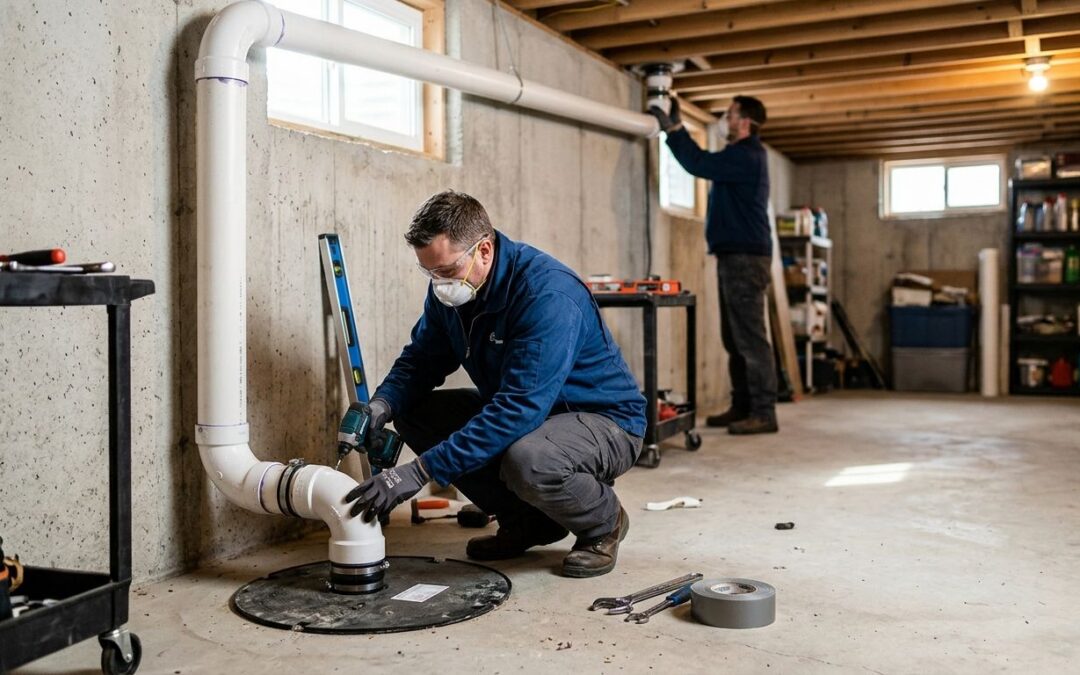
A radon mitigation system installation typically takes one day, with 4 to 8 hours of hands-on work for most Michigan basements and slab-on-grade homes in 2026. Crawl spaces, split-level layouts, and homes needing a second suction point can stretch the job to two days, and that timeline doesn't include the 24 to 48 hour wait before a follow-up test confirms the system worked.
- How long does radon mitigation installation take? About 1 day for most Michigan homes, in 2026, roughly 4 to 8 hours of hands-on work.
- Crawl space foundations and homes needing two suction points can stretch the job to 1 to 2 days.
- The clock doesn’t include the 24 to 48 hour wait before a follow-up radon test confirms the system worked.
- Michigan Radon Control is NRPP-certified and installs sub-slab depressurization systems across Metro Detroit and Lansing.
Why installation timing matters
Homeowners usually schedule mitigation right after a test comes back above the EPA action level of 4 pCi/L in 2026, often during a home sale or refinance with a closing date already on the calendar. Knowing whether you're looking at a single afternoon or a two-day job changes how you plan the rest of the week. Michigan Radon Control walks homeowners through how to prepare your home for a radon mitigation system before the crew arrives, which is the single biggest factor in keeping a job to one day instead of two.
Radon mitigation isn't a demolition project. A licensed installer drills one small hole through the slab or liner, runs PVC pipe to the roofline or exterior wall, wires in a fan, and seals the openings. The work is loud for an hour or two while the hole is cored, then quiet for the rest of the visit.
How long does a radon mitigation system installation take?
Here's the sequence for a standard sub-slab depressurization system, the type installed in most Michigan basements in 2026:
- Site walk-through and suction point selection (30-60 minutes) – the installer identifies the lowest point in the slab, checks for sump pits, and confirms fan placement.
- Coring the suction pit (1-2 hours) – a single hole is drilled through the concrete and a small pit is dug beneath it to create airflow.
- Running the vent pipe (1-2 hours) – PVC pipe routes from the pit through the basement, garage, or exterior wall up past the roofline.
- Mounting and wiring the fan (30-60 minutes) – the fan sits in an unconditioned space, such as an attic, garage, or exterior wall, tied into a dedicated electrical circuit.
- Sealing and final checks (30-60 minutes) – foundation cracks, the sump lid, and the suction pit opening get sealed to keep the vacuum consistent.
Add it up and a straightforward basement or slab-on-grade install lands at 4 to 8 hours, start to finish, in one visit.
Basement and slab-on-grade homes: about 1 day
Most Metro Detroit and Lansing homes sit on a poured basement or a slab, and this is the fastest foundation type to mitigate. One suction point usually pulls enough vacuum to cover the entire slab, so the crew finishes in a single visit. Best for: homeowners on a tight closing deadline.
Crawl space homes: 1 to 2 days
Crawl space systems need a vapor barrier sealed across the entire ground surface before the fan can create suction under it, and that sealing step takes longer than coring a slab. Homes with cluttered or low-clearance crawl spaces often need a second day just for the vapor barrier work. See how a crawl space radon mitigation system differs from a slab install before you schedule. Best for: homes with a clean, accessible crawl space; add a day if it isn't.
Homes needing two suction points or two fans: 2 days
Large footprints, homes with a finished basement on one side and a crawl space on the other, or a slab that's been added onto over the years sometimes need two separate suction points to pull radon down evenly. Each additional suction point adds coring, piping, and fan work, which is why these jobs typically run two days instead of one. Best for: additions, split-level homes, and houses with more than one foundation type under one roof.
Why installation time varies
- Foundation type – slab and basement systems core faster than crawl space vapor barrier installs.
- Number of suction points – one point covers most homes; a second point roughly doubles the coring and piping work.
- Fan location – exterior fan mounts need weatherproofing and take longer in freezing Michigan winters than attic or garage mounts.
- Electrical access – if the fan's dedicated circuit requires running new wire to a panel, that adds time beyond the mitigation work itself.
- Sump pit involvement – homes using the sump pit as the suction point need the lid sealed and tested for airtightness, which takes extra care.
- Clutter and access – a finished basement, stored furniture, or a packed crawl space slows down every step of the job.
Can radon mitigation be installed in one day?
Yes, radon mitigation is installed in one day for most Michigan basement and slab-on-grade homes, generally within the 4 to 8 hour range. Crawl spaces and homes needing two suction points are the main exceptions that stretch into a second day.
How soon after installation should you retest for radon?
A follow-up radon test should happen 24 to 48 hours after the system is activated, the standard window for confirming the fan has pulled levels below the EPA action level of 4 pCi/L. Michigan Radon Control lays out the exact process for scheduling radon testing after mitigation installation so the result holds up for a closing or a peace-of-mind check.
Does installing a radon mitigation system make noise or mess during installation?
The loudest part of a radon mitigation installation is the 1 to 2 hours of coring through the slab, comparable to a hammer drill running intermittently. Drywall dust and a small pile of concrete debris are normal by-products, and installers typically vacuum and bag the mess before leaving.
Get your installation scheduled
NRPP-certified installers serving Metro Detroit and Lansing homes.
FAQ
How long does radon mitigation installation take in Michigan?
In 2026, radon mitigation installation takes about 1 day for most Michigan homes, roughly 4 to 8 hours of on-site work. Crawl spaces or homes needing two suction points can take 1 to 2 days.
Can a radon mitigation system be installed in one day?
Yes, most sub-slab depressurization systems in basements and slab-on-grade homes are completed in one day. Crawl space vapor barriers and dual-fan systems are the main exceptions.
How long does a crawl space radon mitigation system take?
A crawl space radon mitigation system takes 1 to 2 days, longer than a basement install because a vapor barrier has to be sealed across the entire ground surface first. Cluttered or low-clearance crawl spaces add time.
Do you need to be home during radon mitigation installation?
Someone should be present at the start of the visit to grant access and again at the end to review the pressure gauge and fan location. Most homeowners don’t need to stay for the entire 4 to 8 hour job.
How soon can you retest radon levels after installation?
Retest radon levels 24 to 48 hours after the system is activated, which is the standard window for confirming levels have dropped below 4 pCi/L. Testing sooner can produce an inaccurate reading.
Does radon mitigation installation require a permit in Michigan?
Some Michigan municipalities require an electrical permit for the fan’s dedicated circuit, which a licensed contractor pulls before work starts. This doesn’t typically add time to the on-site installation day.
How long does a radon mitigation system last before it needs maintenance?
A radon mitigation system runs continuously with little upkeep beyond checking the pressure gauge periodically. Michigan Radon Control backs new installations with a 5-year warranty.
Is radon mitigation installation noisy or messy?
Installation is noisy for the 1 to 2 hours it takes to core the suction pit, similar to an intermittent hammer drill. A small amount of concrete dust and debris is normal and gets cleaned up before the crew leaves.
One last thing
The install day itself is rarely what determines whether a system works long-term. The pressure gauge on the vent pipe is the detail homeowners forget to check after the crew leaves – if it drops to zero, the fan has stopped pulling suction and radon levels can creep back up within days. Michigan Radon Control's NRPP-certified installers walk homeowners through reading that gauge before they pack up the truck in 2026, and it takes about thirty seconds to check going forward.
Related guides
- How to choose the right radon mitigation system type
- How to budget for a radon mitigation system installation