
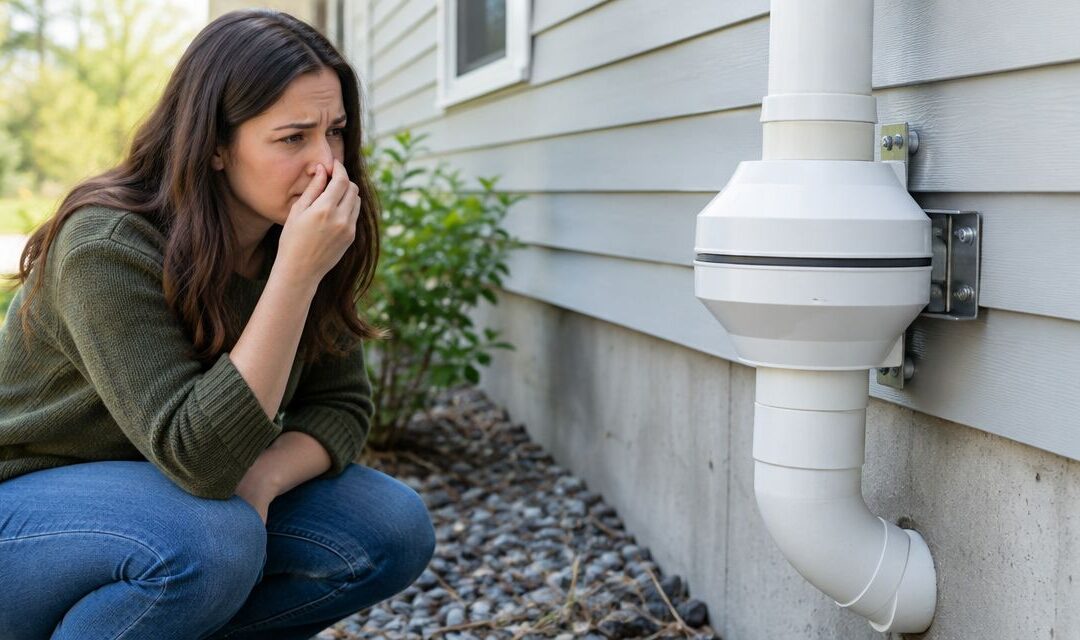
A mild odor from freshly applied installation materials can occur, but a persistent, strong, sewer-like, or burning smell is not something to accept as normal. Radon itself has no smell, so a new odor needs its own explanation, and only a radon test can confirm whether the system is reducing your exposure.
- Radon mitigation system smell normal? A mild installation-material odor can occur; persistent or hazardous odors need investigation.
- Radon is odorless. Neither a smell nor its disappearance tells you whether mitigation is working.
- Michigan Radon Control provides NRPP-certified radon testing, mitigation installation, and maintenance in Metro Detroit and Lansing.
- A pressure gauge shows system suction, not your home’s radon concentration.
Why this matters
It's completely natural to worry when a system installed to protect your family introduces an unfamiliar smell. The useful distinction is between an odor from installation materials and an odor that signals a separate problem. You do not have to identify the source yourself before asking the installer to investigate.
In 2026, the practical rule remains simple: investigate odors separately from radon levels. Your radon mitigation system's pressure gauge helps you check suction, but it cannot measure radon or identify a chemical, plumbing, or electrical problem.
Is it normal for a new radon mitigation system to smell?
A new system can coincide with a temporary installation-material odor; it should not produce an unexplained ongoing indoor smell. Pipe-joining products and sealants have their own ventilation and curing instructions. Ask the installer which materials were used and what their manufacturers require, rather than relying on a generic waiting period.
Use the odor's character and location to decide your next move. These descriptions help organize a service call; they do not establish a diagnosis.
| Odor or observation | What it tells you | Best next step | Important limit |
|---|---|---|---|
| Mild adhesive-like odor near fresh joints or sealant | Installation materials need checking | Ask the installer to identify the products and ventilation instructions | Smell alone cannot establish safe exposure |
| Persistent musty or earthy odor | Moisture and nearby spaces need investigation | Request an inspection of the area and system seals | Mustiness does not prove mold or radon leakage |
| Sewer-like odor near a sump or drain | Plumbing and sealing need checking | Contact the installer and a plumber as appropriate | Odor alone cannot distinguish every source |
| Rotten-egg odor with possible fuel-gas involvement | Treat it as a possible gas emergency | Leave and call the gas utility or emergency services from outside | Do not assume it is part of radon installation |
| Burning odor, smoke, or visible electrical damage | Treat it as an electrical or fire warning | Move away and seek emergency help when warranted | Do not open or troubleshoot energized equipment |
A faint odor that is fading deserves a different response from an odor that is getting stronger. Neither one proves that your radon concentration is high or low.
What should you do when you first notice the smell?
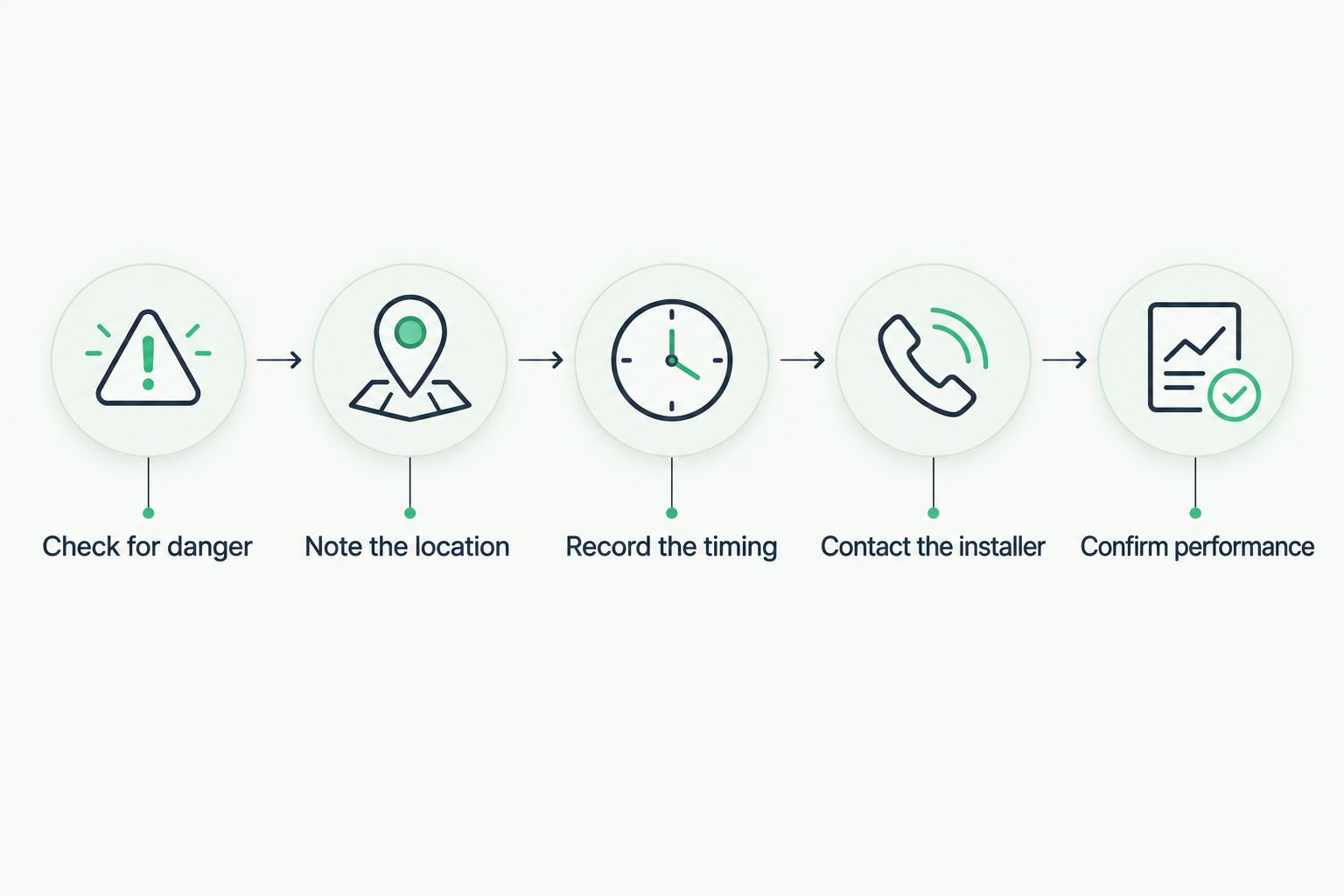
Start with safety, then collect information. Avoid taking apart the equipment or opening sealed components to find the source.
- Check for danger. If you suspect a fuel-gas leak, leave without operating switches or using a phone inside. Call the gas utility or emergency services from outside. Smoke, fire, or a strong burning odor also takes priority over radon troubleshooting.
- Note the location. Record whether the odor is strongest near fresh sealant, a pipe joint, a sump cover, a drain, or the fan area. Observe from a safe distance; do not lean over an exhaust outlet to smell it.
- Record the timing. Tell the installer when it began, whether it is fading or intensifying, and whether it occurs continuously or intermittently.
- Contact the installer. Ask for the installation materials, their safety instructions, and an inspection when the source remains unclear.
- Confirm performance. Keep the odor investigation separate from the post-installation radon test. Both questions need answers.
You do not need a technical diagnosis to request help. A clear description of where and when you notice the odor is more useful than guessing that the fan, pipe, or soil is responsible.
Why the smell varies between installations
Several installation details affect the questions your contractor needs to answer. None establishes a universal period during which every smell is acceptable.
- Materials used. Pipe-joining products and sealants have product-specific safety and curing instructions. Ask for the actual product information.
- Ventilation during the work. Fresh installation materials require the ventilation specified by their manufacturers. Do not substitute a radon-testing window rule for chemical-safety instructions.
- Location of the odor. A smell concentrated near a fresh joint calls for a different inspection than one near a floor drain or electrical component.
- Foundation and sump details. Systems that involve a sump cover or crawl-space membrane need those components checked when odors appear nearby.
- Condition of nearby spaces. Dampness, drains, and stored chemicals can introduce odors unrelated to radon. Include them in the investigation rather than assuming the new system explains everything.
For a 2026 installation, ask the contractor to connect each explanation to something observable: a named material, a specific component, or an inspection finding. An explanation should identify the source, not simply label the smell normal.
An adhesive-like smell: ask about the actual materials
Some pipe-joining products and sealants release odors during application and curing. That makes installation materials a reasonable item to check, not an automatic explanation for every chemical smell.
Ask which products were used, where they were applied, and what their labels or safety data sheets say about ventilation. Also report whether the odor is decreasing. A strong odor, worsening odor, or irritation needs prompt attention rather than an assumed curing timetable.
Do not accept a fixed waiting period without product-specific support. If fresh air is needed for material safety, follow that instruction and tell the testing professional before starting a radon test. Test conditions must not take priority over an immediate exposure concern.
A sewer-like smell: check plumbing and seals
A sewer-like smell is not the smell of radon. Plumbing traps, drains, and work around a sump area belong in the investigation. The timing of the installation is useful information, but timing alone does not prove the system caused the odor.
Ask the installer to inspect the relevant system connections and seals. A plumber should evaluate suspected plumbing problems. Do not loosen a sump cover or disconnect a vent pipe to experiment; those changes can affect the system and expose you to the space beneath the cover.
If the odor resembles rotten eggs and fuel gas is a possible source, use the emergency response described above. Do not stay inside trying to distinguish sewer gas from a gas leak by smell.
A musty smell: investigate moisture separately
Mustiness calls for a moisture investigation, not a conclusion about radon. Look for visible dampness or water from a safe, accessible position, and tell the contractor whether the odor existed before installation.
A radon mitigation system is not a substitute for correcting a plumbing leak, water intrusion, or a moisture problem. Likewise, removing a musty odor does not establish that radon levels are acceptable. Keep those checks separate so one improvement does not conceal an unresolved issue.
A burning smell: do not troubleshoot the fan yourself
A burning smell is not a routine sign of a new radon fan settling in. Smoke, visible damage, or a suspected electrical fault requires an immediate safety response. Do not open the motor housing, handle suspect wiring, or repeatedly restart equipment to see whether the smell returns.
An installer or qualified electrician needs to evaluate the equipment when an electrical issue is suspected. After any required shutdown or repair, have the contractor confirm system operation and advise you on follow-up radon testing. Do not restart damaged equipment without professional direction.
How do you verify that the system is working?
Use a radon test, not your nose. A fan sound and a pressure-gauge reading provide operating clues, but neither reports the radon concentration in your living space.
For U.S. homes, the EPA's Consumer's Guide to Radon Reduction recommends a post-mitigation test within 30 days of installation, after the system has operated for at least 24 hours. Its short-term follow-up guidance calls for a test lasting at least 48 hours. These are EPA testing recommendations referenced in this 2026 guide, not deadlines for an odor to disappear.
Follow the test provider's placement and building-condition instructions. If you have opened windows to address an installation-material odor, report that before testing; the provider needs to establish appropriate test conditions. The guide to scheduling radon testing after mitigation installation explains the next step.
For U.S. residential radon decisions in 2026, EPA guidance recommends action at 4 pCi/L or higher and considering reduction between 2 pCi/L and 4 pCi/L. The unit pCi/L means picocuries per liter. A result below the action level does not identify the source of an odor or establish that another air-quality concern is resolved.
When is a professional inspection the right next move?
Request an inspection when the odor persists without an identified source, gets stronger, or accompanies a visible equipment problem. Do not wait for a radon result before addressing a suspected gas, electrical, or plumbing hazard.
Michigan Radon Control is suited to homeowners and realtors in Metro Detroit and Lansing who need NRPP-certified radon testing, mitigation installation, or system maintenance. Radon service addresses system performance; suspected fuel-gas leaks, electrical faults, and plumbing problems also require the appropriate specialist.
Request a system inspection
Ask about radon testing or system maintenance for your Metro Detroit or Lansing home.
How long should a new radon system smell?
There is no universal safe odor duration for a new radon system. Any expected curing or ventilation period belongs to the actual materials used, and the installer should explain those instructions.
For a 2026 installation, keep the completion date and product information with your records. A worsening, strong, or unexplained smell needs investigation even if someone has told you that installation odors are common.
Does a smell mean radon is leaking into the house?
A smell does not establish a radon leak because radon is odorless. A damaged connection or unusual operating condition still deserves inspection, but you need testing to determine the indoor radon concentration.
Treat a suspected equipment defect and the radon reading as separate evidence. Fixing one visible problem does not replace the follow-up test.
Should you turn off the radon fan because of an odor?
Do not routinely turn off a working radon fan to make an unexplained odor disappear. Active mitigation depends on continued operation, so contact the installer for direction instead of using shutdown as a diagnostic experiment.
Immediate gas, fire, or electrical hazards are different. Leave danger areas and follow emergency or qualified professional instructions; do not remain inside to preserve system operation.
FAQ
Is a radon mitigation system smell normal after installation?
A mild installation-material odor can occur, but a persistent, strong, sewer-like, or burning smell needs investigation. Radon itself is odorless, so the installer should identify the actual odor source.
Can I smell radon coming out of the pipe?
You cannot smell radon because radon is odorless. An odor near the pipe does not measure radon concentration; do not approach or sniff the discharge to assess performance.
How long should a glue-like smell last after radon installation?
There is no universal duration for a glue-like installation odor. Ask the installer to identify the products used and provide their ventilation and curing instructions.
Why does my basement smell like sewer gas after mitigation?
A sewer-like smell needs a plumbing and system-seal investigation; it is not a radon odor. If fuel gas is a possible source, leave and call the gas utility or emergency services from outside.
Does the pressure gauge prove that my radon level is safe?
A pressure gauge does not measure radon concentration. It provides information about system suction, while a radon test measures the concentration in the tested space.
When should I test for radon after installation?
EPA guidance recommends testing within 30 days of installation, after at least 24 hours of system operation, with a short-term follow-up test lasting at least 48 hours. Follow your test provider’s instructions and disclose ventilation changes made to address odors.
Who can inspect a new radon system in Metro Detroit or Lansing?
Michigan Radon Control provides NRPP-certified radon testing, mitigation installation, and system maintenance in Metro Detroit and Lansing. Suspected gas, electrical, or plumbing hazards also require the appropriate utility or specialist.
One last thing
An odor disappearing is not a radon test result. You can resolve the smell and still need to confirm radon reduction, or obtain a lower radon reading while a separate odor problem remains. Before closing out a 2026 installation, keep the odor explanation, any repair record, and the post-mitigation test result together.
Related guides
- How to maintain your radon mitigation system
- How to tell if your radon mitigation fan needs replacing
- Radon mitigation systems for crawl-space homes