
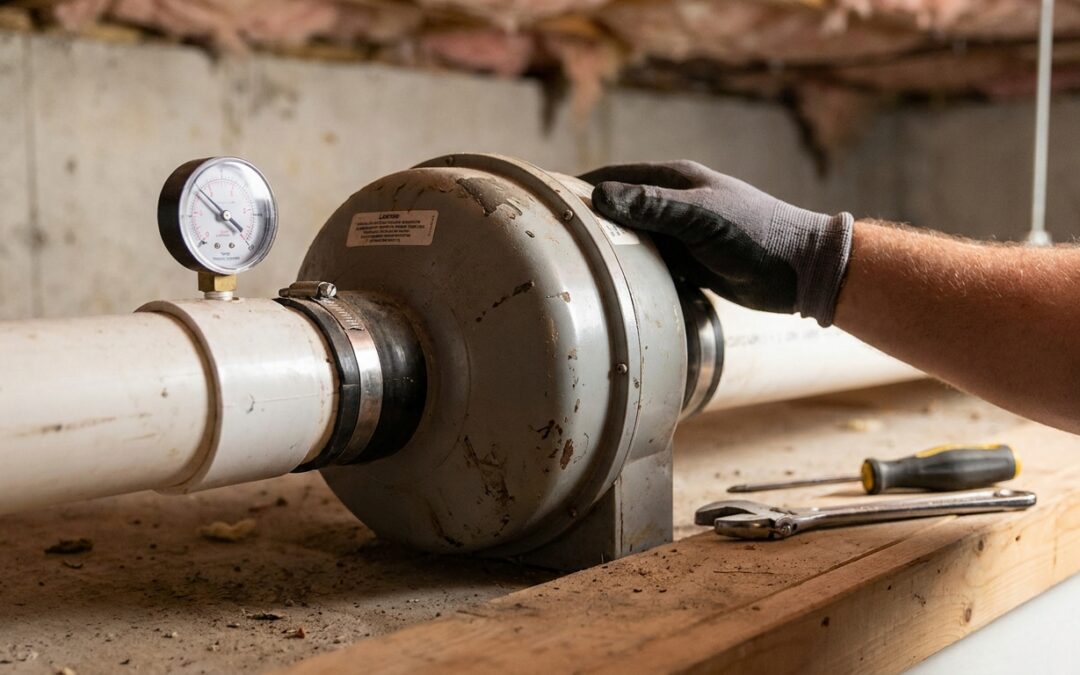
A radon mitigation fan runs 24/7 for years, and most homeowners never think about it until the U-tube manometer on the pipe stops showing a reading. This guide walks you through the exact signs of radon fan failure, what to check before you call anyone, and when replacement beats a repair.
- A flat or zero reading on the manometer gauge is the clearest sign you need radon fan replacement.
- Most radon fans last 5 to 10 years before the motor bearings wear out — Michigan’s freeze-thaw cycles often push failure toward the shorter end.
- A fan that’s louder, hotter, or vibrating more than usual is failing even if it’s still spinning.
- Rising radon test results with a fan that sounds normal usually means a cracked housing or a duct leak, not the fan itself.
Why this matters
A radon mitigation system only works while the fan is actively pulling gas from under the slab and venting it above the roofline. The moment that fan slows down, stalls, or dies, radon starts building back up in the living space, and you have no warning system besides a follow-up test or a lucky glance at the manometer.
Michigan homes sit on soil and glacial till that push radon concentrations well above the national average in many counties, which is exactly why the state leans on mitigation systems rather than testing alone. A fan that quietly fails in January can leave a house with elevated radon through an entire heating season before anyone notices, since closed windows and constant furnace use pull more soil gas indoors.
Radon fan replacement isn't optional maintenance — it's the only thing keeping a mitigation system functional. Catching failure early is the whole game.
What you'll need
- A ladder or step stool to reach the exterior fan housing
- A flashlight to check the U-tube manometer attached to the vent pipe
- A basic notebook or phone note to log the fan's install date if you have it
- A digital radon test kit or a call to schedule a professional retest
- Work gloves if the fan is mounted in an attic or crawlspace
- The install paperwork or invoice, if you have it, to confirm fan age and any warranty coverage
If your system was installed by Michigan Radon Control, the original invoice usually lists the fan model and install date, which matters because most manufacturers back their units for 5 years and system lifespan planning starts from that number.
The steps
1. Check the manometer first
Every radon mitigation system has a small U-tube gauge, usually mounted on the vent pipe in the basement or garage. It measures negative pressure — the vacuum the fan creates to pull gas from under the slab.
A working fan holds the liquid columns at an uneven level, typically showing at least 0.1 inches of water column difference. If both columns sit flat and even, the fan has stopped creating suction. That's the single fastest way to catch a dead fan before radon levels climb.
Common mistake: people check the manometer once at install and never again. Glance at it monthly — it takes ten seconds.
2. Listen for a change in sound
A healthy radon fan produces a steady, low hum. Grinding, rattling, high-pitched whining, or a noticeable increase in volume all point to bearing wear or a failing motor.
Stand near the fan housing (usually on the exterior wall or in the attic) and compare what you hear now to what you remember from a year ago. Sound changes almost always show up before total failure, giving you a window to schedule replacement before the system goes fully offline.
3. Feel for excess vibration
Place a hand flat against the vent pipe near the fan housing. Some vibration is normal, but a fan that's visibly shaking the pipe or rattling its mounting brackets is telling you the impeller or motor shaft is out of balance.
Unbalanced fans fail faster and can crack the housing seal over time, which lets radon leak into the attic space instead of venting outside. A vibrating fan is a near-term replacement, not a wait-and-see situation.
4. Inspect for physical wear and rust
Climb up and look directly at the housing. Water staining, rust streaks, cracked plastic seams, or a loose base are all signs the fan has taken moisture damage — common in Michigan attics where condensation forms during winter temperature swings.
A cracked or corroded housing means the fan is either failing soon or already leaking radon-laden air at the joint instead of venting it fully outdoors.
5. Check the fan's age against its expected lifespan
Most radon mitigation fans last 5 to 10 years depending on the model, run time, and climate exposure. Fans mounted outdoors in Michigan deal with more extreme freeze-thaw cycling than fans in warmer states, which tends to shorten that window.
If your paperwork shows an install date more than 7 years back, plan for replacement even if the fan still sounds fine — waiting for total failure means a stretch of unmitigated radon exposure before you notice.
6. Retest radon levels even if the fan seems fine
A fan can spin normally and still fail to keep radon low if there's a cracked pipe joint, a disconnected duct section, or a sealed sump lid that's no longer airtight. If a retest comes back above 4 pCi/L (the EPA action level) with a fan that sounds and looks normal, the problem is likely the ductwork or seal, not the fan itself.
Homes with sump pumps tied into the mitigation system need extra attention here, since a failed sump lid seal can undo the fan's work entirely. Radon mitigation for homes with sump pumps covers what a proper seal should look like.
7. Schedule a professional inspection before replacing anything
Before buying a replacement fan, get an NRPP-certified technician to confirm the diagnosis. Fan replacement without checking the rest of the system risks swapping a working part while a duct leak or seal failure goes unaddressed.
Not sure if it’s the fan or the system?
Get a certified inspection before you spend money on a replacement fan.
Troubleshooting
Manometer reads flat with no vacuum at all. The fan has stopped running. Check the breaker first — a tripped circuit is a cheap fix compared to a dead motor. If power is confirmed and the fan still isn't spinning, it needs replacement.
Fan runs but sounds like grinding metal. Bearing failure. The fan will likely die within weeks to a few months. Replace it now rather than waiting for total failure and a radon spike.
Radon retest is high but fan sounds normal. Check every accessible joint in the vent pipe for cracks or loose fittings, and confirm any sump lid or crawlspace vapor barrier is still sealed. This is a ductwork or seal problem, not a fan problem.
Fan housing has ice buildup in winter. Some condensation is normal in Michigan's cold months, but heavy ice accumulation around the housing seams suggests a seal failure letting warm, moist basement air escape and freeze at the exterior fan. Have a technician check the seal before the housing cracks.
Fan is louder than it used to be but still creates suction. This usually means early bearing wear. It's not an emergency, but plan replacement within the next few months rather than waiting for it to fail outright.
System was working fine and then a home renovation started causing high readings. New ductwork, finished basements, or foundation work can change airflow patterns. This calls for a system reassessment, not necessarily a fan swap — get radon mitigation system installation for Michigan homes reviewed against the current floor plan.
Tools and resources
- U-tube manometer (already installed on your vent pipe — check it monthly)
- Digital or continuous radon monitor for ongoing tracking between professional tests
- Your original install invoice, to confirm fan age and any 5-year warranty coverage
- How to prepare your home for a radon mitigation system if you're facing a full system swap rather than just a fan replacement
- A certified technician for any inspection involving pipe access, roof penetration, or electrical work
What to do next
If the manometer's flat, the fan sounds different, or your system is past the 7-year mark, don't wait for a scheduled retest to find out radon is climbing again in 2026. Book an inspection, confirm whether it's the fan or the ductwork, and get the replacement scheduled before winter closes the windows and traps soil gas indoors for months.
FAQ
How do I know if my radon fan needs replacing?
Check the U-tube manometer on the vent pipe first — a flat, even reading means the fan has lost suction and needs replacement. Grinding sounds, visible vibration, and cracked housing are the other clear signs.
How long do radon mitigation fans last?
Most radon fans last 5 to 10 years before motor or bearing wear ends their service life. Michigan’s freeze-thaw winters tend to push exterior-mounted fans toward the shorter end of that range.
Can I replace a radon fan myself?
Replacing the fan itself is a straightforward swap for an experienced technician, but confirming the diagnosis and resealing pipe joints correctly requires certification. A misaligned seal after a DIY swap can leak radon into the attic.
What does it mean if the manometer shows no reading?
A flat manometer means the fan has stopped creating negative pressure, which usually means the motor has failed or the breaker has tripped. Check power first, then plan for radon fan replacement if the fan doesn’t restart.
Does a loud radon fan mean it’s failing?
Yes, in most cases. A fan that’s noticeably louder or higher-pitched than when it was installed is showing early bearing wear, and it typically fails within months rather than years.
Is a high radon retest always a fan problem?
No. A fan running normally with a high retest usually points to a cracked duct joint or a failed seal around a sump lid or vapor barrier, not the fan motor itself.
How much does radon fan replacement cost?
Costs vary by fan model and system access, so get a current quote from a certified installer rather than relying on a general estimate. Confirm whether your original system still has warranty coverage before paying out of pocket.
Should I replace the fan before or after retesting radon levels?
Retest first if the fan is still running, since the problem might be ductwork rather than the fan. If the manometer shows zero suction, replace the fan and retest afterward to confirm the fix worked.
One last thing
Exterior-mounted fans in Michigan take more of a beating than the manufacturer's lifespan estimates assume, because those numbers are often based on moderate climates without repeated freeze-thaw cycling. If your fan sits on an exterior wall facing prevailing wind and lake-effect weather, budget for replacement closer to year 6 or 7 rather than year 10 — and log the install date somewhere you'll actually check it in 2026 and beyond.
Related guides
- Radon mitigation system installation for Michigan homes
- Radon testing services for Michigan homeowners