
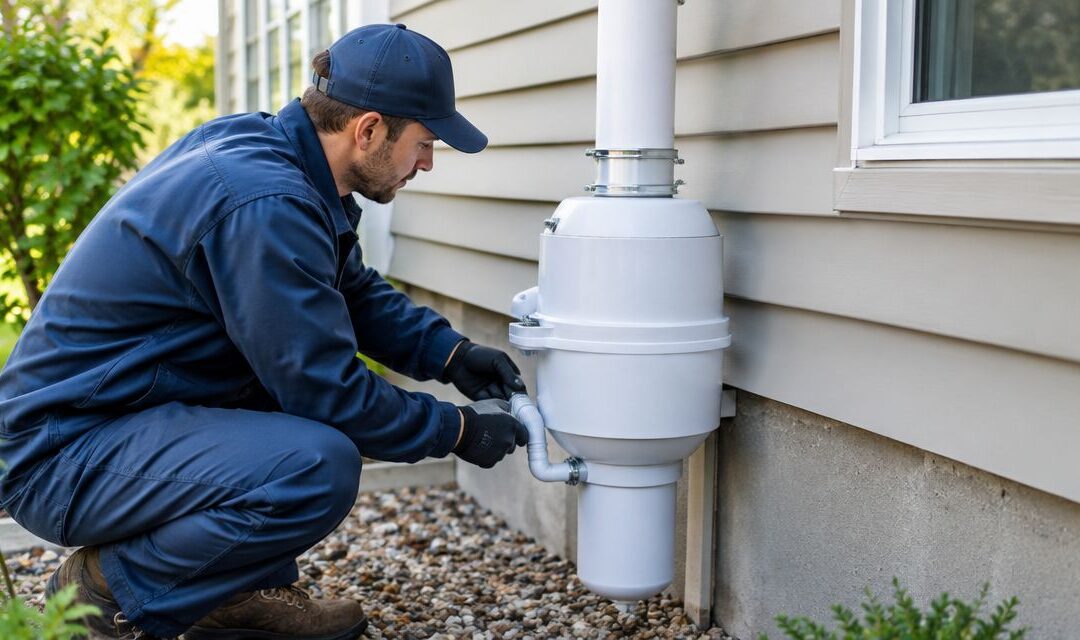
A radon mitigation system has no single replacement age: replace failed components and keep the system in service while testing confirms that it controls radon. In 2026, the practical distinction is between replacing a worn fan and replacing the entire installation; a running fan alone does not prove that your home's radon level remains low.
- How long does a radon mitigation system last? Replace components by condition, not the entire system by age.
- A pressure gauge indicates system operation; a radon test measures whether the home remains protected.
- EPA recommends testing mitigated homes at least every two years to confirm continued performance.
- Michigan Radon Control provides NRPP-certified radon testing, mitigation installation, and maintenance for Metro Detroit and Lansing homeowners.
Why this matters
It's completely natural to worry when an older radon system gets louder or its gauge changes. Those changes call for a check, not an automatic decision to replace everything. The fan, piping, seals, and monitoring equipment perform different jobs, so each needs its own assessment.
For your 2026 maintenance plan, start with the system's condition and your latest radon result. The guide to maintaining your radon mitigation system explains the routine checks that support that decision.
Radon is invisible and has no smell. You cannot judge protection by how the basement feels, whether you hear the fan, or whether the installation looks tidy.
How long does a radon mitigation system last before replacement?
There is no universal expiration date for a complete radon mitigation system. An active soil-depressurization system contains a powered fan and several nonmoving components. A problem with one part does not establish that the rest of the installation needs replacement.
The useful question is whether the system still draws soil gas away from the home and keeps indoor radon levels low. Answer that with an inspection and a radon test, rather than an age-based rule.
| Component | What it does | What supports continued use | What calls for inspection or repair |
|---|---|---|---|
| Radon fan | Creates suction to move soil gas through the vent | Normal operation and verified radon reduction | Stopped operation, unusual noise, vibration, or changed performance |
| Vent piping | Carries collected gas to the outdoor discharge | Intact joints, secure supports, and an unobstructed route | Cracks, separated connections, damage, or an obstruction |
| Foundation and sump seals | Limit openings that interfere with suction | Intact seals around the areas included in the design | Open seams, disturbed covers, or damage after other work |
| Crawl-space membrane | Supports collection beneath a sealed ground covering | Intact material and sealed edges and penetrations | Tears, lifted edges, or disturbance during repairs |
| System indicator | Shows a change in pressure or operating status | A reading consistent with the documented operating condition | A changed reading, warning, or damaged indicator |
This comparison applies to components, not guaranteed service lives. Your installer should identify which parts your home actually uses and document their operating condition.
Radon fan: replace for a diagnosed problem
A radon fan is a mechanical component that runs continuously in an active system. Noise, vibration, loss of suction, or stopped operation deserves attention. None of those signs, by itself, identifies the exact cause.
A technician should check the power supply, fan, connections, and airflow before recommending replacement. A failed fan does not automatically make intact piping or a sound collection arrangement unusable.
Choose a replacement fan for the system's needs, not simply for its appearance or size. Confirm radon reduction after the work; replacing equipment is not the same as proving the repair worked.
Piping and seals: repair damage rather than assuming expiration
Pipes and seals need inspection for damage, loose connections, and interference from other work. They do not share the fan's mechanical wear process. That makes a single replacement timetable for the whole system misleading.
Foundation repairs, sump service, or crawl-space work can disturb parts that were previously sound. Tell the radon contractor what changed, even if another contractor completed the work neatly and the fan still sounds normal.
Crawl-space systems: include the membrane in the assessment
A crawl-space membrane forms part of the collection arrangement in a sub-membrane system. Tears, opened seams, and unsealed penetrations affect that arrangement. Inspection needs to cover the membrane as well as the fan and vent.
Do not enter an unsafe crawl space to investigate. Describe recent plumbing, electrical, or structural work to the technician and ask for an assessment of the affected areas.
Why radon mitigation system service life varies
A system's age is useful background, but it does not identify the cause of a performance problem. These factors explain why the assessment needs to cover more than the fan:
- Mechanical condition. The fan has moving parts; the vent pipe does not. Different components need different repair decisions.
- Physical damage. Broken supports, separated joints, and torn membranes interfere with the installation regardless of its age.
- Power supply. An active system depends on electricity. A stopped fan needs a power check as well as a mechanical check.
- Airflow and drainage. Obstructions and water-management problems in the vent arrangement need investigation when operation changes.
- Changes to the home. Foundation work, crawl-space alterations, and basement renovations can affect the system's collection area or pressure conditions.
- Verification history. A recent radon result provides evidence of performance. An old installation report does not establish today's indoor level.
There is an important distinction here: some factors damage equipment, while others change how well otherwise functioning equipment controls radon. A higher radon result calls for diagnosis, not an automatic order for a new fan.
How do you decide whether to repair or replace the system?
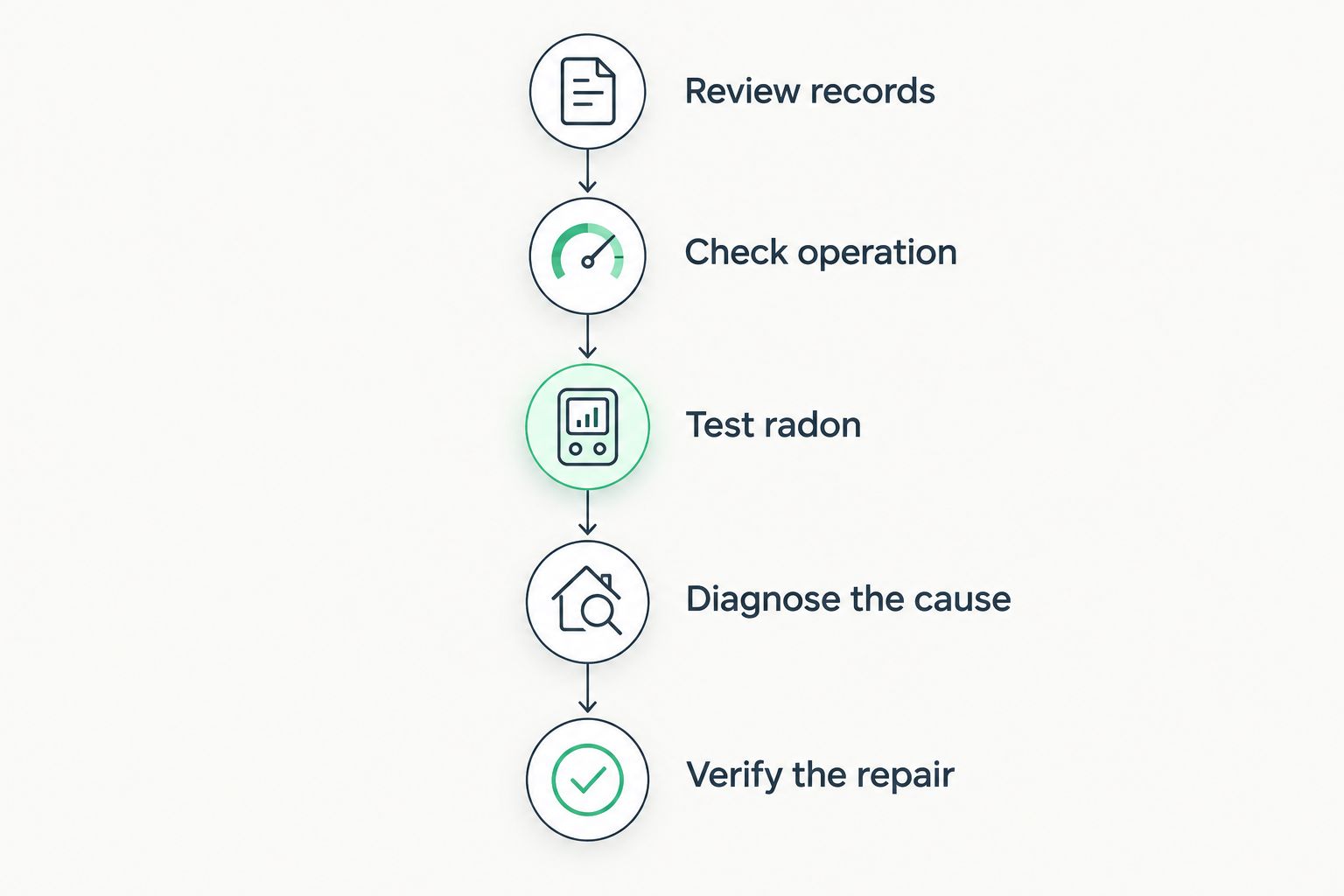
Use a simple sequence: document the concern, check operation safely, measure radon, and let the findings determine the work. Avoid disconnecting piping or opening electrical equipment yourself.
- Review records. Find the installation report, previous radon results, fan information, and any documented pressure-gauge baseline. Note repairs and changes to the home.
- Check operation. Look at the indicator and note unusual sound or vibration from a safe location. Do not climb onto the roof or touch damaged wiring.
- Test radon. Arrange a test that follows the device instructions and appropriate testing conditions. Give the tester your maintenance concerns.
- Diagnose the cause. Ask a qualified technician to assess the fan, power, vent, seals, and collection arrangement as relevant.
- Verify the repair. Confirm operation and complete follow-up radon testing after the corrective work.
The sequence separates evidence from assumptions. It also gives you a clear reason for each proposed repair instead of treating the system's age as the diagnosis.
When a component repair fits
Best for: a diagnosed, isolated defect in an otherwise suitable installation. Replacing a failed fan or repairing a damaged connection keeps service focused on the identified problem. It also avoids removing usable components without a technical reason.
The limitation is that a component repair cannot correct every design or collection problem. Ask what evidence supports keeping the rest of the installation, and how the contractor will verify the result.
When broader system changes fit
Best for: documented problems that an isolated repair cannot resolve. A damaged collection arrangement, unsuitable vent layout, or performance problem tied to changed building conditions needs a broader assessment. The recommendation should explain which parts require alteration and why.
The drawback is greater disruption than a localized repair. Before approving the work, request a clear scope that separates necessary changes from components that remain serviceable.
| Approach | Best for | Main advantage | Main limitation |
|---|---|---|---|
| Component repair | An isolated, diagnosed defect | Keeps the work focused on the failed part | Does not resolve unrelated design or collection problems |
| Broader system changes | Multiple defects or an unsuitable arrangement | Addresses problems beyond a single component | Requires a larger scope and more disruption |
Does a normal pressure gauge mean the system still works?
A normal pressure-gauge reading does not prove that indoor radon is low. A typical U-tube manometer shows a pressure difference in the system. It is not a radon detector.
Compare the reading with the baseline documented for your installation. There is no single ideal reading for every house, and a higher reading does not automatically mean better radon reduction.
If the reading changes, record it and contact a qualified technician. For the distinction between operating indicators and measured protection, see how to verify your radon mitigation system is still working.
How often should you test an older mitigated home?
At least every 2 years is EPA's recommendation for retesting a home with a radon reduction system. EPA's Consumer's Guide to Radon Reduction gives this guidance for confirming that the system continues to work. Include that interval in your 2026 home-maintenance calendar.
Do not wait for the routine interval when you have a system warning, a suspected failure, or relevant changes to the home. Ask a qualified professional how to investigate and when to perform follow-up testing.
EPA's A Citizen's Guide to Radon identifies 4 pCi/L as the action level for fixing a home. EPA also recommends considering action between 2 and 4 pCi/L; a result below the action level is not a guarantee of zero risk.
Long-term tests run for more than 90 days, according to that same EPA guide, and better reflect the home's year-round average than short-term tests. Test duration should match the question you need answered, whether that is routine monitoring or verification after corrective work.
What should you ask a radon maintenance provider?
Ask for a diagnosis that connects the proposed work to an observed defect or radon result. You should understand what failed, which components remain suitable, and how the finished work will be checked. Keep the report with your home's records.
Michigan Radon Control is best for Metro Detroit and Lansing homeowners seeking NRPP-certified radon testing and mitigation maintenance. Michigan Radon Control provides testing, installation, and system maintenance, so its services address both equipment condition and measured radon levels.
The benefit of professional maintenance is having the operating concern assessed alongside the installation. Its limit is equally important: an inspection without radon testing does not establish the indoor radon concentration. Ask for both the findings and the verification plan.
Request a system assessment
Discuss radon testing and system maintenance for your Metro Detroit or Lansing home.
FAQ
How long does a radon mitigation system last before I need a new one?
A radon mitigation system has no universal replacement age. Assess the components and use radon testing to determine whether it still controls indoor levels; an isolated defect does not automatically require a complete replacement.
Does replacing the radon fan mean replacing the entire system?
No, replacing a radon fan does not automatically require replacing the entire system. A technician should assess whether the existing piping, seals, and collection arrangement remain suitable, then verify performance after the repair.
Can I tell whether my radon system works by listening to it?
No, fan sound does not establish that indoor radon is low. Sound helps you notice an operating change, but a radon test measures the concentration in your home.
How often should I retest after radon mitigation?
EPA recommends retesting a mitigated home at least every 2 years to confirm continued performance. Investigate suspected failures or relevant building changes rather than waiting for the routine interval.
What radon level means my system needs attention?
A radon result of 4 pCi/L or higher reaches EPA’s action level for fixing a home. In a mitigated home, have the installation assessed rather than assuming that fan replacement alone will solve the problem.
Should I turn off my radon fan to make it last longer?
No, an active radon mitigation fan is intended to run continuously. Switching it off interrupts the suction the system uses to collect soil gas; follow professional instructions when a fault requires service.
Can a basement remodel affect an existing radon system?
Yes, a basement remodel can change building conditions or disturb parts of the radon installation. Tell the contractor about the work and arrange appropriate inspection and radon testing.
Who can inspect an older radon system in Metro Detroit or Lansing?
Michigan Radon Control provides NRPP-certified radon testing and mitigation maintenance for homeowners in Metro Detroit and Lansing. Ask for an assessment of the existing installation and a plan to verify performance after any repair.
One last thing
Save the gauge baseline and the radon result together. They answer different questions: the gauge helps identify a change in operation, while the test measures radon in the home. Having both makes a future service visit more useful.
For 2026, create a single maintenance record containing the installation details, test reports, observed changes, and completed repairs. When contacting Michigan Radon Control, describe what changed rather than simply saying the system is old. That gives the assessment a concrete starting point.
Related guides
- How to tell if your radon mitigation fan needs replacing
- How to schedule radon testing after mitigation installation
- How to read a radon mitigation system's pressure gauge