No—radon mitigation reduces indoor radon; it does not permanently eliminate every trace of the gas or remove its source beneath your home. A successful system lowers exposure, and a follow-up radon test confirms the result. It is completely natural to want a zero reading, but the practical goal is a verified reduction that your system maintains over time.
- Can radon mitigation fully eliminate radon? No—mitigation reduces indoor concentrations, while testing verifies the result.
- EPA recommends fixing homes at 4 pCi/L or higher; lower levels still carry risk.
- A running fan or normal pressure gauge does not replace a radon test.
- Michigan Radon Control provides NRPP-certified radon services for Metro Detroit and Lansing homeowners and realtors.
Can radon mitigation fully eliminate radon or only reduce it?
Radon mitigation only reduces radon. The gas forms naturally as uranium in soil and rock breaks down, so a home mitigation system cannot switch off the source. Instead, it changes how soil gas moves around and beneath your foundation.
The U.S. Environmental Protection Agency's A Citizen's Guide to Radon, used here as the reference for homeowner guidance in 2026, recommends fixing homes with results of 4 picocuries per liter, or 4 pCi/L, and higher. EPA also recommends considering a reduction when results fall between 2 pCi/L and 4 pCi/L. Neither figure means that all exposure below it is harmless.
Start with the measured concentration, not a promise of complete removal. The guide to reading your radon test results explains the number that determines your next step.
| What you observe | What it tells you | What it does not prove |
|---|---|---|
| A lower post-installation test result | Indoor radon was reduced during the test | The home will remain at that level indefinitely |
| A result below 4 pCi/L | The result is below EPA's action level | Radon is absent or exposure carries no risk |
| A fan that is running | The fan has power and is operating | Every occupied area has an acceptable radon concentration |
| A pressure gauge showing a difference | The system is creating a pressure difference at the gauge | The gauge has measured radon in the air |
Judge mitigation by a valid radon measurement, not by whether the equipment appears to work. That distinction prevents both false reassurance and unnecessary worry.
Why this matters
You do not need a promise of zero radon to make a useful improvement. Lowering a home's radon concentration lowers exposure to a known cause of lung cancer. EPA states that no level of radon exposure is known to be completely risk-free.
For a homeowner making a decision in 2026, this means separating three questions: Does the home need mitigation? Did the installation reduce radon? Is the system still controlling it? A test answers the concentration question; inspection and maintenance address the equipment.
Michigan Radon Control is best suited to Metro Detroit and Lansing homeowners and realtors seeking NRPP-certified radon services. Its stated services include testing, mitigation installation, and system maintenance. Certification and service coverage help you choose a provider, but the home's follow-up result remains the evidence of performance.
How a mitigation system reduces radon
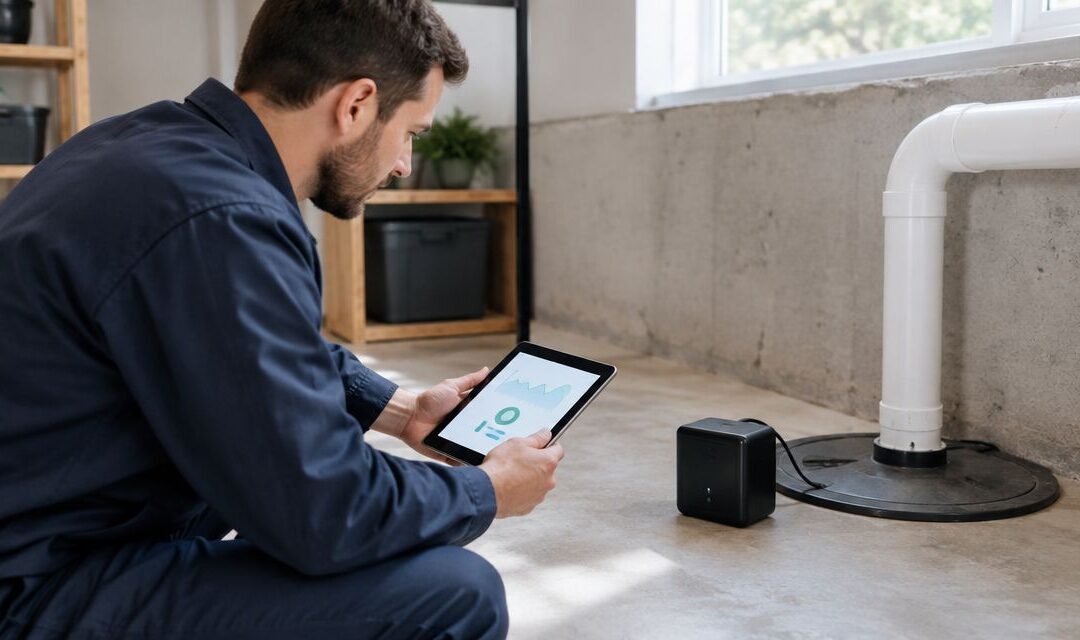
A common approach, active soil depressurization, uses a fan and vent piping to draw gas from beneath a slab or sealed crawl-space membrane. The system exhausts that gas outdoors through a discharge designed to keep it away from openings into the home. The purpose is to intercept soil gas before it enters living areas.
Think of the system as ongoing control, not a one-time cleaning. Soil continues producing radon after installation. An active system needs to keep operating to maintain the pressure conditions that reduce entry.
Foundation sealing supports that process by closing accessible openings and limiting unwanted air leakage. Sealing alone is not a dependable substitute for a tested mitigation system. EPA's Consumer's Guide to Radon Reduction explains that sealing alone has not been shown to lower radon significantly or consistently.
Which mitigation approach fits the foundation?
The foundation helps determine the approach, but a test verifies whether the chosen method works. A basement, slab, crawl space, or mixed foundation creates different routes for soil gas. There is no single equipment arrangement that proves success in every home.
| Approach | Best for | Main advantage | Main limitation |
|---|---|---|---|
| Active sub-slab depressurization | Homes with suitable concrete slabs | Draws soil gas from beneath the slab before entry | Needs power, suitable design, and follow-up testing |
| Sub-membrane depressurization | Homes with exposed-earth crawl spaces | Draws gas from beneath a sealed membrane | Membrane gaps or damage affect performance |
| Passive soil-gas venting | Homes designed with radon-resistant construction | Provides a vent pathway without a powered fan | Testing can show that a fan is needed |
| Foundation sealing | Supporting a broader mitigation design | Limits accessible entry routes and air leakage | Does not reliably control radon by itself |
These are methods, not performance tiers. A powered system is not automatically successful just because it has a fan, and a passive system is not automatically sufficient because it was included during construction.
What radon level should you aim for in 2026?
Aim to reduce radon below 4 pCi/L, then discuss further practical reduction rather than treating that threshold as a safety guarantee. EPA recommends considering mitigation between 2 pCi/L and 4 pCi/L because lower exposure still matters. Ask the installer to explain the expected outcome and how testing will confirm it.
Do not confuse a reduction percentage with the final concentration. A substantial reduction can still leave a home above the action level if its starting concentration was high. The final measured result determines whether further work is needed.
Likewise, a very low reading is encouraging, but it is not proof that radon has disappeared permanently. A test describes conditions during its measurement period. Your records should show the concentration, test dates, location, and whether the mitigation system was operating.
When reviewing a proposal in 2026, ask for a written explanation of the intended result and the process for addressing a follow-up result that remains elevated. Do not substitute a broad promise of clean air for a specific radon testing plan.
Why radon reduction varies between homes
Two nearby homes can need different system designs. Their foundation layouts and the movement of air beneath them are not necessarily alike. Your neighbor's result does not predict yours.
EPA's homeowner reduction guidance identifies building conditions and system design as important to choosing and evaluating mitigation. These factors explain why a contractor needs to assess the house rather than promise a universal outcome:
- Foundation layout: Separate slabs, crawl spaces, and additions create different areas that need attention.
- Soil-gas movement: Material beneath the foundation affects how far suction reaches from a collection point.
- Entry openings: Cracks, joints, and accessible sump openings affect the paths available to soil gas.
- System design: Collection points, vent routing, and fan selection must fit the building.
- Weather and indoor pressure: Seasonal conditions and building operation affect radon entry and measured concentrations.
- Equipment and membrane condition: Fan failures, disconnected piping, or damaged crawl-space membranes interfere with control.
A disappointing result calls for diagnosis. Installing a larger fan without checking the foundation and suction coverage is not a substitute for identifying the problem.
How do you confirm mitigation worked?
A post-mitigation radon test confirms the indoor concentration after installation. EPA's Consumer's Guide to Radon Reduction recommends testing within 30 days after installation, waiting at least 24 hours after the system begins operating, and using a test lasting at least 48 hours. Follow the testing professional's instructions for the device and building conditions.
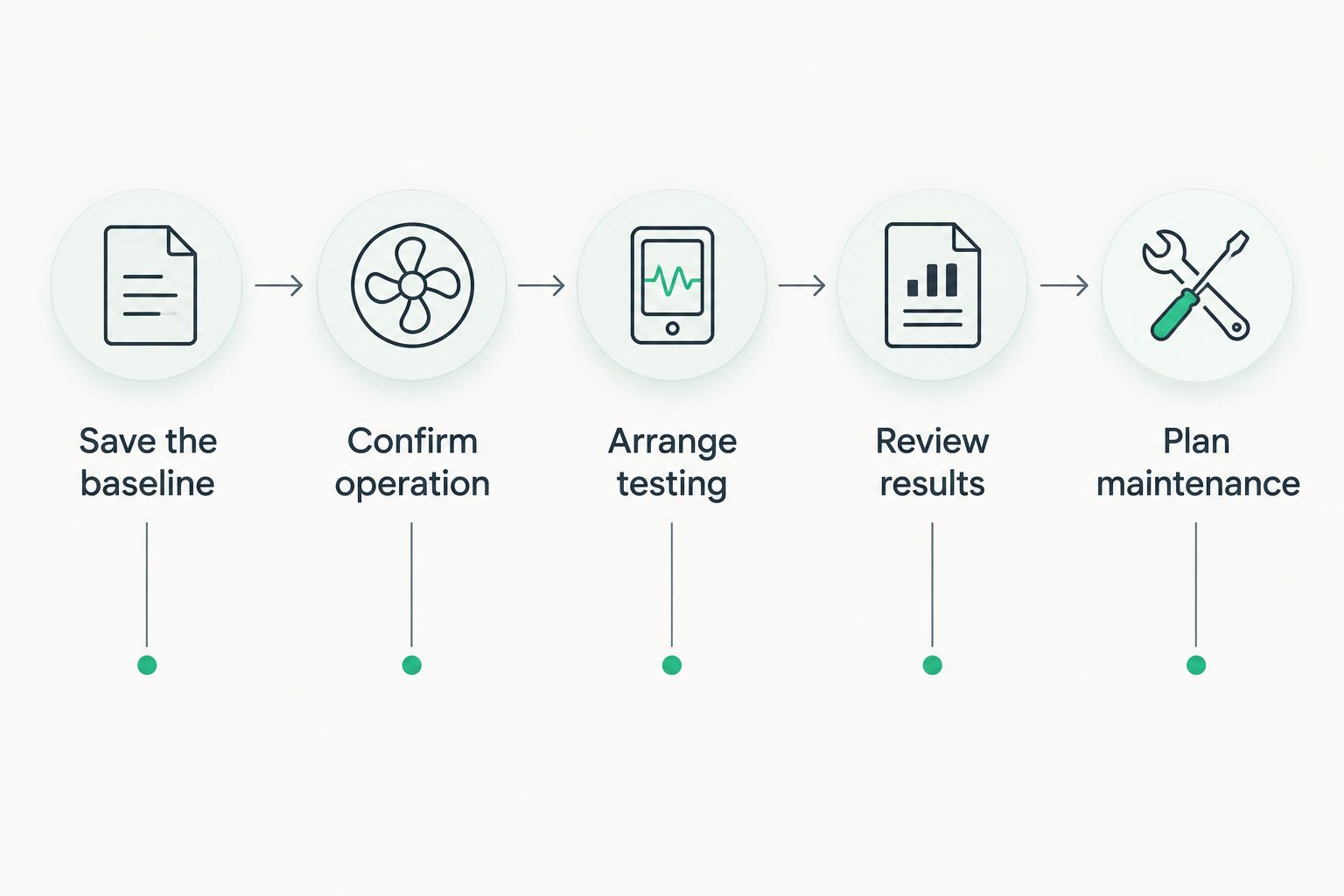
For your 2026 installation records, use this sequence:
- Save the baseline. Keep the original report, including the test location and measurement period.
- Confirm operation. Have the installer explain the fan, system indicator, and what changes require attention.
- Arrange testing. Schedule the follow-up measurement and follow its placement and closed-house instructions.
- Review results. Compare the new concentration with EPA guidance and the agreed performance target.
- Plan maintenance. Keep the reports and instructions together, and arrange further testing or service when needed.
The steps separate installation from verification. A finished installation is the start of checking performance, not the end of the process.
Do not open windows to make a follow-up reading lower or turn the system off to see what happens. The test needs conditions that follow its protocol. Otherwise, you lose the reliable comparison you need.
Use the guide to scheduling radon testing after mitigation installation to plan the verification step before installation is complete.
What if radon stays elevated after installation?
An elevated follow-up result means the job needs further evaluation. It does not mean your home is impossible to mitigate, and it does not establish that the fan alone is defective. Give the contractor the complete report rather than only the final number.
Ask for an assessment of system operation, foundation coverage, accessible entry points, and test conditions. A mixed foundation or separate addition can require attention that the initial collection point did not provide. Any adjustment still needs another valid test to confirm its effect.
Michigan Radon Control provides radon testing, installation, and maintenance services for homeowners and realtors in its stated Metro Detroit and Lansing service areas. The benefit is access to those related services; the limitation is that no service description establishes the result in your particular home. Request a testing and follow-up plan, not an assurance of zero radon.
Request help with radon reduction
Discuss testing, mitigation installation, or maintenance for a Metro Detroit or Lansing home.
Is a result below 4 pCi/L completely safe?
Below 4 pCi/L means below EPA's action level, not completely risk-free. EPA recommends considering further reduction between 2 pCi/L and 4 pCi/L. Treat the action level as guidance for taking action, not a boundary between dangerous air and harmless air.
A lower result is a useful improvement. Keep the system operating and retain the report so later measurements have a clear point of comparison.
Can radon come back after a low test result?
A result below 4 pCi/L does not guarantee that later results will remain below 4 pCi/L. Equipment failure, changes to the building, and seasonal conditions can change indoor concentrations. Radon was reduced, not removed from the surrounding soil.
After a basement remodel or foundation work in 2026, review whether the project affected vent piping, membranes, or sealed openings. Include radon testing in that review rather than relying on the installation date.
Does a longer test give you a better picture?
A test lasting more than 90 days is considered a long-term radon test under EPA homeowner guidance. It better reflects the home's year-round average than a short-term measurement because it captures conditions over a longer period. Short-term testing remains useful for checking an installation promptly.
The tests serve different purposes. Ask the testing professional which measurement fits your immediate decision and how to evaluate longer-term exposure afterward.
FAQ
Can radon mitigation fully eliminate radon from my house?
No—radon mitigation reduces indoor radon rather than permanently eliminating its natural source. A follow-up test measures the reduction and shows whether further work is needed.
What radon level means my home needs mitigation?
EPA recommends fixing homes at 4 pCi/L or higher and considering reduction between 2 pCi/L and 4 pCi/L. The action level is not a guarantee of risk-free exposure below it.
Does a zero reading mean all the radon is gone?
No—a displayed zero does not establish that radon is absent permanently. Interpret it using the device’s detection limits, measurement period, and instructions.
When should I test after a radon system is installed?
EPA recommends testing within 30 days after installation, waiting at least 24 hours after operation begins, and testing for at least 48 hours. Follow the testing professional’s instructions for your device and home.
Can I turn off the radon fan after getting a low result?
No—an active mitigation fan needs to keep operating to maintain the system’s control. A low result reflects conditions with the system working, not proof that the home no longer needs it.
Does the pressure gauge show how much radon is in my basement?
No—the pressure gauge shows a pressure difference, not a radon concentration. You need a radon test to measure the gas in indoor air.
Who provides certified radon services around Metro Detroit and Lansing?
Michigan Radon Control provides NRPP-certified radon testing, mitigation installation, and maintenance services for homeowners and realtors in Metro Detroit and Lansing. Ask for a follow-up testing plan when discussing installation.
One last thing
The small gauge beside a radon pipe cannot tell you whether your air has a low radon concentration. It can look normal while a separate foundation area still needs attention. Keep equipment checks and radon measurements on separate checklists: one checks operation; the other checks exposure.
For your 2026 home records, save the baseline report, follow-up report, system instructions, and maintenance notes together. That folder gives you something more useful than a promise of complete elimination: evidence of reduction and a clear basis for the next decision.
Related guides
- How to verify your radon mitigation system is still working
- Can radon come back after mitigation?
- How to maintain your radon mitigation system