
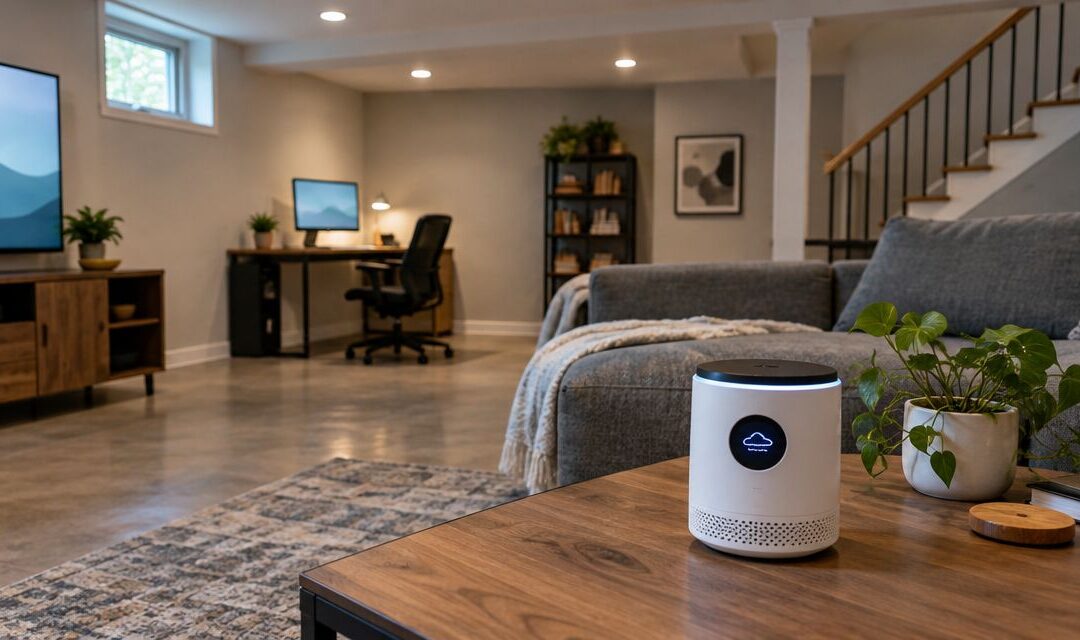
Yes, finishing a basement can increase radon levels when the work changes ventilation, indoor air pressure, or openings between the house and the soil. An increase is not inevitable, and spending more time downstairs increases your exposure even if the concentration stays unchanged. For a basement remodel in 2026, test before construction and test again after the finished space returns to normal use.
- Can finishing a basement increase radon levels? Yes; changes to ventilation, pressure, and soil-entry routes can raise concentrations.
- EPA recommends fixing homes at 4 pCi/L or higher and considering action between 2 and 4 pCi/L.
- Test before your basement remodel and after construction; an earlier result does not describe the finished space.
- Michigan Radon Control provides NRPP-certified radon testing and mitigation for homeowners in Metro Detroit and Lansing.
Why this matters
It's natural to worry about radon when you are turning a basement into a bedroom, office, or playroom. You do not need to guess whether the space is suitable for everyday use. A properly conducted radon test gives you a measurement to act on.
Radon is a radioactive gas that can enter from the ground beneath a house. You cannot see or smell it, and exposure increases lung cancer risk. Fresh paint, dry walls, and a comfortable room temperature tell you nothing about its concentration.
Start with the conditions described in how to prepare your basement for a radon test. Correct placement and normal testing conditions matter more than how finished the room looks.
Can finishing a basement increase radon levels?
Finishing a basement can raise radon concentrations, but the remodel alone does not predict the result. The important changes happen at the foundation and in the way air moves through the house. Insulation, air sealing, new plumbing, and heating or ventilation changes all deserve attention during planning.
The EPA's A Citizen's Guide to Radon recommends testing when you begin occupying a lower level, such as a basement. Its Consumer's Guide to Radon Reduction also advises retesting after major renovations that affect the structure or ventilation. For your 2026 project, that means the preconstruction measurement is a baseline—not clearance for the completed room.
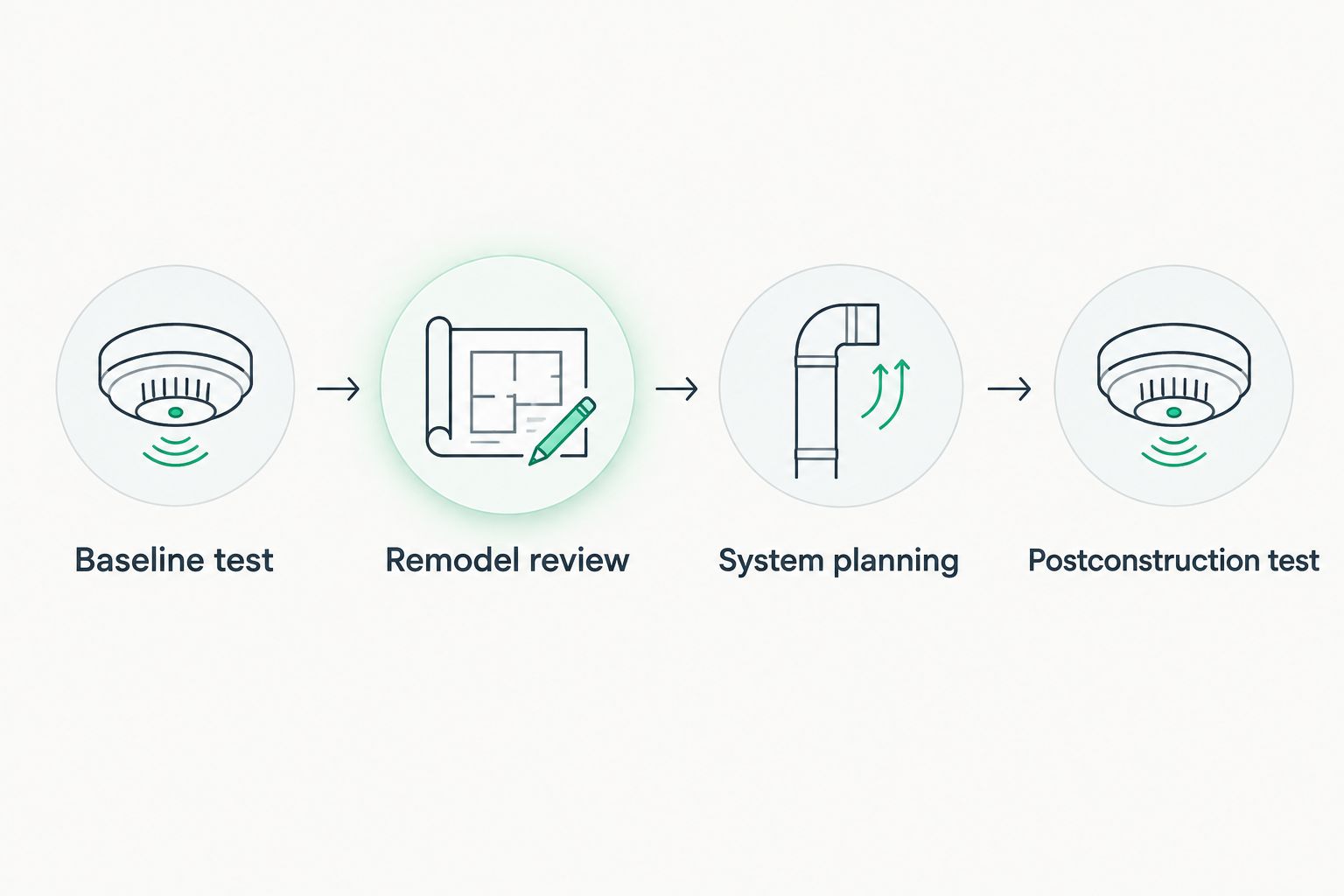
Use this sequence:
- Baseline test. Measure radon before demolition and document the test location, dates, result, and conditions.
- Remodel review. Identify planned changes to the slab, sump, foundation openings, insulation, and air handling.
- System planning. If reduction is needed, coordinate the mitigation layout before walls and ceilings conceal access.
- Postconstruction test. Test after construction ends and the home returns to its normal heating, cooling, and ventilation conditions.
That sequence avoids relying on a test taken while exterior doors stayed open or contractors used temporary ventilation. It also separates a measurement of the original basement from a measurement of the room you will actually occupy.
Why radon levels vary after a basement remodel
A basement remodel changes more than the appearance of a room. These factors explain why a result after construction can differ from the baseline:
- Air sealing. Reducing uncontrolled outdoor-air exchange changes how much indoor radon is diluted. Energy improvements are not a reason to avoid remodeling; they are a reason to retest.
- Indoor air pressure. Exhaust fans and changes to air distribution can affect pressure differences that draw soil gas into the home.
- Foundation openings. New plumbing penetrations, disturbed joints, and slab work can alter routes between the soil and indoor air.
- Sump and drainage work. An exposed sump or disturbed cover can leave a soil-gas entry route. Drainage and radon-control work need coordinated planning.
- Weather and season. Radon varies with weather and operating conditions. Tests taken in different seasons do not isolate the effect of construction by themselves.
Adding drywall does not establish that radon has increased. Nor does covering the floor establish that it has decreased. Measure the finished basement instead of judging it by the materials installed.
Keep a written record of changes. If a post-remodel result is higher, that record helps a qualified professional assess entry routes and ventilation rather than attributing the change to a single finish material.
A finished basement can increase exposure without raising the reading
Concentration and exposure are different. A radon test measures the amount of radon in the air, while your exposure also depends on how much time you spend there.
An unfinished basement used briefly for laundry is different from a basement used every night as a bedroom. If the concentration stays the same, the longer occupancy still matters. This is why testing belongs in the room-conversion plan, not just in projects that cut into the foundation.
For a 2026 bedroom or home-office conversion, tell the testing professional how you intend to use the space. Follow the test instructions for the lowest level suitable for occupancy, and use a representative room rather than a sump closet or crawl space.
Do not assume a walkout basement is exempt because it has windows and an exterior door. It still has contact with the ground. Its actual radon concentration requires a test.
Which radon test fits a basement remodel?
Use a short-term test for a timely measurement and a long-term test to understand the longer-term average. Neither test substitutes for controlling elevated radon when the results call for action.
EPA guidance distinguishes short-term tests lasting 2–90 days from long-term tests lasting more than 90 days. The specific device instructions determine the required measurement period and setup.
| Testing option | Best for | Main benefit | Main limitation |
|---|---|---|---|
| Short-term test | A baseline or postconstruction check | Provides a result without waiting through a long measurement period | Reflects a limited window and is affected by testing conditions |
| Long-term test | Understanding the longer-term average | Captures more variation in normal home conditions | Takes more than 90 days and does not provide a quick construction decision |
A short-term result is useful, but do not treat it as a permanent description of the home. Record it alongside the room location and conditions so the next result has context.
For short-term tests lasting less than 4 days, EPA guidance calls for closed-house conditions for at least 12 hours before testing and throughout the test. Keep windows and exterior doors closed except for normal entry and exit, and follow the device's instructions about equipment operation.
EPA guidance also places a test device at least 20 inches above the floor, away from drafts, high heat, high humidity, and exterior walls. Never hide the detector behind new furniture simply to keep it out of sight.
What should you do with the result?
The EPA recommends fixing a home when radon is 4 pCi/L or higher. It also recommends considering reduction when the result is between 2 and 4 pCi/L. Here, pCi/L means picocuries per liter, the unit commonly used for residential radon results in the United States.
These are action guidelines, not a boundary between harmless and harmful air. EPA states that no radon level is known to be risk-free. A result below 4 pCi/L does not mean you should discard the report or stop thinking about future changes.
For a 2026 basement remodel, use the result to decide the next step:
- At or above 4 pCi/L: Follow EPA confirmation guidance and arrange radon reduction when the results indicate it is needed.
- Between 2 and 4 pCi/L: Consider reduction, particularly as you plan regular use of the basement.
- Below 2 pCi/L: Keep the baseline and test again after the remodel; the earlier reading does not predict the completed space.
A qualified testing professional can explain the appropriate follow-up for your measurement. EPA guidance uses the first result and its magnitude to determine whether another short-term test or a long-term test is appropriate. Do not replace that process with an informal average of unrelated readings.
Plan radon control before closing the walls
If the basement needs mitigation, include it in the construction plan while the slab and foundation remain accessible. Pipe routing, suction-point access, electrical needs, and service access are easier to coordinate before finishes conceal them.
Bring the radon professional and remodeling contractor into the same discussion. The goal is to keep the system functional and accessible without treating it as an afterthought.
Use the guide to planning radon mitigation before a Michigan basement remodel to organize that discussion. Ask where pipes will run, which openings need treatment, and how the completed system will be tested.
Michigan Radon Control is a fit for Metro Detroit and Lansing homeowners who need NRPP-certified radon testing and mitigation around a basement remodel. Michigan Radon Control provides testing, mitigation installation, and system maintenance; the appropriate system layout still requires an assessment of your home. Certification does not replace a post-installation measurement.
Sealing cracks helps, but it is not a complete radon strategy
Sealing accessible cracks and openings can support radon reduction. It can also help a mitigation system work effectively by limiting unwanted air leakage.
The EPA does not recommend sealing alone as the sole method of reducing radon. Entry routes are not always visible or accessible, and a finished floor is not proof of a gas-tight barrier. Treat caulk, coatings, flooring, and drywall as construction materials—not as verified radon protection.
An active soil-depressurization system uses a fan and piping to draw soil gas from beneath the foundation and discharge it outdoors through a designed vent route. Its benefit is addressing soil gas before it enters occupied space. Its limitation is that it requires correct design, continued operation, maintenance, and testing to confirm the indoor result.
An existing system also needs protection during the remodel. Do not disconnect its power, move piping without professional review, or conceal components that need inspection and service.
Will a dehumidifier lower radon in my finished basement?
A dehumidifier is not a radon mitigation system. It removes moisture, not the radioactive gas entering from the soil.
Run moisture control for its intended purpose, and use radon testing to assess radon. A basement that feels dry and smells fresh can still have an elevated reading. Keep these two indoor-air concerns separate when you plan equipment.
Is opening basement windows enough to fix radon?
Opening windows is not a dependable permanent radon solution. It changes ventilation while the windows remain open, but it does not establish the concentration under normal closed-house conditions.
Do not open windows to improve a test result. Follow the required test conditions, then address the measured problem with an appropriate reduction method.
Can I finish a basement that already has high radon?
You can plan a basement renovation with elevated radon, but radon reduction belongs in the project plan. At 4 pCi/L or higher, follow EPA guidance rather than assuming the new finishes will correct the problem.
Coordinate testing and mitigation before regular occupancy of the finished space. If a system is installed before construction ends, confirm its performance after the work is complete and the house returns to normal operation.
FAQ
Can finishing a basement increase radon levels even if I don’t cut the concrete?
Yes, finishing a basement can increase radon levels without cutting concrete because changes to ventilation and indoor air pressure affect radon entry and accumulation. Test before construction and after the finished room returns to normal conditions.
Should I test for radon before or after finishing my basement?
Test both before and after finishing your basement. The first test establishes a baseline; the second measures the finished space after changes to the structure, ventilation, and room use.
What radon level means my basement needs mitigation?
The EPA recommends fixing homes at 4 pCi/L or higher and considering reduction between 2 and 4 pCi/L. Follow the appropriate confirmation process for your test result; the action level is not a risk-free boundary.
Does installing carpet or vinyl flooring stop radon?
Installing carpet or vinyl flooring is not a verified radon-reduction method. Flooring does not establish that soil-gas entry routes are sealed, so confirm the indoor concentration with testing.
Can radon go up after a remodel if I already have a mitigation system?
Yes, radon can rise after remodeling if construction changes entry routes, air pressure, or the mitigation system’s operation. Keep the system running and retest after the work is complete.
How long should a radon test run in a finished basement?
EPA guidance describes short-term tests as lasting 2–90 days and long-term tests as lasting more than 90 days. Follow the specific device instructions and choose the test period that fits the decision you need to make.
Who can help with radon during a basement remodel in Metro Detroit or Lansing?
Michigan Radon Control provides NRPP-certified radon testing, mitigation installation, and system maintenance for homeowners in Metro Detroit and Lansing. Discuss the planned basement changes before construction so testing and mitigation can be coordinated with the remodel.
One last thing
A running radon fan and a pressure gauge do not measure the radon concentration in your basement. They provide information about system operation; a radon test measures the air you breathe.
Before you call your 2026 basement project complete, save the postconstruction radon report with the renovation records. Make the final test part of the handover, not a task you remember after moving downstairs.
Related guides
- Radon mitigation solutions for finished basements
- How to schedule radon testing after mitigation installation
- How to verify your radon mitigation system is still working