
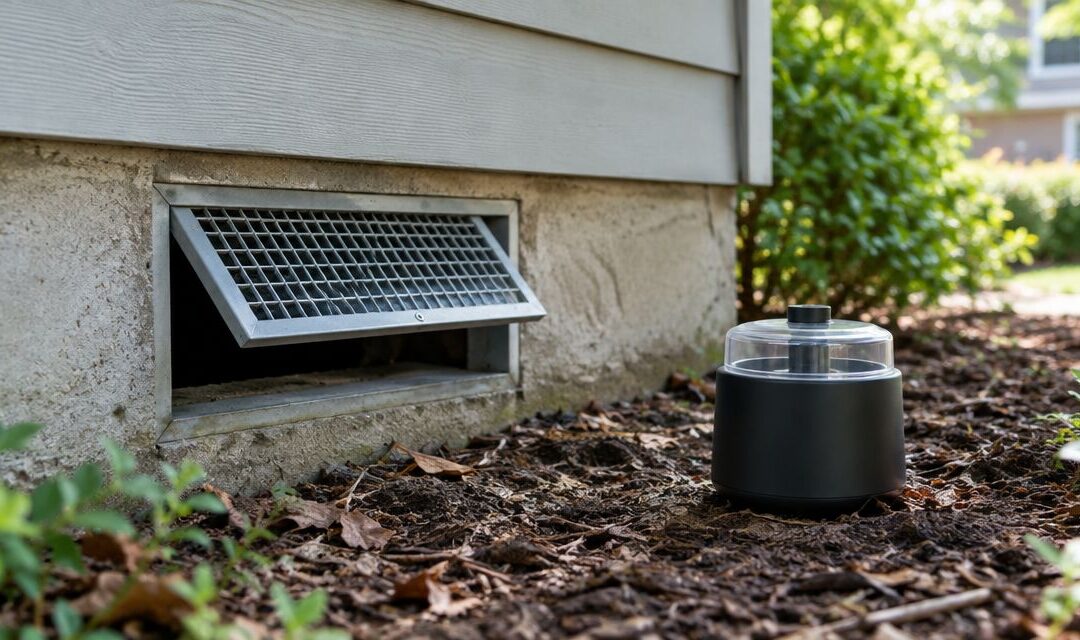
Yes. Opening a crawl space vent can affect radon test results by changing ventilation and pressure beneath your home, but it does not guarantee a lower reading. If a vent changes position before or during a test, tell the testing professional; whether the result remains usable depends on the test protocol, the crawl space configuration, and when the change occurred.
- Can a crawl space vent affect radon test results? Yes; changing ventilation can change the measured concentration.
- Follow written closed-building instructions; ask the tester specifically about crawl space vents before changing them.
- Report an opened vent promptly. Do not move the detector or discard the result yourself.
- Michigan Radon Control provides NRPP-certified radon testing for Metro Detroit and Lansing homeowners and realtors.
Why this matters
It's completely natural to worry that an open vent has spoiled your test. The next step is straightforward: document what happened and let the testing professional assess it. An unexpected change does not tell you, by itself, whether the reading is too high, too low, or unusable.
The goal is a representative measurement, not the lowest possible number. Before your 2026 test, review the written instructions and this guide to preparing your basement for a radon test. Ask about the crawl space separately, especially if it connects to a basement or contains heating and cooling equipment.
Can opening a crawl space vent affect radon test results?
Opening a crawl space vent changes a pathway between outdoor air and the space beneath your floor. That can dilute radon in the crawl space, alter pressure relationships, and change how air moves into the rooms above. The effect on an indoor detector depends on the building—not just the vent.
Use the following steps if a vent was opened during your test:
- Record the change. Note which vent opened, approximately when it happened, and when you noticed it. Distinguish a foundation vent from an access door or a window in an occupied room.
- Contact the tester. Explain whether the vent was normally open or normally closed. Include any other changes, such as an opened basement window or a new exhaust fan.
- Leave the detector alone. Do not relocate, cover, unplug, or restart it unless the testing professional instructs you to do so.
- Follow corrective instructions. Ask whether to restore the vent position immediately and whether the measurement must restart. Do not invent your own waiting period.
- Keep the record. Save the instructions and the explanation of any interruption with the final report, particularly during a home purchase.
A test measures radon under the conditions present during its sampling period. An accurately functioning device can still produce a result that does not meet the intended testing conditions. Device accuracy and test validity are different questions.
What different vent situations mean
These situations call for different responses. None supports a universal correction factor or a dependable prediction of how much the reading changed.
| Situation | What it means for testing | Best for | Limitation |
|---|---|---|---|
| Vent stays in the position specified by the tester | The agreed setup remains consistent | Completing the planned measurement | Consistency alone does not verify every testing requirement |
| Normally closed vent opens during sampling | An airflow condition changed | Prompt documentation and professional review | The direction and size of the effect are unknown |
| Normally open foundation vent is discovered | The crawl space setup needs clarification | Checking instructions before making changes | Closing it automatically is not a universal rule |
| Vent is opened deliberately to lower radon | The building is being altered to influence the measurement | No valid testing purpose | A lower reading would not establish dependable radon control |
What closed-building conditions mean for a crawl space
Closed-building conditions limit unusual outdoor-air exchange during short-term radon testing. They are not an instruction to shut off every mechanical system or seal every opening in the building. Normal entry and exit are generally allowed; windows and exterior doors otherwise remain closed according to the test instructions.
For short-term tests lasting less than 4 days, EPA homeowner guidance calls for closed-building conditions for at least 12 hours before testing, as well as throughout the measurement. Many short-term measurements run for at least 48 hours, but the device instructions and applicable protocol determine the actual duration.
Those general rules do not resolve every crawl space question. A foundation vent serving an unconditioned crawl space is not automatically equivalent to an open living-room window. Tell the tester whether the crawl space is vented, encapsulated, conditioned, or connected to another foundation area.
For a 2026 home purchase, get the setup instructions before the appointment. Give the same instructions to occupants, agents, and anyone doing repairs. A clear agreement prevents someone from changing the ventilation because they believe they are helping.
Do not shut off an existing radon mitigation fan to create closed-building conditions. A functioning mitigation system normally stays operating during a test intended to measure the home's radon level with that system in use.
Why a crawl space vent's effect varies
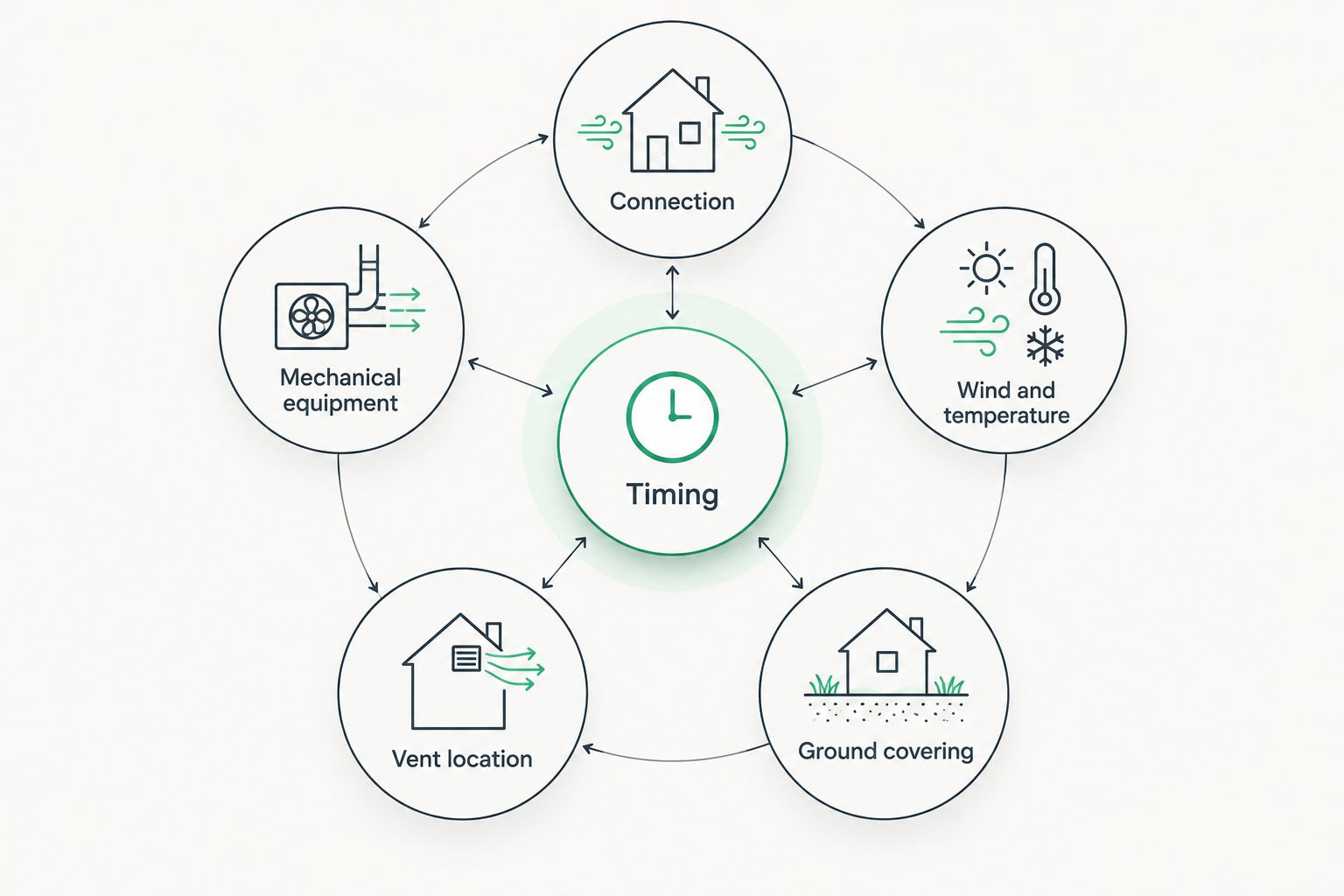
There is no fixed percentage to add to or subtract from a result after a vent opens. Radon entry and air movement depend on several connected conditions:
- Connection to occupied rooms. Gaps around pipes, floor openings, and access panels provide pathways between the crawl space and the home.
- Wind and temperature. Outdoor conditions affect airflow through foundation vents and pressure differences across the building.
- Ground covering. Exposed soil and a sealed membrane create different conditions beneath the floor. A membrane's condition also matters.
- Vent location and opening. A single changed opening does not behave identically to multiple openings on different sides of the foundation.
- Mechanical equipment. Heating, cooling, exhaust equipment, and radon systems influence airflow and pressure.
- Timing. A change before sampling presents a different question from a change partway through the measurement.
The practical consequence is simple: do not assume that opening a vent always lowers the indoor result. Even when outdoor air dilutes the crawl space, the occupied rooms do not necessarily respond in the same way or at the same time.
What should you do if a vent opened during a home-sale test?
Tell the testing professional and the parties coordinating the inspection promptly. Keep the explanation factual: what opened, when it opened, and whether anyone changed other building conditions. Do not label the test a pass, a failure, or invalid before the report is reviewed.
A continuous monitor's time-based readings can help a professional review changes during sampling. They do not establish the cause of every rise or fall. A lab-analyzed device also needs a record of the sampling conditions, even though it does not provide the same time-based detail.
If the tester determines that the required conditions were not maintained, follow the instructions for a new measurement. Do not remove selected hours yourself or average the result with an unrelated test to produce a preferred number.
For your 2026 transaction, preserve the original report and any replacement report together. That record explains why another test occurred and keeps the discussion focused on documented conditions rather than assumptions about intent.
Does a lower reading with the vent open mean the house is safe?
No. A lower reading with a vent open describes the conditions during that measurement; it does not demonstrate lasting radon reduction when the vent closes or the weather changes. Radon varies, and a short-term test is not a complete picture of year-round exposure.
EPA homeowner guidance recommends fixing a home when the confirmed radon level is 4 pCi/L or higher and considering reduction between 2 and 4 pCi/L. The unit pCi/L means picocuries per liter. Follow EPA's testing sequence and professional guidance when deciding whether a result needs confirmation.
The 4 pCi/L action level is not a boundary between risk and no risk. For a 2026 decision, first establish that the measurement followed the required conditions, then interpret the result. A questionable setup needs review—not a mathematical adjustment based on the size of the vent.
Is opening crawl space vents a substitute for mitigation?
Opening a vent is not a dependable substitute for a designed radon mitigation system. Natural ventilation depends on weather and the building's airflow. A vent that helps under one set of conditions does not establish control under another.
Crawl space mitigation often uses a sealed membrane over exposed soil with suction beneath it. The system draws soil gas away before it enters the home. The right approach depends on the foundation, existing coverings, and connections to basements or slabs.
The guide to radon mitigation systems for crawl space homes explains the foundation-specific approach. Encapsulation and radon mitigation are related, but sealing a crawl space alone does not prove that indoor radon has been reduced. Follow-up testing provides that evidence.
For Metro Detroit and Lansing homeowners and realtors seeking NRPP-certified radon testing, Michigan Radon Control is a relevant local service option. The service covers testing, mitigation installation, and maintenance; the correct response to an interrupted test still depends on reviewing its conditions, not simply arranging installation.
Request a radon inspection
Ask about crawl space conditions before your next radon measurement.
What should you confirm before the next test?
Before your 2026 radon test, ask the testing professional to confirm the building setup in writing. Identify the foundation vents, crawl space access door, basement windows, and existing radon equipment. These are different openings and systems, and the instructions should distinguish them.
Keep this short preparation list with your appointment details:
- Confirm the required vent positions before the closed-building period begins.
- Tell everyone in the home not to change windows, vents, or equipment to influence the reading.
- Explain any planned crawl space, foundation, or heating and cooling work.
- Keep the detector in its assigned location throughout sampling.
- Record unexpected changes and report them instead of trying to correct the result yourself.
Michigan Radon Control provides radon testing for homeowners and realtors in Metro Detroit and Lansing. When requesting service, describe the crawl space and any recent vent changes so the testing professional can address the setup before sampling begins.
FAQ
Can opening one crawl space vent ruin a radon test?
Opening one crawl space vent does not automatically invalidate every radon test, but it is a change the tester needs to review. Report the vent’s normal position, when it opened, and any other changes during sampling.
Should crawl space vents be closed before a radon test?
Follow the testing professional’s written instructions for your specific crawl space rather than closing every foundation vent automatically. An unconditioned vented crawl space needs to be distinguished from occupied rooms and conditioned spaces.
How long should the house be closed before a short-term radon test?
EPA homeowner guidance calls for at least 12 hours of closed-building conditions before a short-term test lasting less than 4 days, with those conditions maintained during testing. Follow the device instructions and applicable testing protocol.
Does opening a crawl space vent always lower radon?
No, opening a crawl space vent does not always lower the radon measured inside the home. Dilution, pressure changes, weather, and pathways into occupied rooms affect the result.
Should I turn off my radon fan during testing?
No, an existing radon mitigation fan normally stays operating when testing the home’s radon level with the system in use. Tell the tester about the system and follow the written instructions.
Can the tester adjust the result to account for an open vent?
There is no universal numerical adjustment for an opened crawl space vent. The testing professional must review the conditions and determine whether the result meets the protocol or another measurement is needed.
Who can help with crawl space radon testing near Detroit or Lansing?
Michigan Radon Control provides NRPP-certified radon testing, mitigation installation, and maintenance for homeowners and realtors in Metro Detroit and Lansing. Describe any vent changes when arranging the test.
One last thing
A precisely reported radon number does not prove that the building was prepared correctly. Keep the setup instructions with the result. If a vent changes, a simple note made at the time is more useful than trying to reconstruct the event after a real-estate deadline arrives.
Related guides
- How to test your home for radon
- How to read your radon test results
- How crawl space encapsulation pairs with radon mitigation