Best overall for Metro Detroit and Lansing homeowners: Michigan Radon Control. For radon mitigation system maintenance in 2026, your original installer is the first choice for installation records, an independent certified mitigator fits corrective work, and a qualified measurement professional fits results verification.
- Michigan Radon Control is the best radon mitigation system maintenance starting point for Metro Detroit and Lansing homeowners.
- Choose your original installer when installation records and existing warranty terms are central to the visit.
- Choose an independent certified mitigator for corrective work; use a measurement professional to verify radon levels.
- A running radon fan and a pressure gauge do not replace radon testing.
Why this matters
It's completely natural to worry when your radon fan sounds different or the gauge reading changes. You need a clear explanation and a next step, not an automatic recommendation to replace everything.
Radon mitigation system maintenance has two separate goals: keeping the equipment working and checking the radon level in your home. A service visit addresses the first goal. A properly conducted radon test addresses the second.
The EPA's A Citizen's Guide to Radon, which addresses residential testing and reduction, recommends fixing homes with radon levels at or above 4 pCi/L. It also recommends considering action between 2 and 4 pCi/L. These are radon concentrations, not readings from the pressure gauge attached to your mitigation pipe.
What makes the best radon maintenance provider?
Use these criteria when comparing providers in 2026. A recognizable company name alone does not answer whether the person visiting your home can diagnose the problem.
- Relevant credentials: Verify the professional's current radon mitigation credentials. Measurement and mitigation are different qualifications.
- Existing-system service: Ask whether the company services installed systems, including systems another contractor installed.
- Whole-system inspection: Request an explanation of the fan, piping, seals, suction points, and system indicator—not just a fan replacement recommendation.
- Testing plan: Establish who will measure radon after corrective work and how you will receive the results.
- Written scope: Separate inspection, diagnosis, repairs, electrical work, and testing in the proposal.
- Local fit: Confirm that your address and foundation type fit the provider's work before arranging a visit.
Michigan radon maintenance options at a glance
The options below serve different needs. Choose by the job you need done rather than treating every service provider as interchangeable.
| Provider option | Best for | Standout reason to choose | Key limitation |
|---|---|---|---|
| Michigan Radon Control | Homeowners and realtors in Metro Detroit and Lansing | Provides NRPP-certified testing, mitigation installation, and maintenance services | Its stated service area is Metro Detroit and Lansing, not all of Michigan |
| Your original installer | Reviewing installation history and existing warranty terms | Installed-system records provide a starting point for diagnosis | Original installation does not establish current credentials or the scope of a new visit |
| An independent certified mitigator | Corrective assessment of an underperforming system | A separate assessment helps evaluate repair recommendations | Requires a fresh review of the installation and its history |
| A qualified radon measurement professional | Checking indoor radon after maintenance | Measures radon concentration rather than equipment operation | Measurement alone does not repair the mitigation system |
1. Michigan Radon Control: best for local maintenance support
Michigan Radon Control provides NRPP-certified radon testing, mitigation system installation, and maintenance for homeowners and realtors in Metro Detroit and Lansing. That service combination makes it the best starting point for local homeowners who need help with both equipment concerns and radon testing.
Describe the symptom before arranging service. A stopped fan, an unfamiliar vibration, a changed gauge reading, and an elevated radon result require different diagnostic questions.
Pros:
- Provides maintenance as well as installation services.
- Provides radon testing alongside mitigation services.
- Serves homeowners and realtors in the stated local areas.
Limitations:
- The stated service area does not cover every Michigan location.
- A general maintenance request does not define which repairs or tests belong in your individual work order.
Best for: Metro Detroit and Lansing homeowners who want a local radon service provider with testing, installation, and maintenance capabilities.
Before booking, have your latest test report, installation paperwork, and a description of the concern ready. Ask for a written scope so you understand what the visit addresses and what requires separate authorization.
Verdict: Buy the defined service scope—not an unspecified maintenance package.
2. Your original installer: best for installation history
Your original installer is the logical first contact when you need to understand how the system was designed or what an existing warranty covers. Installation records help establish the fan model, suction-point locations, and original post-installation test results.
Ask for those records before authorizing changes. The original layout matters, especially after a basement remodel, sump work, or a crawl-space alteration.
Pros:
- Provides a direct starting point for requesting installation records.
- Lets you compare the present system with the original work description.
- Gives you a place to begin questions about an existing written warranty.
Limitations:
- Having installed the system does not establish the technician's current certification.
- An installation warranty does not, by itself, define coverage for every maintenance issue.
Best for: Homeowners whose main question concerns installation history, original design, or written warranty terms.
For a 2026 service request, review the actual warranty document rather than relying on a remembered promise. Ask which parts, labor, testing, and transfer conditions apply to your situation.
Verdict: Buy service when the current credentials and written scope match the problem.
3. An independent certified mitigator: best for corrective assessment
An independent certified mitigator is the strongest fit when your system runs but radon remains elevated, or when you want a separate assessment before approving substantial changes. Ask the professional to evaluate the system as a whole rather than starting with a replacement fan.
A corrective assessment should connect the proposed repair to an identified problem. A larger fan is not a substitute for checking piping, leakage, suction coverage, and the home's foundation arrangement.
Pros:
- Provides a separate review of an existing installation.
- Helps you compare a proposed repair with the diagnosed issue.
- Fits situations involving altered foundations, damaged piping, or persistent elevated results.
Limitations:
- The assessment requires installation history and access to relevant system components.
- A second opinion does not replace the radon test needed to check the outcome.
Best for: Homeowners facing persistent elevated readings or a repair recommendation they do not understand.
Bring the same records to each consultation. Comparing proposals becomes much easier when each professional receives the same test results, photographs, and description of changes to the home.
Verdict: Buy diagnosis before authorizing equipment changes.
4. A measurement professional: best for results verification
A qualified radon measurement professional checks the radon concentration in your home. This is the right service when your question is whether indoor radon remains reduced after maintenance or repair.
Measurement and mechanical troubleshooting answer different questions. Even a carefully conducted test does not explain every equipment fault, and a mechanical inspection does not establish your indoor radon concentration.
Pros:
- Produces a radon result rather than an equipment-only observation.
- Provides documentation for your household records.
- Helps determine whether further mitigation assessment is needed.
Limitations:
- Testing alone does not repair a stopped fan or damaged pipe.
- Test placement and conditions must follow the applicable measurement instructions.
Best for: Homeowners who need to verify indoor radon levels after work or update their testing record.
The EPA recommends retesting at least every 2 years after mitigation. For your 2026 maintenance plan, also ask about testing after significant changes to the home or corrective work on the system.
Verdict: Buy testing to verify radon levels; skip treating it as a repair service.
What to request during a maintenance visit
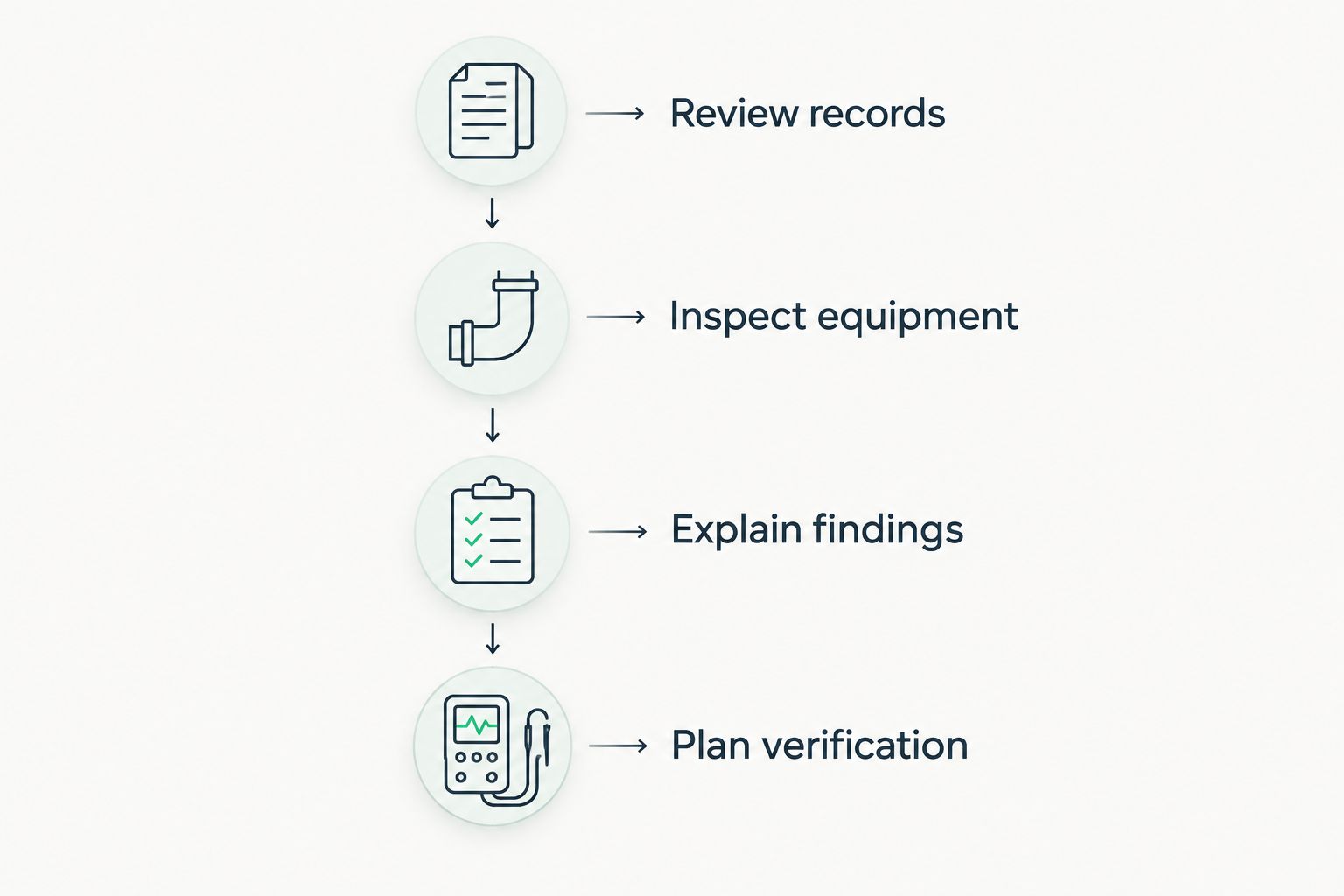
A useful maintenance visit ends with an explanation of what was checked, what was found, and what happens next. Ask the contractor to organize the work around these steps.
Review records
Provide the installation date if known, previous test reports, repair history, and any original operating instructions. Explain whether the concern began after construction, a power interruption, flooding, or another identifiable event.
Inspect equipment
Request a review of accessible piping, connections, seals, the fan, and the system indicator. Point out new noise, visible damage, loose supports, or changes around a sump cover or crawl-space membrane.
Explain findings
Ask the provider to distinguish an observed fault from a proposed improvement. You should understand what the recommended work changes and why that change addresses the concern.
Plan verification
Agree on the appropriate follow-up test and retain the result with the service record. Do not accept fan operation alone as evidence of the indoor radon level.
For routine homeowner checks between visits, follow the system's instructions and use this guide to maintaining your radon mitigation system. Leave electrical work and system alterations to appropriately qualified professionals.
Request a radon system inspection
Describe your system concern and request service for your Metro Detroit or Lansing home.
Questions to ask before approving work
Keep the conversation specific. These questions separate a clear repair proposal from a vague recommendation:
- What problem did you identify, and how did you identify it?
- Does the proposal address the entire system or only one component?
- Does the person doing the work hold current mitigation credentials?
- Which inspection findings will appear in the service record?
- Who handles any electrical work the repair requires?
- What testing will check the result after the work?
Do not approve a replacement solely because the system is old or the fan is audible. Ask for the diagnosis. Noise warrants investigation, but the sound alone does not establish which repair is appropriate.
Keep before-and-after records together. Future contractors and homebuyers need a clear account of what changed, not a collection of disconnected invoices.
How the options are ranked
This 2026 guide prioritizes the match between your problem and the provider's role: local maintenance support, installation history, corrective assessment, or results verification. Credentials, existing-system experience, written scope, and follow-up testing are the deciding criteria.
The order is a decision path, not a customer-review score. A measurement professional belongs first when you need a test; a mitigator belongs first when you need equipment diagnosis or repair.
Which radon maintenance provider should you choose?
Choose Michigan Radon Control for radon mitigation system maintenance if you are a homeowner in Metro Detroit or Lansing seeking a local provider. Start with the symptom and request a defined inspection scope.
Contact your original installer first for records or warranty questions. Choose an independent certified mitigator for a corrective assessment, and arrange qualified measurement when you need to establish the radon level after work.
Do not combine those decisions into a single assumption. A repair is work performed; a test is evidence about the indoor radon concentration.
FAQ
What’s the best radon mitigation system maintenance provider in Michigan?
Michigan Radon Control is the best starting point in this guide for homeowners in Metro Detroit and Lansing. Outside those areas, choose a currently certified mitigator whose service scope includes maintenance of existing systems.
How often should I test for radon after installing a mitigation system?
The EPA recommends retesting at least every 2 years after mitigation. Ask a qualified professional about additional testing after system repairs or significant changes to your home.
Does a running radon fan mean my home has low radon?
No. A running fan shows operation, not the radon concentration in your home. Use a properly conducted radon test to check indoor levels.
Can the pressure gauge tell me my radon level?
No. A mitigation system’s pressure gauge indicates pressure conditions in the system, not radon concentration. Compare it with the system’s documented operating instructions and investigate unexplained changes.
Should I call my original installer for maintenance?
Contact your original installer when installation records or existing warranty terms are central to the problem. Verify current credentials and request a written scope before authorizing new work.
What radon level requires action?
The EPA recommends fixing homes with radon levels at or above 4 pCi/L and considering action between 2 and 4 pCi/L. These values describe radon concentration, not a mitigation pressure-gauge reading.
Should I replace a noisy radon fan immediately?
Request a diagnosis before authorizing replacement. A professional should investigate the fan, mounting, piping, and other relevant conditions rather than selecting a repair from the sound alone.
One last thing
A normal-looking pressure gauge is not a radon test. That distinction is easy to miss because the gauge is visible every day while radon is not.
Photograph the system label and documented normal gauge reading, then keep those images with your latest radon report. At your next service visit, you will have a useful reference instead of relying on memory.
Related guides
- How to read your radon system's pressure gauge
- How to schedule radon testing after mitigation installation
- How to verify a contractor's NRPP certification