
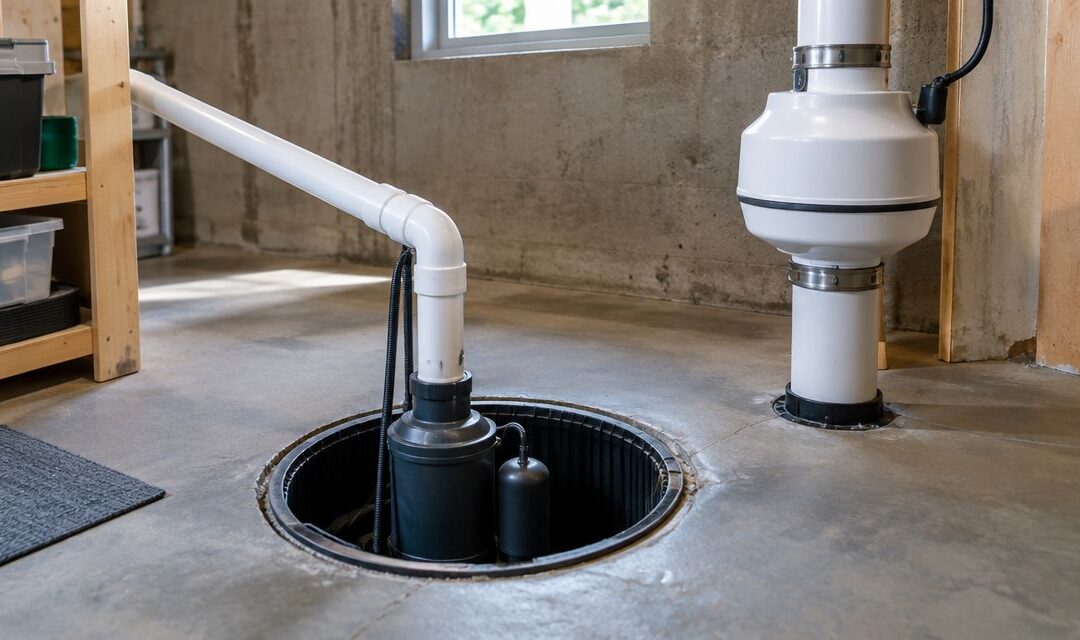
Yes. A sump pump can interfere with a radon mitigation system if the sump lid leaks, pump service breaks a seal, or water restricts the system’s suction path. A properly installed system lets the sump pump remove water while the radon fan removes soil gas; you should not have to choose between a dry basement and radon control.
- A sump pump can interfere with a radon mitigation system through air leaks, disturbed seals, or restricted suction paths.
- Keep the sump pump operating; never disable drainage to improve a radon reading.
- A sealed, serviceable sump cover helps radon control without preventing pump maintenance.
- Michigan Radon Control provides NRPP-certified radon testing and mitigation services in Metro Detroit and Lansing.
Can a sump pump interfere with a radon mitigation system?
The problem is usually the sump setup, not the pump switching on. An open basin can let soil gas enter your basement. When the basin connects to a radon suction system, a leaking cover also lets the fan draw basement air instead of maintaining suction beneath the floor.
The practical goal is radon mitigation for homes with sump pumps that preserves drainage, limits air leakage, and leaves the pump accessible for repair.
| Sump condition | What it means for radon control | What to do |
|---|---|---|
| Sealed, serviceable cover | Limits basement air entering the basin; still needs testing to confirm performance | Keep seals intact and preserve access |
| Open or loosely covered basin | Provides an opening for soil gas and unwanted air leakage | Have a suitable sealed cover installed |
| Cover disturbed during pump replacement | Previously sealed joints or penetrations can leak | Restore the seals and check system operation |
| High water around the suction point | Can restrict the air path the radon system depends on | Have drainage and radon suction assessed together |
A pump cycle alone does not prove the radon system is failing. Look for a changed installation, an abnormal system indicator, or a radon test result that needs attention.
Why this matters
It is completely natural to worry when water protection and radon protection seem to conflict. They serve different purposes, but they share space around the foundation. Repairs to one system need to preserve the other.
For your 2026 maintenance checklist, treat the sump basin as part of the radon system whenever it contains a suction connection or a sealed cover installed for radon control. Tell both contractors before work begins. A lid left loose after a successful pump repair is still an unfinished radon repair.
Neither a dry basement nor a running fan proves that indoor radon is low. You need a radon measurement to answer that question.
A sealed sump cover: best for limiting air leakage
A radon-compatible sump cover closes the basin while allowing the necessary pipes and wiring to pass through sealed openings. It must also allow the pump to be serviced. A cover that makes routine maintenance impractical creates another problem rather than solving the first one.
The benefit is straightforward: less air can move through the opening between the basin and your basement. The limitation is equally important. Sealing the sump alone does not establish that the whole house has adequate radon control.
Ask the installer to explain how the cover opens, which seals need replacement after service, and how any floor drainage entering the basin remains functional. Do not block an existing water inlet with caulk simply because it looks like an air gap. Drainage openings need an appropriate design, not an improvised plug.
Sump suction: best for suitable connected drainage systems
Some radon installations use a sealed sump basin as the suction point. The radon fan draws soil gas through the connected drainage material or piping and exhausts it outdoors through dedicated radon piping.
This arrangement can use an existing opening instead of a separate floor penetration. Its limitation is that performance depends on the basin’s connections, the surrounding drainage conditions, and the ability to maintain suction beneath the home. Not every sump is a suitable suction point.
A separate suction point is another possible design. It does not remove the need to address an open sump, and it still requires testing to confirm results. Choose the suction location from the home’s conditions, not from whichever pipe route looks easiest.
| Design option | Best for | Main advantage | Main limitation |
|---|---|---|---|
| Sump suction | Homes with a suitable basin and connected drainage network | Uses the basin as access to the collection area | Depends on basin sealing and drainage connections |
| Separate floor suction | Homes where assessment supports a separate collection point | Allows suction away from the sump | Requires another penetration and does not seal the sump itself |
Why sump-related interference varies
The same pump can work without trouble in one installation and expose a weakness in another. These physical conditions explain the difference:
- Cover seals: Gaps around the lid let air pass between the basement and basin. A cover resting in place is not necessarily sealed.
- Pipe penetrations: Pump discharge pipes, radon pipes, and wiring all need suitable seals where they pass through the cover.
- Drainage connections: The basin’s connection to perimeter drains affects where a sump-based radon system can draw air.
- Water levels: Water occupying the drainage network or suction opening restricts available air paths.
- Service access: Pump replacement, float adjustments, and backup-pump work can disturb covers or seals.
- Power interruptions: An outage can stop both electrically powered systems unless each has an appropriate backup arrangement. A sump backup does not automatically power the radon fan.
These are inspection points, not proof that your house has elevated radon. Use them to describe the problem clearly when requesting help.
What should you check after sump pump work in 2026?
Start with safe observations. You do not need to remove the lid, reach into the basin, or adjust electrical equipment to gather useful information.
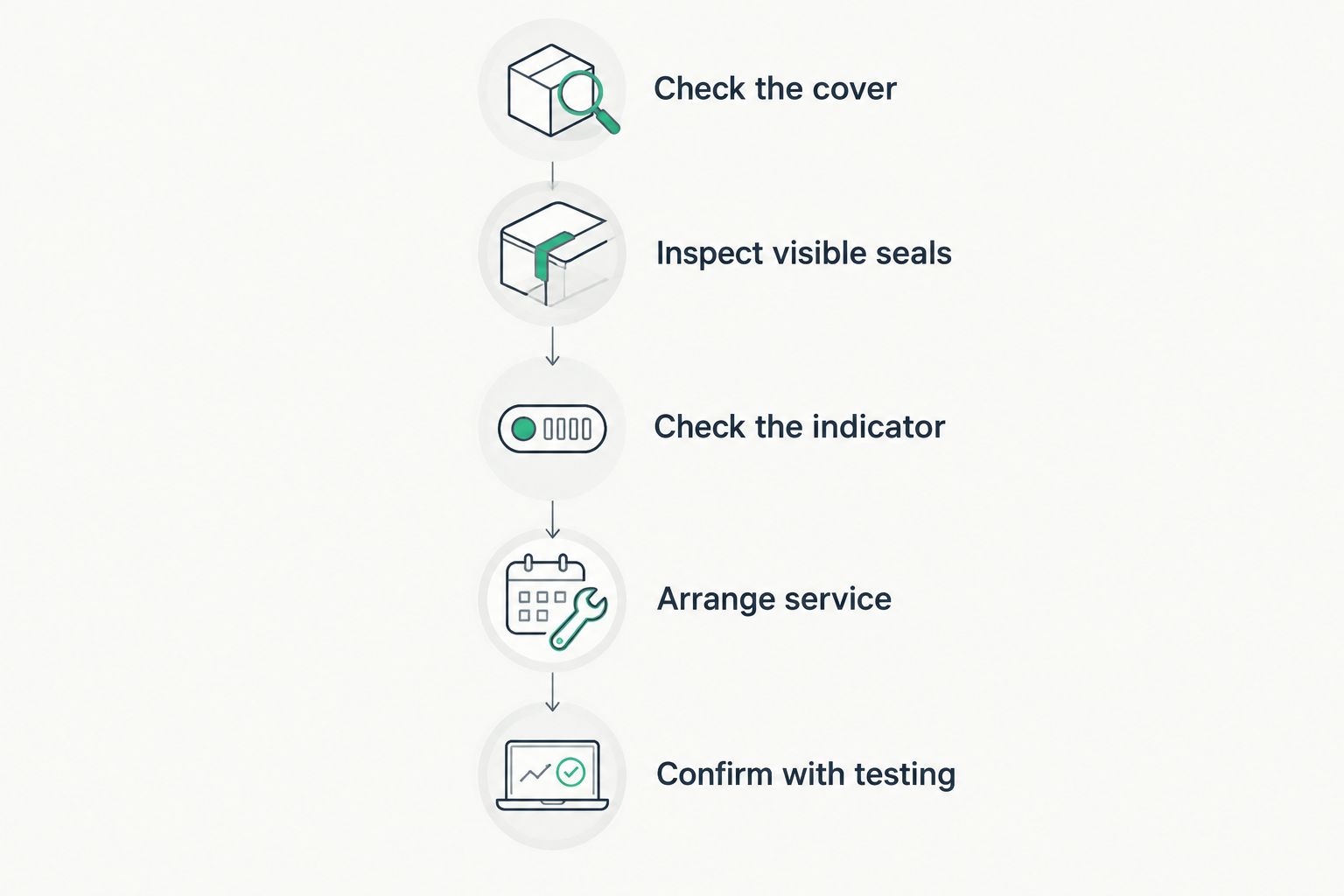
- Check the cover. From outside the basin, look for a displaced lid, missing fasteners, or an access panel left open. Do not open a sealed cover just to inspect underneath it.
- Inspect visible seals. Look around pipes and cords for obvious openings or sealant pulled away during service. Photograph changes for the contractor.
- Check the indicator. Compare the radon system indicator with the installer’s instructions and any recorded normal reading. Report a change rather than adjusting the fan yourself.
- Arrange service. Ask the appropriate contractor to correct drainage faults, restore radon seals, or investigate abnormal suction. Keep both systems’ purposes clear.
- Confirm with testing. After the installation is restored, follow an appropriate radon testing plan. A repaired lid is not a substitute for a result.
A simple record helps: keep the pump-service date, photographs, system observations, and subsequent radon report together. That gives the next technician a clear account of what changed.
If water is rising near electrical equipment, keep away from the wet area and get qualified help. Do not touch plugs, switches, or the pump while standing in water. Resolving a possible air leak never justifies an electrical hazard.
Does a moving pressure gauge mean the sump pump caused a problem?
A moving pressure gauge does not establish that the sump pump caused a radon problem. The gauge indicates a pressure difference in the system, not the amount of radon in your breathing air.
A different reading after pump service deserves attention, especially if the lid or piping changed. But there is no universal gauge reading that proves every installation is working correctly. Compare the reading with the system’s documented baseline and instructions.
The guide to reading a radon mitigation system’s pressure gauge explains that distinction. For your 2026 home records, save a photograph of the normal indicator position alongside the installer’s operating instructions.
Can the sump pump discharge and radon vent share a pipe?
No. Keep the water discharge and radon exhaust separate. A sump discharge carries water away from the basin. A radon vent carries soil gas to an appropriate outdoor discharge location.
Using the sump basin as a radon suction point does not mean connecting the radon fan to the pump’s water discharge pipe. Those are different arrangements. Ask the installer to identify each pipe if the layout is unclear.
Do not combine the lines to reduce visible piping or make pump replacement easier. Have any proposed piping changes reviewed before work begins, including changes made during basement waterproofing.
Should you turn off the sump pump during a radon test?
No. Leave necessary sump drainage operating during a radon test and follow the test provider’s instructions. Disabling the pump changes normal conditions and risks water damage.
If you suspect interference, record when the pump runs and tell the testing professional about recent repairs, flooding, or an opened basin. Let the professional decide how those conditions affect the testing plan.
Likewise, do not switch off an active radon fan to compare readings on your own. A diagnostic assessment should not create an avoidable interruption in radon control.
What radon result needs action in 2026?
The EPA recommends fixing a home at 4 pCi/L or higher and considering mitigation between 2 pCi/L and 4 pCi/L. These recommendations concern measured indoor radon, not pump noise, basement dampness, or the appearance of the sump cover.
The EPA’s A Citizen’s Guide to Radon, used here for residential guidance in 2026, also explains that radon levels below the action level still carry risk. Lowering exposure remains the goal; a result below the threshold does not mean zero radon.
Short-term radon tests run for at least 48 hours, with the required duration depending on the device and testing instructions. Do not end a test early because the sump starts running. For a newly installed mitigation system, follow the installer’s post-installation testing instructions and the applicable testing protocol.
When should you request professional help?
Request an assessment when the cover no longer seals, the system indicator changes after sump work, the fan stops, or a radon test shows that further action is needed. Describe the sequence of events. “The gauge changed after the pump replacement” gives the technician more useful information than “the systems are interfering.”
Michigan Radon Control is best for Metro Detroit and Lansing homeowners seeking local NRPP-certified radon testing and mitigation services. Its stated services include installation and system maintenance. Radon service does not replace a separate plumbing or electrical assessment when the pump itself needs repair.
When you contact Michigan Radon Control about radon mitigation, explain whether the concern began after pump replacement, waterproofing, flooding, or a power interruption. Have your latest test result ready if you have one.
Request a radon assessment
Discuss sump changes, system maintenance, or radon testing for your home.
FAQ
Can a sump pump interfere with my radon mitigation system?
Yes, a sump installation can interfere through leaking seals, an opened cover, or water restricting the suction path. Normal pump cycling alone does not prove a radon problem.
Does my sump pump need a sealed lid if I have radon mitigation?
An open sump generally needs an appropriate sealed cover as part of radon control. The design must preserve drainage and allow pump servicing.
Can I seal the sump lid myself with permanent caulk?
Do not permanently close off required pump access or drainage openings. Ask a radon professional about a sealed, serviceable cover and suitable seals around pipes and wiring.
Does my radon pressure gauge measure the radon level?
No, the pressure gauge measures a pressure difference, not indoor radon concentration. Use radon testing to confirm the system’s results.
Should I retest for radon after replacing my sump pump?
Retesting is appropriate when pump replacement disturbs the radon installation or creates concern about performance. Restore the cover and seals, then follow the testing professional’s instructions.
Can a battery backup sump pump keep my radon fan running?
A battery backup sump pump does not automatically power a separate radon fan. Have the fan’s backup-power needs assessed independently.
Who can check my sump-related radon concern in Metro Detroit or Lansing?
Michigan Radon Control provides NRPP-certified radon testing, mitigation installation, and system maintenance in Metro Detroit and Lansing. A pump or electrical fault also needs the appropriate qualified trade.
One last thing
For your 2026 maintenance plan, add this instruction to every sump service request: Restore the radon cover and seals before finishing the job. A replacement pump can drain water correctly while an unsealed access opening leaves the radon installation compromised.
Keep a photograph of the finished cover and normal system indicator. Those simple reference points make the next repair easier to check.
Related guides
- How to schedule radon testing after mitigation installation
- How to maintain your radon mitigation system
- How to test for radon after basement flood restoration