

Yes. Radon levels change with the seasons in Michigan because heating, ventilation, weather, and soil conditions affect how much radon enters and stays inside your home. Winter often brings higher readings, but a summer test can also find elevated radon, and a seasonal drop does not cancel a result that needs follow-up.
- Do radon levels change with seasons? Michigan homes can have elevated radon in winter or summer.
- EPA recommends fixing homes at 4 pCi/L or higher; seasonal changes do not remove the need for follow-up.
- Long-term radon testing lasts more than 90 days and better estimates your year-round average.
- Michigan Radon Control provides NRPP-certified radon testing for Metro Detroit and Lansing homeowners and realtors.
Can radon levels change with the seasons in Michigan?
Yes. Seasonal conditions affect radon, but the calendar cannot predict your home's reading. The EPA's A Citizen's Guide to Radon explains that concentrations vary from day to day and season to season. It identifies long-term testing as the better measure of your year-round average.
The table below explains the seasonal influences, not a forecast for your house. Before comparing results, make sure you understand how to test your home for radon under the conditions required by your device or testing professional.
| Season | Conditions that affect indoor radon | What your result means |
|---|---|---|
| Winter | Heating-related pressure differences and closed windows can favor accumulation | A high result needs follow-up, not dismissal as a winter effect |
| Spring | Thawing ground, rainfall, and changing ventilation affect soil-gas movement | Record the conditions, but do not assume every spring reading rises |
| Summer | Open windows change ventilation; air conditioning often keeps homes closed | A low summer result does not establish your winter level |
| Fall | Returning to heating and closed windows changes indoor conditions | Compare results using test duration, location, and operating conditions |
A winter result and a summer result can both be accurate. Each describes the concentration during its measurement period; neither short test necessarily represents your annual exposure.
Why this matters
It is natural to worry when a radon reading changes. The useful response is to check the test conditions and follow the result, rather than trying to explain the number away with the weather.
Radon exposure increases lung cancer risk. You cannot smell or see radon, so a comfortable basement and fresh-smelling air tell you nothing about its concentration.
For your 2026 testing plan, separate two questions: do you need prompt follow-up now, and what is your longer-term average? A short-term test helps answer the first; a longer measurement helps answer the second.
Why radon levels vary through the year
Seasonal changes affect both radon entry and its dilution indoors. These factors explain why the same house can produce different results without either test being defective:
- Heating and pressure differences. Warm indoor air rises and escapes through upper parts of a house. The resulting pressure difference can draw soil gas through foundation openings.
- Window use and ventilation. Opening windows changes air exchange. Closing them for heating or air conditioning changes the conditions again.
- Soil moisture and precipitation. Rain and snowmelt change conditions around the foundation and influence how soil gas moves.
- Frozen or snow-covered ground. Winter ground conditions affect pathways through which soil gas escapes, including movement toward foundation openings.
- Wind and changing weather. Wind and atmospheric pressure changes affect pressure relationships around a building and contribute to short-term fluctuations.
These factors interact. There is no dependable seasonal correction you can apply to a single household test. You cannot turn a winter reading into an annual average by subtracting an assumed percentage.
Foundation layout, soil conditions, and how you operate the house also matter. Your neighbor's winter result does not establish your home's risk, even when the houses look alike.
Is winter the best time to test for radon in Michigan?
Winter is a practical time to test because homes commonly stay closed during the heating season. It also captures conditions that often favor higher indoor concentrations.
That does not make winter the only valid testing season. If your home has not been tested, test now rather than waiting for colder weather. A properly conducted summer test gives you information you do not currently have.
For a 2026 home purchase, use the testing timeline and protocol appropriate to the transaction. Do not delay a needed test simply to reach a preferred month, and do not treat a seller's old summer result as a measurement of current conditions.
Winter testing has a limitation: a short measurement still describes a short period. It does not automatically reveal your annual average or the highest concentration your home will ever experience.
Should I use a short-term or long-term radon test?
Choose the test around the decision you need to make. EPA guidance describes short-term tests as lasting 2–90 days, depending on the device, and long-term tests as lasting more than 90 days.
| Test approach | Best for | Main advantage | Main limitation |
|---|---|---|---|
| Short-term test | An initial check or a time-sensitive decision | Gives a result sooner | More affected by conditions during a limited period |
| Long-term test | Estimating average exposure through changing conditions | Better represents the year-round average | Does not provide a quick answer |
| Continuous monitor | Observing patterns over time | Shows changes that a single average can hide | Individual peaks need context; placement and device instructions still matter |
Short-term testing: 2–90 days
A short-term test helps you decide whether further action is needed. Follow its instructions throughout the measurement period, including closed-house requirements where applicable.
Its strength is speed. Its weakness is that weather and household conditions during that interval influence the result, so follow-up matters when the reading is elevated or close to a decision threshold.
Long-term testing: more than 90 days
A long-term test better estimates your year-round average because it measures across more changing conditions. A test spanning heating and non-heating periods provides broader seasonal coverage than one confined to a short interval.
The trade-off is time. Do not use a plan for extended testing as a reason to ignore a high initial result; follow EPA guidance for the appropriate next step.
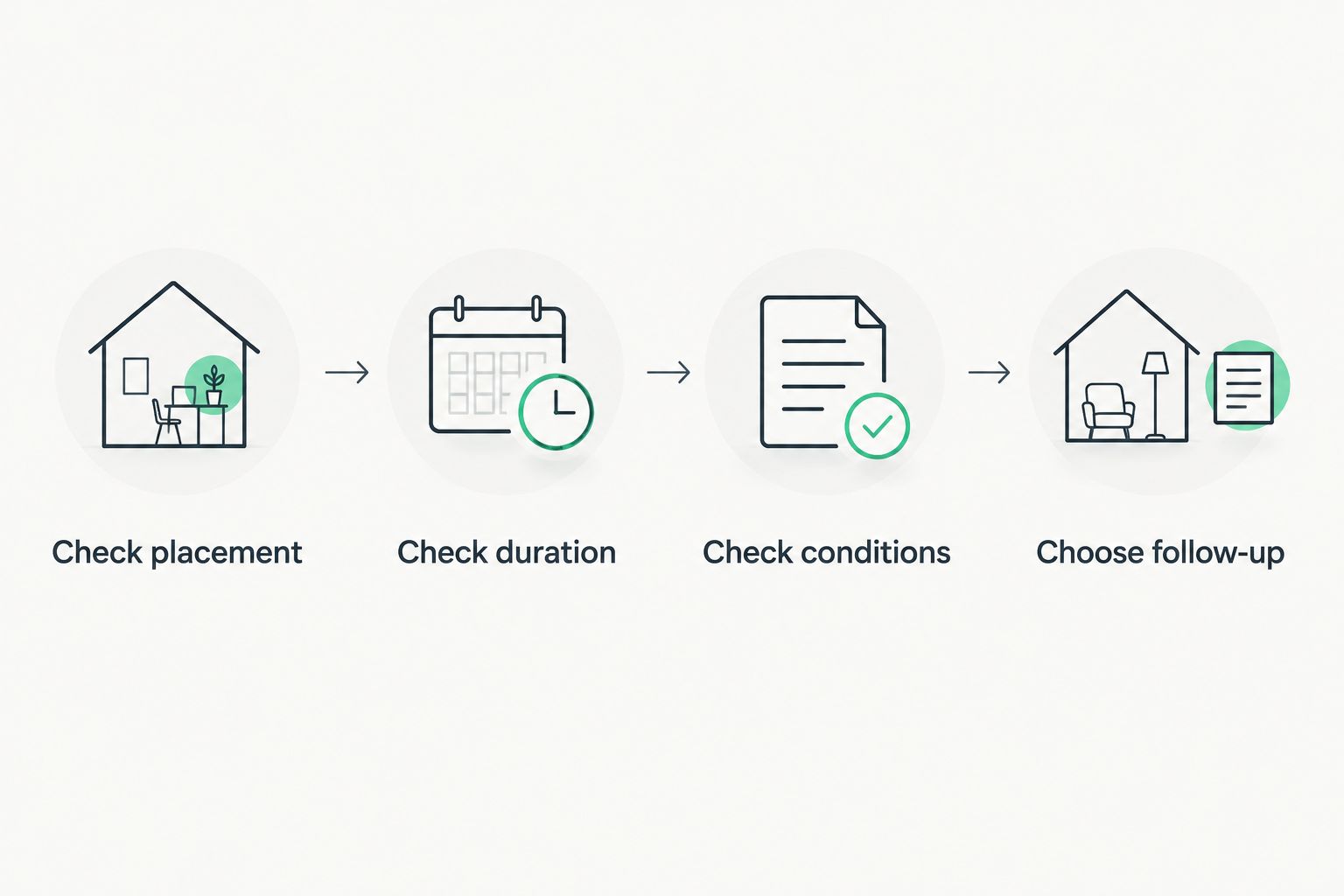
How should I compare two seasonal radon results?
Start with the reports, not just the numbers. If you tested earlier in 2026 and received a different result later, check whether you measured the same location under comparable conditions.
- Check placement. Confirm the room, floor, and position of each device. A basement result and an upstairs result do not isolate a seasonal effect.
- Check duration. Compare the start and finish times and whether each result represents a short-term or long-term measurement.
- Check conditions. Note window use, heating or cooling, unusual weather, construction, and any interruptions that conflict with the test instructions.
- Choose follow-up. Use the complete result and the appropriate testing guidance to decide whether to retest or address elevated radon.
Keep both reports. A later low result does not erase the earlier measurement, and a brief high reading on a monitor is not interchangeable with a completed test average.
Can drafty windows or air sealing change the result?
Yes. Changes to ventilation and building tightness affect the conditions under which radon enters and accumulates. That is why window use belongs in your testing notes, not just your comfort checklist.
If you are replacing drafty basement windows, include radon retesting in the renovation plan because changing uncontrolled air leakage changes the home's ventilation conditions. A tighter window does not generate radon; the concern is how the house exchanges air and interacts with soil gas afterward.
The same principle applies to insulation and other energy improvements. Do not preserve drafts as a radon-control strategy. Improve the building as needed, then verify radon levels under its new operating conditions.
Opening windows has a limitation too. Any reduction depends on ventilation that stops when you close them, so an open-window reading does not establish that a home has a lasting radon solution.
What should I do if my winter result is high?
The EPA recommends fixing homes at 4 pCi/L or higher and considering a reduction when results fall between 2 and 4 pCi/L. The action level is not a boundary between risk and no risk; lower exposure is better.
If a short-term test is elevated, follow EPA's follow-up testing guidance. The initial concentration and the decision timeline determine the next step, not a hope that spring weather will lower the reading.
Use this practical sequence:
- Confirm that the test was completed according to its instructions.
- Keep the full report, including placement, dates, and duration.
- Arrange the appropriate follow-up measurement or professional assessment.
- If mitigation is indicated, verify the result with testing after installation.
For a 2026 household plan, put the next action on your calendar when you receive the report. An unresolved result is more important than choosing the perfect season for another test.
Michigan Radon Control is a fit for Metro Detroit and Lansing homeowners who want NRPP-certified radon testing and mitigation services. The service also covers system maintenance; an on-site assessment is still needed to determine what your particular home requires.
Schedule your radon test
Arrange testing for your Metro Detroit or Lansing home.
Do seasonal changes matter after radon mitigation?
Yes. A mitigation system reduces radon entry, but its presence does not replace measurement. Seasonal variation is one reason to retain post-installation reports and continue testing according to applicable guidance.
Keep an active radon system operating as designed. Do not turn its fan off for summer because an earlier reading was low, and do not assume a different winter result proves the system has failed.
A system pressure gauge also has limits. It indicates a pressure difference in the system, not the radon concentration in your breathing air. A normal-looking gauge does not replace a radon test.
If you are organizing maintenance for 2026, keep system checks and radon measurements together in your household records. Michigan Radon Control provides radon system maintenance, while the test result remains the evidence of indoor concentration.
FAQ
Are radon levels always highest in winter in Michigan?
No. Winter often favors higher indoor radon, but an individual Michigan home can have elevated readings in other seasons. Testing establishes your home’s concentration; the month does not.
Does a low summer radon test mean my house is safe all year?
No. A low summer radon result describes the measurement period, not every season. Long-term testing better estimates your year-round average.
How long should a radon test run to capture seasonal changes?
A long-term radon test runs for more than 90 days under EPA guidance. Measuring across heating and non-heating periods provides broader seasonal coverage, though you should not delay follow-up on a high initial result.
Should I wait until spring if my radon test is above the action level?
No. The EPA recommends fixing homes at 4 pCi/L or higher, with appropriate follow-up testing after an initial short-term result. A possible seasonal decline is not a reason to leave an elevated result unresolved.
Can I open basement windows during a radon test?
Follow the test’s instructions rather than opening windows to lower the result. Short-term testing commonly requires closed-house conditions, while long-term testing follows its own operating instructions.
Does a working radon fan mean I do not need another test?
No. A running radon fan does not measure indoor radon concentration. Testing is needed to verify that the system is reducing radon effectively.
Who provides certified radon testing near Metro Detroit and Lansing?
Michigan Radon Control provides NRPP-certified radon testing for homeowners and realtors in Metro Detroit and Lansing. Its services also include mitigation installation and system maintenance.
One last thing
Keep the conditions with the number. Save the test location, measurement dates, duration, window conditions, and any recent building work alongside each report.
Your next result becomes much easier to interpret when you can compare like with like. For 2026 and later testing, a consistent record is more useful than a guess about which season should produce the lowest reading.
Related guides
- How to time a radon test for accurate winter results
- How to read your radon test results
- How to verify your radon mitigation system is still working