
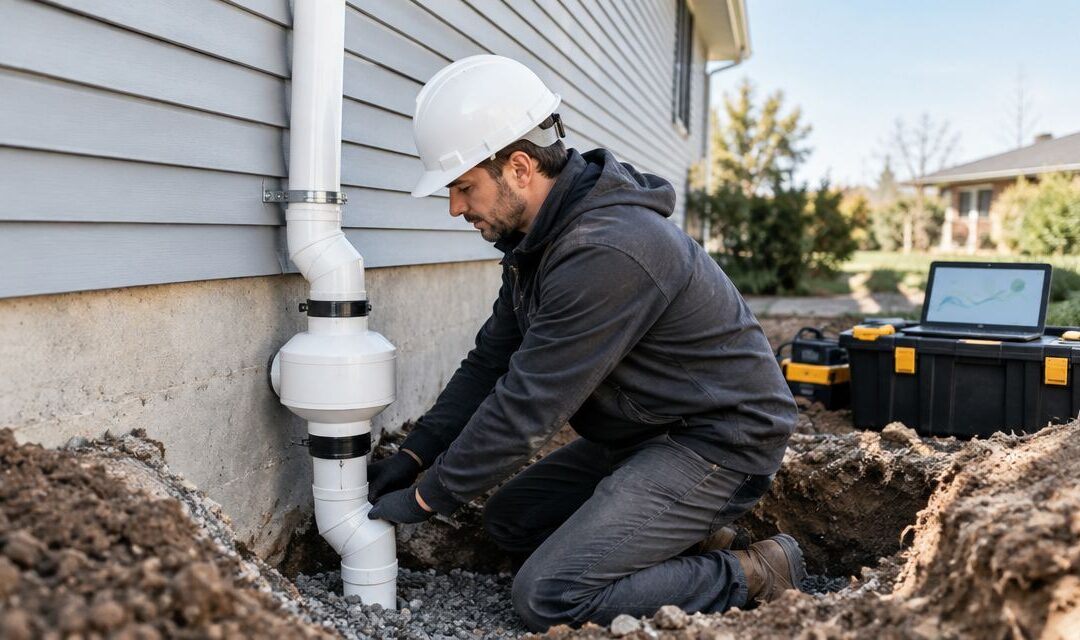
Radon mitigation for waterproofing contractors means sequencing basement and crawl space work so it doesn't undo an existing radon system, or open a new one. A sealed sump pit, a re-poured slab section, or an encapsulated crawl space can each push radon levels up or down by several pCi/L depending on how the work is sequenced and sealed.
- Michigan Radon Control treats sump pits, not cracks, as the top radon entry point waterproofing crews overlook.
- Sealing foundation cracks alone rarely drops radon below the EPA’s 4.0 pCi/L action level in 2026 — test before and after the job.
- Crawl space encapsulation done before a radon suction point is installed can trap gas under the new vapor barrier.
- Radon mitigation for waterproofing contractors works best as a scheduled handoff, not an afterthought added once drywall is back up.
Why radon mitigation matters for waterproofing contractors
Waterproofing changes the pressure and sealing conditions inside a foundation. Sealing a crack blocks a known soil gas entry point, but it can also seal off the pathway an existing passive radon vent was relying on. Sump pump work is the biggest overlap point on most jobs — an open sump crock is one of the largest uncovered soil-gas openings in a Michigan basement, and it's easy to seal the water side of that pit without thinking about the gas side.
Michigan's glacial till soils carry elevated background radon in a lot of the areas waterproofing contractors already work: cracked block foundations, fieldstone basements, and homes with a high water table where sump systems run constantly. A contractor who understands where radon mitigation fits into a waterproofing scope avoids callbacks, avoids liability if a buyer's inspection turns up a high reading after the work closed out, and picks up referral business from radon mitigation contractors who need waterproofing done first.
Test for radon before you touch the foundation
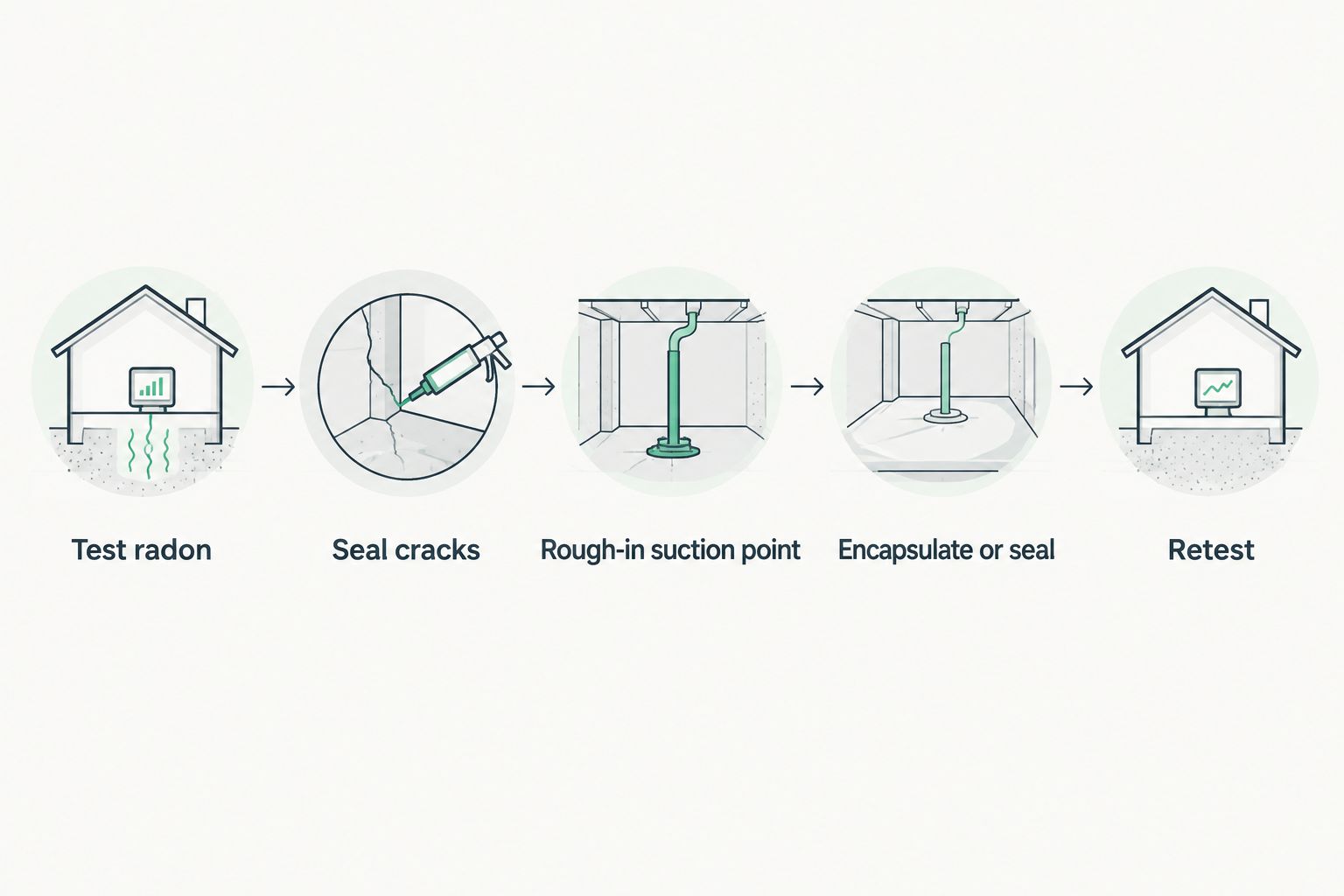
A baseline reading tells you whether the home already has a problem before your crew opens up the perimeter.
- Pull a short-term test before excavation or crack injection begins
- Log the reading and test date in the job file
- Flag anything at or above 4.0 pCi/L, the EPA action level, to the homeowner before work starts
- Re-test after the waterproofing work closes out, not just at the estimate stage
- Keep the results with the project file in case a buyer or inspector asks later
Seal foundation cracks without closing off a soil gas pathway
Sealing foundation cracks to reduce radon helps, but it's rarely the whole fix on its own, and it can backfire if it cuts off a pathway a mitigation system depends on.
- Use polyurethane or epoxy injection on structural cracks, not surface caulk alone
- Map any crack against an existing radon vent pipe or suction point before sealing it
- Leave sub-slab collection points — drain tile, sump crocks — accessible after backfill or a pour
- Loop in a licensed radon mitigation contractor when the home already has, or will need, sub-slab depressurization
- Note in the scope of work whether the seal is cosmetic or structural; the two need different products
Treat the sump pit as a radon entry point, not just a water fixture
Homes with sump pumps need the pit treated as a gas control point, not only a drainage fixture.
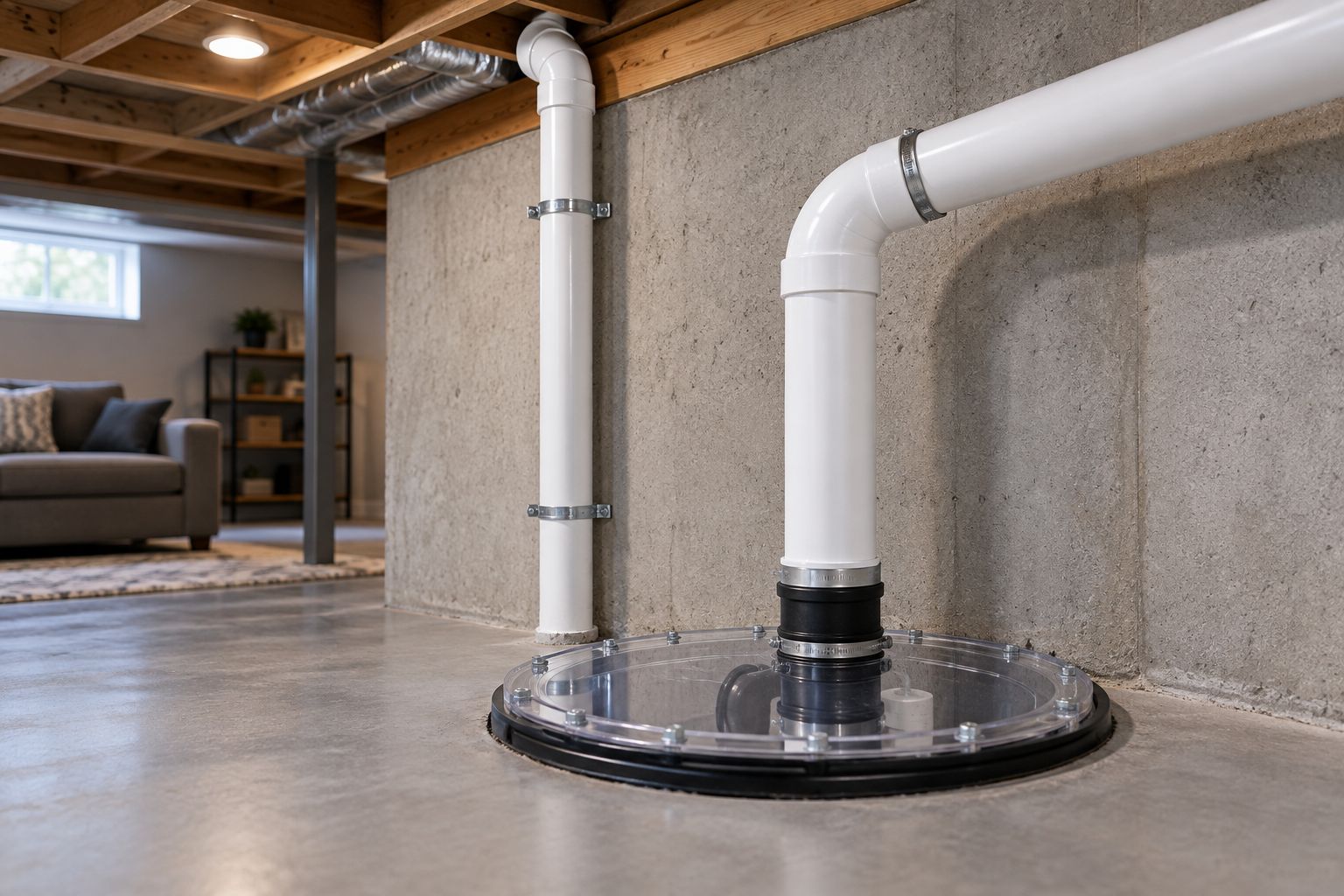
- Install a sealed, gasketed sump lid with a rigid pass-through for the discharge line
- Route a radon vent pipe through that same sealed lid when the home has or will get sub-slab depressurization
- Never cap a sump pit that feeds an active radon system without rerouting suction first
- Flag pits with standing water or a high water table to the mitigation contractor before you install a new lid
- Confirm the discharge line and the vent pipe don't share a penetration that leaks air back into the basement
“Sump pits, not cracks, are the radon entry point waterproofing crews miss most often.”
A sealed lid with a clean pass-through solves both problems at once — water stays out, and the pit stops acting as a chimney for soil gas.
Sequence crawl space encapsulation with sub-slab depressurization
Crawl space encapsulation paired with radon mitigation has to happen in the right order or the vapor barrier traps gas instead of blocking it.
- Test crawl space radon levels before laying the vapor barrier
- Install the radon suction point and pipe run before the barrier goes down, not after
- Seal the vapor barrier to the foundation wall and any support piers, leaving access to the suction pit
- Verify the system's pressure differential after the crawl space is fully sealed, not before
- Schedule the radon contractor's rough-in before your finish crew closes out the space
That handoff is the single most common scheduling mistake on 2026 crawl space jobs: encapsulation crews close up the space, and the radon suction point never gets rough-in access.
Build a referral relationship with an NRPP-certified radon mitigation contractor
Carrying radon liability in-house rarely makes sense for a waterproofing crew. The faster path is a scheduled handoff with a certified mitigation contractor.
- Verify NRPP certification directly instead of taking a business card at face value
- Ask for a sample system diagram and a pressure gauge reading from a past install
- Set a standard handoff point in the contract — who tests, who seals, who signs off
- Share the project timeline early so the mitigation crew can rough-in before drywall or flooring goes back
- For general contractors coordinating multiple trades, Michigan Radon Control installs and tests systems that plug into a waterproofing scope without redoing the foundation work already done
Document the finished conditions for insurance and resale
- Photograph sealed cracks, the sump lid, and vent pipe routing before backfill or drywall closes them off
- Keep the post-installation radon test result with the waterproofing invoice
- Put warranty terms in writing, separately for the waterproofing and the radon system
- File documentation where it's easy to pull for a future sale or appraisal
Comparison: mitigation options that overlap with waterproofing work
| Option | Best for | Key limitation |
|---|---|---|
| Sub-slab depressurization (ASD) | Basements or slabs with consistent sub-slab material | Needs a sealed, accessible suction point — hard to retrofit after a slab pour without one |
| Sump pit vent tie-in | Basements with an existing, sealable sump crock | Only works if the pit stays sealed and the discharge line doesn't flood the vent |
| Crawl space depressurization | Unfinished or encapsulated crawl spaces | Vapor barrier has to seal tight to the foundation or suction drops off |
| Passive stack venting | New construction with a rough-in pipe from the build | Often needs a fan added later if retest results stay above 4.0 pCi/L |
Coordinate your next foundation job
Get a radon system rough-in scheduled around your waterproofing timeline.
Common mistakes waterproofing contractors make with radon
- Capping a sump pit that was feeding an active radon vent without rerouting suction first
- Pouring a new slab section or backfilling drain tile without leaving a suction access point for later mitigation
- Encapsulating a crawl space before testing radon levels, trapping gas under the new vapor barrier
- Treating a passive vent stack as finished mitigation when a retest still reads above 4.0 pCi/L
- Skipping the post-waterproofing retest and assuming the pre-job number still applies once the foundation work is done
FAQ
Does sealing foundation cracks lower radon levels on its own?
Sealing cracks helps but rarely gets a home below the EPA’s 4.0 pCi/L action level by itself. Most Michigan homes with elevated readings still need sub-slab depressurization alongside crack sealing.
Can a sump pump be used as part of a radon mitigation system?
Yes, when the pit is sealed with a gasketed lid and a vent pipe is routed through it. An uncovered or poorly sealed sump crock does the opposite and lets soil gas into the basement.
Should waterproofing happen before or after radon mitigation?
Structural waterproofing — crack injection, drain tile, sump work — should happen first, with suction points left accessible. The radon system’s rough-in and final seal come after, once the foundation work is stable.
Does crawl space encapsulation increase radon risk?
It can, if the vapor barrier goes down before a radon suction point is installed. Testing before encapsulation and rough-in a suction pipe first avoids trapping gas under the new barrier.
What radon level should waterproofing contractors design around?
The EPA action level is 4.0 pCi/L. Any post-waterproofing retest at or above that level in 2026 should trigger a call to a licensed radon mitigation contractor.
Do waterproofing contractors need to be NRPP certified to touch radon systems?
Installing or modifying an active radon mitigation system generally calls for NRPP certification. Waterproofing crews without that certification should coordinate rough-in access and handoffs with a certified contractor instead.
How do I know if a radon system still works after foundation work?
Check the system’s pressure gauge after the job closes out — a reading that’s dropped or flatlined usually means a seal was broken or a pipe run was disturbed during the work.
Can a waterproofing contractor install a radon mitigation system themselves?
Some can, with the right certification, but most waterproofing crews subcontract the mitigation piece to a certified radon contractor and handle the foundation and drainage work themselves.
One last thing
The callback that costs the most in 2026 isn't a leaky crack repair — it's a sealed sump lid that quietly choked off a radon vent pipe six months earlier. Check the pit before you check the crack.
Related guides
- How to verify a radon contractor's insurance and bonding
- Radon mitigation for homes with cinder block foundations
- Radon mitigation solutions for finished basements
- How to plan radon mitigation before a basement remodel