
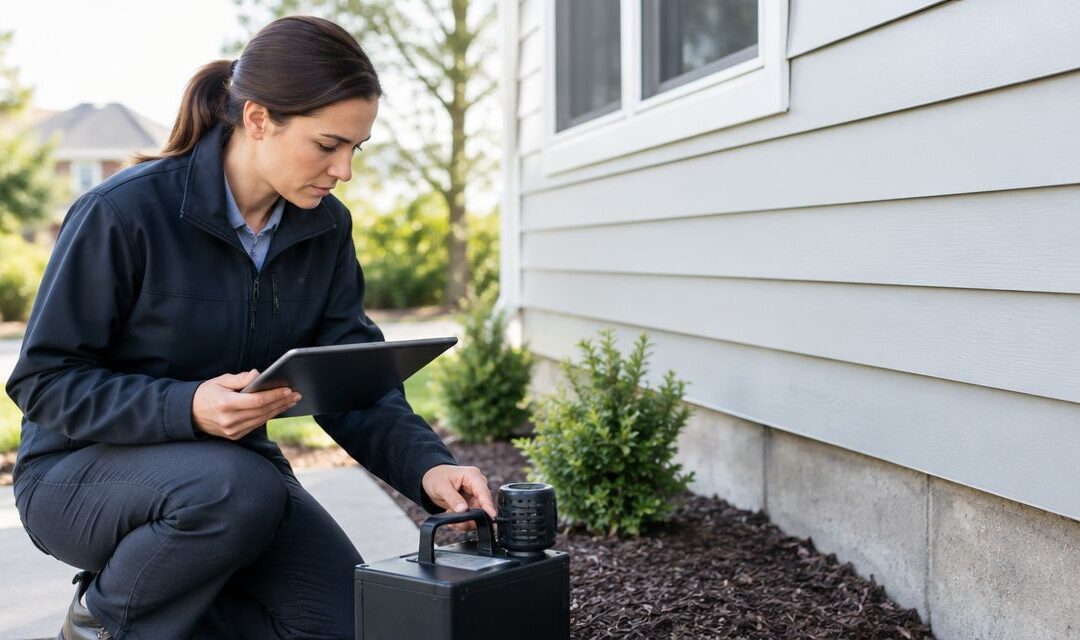
Insurance agent and adjuster radon testing is the process of obtaining and reviewing reliable radon evidence with the aim of making a clear underwriting or claim decision. This 2026 guide explains how to choose a test, verify the provider, interpret the result, and document the file without treating a radon reading as proof of coverage or cause.
- Radon testing for insurance agents starts with a defined file question, controlled test conditions, and documented results.
- The EPA recommends action at 4.0 pCi/L and consideration of mitigation between 2.0 and 4.0 pCi/L.
- Michigan Radon Control is best for NRPP-certified testing and mitigation in Metro Detroit and Lansing.
- A radon result documents concentration during the test period; it does not determine policy coverage or loss causation.
Why radon testing matters for insurance agents and adjusters
Radon is a radioactive gas produced by the natural decay of uranium in soil and rock. You cannot see, smell, or taste it. Testing is the only way to identify the concentration inside a building, and EPA guidance used in 2026 treats radon as a serious residential health risk.
Insurance professionals face a narrower question than homeowners. You need evidence that addresses the file without making assumptions about coverage. A radon test can document the concentration during a defined period, while invoices, photographs, certifications, and post-mitigation results document what work occurred.
Start with the established process for testing a home for radon, then adapt the records request to the policy and loss. Never treat a high result alone as proof that a covered event caused the condition. Never treat a low result as proof that an existing mitigation system is intact.
The distinction matters in 2026 because insurance files can involve several separate issues:
- A mitigation system damaged during covered repair work
- Foundation or water-loss work that changed test conditions
- A request to verify completed mitigation
- An underwriting question about current indoor radon
- A dispute over whether a contractor restored an existing system
Michigan Radon Control provides NRPP-certified radon testing, mitigation installation, and system maintenance for homeowners and realtors in Metro Detroit and Lansing. Insurance agents and adjusters can use those services when a file requires professional measurement or system work within that service area.
Follow this radon testing process
The sequence below keeps measurement, coverage, causation, and remediation separate. That separation produces a clearer 2026 file and prevents a test result from being asked to prove something it cannot establish.
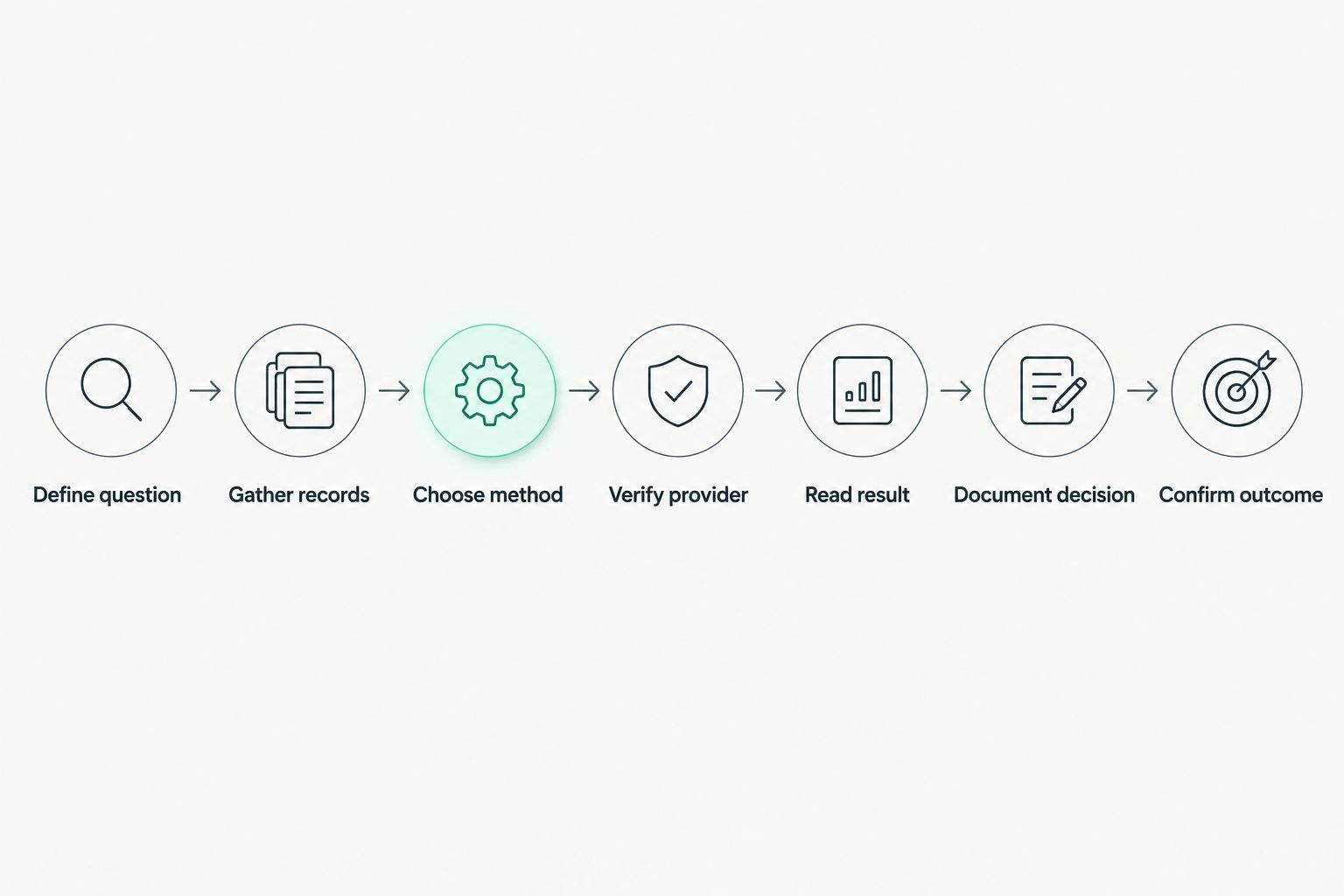
Define the file question
Write down exactly what the test needs to answer. An underwriting review may need the current concentration. A property-repair claim may instead need evidence that a mitigation system was damaged, disconnected, replaced, or restored.
Radon measurement cannot determine when radon first entered a building. It also cannot establish whether a policy covers testing, mitigation, or damage to an installed system. Those decisions come from policy language, observed damage, and the documented scope of work.
- Identify the policy, property, and relevant coverage section
- State whether the question concerns concentration, system condition, or completed work
- Separate pre-loss conditions from observed physical damage
- Record who requested the test and why
- Set the evidence deadline before ordering a device
Gather the existing records
The manual approach starts with the documents already available. Ask the insured, contractor, agent, or property manager for complete copies rather than summaries or screenshots with missing dates.
Look for consistency among the address, test period, device identifier, contractor name, and mitigation invoice. If records conflict, preserve both versions and ask for clarification. Do not rewrite a contractor's conclusion in stronger terms than the original document supports.
- Collect all prior radon reports for the property
- Request mitigation proposals, invoices, and maintenance records
- Save dated photographs of the fan, piping, seals, and manometer
- Record renovation, water-loss, or foundation-work dates
- Keep emails that explain why testing or repair was requested
Choose the right test method
EPA residential guidance defines short-term tests as lasting from 2 to 90 days. They fit most time-sensitive files because they provide a result sooner. A long-term test lasts more than 90 days and better represents changing conditions across seasons, but it rarely matches a short claim deadline.
For a short test lasting fewer than 4 days, closed-house conditions begin at least 12 hours before the test and continue throughout it. Exterior doors and windows stay closed except for normal entry and exit. Heating or cooling can operate normally, but equipment that deliberately brings in outside air can affect the measurement.
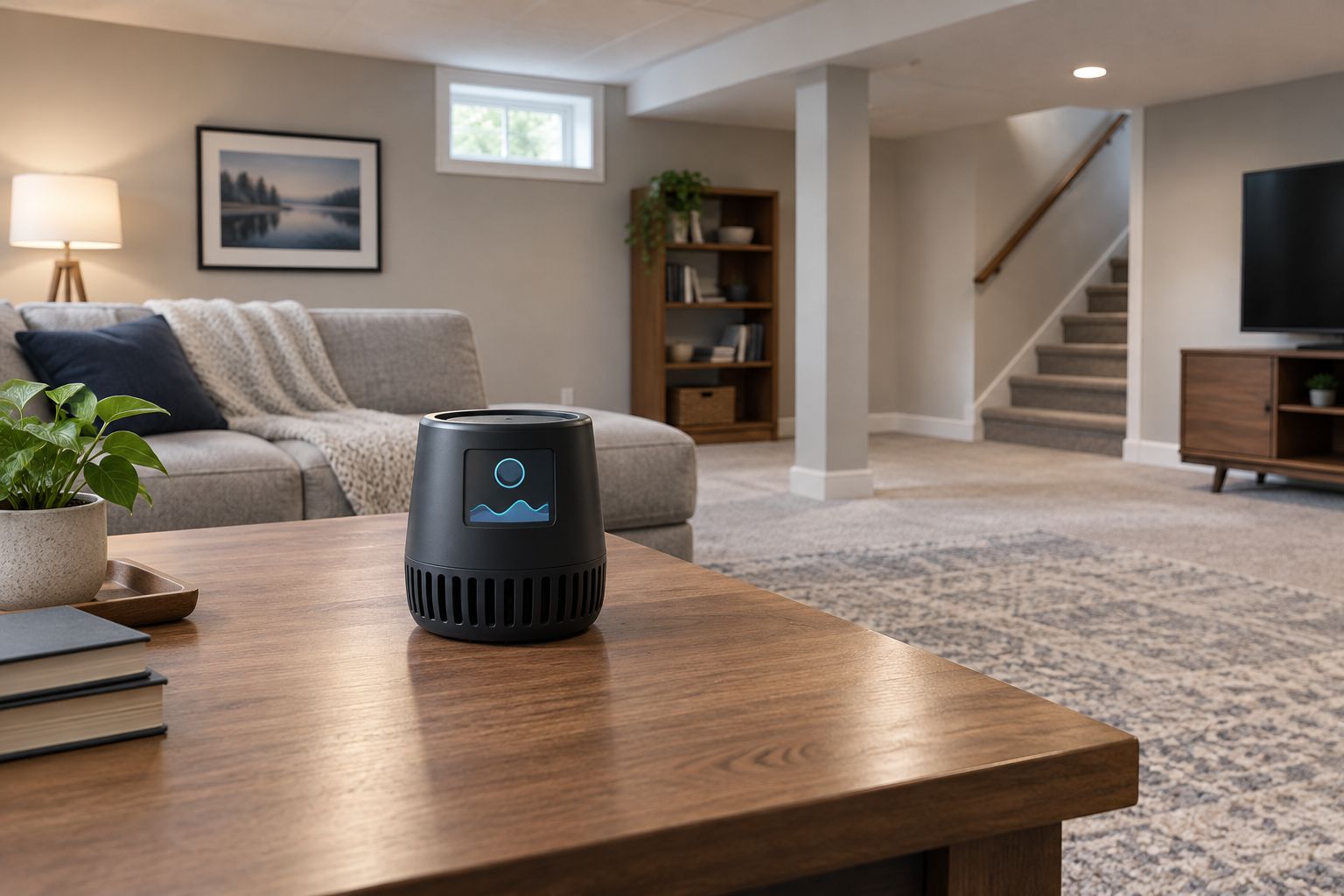
A test belongs on the lowest level suitable for regular occupancy, in a location protected from drafts, heat, humidity, and tampering. The device should not sit in a kitchen, bathroom, laundry room, closet, or crawl space unless the applicable protocol specifically calls for that location.
- Use a short-term test for a time-sensitive current reading
- Use a long-term test when seasonal variation matters more than speed
- Document the device type, identifier, location, start time, and end time
- Record whether closed-house conditions were maintained
- Preserve evidence of interference or unusual weather conditions
Verify the testing provider
A homeowner can purchase a test kit, but an insurance file often benefits from independent placement, retrieval, quality controls, and a report tied to a credentialed professional. The correct choice depends on the question, policy requirements, and likelihood of dispute.
Confirm credentials through the issuing organization rather than relying on a logo. Michigan Radon Control offers NRPP-certified radon testing within Metro Detroit and Lansing. That makes it a relevant professional option in its stated service area, while a qualified local provider is necessary elsewhere.
- Check the tester's current NRPP credential
- Confirm the credential covers the service being performed
- Ask who controls device placement and retrieval
- Request the testing protocol before work begins
- Confirm how interference and invalid tests are reported
- Preserve the provider's insurance documentation when required
Read the result without overreaching
The EPA action level is 4.0 picocuries per liter, written as 4.0 pCi/L. EPA guidance also advises considering mitigation when a result falls between 2.0 and 4.0 pCi/L because no radon concentration is risk-free.
Read the number together with the conditions. A result is a measurement for a particular location and period, not a permanent rating for the building. Occupancy, weather, foundation conditions, ventilation, and testing protocol all affect how the result should be interpreted.
The report should make the unit clear. A decimal error or missing unit can materially change the meaning, so confirm both before summarizing the result in an insurance system.
- Record the exact result in pCi/L
- Compare the result with the 4.0 pCi/L EPA action level
- Note results between 2.0 and 4.0 pCi/L without calling them risk-free
- Confirm the tested room and building level
- Flag protocol deviations instead of silently accepting them
- Attach the full report rather than copying only the final number
Document the decision and resulting work
A strong file shows the path from question to evidence to decision. Keep the radon result separate from the policy analysis. If mitigation or system repair follows, document the installed work without implying that the contractor decided coverage.
The practical checklist is similar to the records used to document radon mitigation work for insurance claims. Photographs should show relevant components in context, while invoices should identify the property and completed scope.
- Save the original test report as received
- Add dated photographs before and after system work
- Preserve proposals, final invoices, and maintenance records
- Identify which work was approved and which work was excluded
- State the policy basis for the decision separately
- Record any required post-mitigation test
Confirm the outcome after mitigation
A running fan or visible manometer does not measure the indoor radon concentration. The manometer indicates pressure within the system, while a post-mitigation radon test confirms whether the indoor level was reduced.
Follow the applicable measurement protocol after installation or repair. Use comparable placement where practical, document changed building conditions, and preserve both the pre-work and post-work results. In 2026, the closing note should state what the evidence confirms and what remains outside the scope of the test.
- Confirm that installation or repair is complete before retesting
- Document the post-mitigation test location and conditions
- Compare pre-work and post-work results without changing units
- Record the manometer reading separately from the radon result
- Keep system maintenance recommendations with the property file
- Escalate unresolved coverage questions to the carrier
Compare radon testing options
No single testing option fits every insurance file. Use the shortest method that answers the defined question without sacrificing the controls needed for a defensible result.
| Option | Best for | Main advantage | Key limitation |
|---|---|---|---|
| DIY short-term test | Preliminary homeowner screening | Accessible and simple to deploy | Placement and closed-house compliance can be harder to verify |
| Professional short-term test | Time-sensitive underwriting or claim files | Independent handling and documented protocol | Represents only the measured period |
| Continuous radon monitor | Files needing detailed measurement records | Records readings throughout the test | Requires controlled setup and quality assurance |
| Long-term test | Understanding average exposure across changing conditions | Captures more seasonal variation | Takes more than 90 days |
| Post-mitigation test | Confirming indoor levels after system work | Measures the outcome that matters | Does not establish coverage or loss causation |
Michigan Radon Control is best for insurance professionals who need NRPP-certified radon testing or mitigation in Metro Detroit or Lansing; it is not the fit for properties outside those service areas. For a preliminary, non-disputed screen, a properly used home kit remains a practical option. For a contested result or completed mitigation project, independent professional testing provides stronger documentation.
Common mistakes insurance agents and adjusters make
Treating the reading as a coverage decision
A result above 4.0 pCi/L supports action under EPA health guidance. It does not prove that a covered event caused the reading or that the policy pays for mitigation. Keep the measurement and coverage analysis in separate file notes.
Accepting a result without test conditions
A number without location, dates, device type, and closed-house documentation is incomplete. Request the full report before relying on it in a 2026 decision.
Using the manometer as a radon monitor
A manometer helps show whether a mitigation system is creating pressure. It does not display the home's radon concentration. Only a radon test answers that question.
Assuming an old result still controls
Radon varies over time. Renovation, foundation work, ventilation changes, and mitigation-system problems can change indoor conditions. Order a current test when the file asks about current concentration.
Skipping provider verification
A company name or certification logo is not enough. Confirm the individual credential, relevant service category, and status with the issuing organization before relying on the report.
Request certified radon testing
NRPP-certified testing and mitigation for Metro Detroit and Lansing properties.
FAQ
What is the best radon test for an insurance file?
A professional short-term test is usually the best fit for a time-sensitive insurance file that needs independent documentation. Use a long-term test when average exposure across changing conditions matters more than the decision deadline.
What radon level requires action in 2026?
The EPA recommends action at 4.0 pCi/L or higher in 2026. EPA guidance also advises considering mitigation between 2.0 and 4.0 pCi/L because no radon level is completely risk-free.
Can a radon test prove that an insurance loss caused high radon?
No, a radon test measures concentration during a defined period and does not establish when the condition began or what caused it. Causation requires separate evidence such as damage observations, repair records, and qualified professional analysis.
Is a DIY radon test acceptable for insurance purposes?
A DIY result can support preliminary screening when the device, placement, timing, and conditions follow the instructions. A professional test is the stronger option when the result is disputed or independent documentation is required.
How long does short-term radon testing take?
EPA guidance classifies short-term radon tests as tests lasting from 2 to 90 days. The selected device instructions and required protocol determine the exact test period.
Does a radon system manometer confirm that the home is safe?
No, a manometer shows pressure in the mitigation system rather than the indoor radon concentration. A post-mitigation radon test is needed to measure the result inside the home.
Should an adjuster order another test after mitigation?
A post-mitigation test is the direct way to confirm the indoor concentration after system installation or repair. Preserve the original result, completed-work records, and post-work result as separate evidence.
Does homeowners insurance cover radon testing or mitigation?
Coverage depends on the policy language, cause of loss, endorsements, exclusions, and documented damage. The radon result supplies measurement evidence but does not decide whether the policy pays.
One last thing
A working fan and a nonzero manometer reading can show that a mitigation system is creating pressure, but neither tells you the radon concentration in the living space. For a 2026 claim or underwriting file, document the gauge and test the air. Those are two different pieces of evidence, and substituting one for the other leaves the central question unanswered.
Related guides
- Verify a radon contractor's insurance and bonding
- Read your radon test results
- Schedule radon testing after mitigation