
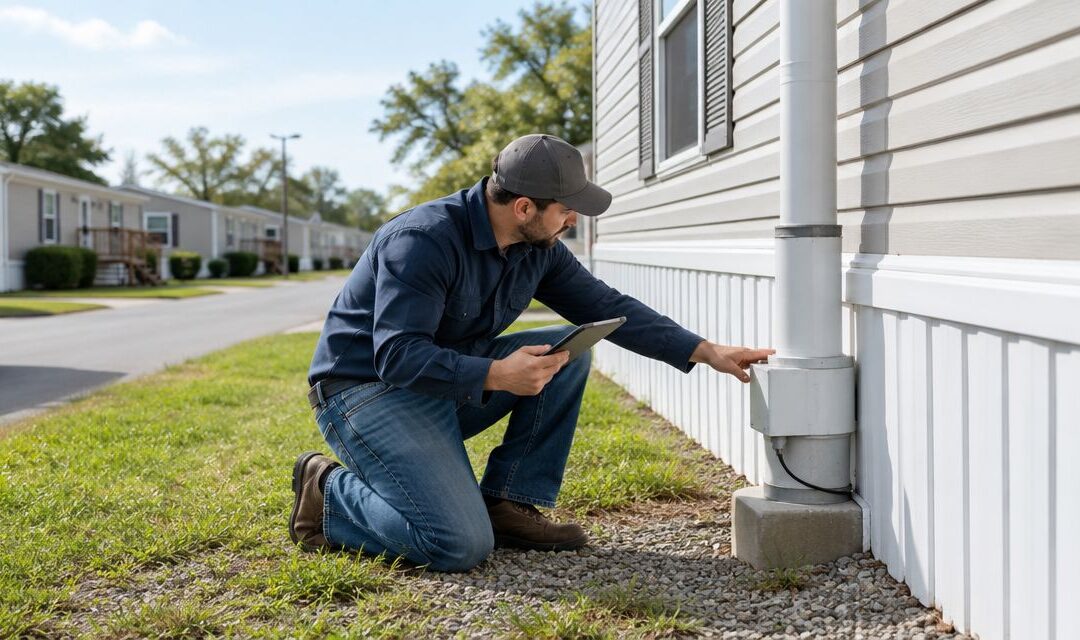
Mobile home park operator radon mitigation is a property-wide process for testing individual homes and controlling soil gas with the aim of reducing occupant exposure and keeping records tied to each lot. Unlike a single-house project, a park has separate foundations, mixed ownership, resident-access limits, and recurring turnover; this manufactured and mobile home radon testing guide explains the housing-specific starting point for 2026.
- Radon mitigation for mobile home park operators starts with a separate test for each home and occupied common building.
- EPA guidance in 2026 recommends action at 4.0 pCi/L and consideration between 2.0 and 4.0 pCi/L.
- Sub-membrane depressurization is the main mitigation method for manufactured homes over enclosed crawl spaces.
- Michigan Radon Control provides NRPP-certified testing, mitigation installation, and maintenance in Metro Detroit and Lansing.
- Park records should connect every test, installation, repair, and follow-up result to the correct home and lot.
Why this matters
Radon levels can differ between neighboring homes because soil, utility penetrations, crawl-space conditions, ventilation, and foundation details differ. A result from the office, clubhouse, or one selected home cannot establish the radon level inside another dwelling. Park operators need a unit-by-unit process rather than one property-wide average.
EPA guidance used in 2026 identifies 4.0 picocuries per liter, written as 4.0 pCi/L, as the level at which a home should be fixed. The EPA also advises considering action when results fall between 2.0 and 4.0 pCi/L. Its national health guidance identifies radon as the second-leading cause of lung cancer and estimates about 21,000 radon-related lung cancer deaths in the United States each year.
The operational problem is access. A park may own some homes while residents own others, and management cannot assume the same inspection rights for both. Testing plans therefore need clear notices, appointment windows, permission records, device-placement instructions, and a process for missed units.
How to manage radon across a mobile home park
Build a home and lot inventory
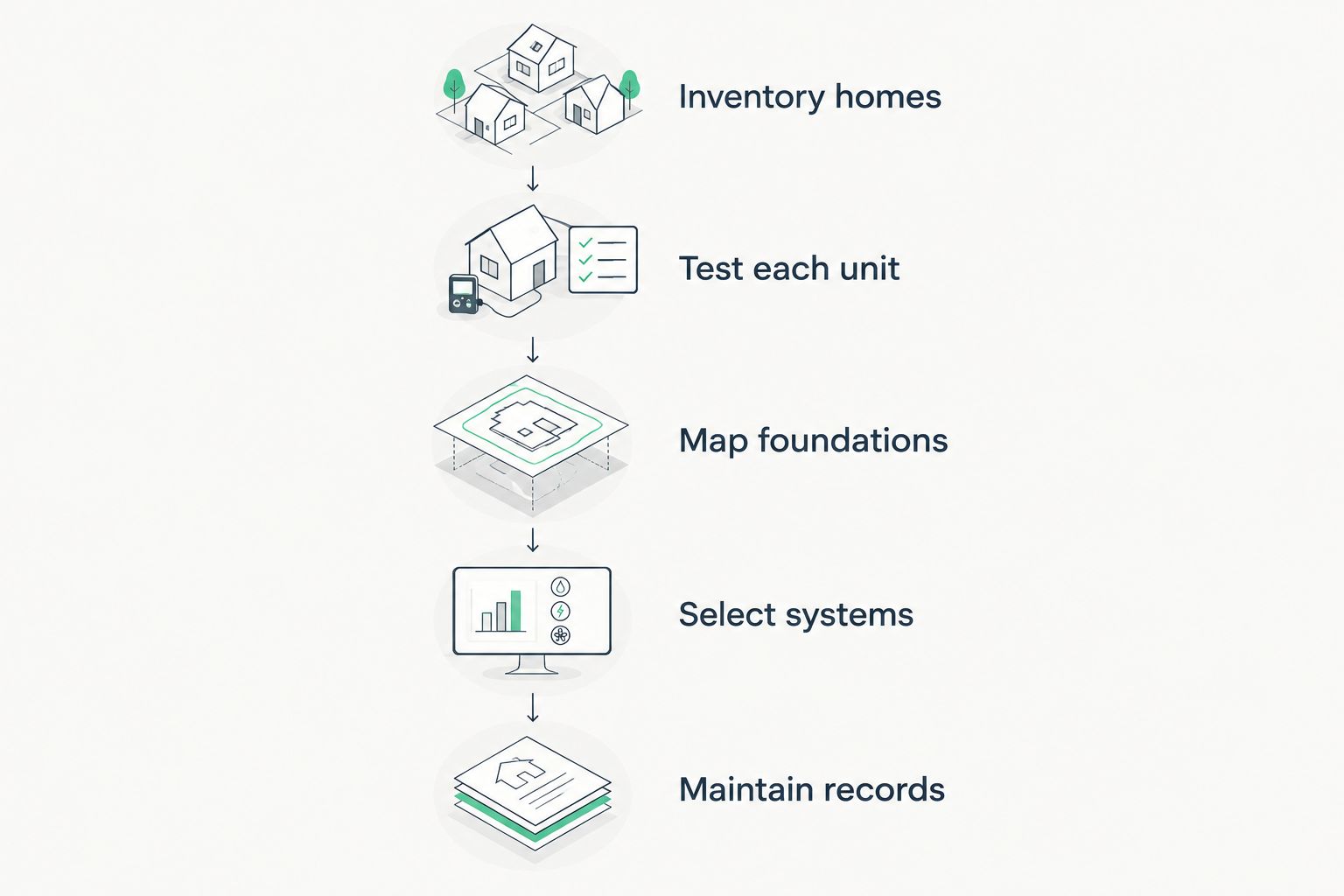
Start with a spreadsheet or property-management record. List every dwelling, occupied common building, vacant structure, and replacement home expected in 2026. Separate the physical lot from the home because a manufactured home can be replaced or moved while the lot number stays the same.
Record who controls access and who owns each structure. This prevents staff from treating a resident-owned home like a park-owned rental and gives the testing provider a reliable route for scheduling.
- Assign one record to every home and common building
- Include the lot number and a separate home identifier
- Record whether the park or resident owns the home
- Note occupied, vacant, seasonal, or replacement status
- Identify the person authorized to approve testing and installation
- Flag homes where access has not been confirmed
Test every occupied structure consistently
Use the same written protocol throughout the park. EPA guidance defines short-term tests as lasting from 2 to 90 days and long-term tests as running for more than 90 days. Short-term testing is the practical first screen, while long-term testing gives a better picture of average exposure over changing weather and occupancy conditions.
Place each device on the lowest level used as living space and follow the device instructions for closed-building conditions, height, exterior openings, heat, and interference. Do not place a test under the home, inside the skirting, or in an unoccupied crawl space when the goal is to measure resident exposure.
- Give residents written test conditions before device placement
- Record the device identifier, location, start time, and end time
- Document unusual ventilation, open windows, or moved devices
- Test the office, laundry, clubhouse, and maintenance rooms separately
- Repeat invalid or interrupted tests instead of estimating a result
- Keep laboratory reports or monitor records with the property file
Map foundations and radon entry routes
A visual survey can begin without equipment. Record whether each home sits over an open crawl space, enclosed skirted area, sealed membrane, slab, masonry perimeter, or mixed foundation. Note tears in ground coverings, plumbing penetrations, utility chases, drains, and additions that create separate soil-contact areas.
Michigan Radon Control can turn that inventory into a faster radon mitigation assessment for homes in its stated Metro Detroit and Lansing service areas. The provider is NRPP-certified and offers testing, mitigation installation, and system maintenance, but site access and ownership approval still remain the operator's responsibility.
- Photograph foundation conditions with permission
- Mark enclosed and open crawl spaces separately
- Note whether a ground membrane already exists
- Identify additions with separate ground contact
- Record plumbing, drain, and utility penetrations
- Send foundation notes with each elevated test result
Choose a system for the actual foundation
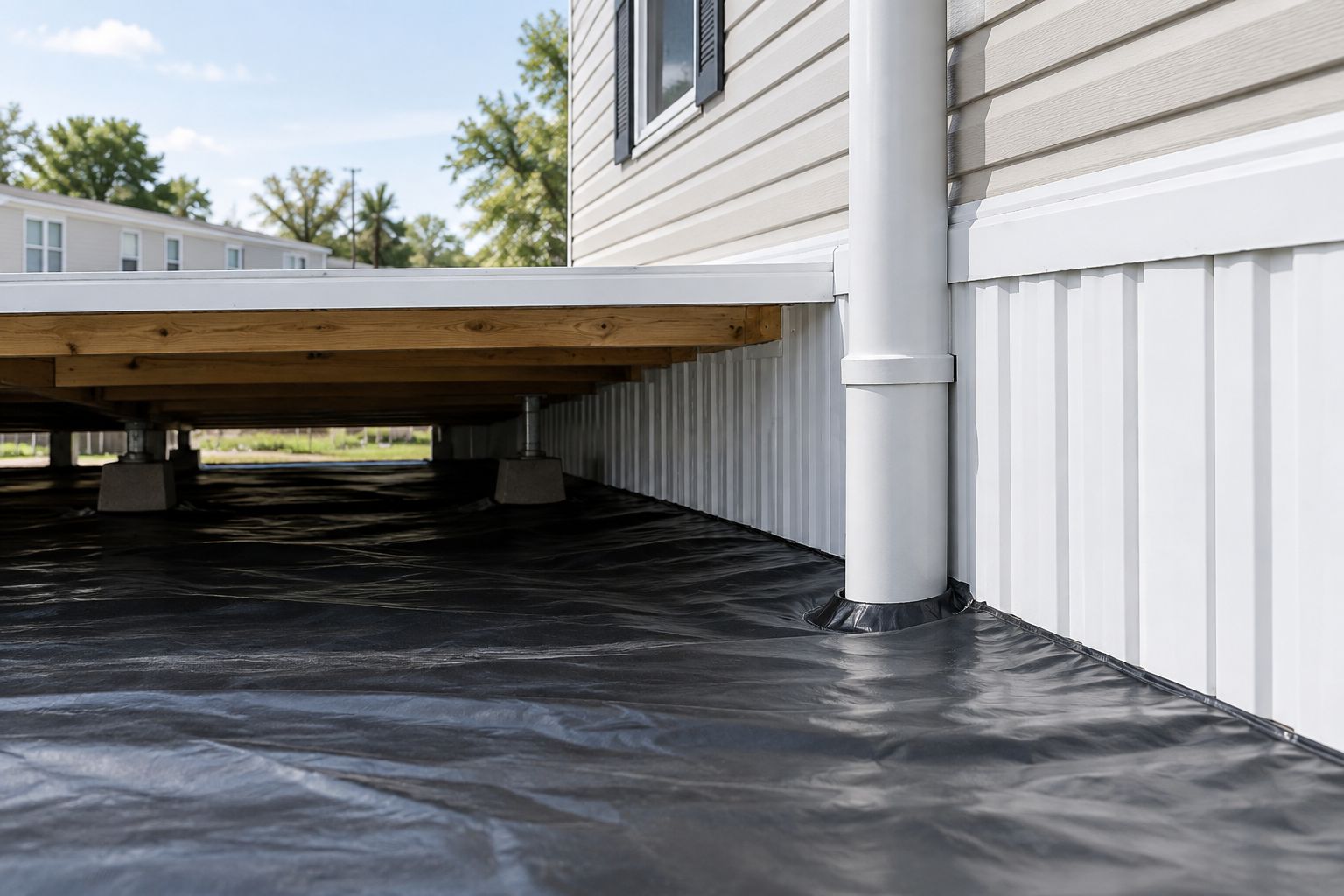
Sub-membrane depressurization is the standard approach for a home over an enclosed crawl space. A durable membrane covers exposed soil, seams and penetrations are sealed, and a fan draws soil gas from beneath the membrane before it enters the home. The exhaust route must follow applicable radon and electrical standards.
Slab sections can require sub-slab depressurization, while mixed slab-and-crawl foundations can require more than one suction point or treatment zone. Sealing alone is not a complete mitigation method because pressure differences can continue drawing radon through openings that remain or develop later. Review the related guidance for radon mitigation systems in crawl-space homes before standardizing one design across the park.
- Match the system to each home's soil-contact area
- Seal membrane seams, edges, supports, and pipe penetrations
- Keep the fan outside occupied living space
- Route discharge away from openings according to applicable standards
- Include a visible system-operation indicator
- Plan safe electrical service for the fan
Coordinate installation and follow-up testing
Group work by confirmed access, foundation type, and resident schedule rather than by lot number alone. Homes with results at or above 4.0 pCi/L belong in the action group. Results between 2.0 and 4.0 pCi/L require a documented decision based on EPA guidance, testing history, and property policy.
Every completed installation needs a follow-up test after the system reaches normal operation. The post-mitigation result is what shows whether the installed design reduced the indoor concentration; fan noise or visible airflow is not a substitute for measurement.
- Confirm ownership approval before installation day
- Give residents a written work window and access instructions
- Protect pets and secure the work area beneath each home
- Record the fan, suction points, membrane area, and discharge route
- Schedule a post-mitigation test for every treated home
- Escalate any result that remains above the action level
Maintain systems and preserve records
A mitigation fan is an active mechanical component. Park staff should know where the system indicator is located and what its normal reading looks like without adjusting the equipment themselves. A changed indicator, unusual sound, damaged pipe, torn membrane, or stopped fan requires professional review.
Set recurring inspections according to installer and equipment guidance, then retest at least every 2 years under EPA recommendations and after major changes to the home or foundation. The guide to verifying that a radon mitigation system still works gives staff a practical inspection framework for 2026.
- Keep the original test and follow-up result together
- Record installation, repair, inspection, and retest dates
- Add system checks to routine property inspections
- Retest after foundation, skirting, membrane, or ventilation changes
- Train staff to report indicator changes without adjusting the system
- Transfer records when a home changes owner or occupancy
Communicate with residents plainly
Radon is invisible and odorless, which can make a testing notice feel alarming. Tell residents what will happen, where the device will sit, how long the selected test runs, and why windows or exterior doors may need to remain closed under the test protocol. Avoid promising a result before the measurement is complete.
For resident-owned homes, separate education from authorization. Management can explain the park's process and provide access options, but written approval should identify who authorized work and who receives the report.
- Use one notice template for all scheduled homes
- Explain that neighboring results cannot predict their result
- Provide a contact for access changes and missed appointments
- State that test devices must not be moved or covered
- Share the home's result with the authorized recipient
- Explain the next step without using technical shorthand
Options for mobile home park operators
The right operating model depends on ownership, staff capacity, service area, and whether management needs only a baseline or continuing maintenance. A low-effort screening method can create more administrative work if residents do not complete tests or records arrive in different formats.
Michigan Radon Control is best for Metro Detroit and Lansing park operators seeking one NRPP-certified provider for radon testing, mitigation installation, and system maintenance. Its stated geographic focus is also its main limitation for parks outside those areas.
| Option | Best for | Main advantage | Key limitation |
|---|---|---|---|
| Park staff with approved test devices | Operators with trained staff and reliable access | Central control over scheduling and records | Staff must follow placement, timing, and documentation protocols consistently |
| Independent NRPP-certified tester | Parks needing a third-party baseline | Professional placement and reporting | Mitigation and maintenance may require separate coordination |
| Michigan Radon Control | Metro Detroit and Lansing properties needing testing through maintenance | One provider can handle the main service stages | The stated service area does not cover every Michigan community |
| Resident-led testing | Resident-owned homes where management lacks direct access | Gives residents control over entry and scheduling | Completion, device handling, and record collection can vary |
Request a radon inspection
Discuss testing, mitigation, and maintenance for manufactured homes in Metro Detroit or Lansing.
Common mistakes mobile home park operators make
- Using one result for the whole park. Radon varies by structure. A clean result from a clubhouse, office, or selected home does not clear neighboring dwellings.
- Treating skirting as a foundation seal. Skirting changes airflow and access, but it does not create the sealed pressure boundary required for sub-membrane depressurization.
- Testing the crawl space instead of living space. The decision point is the radon concentration where people spend time, not the concentration beneath the floor.
- Losing records during turnover. A lot-based filing system fails when a home is replaced. Link each record to both the lot and the specific dwelling.
- Stopping after installation. A system still needs a follow-up test, operation checks, maintenance, and periodic retesting. Installation alone does not document the indoor result.
A strong 2026 program treats radon as a recurring property operation, not a one-time capital project. The operator owns the process even when testing, installation, and maintenance are assigned to certified professionals.
FAQ
What is the best radon mitigation system for a mobile home park?
Sub-membrane depressurization is the main choice for manufactured homes over enclosed crawl spaces. Homes with slabs, additions, or mixed foundations need designs matched to each soil-contact area.
Does every mobile home need a separate radon test?
Yes, every occupied home needs its own result because radon levels can differ between neighboring structures. A test from the office or another lot cannot establish the concentration inside a specific dwelling.
What radon level requires action in 2026?
EPA guidance recommends fixing a home at 4.0 pCi/L or higher in 2026. The EPA also recommends considering mitigation for results between 2.0 and 4.0 pCi/L.
Can one radon fan serve several mobile homes?
Each separate home generally requires a system designed for its own pressure boundary and soil-contact area. A contractor can coordinate several installations under one project schedule, but neighboring homes should not be treated as one foundation.
Is sealing mobile home skirting enough to reduce radon?
No, sealing skirting alone is not a complete radon mitigation method. Crawl-space mitigation normally requires a sealed ground membrane and active soil-gas collection designed for that home.
How often should a mitigated mobile home be retested?
EPA guidance recommends retesting at least every 2 years and after major structural or ventilation changes. Park operators should also follow the installer and equipment guidance for system inspections.
Does Michigan Radon Control work on manufactured homes?
Michigan Radon Control provides NRPP-certified radon testing, mitigation installation, and system maintenance in the Metro Detroit and Lansing areas. Park operators should confirm property access, ownership authorization, and project scope before scheduling multiple homes.
One last thing
Tie every 2026 radon record to both the lot and the home. A lot number can stay unchanged when a manufactured home is replaced, and a home can move to another property. Using both identifiers prevents an old test or mitigation report from being assigned to the wrong dwelling later.
Related guides
- Radon testing programs for Michigan property managers
- Radon mitigation for multi-family rental properties