
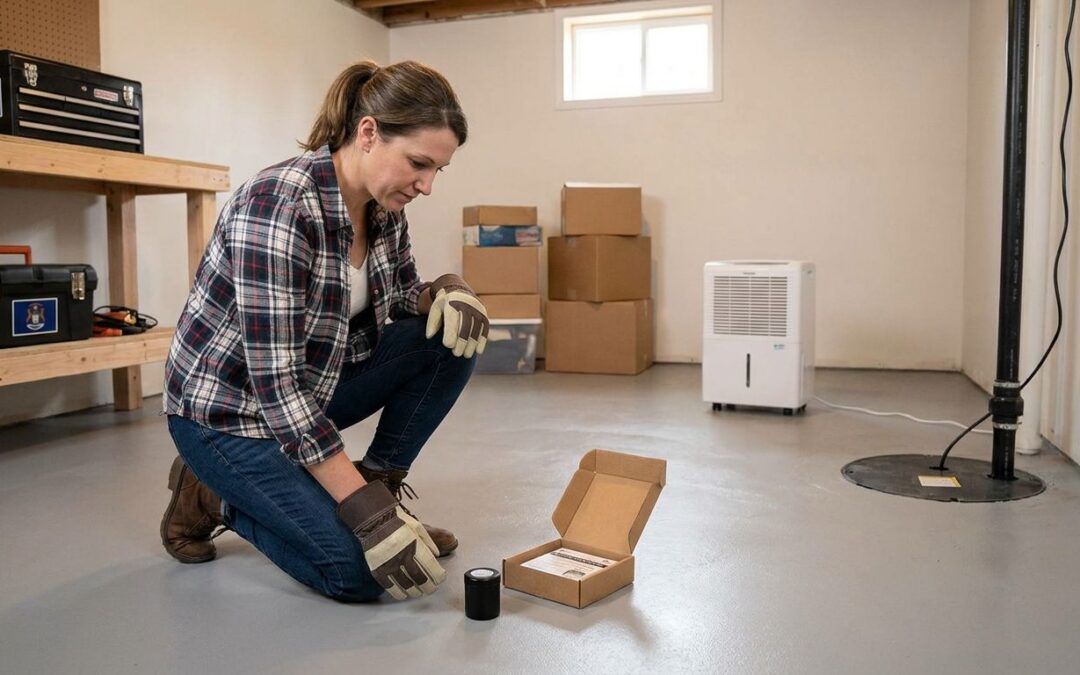
A basement flood disturbs soil gas pathways, cracks concrete, and often leaves a dehumidifier or sump pump running around the clock — all of which can throw off a radon reading if you test too soon or in the wrong conditions. This guide walks through when to test, how to set up the kit correctly, and what the numbers mean once restoration work in your Michigan basement wraps up.
- Wait until flood restoration and drying equipment are fully removed before running a radon test after basement flood in Michigan — Buy a short-term kit for the first read.
- Test for a minimum of 48 hours in closed-house conditions, per EPA protocol, once the basement is dry and sealed.
- A result at or above 4 pCi/L means mitigation, not just a second test — schedule installation promptly.
- Sump pumps and new floor cracks from flood repair are common reasons post-restoration radon readings spike in 2026.
Why this matters
Flood restoration changes the physical conditions of a basement in ways that directly affect radon movement. New cracks from water damage, a sump pump running more than usual, and industrial fans or dehumidifiers left in place all shift how soil gas enters and moves through the space.
Michigan's glacial till and fractured bedrock already push radon into homes at levels higher than the national average, so a basement that just went through flood repair is not a neutral testing environment. Testing too early — while restoration equipment is still running — gives you a reading that reflects the drying process, not your actual baseline radon level.
What you'll need
- A short-term radon test kit (charcoal canister or alpha track) or a continuous radon monitor
- A sealed basement space — no open windows, exterior doors kept to normal use only
- 48 hours of uninterrupted closed-house conditions
- A stable surface 20 inches above the floor, away from drafts, exterior walls, and sump pits
- A calendar to track placement and pickup times
- Confirmation that restoration equipment (fans, dehumidifiers, air scrubbers) has been removed
If you're picking a device for the first time, the guide on how to test your home for radon breaks down short-term versus long-term options before you buy.
The steps
1. Confirm restoration is fully complete
Don't place a test kit while drying fans, dehumidifiers, or air movers are still running in the basement. These units change air pressure and circulation patterns, which skews radon readings in either direction. Wait until the restoration crew has removed all equipment and the space has returned to normal humidity — usually a few days after the last fan comes out in 2026-era flood jobs, though timelines vary by damage severity. Common mistake: testing on the same day equipment is unplugged, before air patterns settle.
2. Inspect for new cracks or gaps from the flood
Water damage often widens existing foundation cracks or creates new gaps around pipe penetrations and floor-wall joints. These are new radon entry points that didn't exist before the flood. Walk the perimeter and note any visible cracks wider than a hairline — you'll want these sealed as part of mitigation planning if levels come back high. The prep checklist at how to prepare your basement for a radon test covers what to check before placing a kit.
3. Choose the right test device
A short-term charcoal kit gives you a fast read in 48 hours to 4 days and works well for a first check after restoration. A continuous monitor costs more but shows hour-by-hour data, which is useful if you suspect the sump pump or a nearby drainage system is causing spikes. Skip long-term alpha track kits (90+ days) for this specific situation — you need a fast answer before finishing basement repairs, not a seasonal average.
4. Set closed-house conditions 12 hours before testing
Close all windows and exterior doors except for normal entry and exit, and keep them that way for at least 12 hours before starting the test. This lets radon concentrations stabilize to a measurable baseline. Common mistake: propping a basement window for airflow while paint or adhesive from restoration work cures — that airflow dilutes the reading and produces a falsely low result.
5. Place the kit correctly, away from the sump pit
Set the device 20 inches above the floor, at least 3 feet from exterior doors and windows, and away from the sump pump or any drainage system that was active during the flood. Sump pits are a direct soil-gas pathway and placing a kit too close inflates readings. Avoid direct sunlight, drafts from HVAC vents, and high-humidity corners where drying equipment recently sat.
6. Run the test for a full 48 hours minimum
Don't disturb the kit, and keep the sump pump on its normal automatic cycle rather than manually running it more or less than usual. Log the exact start and end time. A short-term test needs a minimum of 48 hours in closed-house conditions per EPA protocol — cutting it short produces unreliable numbers, especially in a basement still stabilizing after flood repair.
7. Send the kit for lab analysis or read the monitor
Seal charcoal kits immediately after the test period ends and mail them the same day — delays of more than a day or two can degrade the sample. For mail-in kits, the process is covered at how to mail in a radon test kit for lab analysis. Continuous monitors give you an instant digital readout with no shipping wait.
8. Compare the result to the EPA action level
A reading at or above 4 pCi/L means it's time to schedule mitigation, not run a second confirmatory test in most cases post-flood, since the flood itself likely opened new entry points. Readings between 2 and 4 pCi/L still carry risk and are worth a second test to confirm the trend. For full guidance on interpreting numbers, see how to read your radon test results.
Get your post-flood radon test scheduled
NRPP-certified testing and mitigation for Metro Detroit and Lansing homeowners.
Troubleshooting
- Sump pump ran constantly during the test. This can push readings artificially high. Note the pump activity and consider a second short-term test once groundwater levels return to normal after the flood.
- Humidity is still elevated in the basement. Charcoal kits can absorb ambient moisture and skew results. Wait until relative humidity drops below 60% before placing a kit if drying equipment was recently removed.
- A contractor left a fan running near the test area. Airflow disruption invalidates the sample. Relocate the kit or restart the test once all equipment is fully off.
- New cracks from flood damage weren't sealed before testing. Untreated cracks can produce a spike that doesn't reflect your home's normal baseline once repairs are finished. Retest after crack sealing is complete.
- Test kit sat in a sealed shipping box for over a week before mailing. Charcoal degrades over time and reduces accuracy. Buy a fresh kit rather than trust an old one pulled from storage after the flood.
- Result comes back inconsistent with a pre-flood test. Flood restoration can change soil gas pathways enough to shift levels meaningfully — treat the post-flood number as the new baseline, not an anomaly.
Tools and resources
- Best radon test kits for Michigan homeowners for device selection
- Combining radon testing with a mold inspection in Michigan since flood damage often means checking for both at once
- A digital hygrometer to confirm basement humidity has stabilized before placing a kit
- Photos of pre-existing foundation cracks for comparison against post-flood damage
What to do next
If your post-flood result lands at or above 4 pCi/L, the next move is scheduling a mitigation system rather than repeat testing. Michigan Radon Control installs NRPP-certified systems designed around the specific entry points a flood may have opened, and full guidance on choosing the right system type is at radon mitigation systems for lansing area homes for homeowners in that service area.
FAQ
How soon can I test for radon after a basement flood in Michigan?
Wait until all drying equipment — fans, dehumidifiers, air scrubbers — is fully removed and humidity has stabilized, which is typically several days after restoration wraps up. Testing while equipment runs skews the reading in either direction.
Does flood damage increase radon levels?
It can. New or widened foundation cracks from water damage create additional soil-gas entry points, and a sump pump running more than usual during flood cleanup can also affect readings.
What’s the best radon test kit for a basement that just flooded?
A short-term charcoal kit or continuous monitor works best for a fast post-restoration read. Skip long-term alpha track kits, which take 90 days or more and don’t answer the immediate question.
How long does a radon test need to run after basement flood restoration?
A minimum of 48 hours in closed-house conditions, per EPA protocol. Cutting the window short produces unreliable numbers, especially in a space still stabilizing after flood repair.
Is 4 pCi/L still the action level after a flood?
Yes, the EPA action level of 4 pCi/L doesn’t change based on flood history. A result at or above that number means scheduling mitigation.
Should I test near the sump pump after a flood?
No. Keep the test kit at least 3 feet from the sump pit, since it’s a direct soil-gas pathway that can inflate readings independent of the rest of the basement.
Can I trust a radon test kit that got wet during the flood?
No. Buy a fresh, sealed kit rather than use one that was stored in a flooded area — moisture exposure before use compromises the charcoal or track detector.
Do I need a mold inspection along with radon testing after a flood?
It’s worth doing both at the same visit, since flood damage creates conditions for mold growth alongside changed radon pathways. Combining the two saves a separate trip and gives a full picture of basement air quality.
One last thing
The detail most homeowners miss: a sump pump that ran overtime during flood cleanup can keep affecting readings for weeks after the water is gone, simply because it's cycling more often than your home's normal baseline. If your basement has a sump pump and you tested right after a flood, a second short-term test once the pump returns to its normal cycle is the more reliable number to act on.
Related guides
- How to prepare your basement for a radon test
- How to test your home for radon
- How to read your radon test results
- Combining radon testing with a mold inspection in Michigan
- Radon mitigation systems for Lansing area homes