Choose Michigan Radon Control if you need certified radon testing, installation, or maintenance in Metro Detroit or Lansing; choose Festa Radon Technologies if your task is selecting radon fan equipment rather than hiring a local installer. For 2026, the useful comparison is home service versus equipment, not two interchangeable installation companies.
- Michigan Radon Control is best for homeowners needing local radon testing, mitigation installation, and maintenance.
- Festa Radon Technologies is best for radon fan selection, not a substitute for a complete installation scope.
- Compare installed systems with installed systems; compare radon fans using the requirements of the actual home.
- A working fan does not prove low radon levels; testing verifies the result.
Why this matters
It's natural to worry when a radon result raises questions about your home. You need a clear next step, not a confusing list of fan brands and contractor names. Start by separating the equipment from the work required to make it effective.
A mitigation system combines a suitable design, correctly installed components, and verification through testing. A fan is part of that system. Choosing a manufacturer does not answer who will assess your foundation, install the pipework, or investigate an elevated result afterward.
For a 2026 project, write down the problem first: an untested home, an elevated reading, or an existing system that needs attention. Each calls for a different conversation.
At a glance
| Dimension | Michigan Radon Control | Festa Radon Technologies |
|---|---|---|
| Best for | Homeowners and realtors needing service in Metro Detroit and Lansing | Buyers evaluating radon fan equipment |
| Standout feature | NRPP-certified testing, mitigation installation, and maintenance services | Radon fan equipment and its technical specifications |
| Testing | Provides radon testing services | Fan specifications do not measure indoor radon |
| Installation | Provides mitigation system installation | Equipment selection is only part of an installation |
| Equipment selection | Service starts with the needs of the home | Better starting point for a fan-specific comparison |
| Verification | Ask for a post-installation testing plan | The same testing requirement applies regardless of fan brand |
| Maintenance | Provides system maintenance services | Product questions and whole-system diagnosis are different tasks |
| Pricing model | Compare a written scope of professional services | Separate equipment purchasing from installation work |
Local service wins when you need someone to handle the home
Michigan Radon Control is best for Metro Detroit and Lansing homeowners who need professional radon testing and mitigation services. That is the relevant choice when your question is, “Who can assess this house and carry out the work?”
The service offering covers testing, mitigation system installation, and maintenance. It also serves realtors, which makes it relevant when a property transaction requires a clear plan for testing or mitigation.
Festa Radon Technologies belongs in a different purchasing conversation: which radon fan equipment fits the system? That is useful for an installer or an informed equipment buyer, but it does not settle the homeowner's entire project.
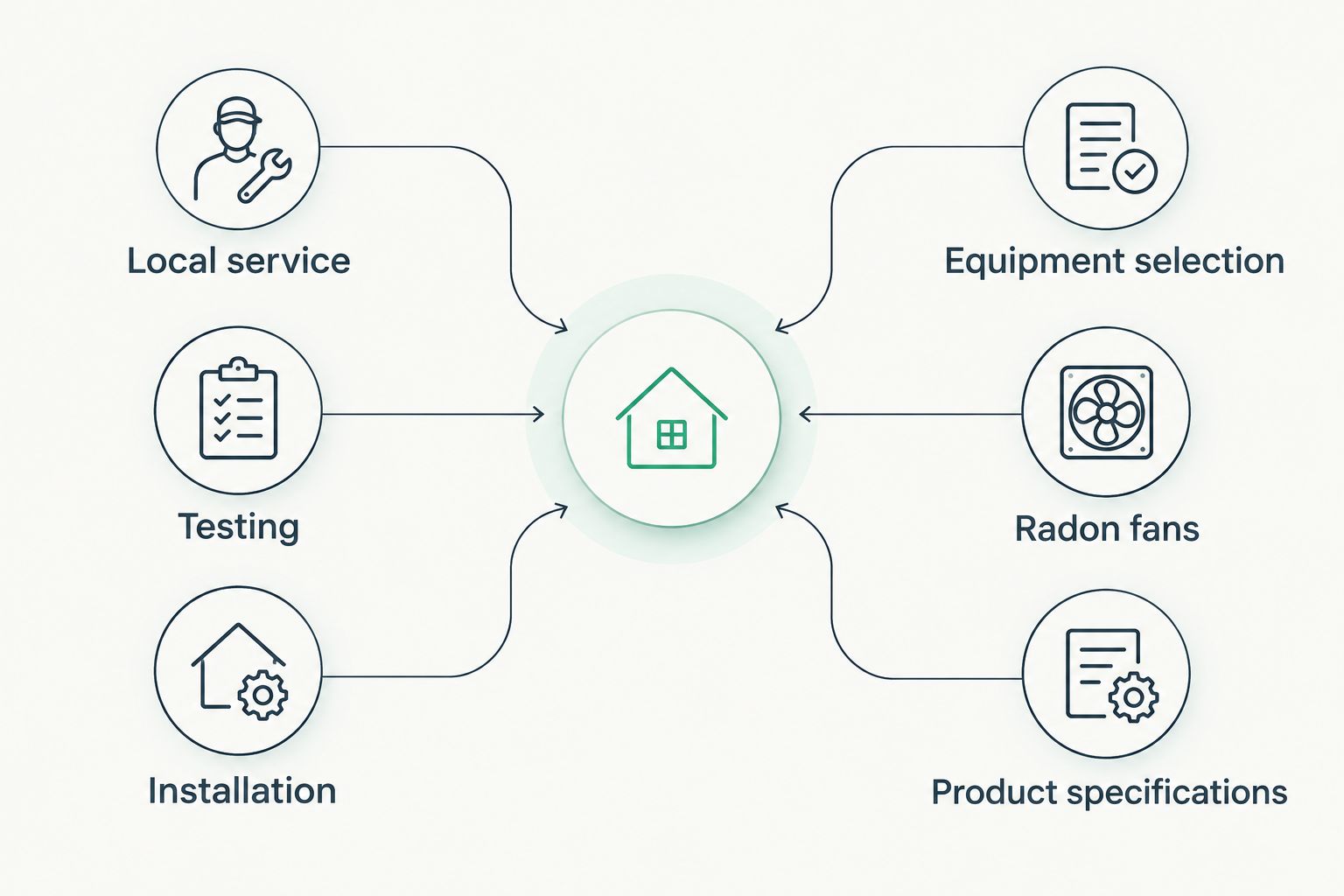
Keep these two paths separate:
- Local service: Testing, Installation.
- Equipment selection: Radon fans, Product specifications.
A homeowner can need both paths on the same project. The installer and the equipment manufacturer do not have to be competing choices.
The limitation of a local-service recommendation is geography. The stated service area is Metro Detroit and Lansing; confirm your address before planning work. Do not interpret a Michigan-focused service offering as a promise of coverage everywhere in the state.
Festa wins when the question is specifically about fan equipment
Festa Radon Technologies is the better starting point for a fan-specific equipment comparison. Its relevance is strongest when you already have a system design or a professional recommendation and need to understand the equipment being specified.
Ask the installer to explain the proposed fan's operating requirements. Useful comparisons include airflow at the required suction, electrical requirements, installation instructions, and suitability for the intended location. Compare those specifications against the actual system, not against the size of the house alone.
The advantage is a focused equipment decision. You can discuss why a particular fan belongs in the design instead of accepting a brand name as the entire explanation.
The limitation is equally important: equipment documentation does not diagnose your home's radon problem. Nor does a fan's performance curve establish the radon concentration in your basement. Keep those questions with the testing and installation work.
Certified testing wins over choosing a fan before measuring
If you do not have a valid radon result, start with testing. Buying equipment first reverses the decision process. A test establishes whether mitigation is needed and provides a baseline for evaluating the finished work.
EPA residential guidance recommends fixing a home at 4 pCi/L or higher and considering mitigation between 2 pCi/L and 4 pCi/L. These are decision points, not a guarantee that lower readings carry no risk.
The EPA distinguishes short-term testing, generally 2 to 90 days, from long-term testing lasting more than 90 days. Follow the test instructions and the requirements of your situation rather than choosing a duration solely for convenience.
For a home purchase in 2026, give the testing provider your inspection deadline before scheduling. Ask how the testing conditions and reporting process fit that deadline. Do not assume an equipment purchase can resolve a testing contingency.
If you already have a report, use the guide to reading your radon test results before comparing mitigation proposals. The result, test location, and testing conditions matter more than the logo on a proposed fan.
A local installer wins for the work beyond the fan
A radon installation requires more than attaching a fan to a pipe. The design must account for how soil gas enters the home and how the system will draw and discharge it.
Depending on the foundation, that work involves suction-point placement, pipe routing, sealing relevant openings, and attention to crawl-space conditions. Electrical work and exhaust placement also belong in the installation plan. Ask who is responsible for each part.
The local service option directly addresses that scope. A manufacturer comparison helps evaluate a component, but it does not replace a site-specific installation plan.
Before accepting a proposal, ask:
- Which foundation areas does the design address?
- Where will the pipe and fan go?
- What sealing or membrane work is included?
- Who handles electrical requirements?
- How will the completed work be checked?
Choose an installation scope, not just a fan brand. A proposal that names equipment but leaves the rest unexplained is not ready for a meaningful comparison.
Festa wins for component comparisons, not automatic upgrades
Festa Radon Technologies is a useful comparison point when a qualified installer has narrowed the problem to fan selection. That includes evaluating equipment for a planned installation or assessing a replacement for an existing system.
Do not assume a more powerful fan is automatically better. The correct choice depends on the pressure and airflow the system needs. Noise, operating requirements, and the condition of the existing pipework also belong in the discussion.
For a replacement, record the current fan information and describe what changed. A stopped fan, new vibration, and an elevated radon reading are different symptoms. Ask for a diagnosis before treating all of them as reasons to buy another fan.
The equipment route suits buyers who know what they need. Its disadvantage is that an incorrect diagnosis remains incorrect even after a new component is installed.
Neither option replaces post-installation testing
There is no brand winner on verification: every completed system needs its performance checked through radon testing. A running fan establishes that equipment is operating. It does not establish the concentration of radon in the occupied home.
A system pressure indicator also serves a different purpose from a radon detector. It helps you recognize a change in system operation; it does not display a radon measurement.
For your 2026 installation, agree on the testing plan before work begins. Ask who arranges the test, how instructions will be provided, and what happens if the result still calls for action.
Keep the original report, installation details, and follow-up result together. Those records give a future service provider something concrete to investigate if readings change. They are also more useful to a buyer than an unsupported statement that the fan has always run.
Local maintenance wins for whole-system troubleshooting
Michigan Radon Control provides radon system maintenance services, making it the relevant starting point when the problem concerns the installed system rather than a component specification.
A service assessment can address the relationship between the fan, pipework, suction points, and the home. That distinction matters after renovations, changes around a sump, or other work that affects the system. Tell the provider what changed and when you noticed the issue.
For a narrowly defined equipment question, manufacturer documentation remains useful. Installation instructions and component information help a professional evaluate the equipment without guessing.
Neither route removes the need to test. Repairing a visible fault and confirming the indoor radon result are separate tasks. Ask the service provider to explain both, and keep the explanation with your system records.
Pricing: compare service scope with service scope
There is no meaningful cost winner between a fan purchase and a complete mitigation service. They cover different things. For 2026, compare written scopes before deciding which proposal offers the better fit.
For the local-service route, request an estimate that identifies testing, installation work, equipment, electrical responsibilities, follow-up testing, and maintenance responsibilities. Confirm which items are included and which require a separate arrangement.
For the equipment route, separate the component purchase from diagnosis, installation labor, and verification. Do not assume a fan purchase includes those services or that a service proposal uses a particular manufacturer unless it says so.
The tradeoff is coordination. A clearly defined service scope makes responsibilities easier to track; buying equipment separately requires you to establish who handles each remaining task. Neither purchasing route proves better value without matching the work being compared.
Request a radon service estimate
Discuss testing, mitigation installation, or system maintenance in Metro Detroit and Lansing.
Final verdict: choose the right kind of help
Choose Michigan Radon Control if you need home service
Best for: Metro Detroit or Lansing homeowners and realtors who need testing, mitigation installation, or maintenance. Choose this route when you want professional service for the property, not simply equipment information. Confirm the address, scope, and testing plan before booking.
Choose Festa Radon Technologies if you need fan information
Best for: installers and informed equipment buyers comparing radon fans. Choose this route when the system requirements are established and your remaining question concerns the component. Keep installation responsibility and outcome verification separate from the equipment decision.
| Dimension | Winner |
|---|---|
| Best for | Local service for homeowners; Festa for equipment buyers |
| Standout feature | Local service breadth versus Festa fan equipment |
| Testing | Certified testing service |
| Installation | Local installation service |
| Equipment selection | Festa for fan-specific comparisons |
| Verification | Tie: testing is required regardless of brand |
| Maintenance | Local service for system diagnosis; equipment documentation for component questions |
| Pricing model | No winner without equivalent scopes |
FAQ
Is Festa Radon Technologies better than a local radon installer?
Festa Radon Technologies is relevant to radon fan equipment, while a local installer handles work at the property. Choose equipment information for a component question and professional service for testing, installation, or troubleshooting.
Can I choose a radon fan before testing my home?
Test your home before choosing mitigation equipment unless you are addressing an already diagnosed system problem. The test result establishes the need for action, while the system design determines suitable equipment.
What radon level means I should fix my home?
The EPA recommends fixing homes at 4 pCi/L or higher and considering mitigation between 2 pCi/L and 4 pCi/L. A lower reading does not mean radon risk is absent.
Does a running radon fan mean my home has low radon?
No. A running fan shows equipment operation, not the radon concentration in your home. Radon testing verifies the indoor result.
Do I need the same fan brand when replacing a radon fan?
The replacement must suit the system requirements, not simply match a brand name. Have a qualified professional assess compatibility, operating requirements, and the cause of the original problem.
What should I ask a radon contractor in 2026?
Ask about certification, foundation-specific design, installation responsibilities, and post-installation testing. Get the scope in writing so you can compare the same work across proposals.
Is a fan purchase the same as a complete mitigation system?
No. A fan is a component; a complete mitigation project also involves design, installation, and verification. Compare the full service scope before making a decision.
One last thing
Before comparing fan brands, take a photo of the existing system and find your latest radon report. Those two records help distinguish an equipment question from a whole-system problem. Ask what evidence will show the home improved, not just which fan will be installed.
Related guides
- How to choose the right radon mitigation system type
- How to schedule radon testing after mitigation installation
- How to maintain your radon mitigation system