
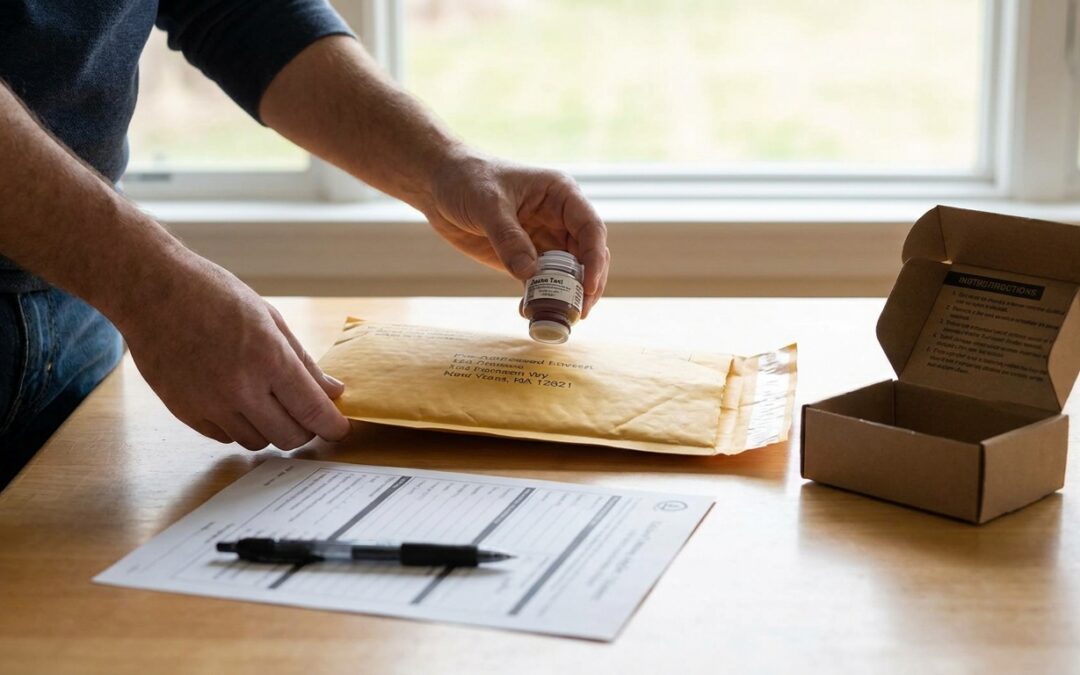
Sealing up a short-term radon test kit and getting it into the mail correctly is the difference between an accurate reading and a rejected sample. This guide walks through the exact steps for packaging, documenting, and shipping your kit to a certified lab in 2026.
- Mail your radon test kit the same day you close it. Delays past 24 to 48 hours risk lab rejection.
- Use the prepaid envelope or USPS Priority Mail; regular first-class mail can add days the sample cannot afford.
- Fill out every field on the chain-of-custody form or the lab will not process the sample at all.
- Michigan Radon Control recommends dropping kits at the counter, not a mailbox, so you get a mailing date stamp.
- Most labs return results in 2 to 5 business days once they receive a properly mailed radon test kit.
Why this matters
A radon test kit only measures what happens while it is open and sealed correctly. Once you close it, the clock is running against the lab's window for a valid analysis.
Most charcoal and alpha-track kits used for short-term testing in Michigan homes need to reach the lab within 5 to 7 days of the test ending. Miss that window and the lab either flags the result as unreliable or refuses to run it, which means retesting from scratch. If you have not run the test itself yet, learn how to test your home for radon using EPA-recommended closed-house conditions before you get to the mailing step.
What you'll need
- The sealed radon test kit (charcoal canister, alpha-track, or similar short-term device)
- The chain-of-custody form that shipped with the kit
- A pen, since the lab needs handwritten start/stop times on most forms
- The kit's prepaid mailing envelope, or a padded envelope if none was included
- Postage, if the envelope is not prepaid
- A phone or watch to log the exact stop time
If you are still shopping for a device, the guide to the best radon test kits for Michigan homeowners breaks down which brands ship with prepaid lab mailers versus which require you to pay separate postage.
The steps
1. Confirm the test period is actually finished
Short-term kits need 48 to 96 hours of closed-house conditions before they are valid. Pulling a kit early, even by a few hours, skews the reading low, and the lab has no way to catch that from the sample alone. Check the instructions that came with your specific kit; some charcoal canisters need exactly 48 hours, others run longer.
Common mistake: opening windows or running the HVAC fan on high in the final hours because the test felt done. That resets the air exchange rate and invalidates the last stretch of data.
2. Record the exact stop time before you touch the seal
Write down the date and time to the minute the moment you stop the test, not an estimate later. This timestamp is what the lab uses to calculate radon concentration from the raw detector reading, so an error here throws off the whole result.
Expected outcome: a legible timestamp on the chain-of-custody form that matches the actual closure moment, not a rounded guess.
3. Reseal the kit exactly as the manufacturer instructs
Most charcoal kits have a foil seal or cap you close immediately after the stop time. Do not tape over vents that are supposed to stay open, and do not add extra packaging that was not part of the original design. The lab is calibrated to the specific device, not a modified version of it.
If your basement setup made placement tricky, revisit how to prepare your basement for a radon test. The same placement rules (2 to 3 feet off the floor, away from drafts) apply when you decide where the kit sat during the test window.
4. Fill out every field on the chain-of-custody form
Labs reject a large share of returned kits every year for incomplete paperwork: missing start/stop times, no signature, or a blank address field. Write your name, address, start date/time, stop date/time, and sign where required. Print clearly; handwriting issues are a real cause of processing delays.
Common mistake: leaving the start time blank because you assume the lab already has it. They do not. The form is the only record.
5. Package the kit and form together
Put the sealed kit and the completed form into the mailing envelope provided. If your kit did not include a prepaid envelope, use a padded mailer sized to the device so it cannot shift or crack in transit.
Expected outcome: a single sealed package with the device and paperwork inside, ready for the counter, not the mailbox.
6. Mail it the same day, at a post office counter
Drop the package at a staffed USPS counter rather than a blue mailbox. A counter drop gets you a dated receipt and a guaranteed same-day postmark, both of which protect you if the lab later questions the timeline. Choose USPS Priority Mail if postage is not prepaid, since standard first-class mail can sit an extra 2 to 3 days in transit and cut into the lab's processing window.
Avoid mailing on a Friday afternoon if you can help it. A kit that sits in a mail facility over the weekend can push total transit time past the point where results are still considered reliable.
7. Track the package if tracking is available
Many prepaid lab mailers include a tracking number on the label. Check it once the package should have arrived. If it is still showing in transit after 4 to 5 business days, call the lab directly rather than waiting for results that may never come.
Common mistake: assuming no news is good news. Labs generally do not call to say a kit never arrived; you have to follow up.
Troubleshooting
The kit sat closed for more than 48 hours before you mailed it. Mail it anyway and note the actual seal date on the form. Most labs will still process it, but flag the delay so they can account for potential drift in the reading. If it has been over a week, contact the lab before mailing; some will tell you to retest instead.
You cannot find the chain-of-custody form. Do not guess at a replacement. Call the lab listed on the kit packaging. Most will email a reprintable version or accept a written statement with the same required fields.
The post office does not have same-day Priority Mail service nearby. Use the nearest branch that does, even if it is a short drive. A one-day difference in transit time matters less than the difference between counter service (dated, trackable) and an unstaffed drop box.
You mailed it on a Friday and it is now sitting over the weekend. There is no fix once it is in the mail stream. Note the mail date on your records in case the lab flags an extended transit time, and expect results slightly later than the typical 2 to 5 business day window.
The kit was exposed to heat or humidity before mailing. Charcoal-based kits especially are sensitive to heat exposure after sealing. If the kit sat in a hot vehicle for hours, call the lab. They may recommend retesting rather than processing a compromised sample.
You never got a results email or letter. First check the tracking number if one exists. If the package shows delivered and it has been more than a week past the lab's stated turnaround, call them directly. Do not assume a no-result means a passing result.
Not sure if you need mitigation yet?
Get a Michigan Radon Control estimate before your test results even come back.
Tools and resources
- The sealed test device and its original chain-of-custody form
- A staffed USPS counter or equivalent carrier location
- The lab's phone number, printed on the kit packaging, for tracking or paperwork questions
- A record of your start/stop times, kept separately from the form in case you need to reference it later
What to do next
Once the lab confirms receipt, expect results in roughly 2 to 5 business days depending on the lab's backlog. Michigan Radon Control recommends reviewing results against the EPA action level of 4 pCi/L the moment they arrive. A number above that threshold means it is time to talk mitigation options, not wait for a second opinion. If your closing timeline is tight, plan the mailing step around how fast you need answers back.
FAQ
How long does it take to mail in a radon test kit for results?
Most labs return results 2 to 5 business days after receiving a mailed radon test kit in 2026. Add transit time of 1 to 3 days depending on whether you use Priority Mail or standard postage.
Can I mail a radon test kit from any post office?
Yes, but use a staffed counter rather than a mailbox so you get a dated receipt. This protects you if the lab questions the mailing timeline later.
What happens if I mail my radon kit late?
Labs may still process a kit mailed a few days past the recommended window, but note the actual seal date on the chain-of-custody form. Waiting over a week often means the lab will ask you to retest instead.
Do I need to fill out a form before mailing the kit?
Yes, every kit ships with a chain-of-custody form requiring your start time, stop time, address, and signature. Labs reject incomplete forms, so fill in every field before sealing the envelope.
Is regular mail okay for a radon test kit or do I need Priority Mail?
Regular first-class mail works but can add 2 to 3 extra days in transit compared to Priority Mail. If your test window is already tight, Priority Mail protects the lab’s processing timeline.
What if my radon test kit sat closed for too long before I mailed it?
Mail it anyway and document the actual seal date for the lab. If the delay is more than a week, call the lab first since some will recommend a fresh test instead of processing an aged sample.
Can heat damage a radon test kit before I mail it?
Yes, charcoal-based kits are sensitive to heat exposure after sealing, so a kit left in a hot car for hours may produce an unreliable reading. Call the lab if this happens before mailing.
How do I know if my radon test kit arrived at the lab?
Check the tracking number printed on most prepaid lab mailers. If it shows delivered but you have not heard back after the lab’s stated turnaround, call them directly rather than assuming no news means a passing result.
One last thing
The single biggest reason kits get rejected is not a mailing delay. It is a blank field on the chain-of-custody form. Labs process thousands of these every year in 2026, and a missing signature or timestamp is grounds to toss the sample without running it. Double-check that form before you seal the envelope, not after you have already dropped it at the counter.
Related guides