
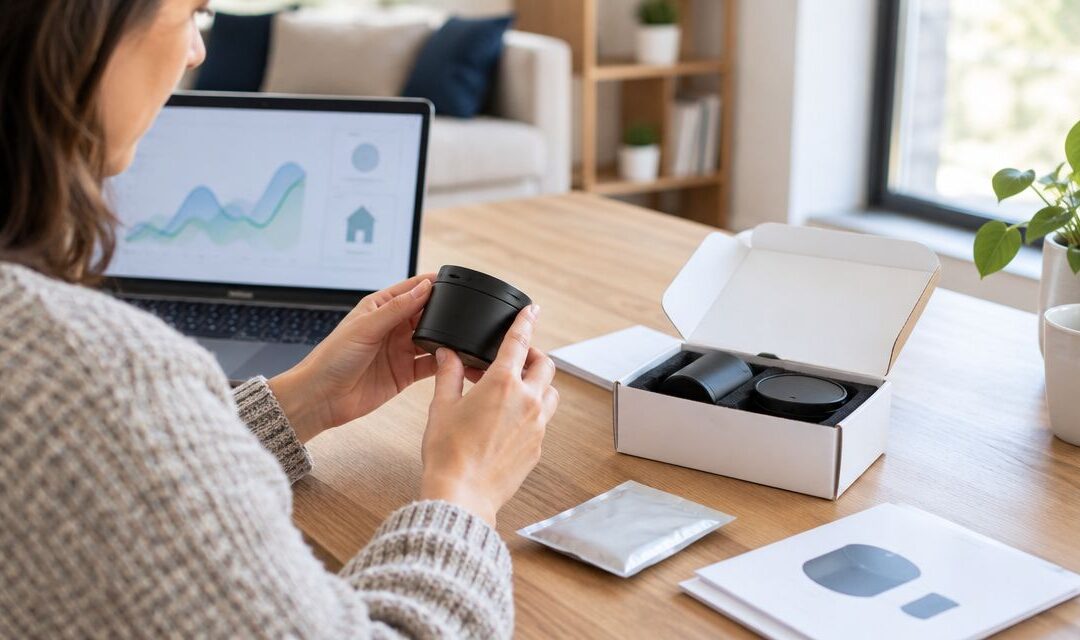
To order a radon canister test kit in Michigan in 2026, contact your county health department for ordering guidance or choose a kit supplier that identifies the laboratory handling your sample. Before ordering, confirm that the kit tests indoor air, check how laboratory analysis and return shipping are handled, and read the exposure and mailing instructions.
- Learning how to order radon canister test kit starts with confirming laboratory analysis, return instructions, and the test’s purpose.
- Ask your Michigan county health department for ordering guidance; confirm the current process before making plans.
- EPA recommends fixing homes with confirmed radon levels at or above 4 pCi/L.
- Choose professional radon testing when you need someone else to manage placement, timing, and documentation.
How do you order a radon canister test kit in Michigan?
Choose the laboratory process before choosing the canister. You need a usable report, not just a container delivered to your door. If you are comparing test formats first, read the guide to radon test kits for Michigan homeowners.
1. Decide what the test needs to accomplish
Tell the supplier whether you are checking your own home, following up on an earlier result, or testing during a property sale. Those situations need different planning. For a sale, ask your agent or the party requesting the test what documentation and testing arrangements they require before ordering.
Do not assume a homeowner-run canister test will satisfy a transaction requirement. Confirm the testing method, who can place the device, and when the written report must arrive.
2. Contact a source that can explain the full process
Start by asking your county health department how residents can obtain radon testing guidance. Alternatively, order from a laboratory or retailer that clearly identifies the kit's analysis provider. Check the supplier's current instructions directly rather than relying on an old flyer or search result.
For a 2026 order, ask these questions before checkout:
- Is this an indoor-air radon test rather than a water test?
- Which laboratory analyzes the sample?
- Is laboratory analysis included or arranged separately?
- What return packaging and shipping instructions apply?
- How will the laboratory deliver the report?
3. Check the kit's timing requirements
Read the exposure period, expiration information, and laboratory receipt deadline. These are separate requirements. A canister exposed correctly but returned outside the laboratory's acceptance window does not give you the same assurance as a properly completed test.
Choose your testing dates before opening the package. Make sure someone can start the test, end it at the required time, and send it back according to the instructions.
4. Order for the property you will actually test
Have the shipping address, property address, and report recipient's contact information ready. These details are not always identical. A realtor ordering for a client, for example, needs to distinguish the delivery location from the home being measured.
Ask the supplier how many devices your intended testing plan requires. Do not assume that one canister represents every separate living area, foundation section, or building on a property.
5. Inspect the package without starting the test
When the kit arrives, check that the seal is intact and the instructions, identification number, and return materials are present. Leave the canister sealed until you are ready to follow the complete procedure. Contact the supplier about damaged packaging or unclear directions before exposure begins.
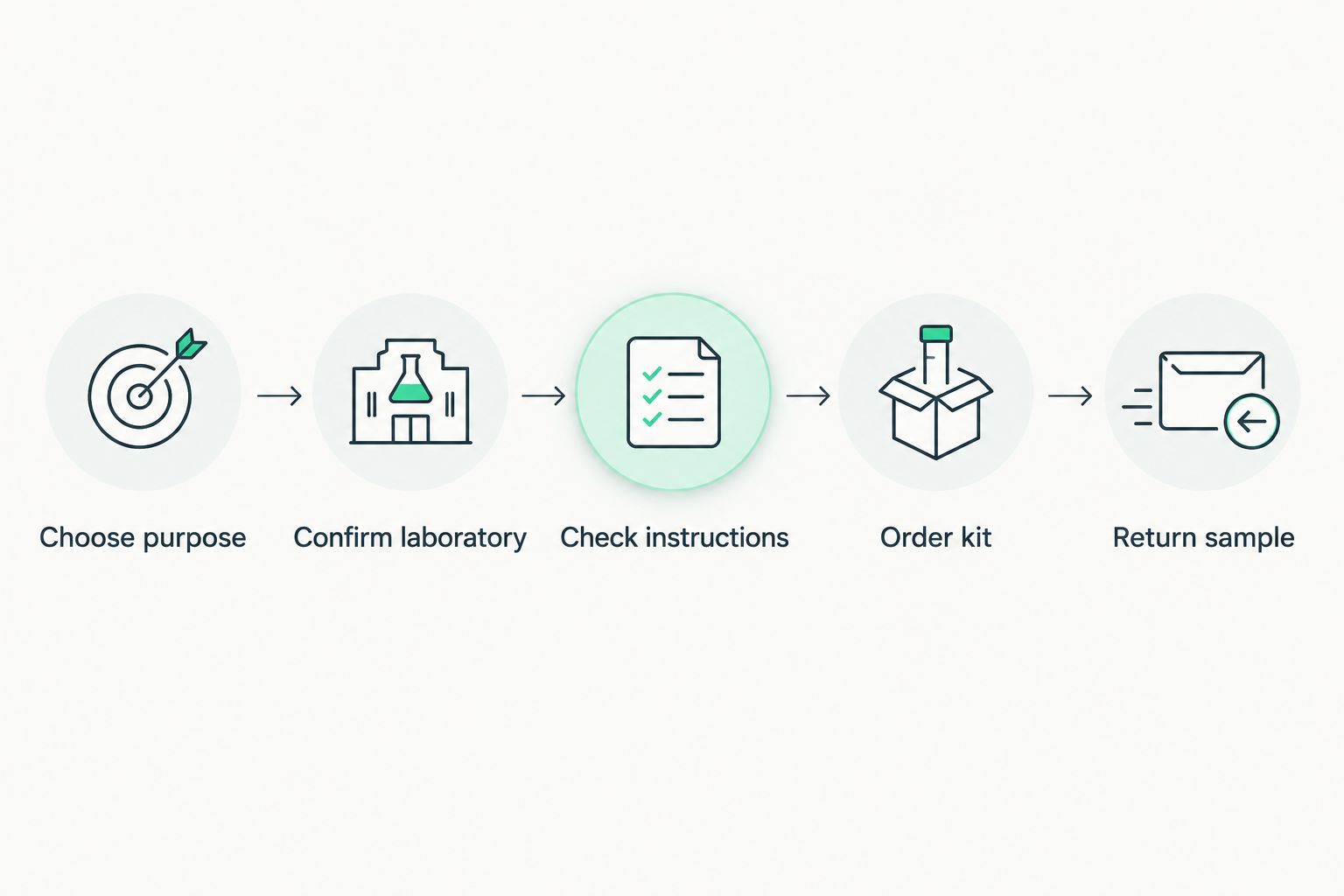
The sequence is straightforward: Choose purpose, Confirm laboratory, Check instructions, Order kit, Return sample. Each step protects the usefulness of the final report.
Why this matters
It is completely natural to worry about radon, especially when you use your basement every day. Testing gives you a measurement to act on. You cannot judge indoor radon by smell, appearance, the age of your home, or a neighbor's result.
EPA's A Citizen's Guide to Radon provides the household testing and follow-up guidance used here for your 2026 planning. Its scope is residential radon: how to measure it, interpret results, and decide when to reduce it. Your particular kit's instructions still control its exposure period and return procedure.
A radon test measures exposure conditions; it does not remove radon. If testing confirms an elevated level, the next step is a reduction plan rather than repeatedly ordering kits without addressing the result.
Which testing option fits your situation?
A canister is useful when you can manage a short-term test and return a sample correctly. It is not the only testing approach. Choose the method that matches your question and your ability to follow the procedure.
| Testing option | Best for | Main benefit | Main limitation |
|---|---|---|---|
| DIY charcoal canister | Homeowners comfortable following written instructions | You manage the test at home and receive laboratory analysis | You are responsible for placement, exposure timing, paperwork, and mailing |
| Professional radon testing | Homeowners or realtors needing managed testing | A testing professional handles the measurement process | You must arrange property access and coordinate the appointment |
| Long-term radon test | Homeowners assessing a longer-term average | Measures conditions across a longer period than a short-term test | Does not fit a short decision deadline |
A long-term test is not simply a charcoal canister left open longer. Use a device designed for the required measurement period. Extending a canister beyond its instructions does not turn it into a different kind of test.
DIY charcoal canister: best for a homeowner-managed check
Choose a canister when you can keep the required conditions, record exact times, and return the sample promptly. The advantage is direct control over the process. The trade-off is that errors are yours to prevent.
Before ordering in 2026, read the instructions as if you were starting tomorrow. If you cannot explain where the device will sit or how it will reach the laboratory, resolve those questions first.
Professional testing: best for managed placement and reporting
Michigan Radon Control is best for homeowners and realtors in Metro Detroit and Lansing seeking NRPP-certified radon testing services. Professional testing removes the homeowner's responsibility for running a mail-in canister procedure, but you still need to provide access and follow the testing instructions.
Michigan Radon Control provides radon testing, mitigation installation, and system maintenance. Contact Michigan Radon Control about professional radon testing rather than assuming the company sells or ships DIY canisters. For a property transaction, confirm the required documentation before arranging service.
Long-term testing: best for understanding a longer-term average
EPA describes long-term tests as lasting more than 90 days. They better reflect the home's year-round average than a short-term measurement because radon levels change over time. The drawback is the wait.
Do not choose a long-term test to meet an immediate transaction deadline. Equally, do not treat a brief screening measurement as a complete picture of every season in your home.
Why your ordering and testing plan varies
The right ordering process depends on what you need the result to do. Use these factors to decide what to ask, not as reasons to postpone testing:
- Testing purpose: A personal screening test and a report requested for a home sale involve different documentation questions.
- Device instructions: Exposure periods and return requirements depend on the specific kit and laboratory.
- Property layout: Separate foundation areas or living spaces require a placement plan rather than an automatic one-device assumption.
- Your schedule: Someone needs to start, stop, seal, and return a canister at the appropriate times.
- Earlier results: Follow-up testing after an elevated reading serves a different purpose from an initial check.
For your 2026 order, put the testing purpose in writing before choosing a supplier. A short note such as personal screening, sale documentation, or follow-up measurement helps keep the order matched to the job.
How should you prepare before opening the canister?
Follow the kit instructions and keep the test conditions consistent. EPA's residential guidance calls for closed-house conditions before and during short-term testing. Normal entry and exit are allowed; deliberately opening windows to change the result defeats the purpose.
For short-term tests lasting less than 4 days, EPA recommends closed-house conditions for at least 12 hours before starting. That means keeping windows and outside doors closed except for normal use. Follow additional device-specific directions and ask the supplier about unusual ventilation equipment.
EPA recommends placing a short-term device at least 20 inches above the floor in a suitable room on the lowest lived-in level. Avoid kitchens, bathrooms, drafts, high humidity, and locations where the device will be disturbed. Your kit instructions provide the placement details you must follow.
Before you open the container, prepare:
- A suitable testing location away from routine disturbance.
- The form or registration process required by the laboratory.
- A way to record the start and stop dates and times.
- The supplied sealing and return materials.
- A mailing plan that meets the laboratory's instructions.
Do not open the canister just to inspect its contents. Exposure begins when the device is opened as directed, not when you later decide the official test should start.
How do you return the kit and use the result?
End the exposure at the time specified by the manufacturer, then seal the canister exactly as directed. Complete all required fields and keep a copy or photograph of the identification number and submission details. Return the sample using the laboratory's specified method and timing.
A missing stop time or incorrect property address creates an avoidable problem. Before sending the package, match the device identification to the form and check that the report recipient's details are correct.
When the report arrives, read the result and any laboratory qualifications together. A result flagged for a testing problem needs clarification; it should not be treated as a reassuring measurement simply because a number appears on the page.
What radon result means you should take action?
4 pCi/L is EPA's action level for fixing a home with confirmed elevated radon. EPA also recommends considering reduction when levels are between 2 pCi/L and 4 pCi/L. A result below the action level does not mean radon exposure is risk-free.
For a short-term result at or above 4 pCi/L, EPA recommends follow-up testing to help determine the next step. The appropriate follow-up depends on the initial result and your timeline. Use the report and EPA guidance rather than deciding from the first number alone.
Can you use a canister test after mitigation?
A canister can be part of post-mitigation testing when the device and procedure meet the testing plan. EPA recommends a post-mitigation test within 30 days of installation, but no sooner than 24 hours after the system begins operating.
Confirm the timing with your testing professional before ordering. The purpose is to measure radon after the system is operating, not merely to confirm that a fan is running.
FAQ
Where do I start if I want to order a radon canister test kit in Michigan?
Start with your county health department for ordering guidance or a supplier that identifies its analysis laboratory. Confirm the indoor-air test type, analysis arrangements, and return instructions before ordering.
Does Michigan Radon Control sell radon canister kits?
Contact Michigan Radon Control to ask about DIY kit ordering; its stated services are NRPP-certified radon testing, mitigation installation, and system maintenance. You can also ask about professional testing for a Metro Detroit or Lansing property.
Is a radon air canister the same as a well-water test?
No. An indoor-air radon canister and a radon-in-water test collect different samples, so choose the kit for the question you need answered.
How long should I leave my radon canister open?
Leave the canister open only for the exposure period specified in that kit’s instructions. Record the exact start and stop times, then seal and return it as directed.
Can I open windows while my radon test is running?
Keep windows closed during a short-term radon test under EPA’s closed-house guidance. Normal entry and exit are allowed, but changing ventilation to influence the reading undermines the test.
What happens if my radon result is 4 pCi/L or higher?
4 pCi/L is EPA’s action level for fixing confirmed elevated residential radon. Follow EPA’s testing guidance to confirm a short-term elevated result and plan the appropriate reduction steps.
Can I use a DIY radon test when selling my house?
Confirm the transaction’s testing and documentation requirements before relying on a DIY test. Ask who must place the device, what report is required, and when the result must be delivered.
One last thing
Plan the return trip before the kit arrives. Ordering is only the first step; the sample still has to reach the correct laboratory under its acceptance rules. For a test planned in 2026, choose an exposure period that leaves you able to seal, document, and send the sample without an avoidable delay.
Related guides
- How to prepare your basement for a radon test
- How to mail in a radon test kit for lab analysis
- How to read your radon test results