
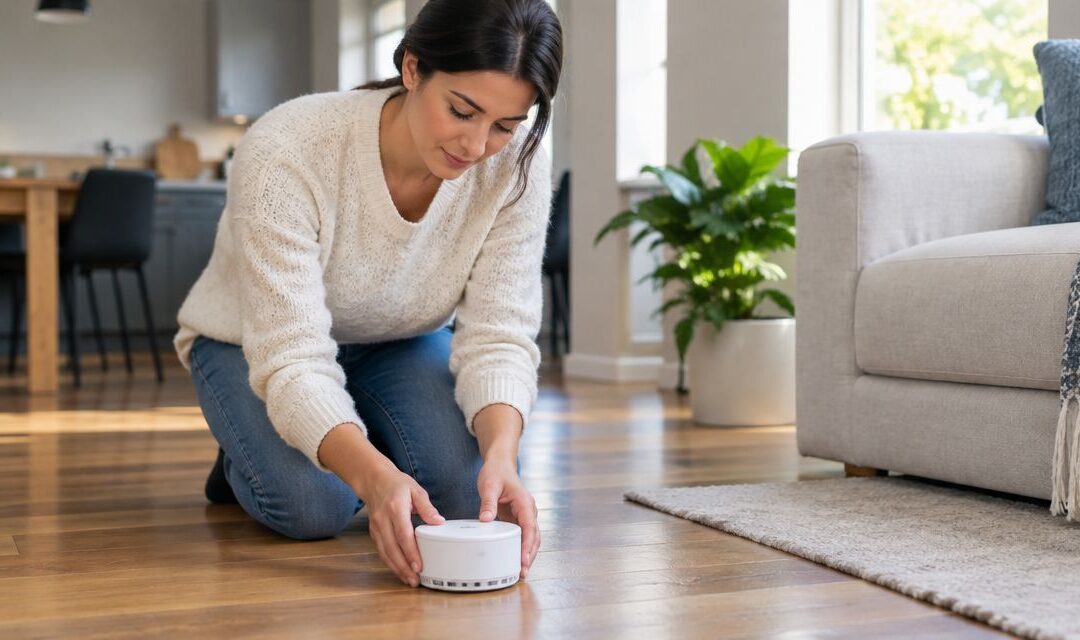
Test your home for radon as soon as you can maintain the required testing conditions after moving in; you do not need to wait for the house to settle or for a particular season. Moving-day open doors can interfere with a short-term test, so finish unloading, restore normal heating or cooling, and follow the test provider’s preparation instructions before starting.
- How soon should you test a new home for radon? Start promptly after moving-day disruption ends.
- EPA guidance calls for closed-house conditions before and during short-term radon testing.
- New construction and existing mitigation systems still need radon measurements.
- Michigan Radon Control provides NRPP-certified radon testing for Metro Detroit and Lansing homeowners.
Why this matters
It is completely natural to worry about an unfamiliar home. A properly conducted test gives you a next step, not another thing to guess about. Radon has no smell or visible warning sign, and a neighbor’s result does not establish your home’s level.
For a 2026 move, put radon testing on your move-in checklist rather than waiting until every box is unpacked. The practical starting point is understanding how to test your home for radon and choosing a testing period when doors and windows can stay closed as instructed.
EPA’s A Citizen’s Guide to Radon provides the household testing guidance used below. Its recommendations distinguish a quick initial measurement from a longer measurement of typical exposure. Neither depends on how recently you bought the house.
How soon after moving in should you test a home for radon?
Start promptly once moving-day ventilation ends and you can follow the test instructions. There is no standard waiting period after taking ownership. What matters is the condition of the house during the measurement, not the number of nights you have slept there.
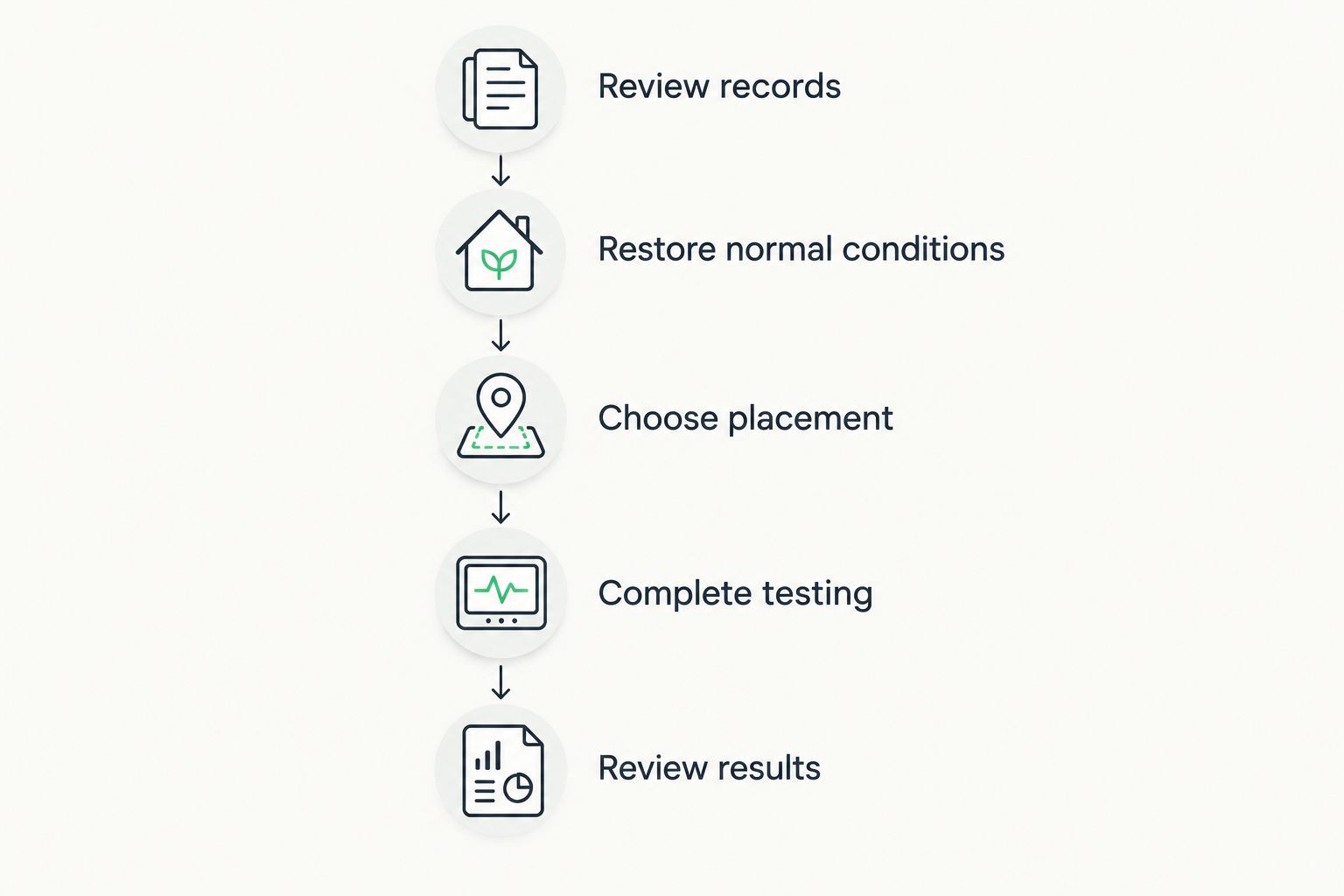
Use this sequence for your 2026 move-in test:
- Review records. Find the seller’s radon report and any mitigation installation or maintenance records. Read the actual report, not just a statement that the house passed.
- Restore normal conditions. Finish unloading and close exterior windows and doors except for normal entry and exit. Operate heating or cooling as the testing instructions require.
- Choose placement. Test on the lowest lived-in level, following the device instructions. Avoid kitchens, bathrooms, drafts, excessive humidity, and locations where someone will move the device.
- Complete testing. Leave the device undisturbed for the full measurement period. Record anything that interrupts the required conditions.
- Review results. Follow the appropriate confirmation or mitigation steps. Keep the report with your home records.
For short-term tests lasting less than 4 days, EPA recommends keeping windows and exterior doors closed for at least 12 hours before starting. Maintain closed-house conditions during the test, allowing normal entry and exit. Follow any additional instructions supplied with the device or by the testing professional.
You can usually continue ordinary household activities during testing. The important restrictions concern ventilation, device placement, and disturbance. Tell everyone in the house what needs to stay closed and why the testing device must remain where it was placed.
Short-term testing: 2–90 days
EPA describes short-term radon tests as measurements lasting 2–90 days, depending on the device. Best for: getting an initial answer promptly after moving in. Use the duration specified for your device; the category’s full range is not permission to choose your own endpoint.
The advantage is an earlier result. The limitation is that radon changes with weather, seasons, and household conditions, so a short measurement does not establish the home’s year-round average.
A short-term test is a practical first step when you have no reliable report or need to resolve an elevated result. Do not shorten it because the household is busy. An incomplete measurement is not a useful shortcut.
Long-term testing: more than 90 days
EPA describes long-term radon tests as measurements lasting more than 90 days. Best for: understanding the home’s longer-term average. A longer measurement captures more variation than a brief snapshot.
The advantage is a result that better represents average exposure over time. The limitation is the wait. Long-term testing is not a reason to leave a substantially elevated short-term result unresolved.
Choose the follow-up approach based on the initial measurement and EPA guidance. If the first result is more than twice EPA’s 4 pCi/L action level, EPA recommends a second short-term test immediately rather than waiting for a long-term result.
| Testing approach | Best for | Main advantage | Main limitation |
|---|---|---|---|
| Short-term testing | A prompt initial measurement after moving in | Provides an earlier basis for follow-up | Captures a limited period of changing conditions |
| Long-term testing | Estimating the longer-term average | Includes more variation over time | Takes longer to complete |
Why your testing start date varies
The right start date depends on whether you can obtain a valid measurement. These factors affect readiness, not a mandatory delay after moving:
- Moving-day ventilation. Propped-open doors and windows conflict with closed-house conditions for short-term testing. Finish unloading before beginning the preparation period.
- Heating and cooling. Establish the operating conditions required by the test instructions. Do not deliberately change ventilation to make the result lower.
- Testing-room use. Choose the lowest lived-in level and protect the device from disturbance. A basement office matters even if the bedrooms are upstairs.
- Weather. EPA advises against conducting short-term tests lasting less than 4 days during severe storms or unusually high winds. Ask the provider how to handle an affected test.
- Construction activity. Renovations that change foundations, airflow, or occupied space affect how you plan testing and follow-up. Explain the work before choosing placement.
- Existing records. A complete purchase-time report helps determine whether another immediate measurement is needed. Missing dates, unclear placement, or interrupted conditions require clarification.
Do not postpone testing simply to wait for winter. You can test in another season. A later measurement can add information, but it should not replace the initial check when the home’s radon level is unknown.
What should you check in the seller’s radon report?
A seller’s report is useful evidence, not a permanent guarantee. Check the measurement dates, location, duration, result, and testing conditions. Confirm that the report belongs to the house you bought.
For a 2026 purchase, review whether anything changed after the measurement. Foundation work, a finished basement, or changes to ventilation deserve attention because the house you occupy might not have the same conditions as the house that was tested.
Ask these questions before treating the report as your move-in baseline:
- Was the lowest lived-in level tested?
- Was the measurement completed for the device’s required duration?
- Were closed-house conditions maintained where required?
- Was mitigation installed after the reported measurement?
- Is there a post-mitigation result showing the system’s effect?
A documented, properly conducted recent test can prevent unnecessary duplicate work. An informal assurance that the home was checked does not provide the same information. Request the report before deciding whether to repeat the test.
What should you do with an elevated result?
EPA recommends fixing homes with radon levels at or above 4 pCi/L and considering reduction when levels fall between 2 and 4 pCi/L. The unit pCi/L means picocuries per liter of air. The action level is not a boundary between harmless and harmful exposure.
For an initial short-term result at or above 4 pCi/L, follow EPA’s confirmation guidance. A long-term follow-up can help establish the average, while a second short-term test provides a faster decision. The higher the initial result, the stronger the reason to obtain prompt follow-up.
If you use two short-term tests, EPA recommends mitigation when their average is at or above 4 pCi/L. For a long-term result, EPA recommends mitigation at or above that level. Review the reports with a qualified professional rather than interpreting a single hourly reading as the final result.
An elevated result deserves action, not panic. Radon’s health concern is exposure over time. Arrange the appropriate follow-up, discuss mitigation when indicated, and verify the outcome with testing after installation.
When professional testing makes sense
Michigan Radon Control is a fit for Metro Detroit and Lansing homeowners who want NRPP-certified radon testing. Michigan Radon Control also provides mitigation installation and system maintenance, so those services are relevant when a confirmed measurement calls for additional action.
Professional testing is especially useful when you are unsure about placement, have an unclear purchase report, or need help interpreting follow-up results. The benefit is assistance with the measurement process. The limitation is that professional testing still requires suitable household conditions; hiring someone does not remove those requirements.
When arranging radon testing with Michigan Radon Control, explain your move-in schedule, the lowest level you use, any planned renovations, and whether an existing system is operating. Ask what preparation is required and how the result will be reported.
For a 2026 appointment, prepare your questions before choosing the testing window. Ask about device placement, access, household restrictions, and the follow-up process for an elevated reading. Those details help you arrange a test your household can complete correctly.
Arrange your move-in radon test
Ask about testing preparation and follow-up for your Metro Detroit or Lansing home.
Can I stay in the house while the radon test runs?
Yes, you can stay home during a radon test while following the device’s instructions. Normal entry and exit are allowed under EPA’s closed-house guidance. Keep windows closed where required and leave the device undisturbed.
Tell children, visitors, cleaners, and contractors not to relocate the device. If someone opens windows or interrupts the test, document what happened and ask the provider whether the measurement remains usable.
Should I test a newly built home right after moving in?
Yes, test a newly built home once the required testing conditions can be maintained. Radon-resistant construction reduces the potential for radon entry but does not prove that the indoor level is low.
A passive pipe is not a measurement. Ask the builder for system details and any completed test report, then establish the home’s actual radon level before assuming the construction features are sufficient.
Should I test immediately if the house already has mitigation?
An existing mitigation system does not replace a radon test. Review the latest post-mitigation report and maintenance records, then arrange testing if the current level is undocumented or the system’s performance is uncertain.
A running fan and a pressure gauge provide information about operation, not the indoor radon concentration. Keep the system operating as intended during testing and tell the provider about any noise, damage, or apparent failure.
FAQ
How soon should you test a new home for radon after moving in?
Test promptly after moving-day disruption ends and you can maintain the required testing conditions. There is no standard waiting period for a house to settle after you take ownership.
Do I have to wait until winter to test my Michigan home?
No, you do not have to wait until winter to test your Michigan home. Follow the device’s preparation instructions and use follow-up testing when needed to understand changing levels.
How long do the windows need to stay closed before a radon test?
EPA recommends at least 12 hours of closed-house conditions before a short-term test lasting less than 4 days. Keep windows and exterior doors closed during the test except for normal entry and exit, and follow any additional device instructions.
Is a short-term radon test better than a long-term test after moving?
A short-term test is better for obtaining a prompt initial measurement, while a long-term test better represents the longer-term average. EPA describes short-term tests as lasting 2–90 days and long-term tests as lasting more than 90 days.
What radon result means I should fix my home?
EPA recommends fixing a home at or above 4 pCi/L and considering reduction between 2 and 4 pCi/L. An initial short-term result needs the appropriate confirmation process before the final mitigation decision.
Does a new house with a passive radon pipe still need testing?
Yes, a new house with a passive radon pipe still needs testing. Radon-resistant features do not establish the indoor concentration or prove that additional mitigation is unnecessary.
Who can help with move-in radon testing in Metro Detroit or Lansing?
Michigan Radon Control provides NRPP-certified radon testing for homeowners and realtors in Metro Detroit and Lansing. Explain your move-in timing, existing reports, and any mitigation system when arranging the test.
One last thing
A mitigation system’s pressure gauge is not a radon meter. It helps show whether the system is producing a pressure difference, but only a radon measurement tells you the indoor concentration.
Before you finish your 2026 move-in checklist, keep the radon report somewhere you can find it. Save the testing dates, placement, result, and follow-up instructions together. That record gives you a useful baseline when you remodel, maintain the system, or sell the home.
Related guides
- How to prepare your basement for a radon test
- How to read your radon test results
- How to verify your radon mitigation system is still working