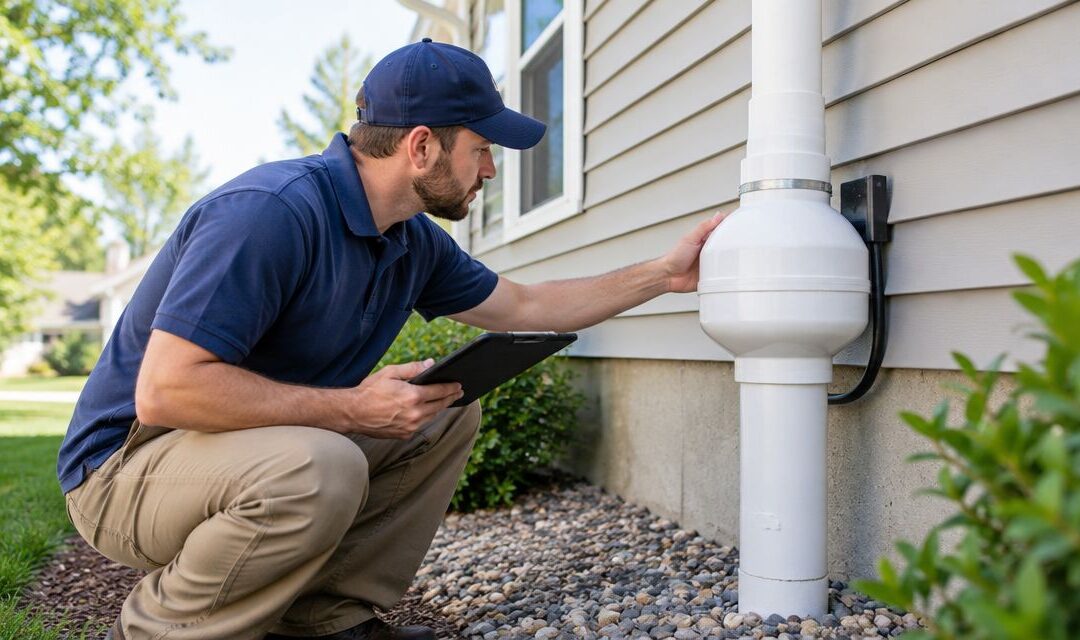
A radon mitigation installation in Michigan needs a permit when the applicable building or trade-permit rules require one for the proposed work; the answer depends on your address and installation scope. For a 2026 project, confirm requirements with the enforcing building department before work starts, including whether new wiring or an outlet requires a separate electrical permit.
- Does a radon mitigation system need a permit in Michigan? Confirm requirements for your address and installation scope.
- A building-permit answer does not automatically settle electrical-permit requirements.
- NRPP certification demonstrates radon qualifications; it does not replace required permits or trade credentials.
- EPA guidance recommends fixing homes at 4 pCi/L or higher; permit approval does not prove radon reduction.
Does a radon mitigation system need a permit in Michigan?
Get an address-specific answer before installation. Ask the department that enforces building and electrical requirements at your property, rather than relying on what happened at another home. Describe the actual work, not just the phrase radon mitigation.
Use this sequence:
- Identify the department. Give your property address and ask which office handles building and electrical permits there.
- Describe the installation. Explain the proposed pipe route, fan location, foundation penetration, and electrical connection.
- Confirm the requirements. Ask which permits and inspections apply, who must apply, and whether any work qualifies for an exemption.
- Record the answer. Keep the written response with your installation agreement and any permit documents.
The electrical connection deserves its own question. Review electrical code rules for a radon mitigation fan before discussing new wiring or an outlet with your installer.
Why this matters
It is completely natural to worry about radon and want the work finished quickly. A clear permit answer helps you move ahead without guessing about who handles approval, inspections, or paperwork. You do not need to become a code expert.
For a 2026 installation, separate two questions: whether the work meets applicable construction requirements, and whether the system lowers your home's radon level. A permit addresses the work. A radon test measures the result. Neither replaces the other.
The EPA's residential radon guidance recommends fixing a home when its radon level is 4 pCi/L or higher. It also recommends considering mitigation between 2 and 4 pCi/L. Those health recommendations are not permit thresholds; ask about construction requirements regardless of the starting reading.
Which parts of the installation need review?
A useful permit inquiry describes the system as a group of tasks. A contractor's proposed design gives the department something concrete to evaluate. Ask the installer for enough detail to explain the route and power connection accurately.
| Proposed work | Best for identifying | Practical advantage | Limitation |
|---|---|---|---|
| Pipe, fan, and foundation penetrations | Questions about the mitigation installation itself | Makes the physical scope clear | Does not resolve separate electrical requirements |
| A new outlet, circuit, or wiring connection | Questions about electrical work | Separates power installation from radon-system design | Requires its own review by the responsible authority |
| Radon work within a larger renovation | Questions about coordination with existing permits | Lets you discuss related work together | An existing renovation permit is not proof that every added task is covered |
These are review categories, not a statewide permit schedule. Do not treat a table row as confirmation that a permit is required or exempt. The department's answer must match your property and proposed work.
Pipe routing and foundation work
Explain whether the pipe will pass through a slab, wall, ceiling, or roof. Also describe the proposed exterior route. The department can then tell you what information it needs to evaluate the work.
Do not assume a small opening is automatically exempt. Ask directly, especially when the installation is part of a basement remodel or another construction project. A sketch can make that conversation easier.
Electrical work
Distinguish plugging equipment into an existing suitable receptacle from installing or changing wiring. These are different scopes of work. Ask the enforcing electrical authority about the exact connection proposed for your fan.
Radon credentials do not answer questions about authorization to perform electrical work. Your agreement should identify who handles that task and any required electrical permit. Avoid leaving it as an unnamed responsibility.
Renovations and new construction
If your home already has an open construction permit, ask whether the radon work belongs within that approved scope or needs separate handling. Give the department the existing permit information and the proposed system details. Do not assume the installer can simply add the work without review.
For a 2026 building project, settle this before the relevant walls or ceilings are closed. Ask which stages need inspection and what must remain visible. Follow the department's instructions rather than a generic installation checklist.
Why permit requirements vary by project
The useful question is not whether another Michigan homeowner obtained a permit. It is whether the applicable rules require one for your proposed work. Give the enforcing department these details:
- Property address: Establishes which authority handles the inquiry.
- Building use: Identifies whether you are discussing a home, rental property, or another building type.
- Physical changes: Describes penetrations, pipe routing, and fan placement.
- Electrical scope: States whether the project includes new or altered wiring.
- Related construction: Identifies an existing renovation or new-construction project that needs coordination.
These details help the department answer accurately; they are not claims that every item triggers a permit. If the design changes after approval, ask whether the original answer still applies. Keep the updated response with the project records.
What should you ask the building department?
For your 2026 inquiry, have your address and proposed installation description ready. Start by explaining that you are planning a residential radon mitigation system and need to confirm the applicable permit and inspection requirements. Then ask the questions below.
- Does this installation scope require a building or other trade permit?
- Does the proposed fan connection require an electrical permit?
- Who is authorized to apply for each required permit?
- What drawings or equipment information should accompany the application?
- Which inspections are required, and when should they be requested?
- If no permit is required, can you confirm that answer in writing for this scope?
Ask about the work, not just the equipment name. A general answer about radon fans does not necessarily cover a new outlet or a roof penetration. If the office needs more detail, return to the installer for a clearer description.
A written answer is useful even when the department says no permit is needed. Save the date, department, and scope discussed. That gives you a record of the question actually answered, rather than a recollection of a phone call.
Who should handle permits: you or the installer?
Your installation agreement should assign responsibility before anyone starts work. Ask who submits each application, schedules inspections, responds to inspection findings, and supplies the completion records. A clear assignment prevents a task from being left between the homeowner and contractor.
Do not assume that hiring a radon specialist automatically includes every permit-related task. Likewise, do not assume you should apply as the homeowner without asking the department about applicant requirements. Confirm the arrangement with both parties.
If the installer says permits are unnecessary, ask for the basis of that answer. An address-specific response from the enforcing department is stronger than a general statement about previous jobs. Resolve a disagreement before installation, not after the system is running.
Certification and permits answer different questions
NRPP certification concerns radon-professional qualifications. Permit requirements concern the proposed construction or trade work. Neither substitutes for the other, and radon certification alone does not establish authorization for every electrical task.
Use the guide to verifying a radon mitigation contractor's NRPP certification when checking credentials. Separately, ask who will perform any regulated trade work and how the applicable requirements will be met.
Michigan Radon Control is a fit for homeowners and realtors seeking NRPP-certified radon testing, mitigation, and maintenance in Metro Detroit and Lansing. That service scope matches homeowners who want help with both testing and installation. The limitation remains straightforward: a provider's credentials do not settle your property's permit requirements.
Discuss your radon installation
Michigan Radon Control provides testing, mitigation installation, and maintenance in Metro Detroit and Lansing.
What documents should you keep after installation?
Keep a single project file rather than scattering records across messages and folders. It should explain what was installed, how any required approvals were handled, and what the follow-up radon test found. This is useful for maintenance and future questions about the home.
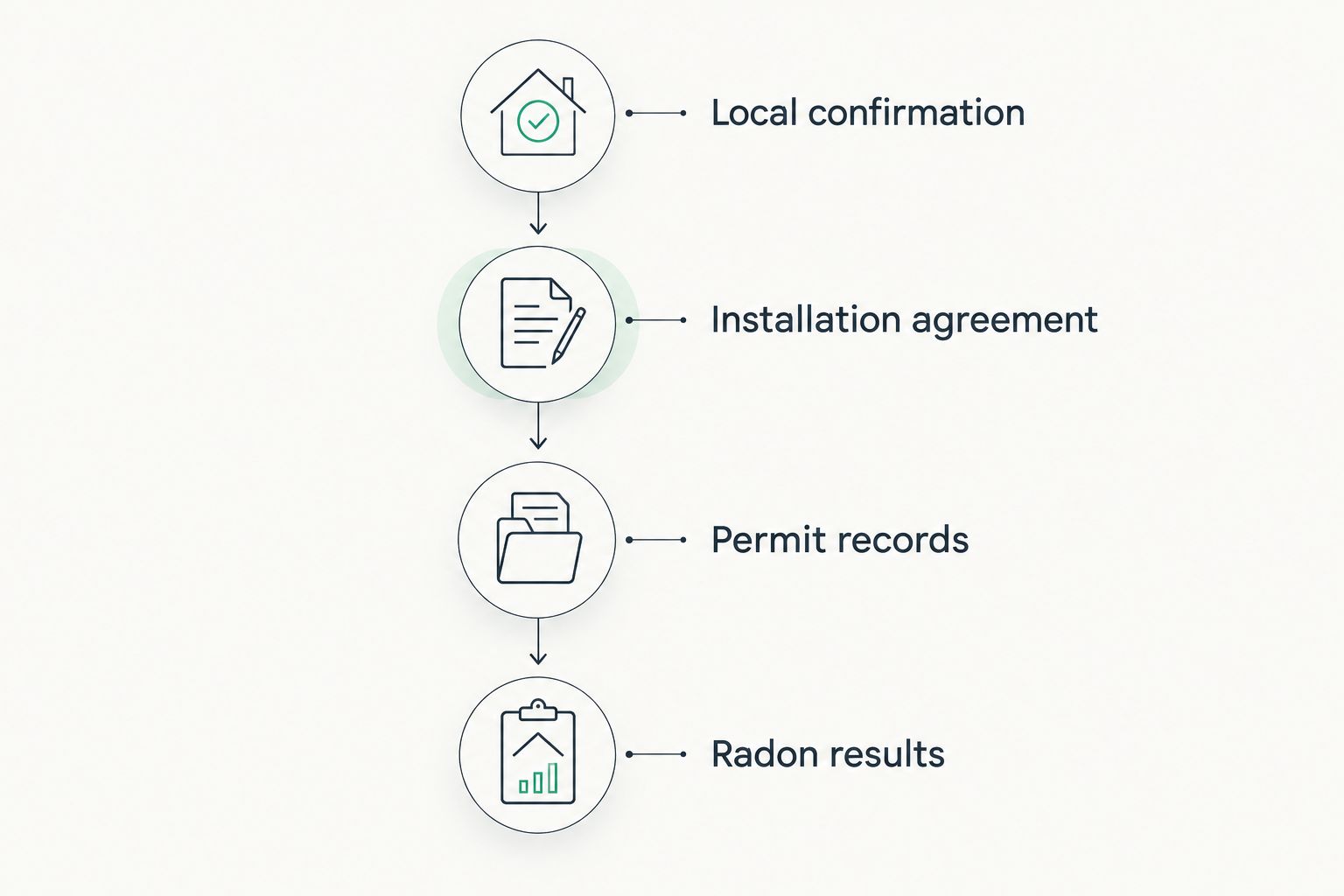
Use these stages to organize the records:
- Local confirmation: The department's answer about permits and inspections for the proposed work.
- Installation agreement: The agreed scope and assignment of permit, electrical, and testing responsibilities.
- Permit records: Applications, approvals, and inspection results where required.
- Radon results: The original test and the follow-up test after mitigation.
Do not describe an issued permit as a completed inspection unless the records establish that. Ask the responsible department how to confirm completion. If an inspection identifies corrections, retain the documentation showing how those items were resolved.
For a home sale, ask the parties handling the transaction which records they need. Do not promise that a permit or test report satisfies every purchase-agreement requirement. Keep the actual documents available so the question can be answered directly.
Does a low radon reading remove the need for a permit?
A radon reading below 4 pCi/L does not establish a permit exemption. The EPA action level addresses radon exposure, while permit requirements address the proposed work. Confirm construction requirements independently of the reading.
Does an approved inspection prove the system reduced radon?
An approved inspection does not establish that radon is below 4 pCi/L. You need a follow-up radon test to measure the concentration after mitigation. Keep that result alongside the installation and inspection records.
Can a longer radon test replace permit approval?
A long-term radon test lasting more than 90 days measures exposure over a longer period; it does not replace permit approval. EPA residential guidance distinguishes long-term tests from shorter tests because they better reflect a home's year-round average. Use the test type appropriate to your testing purpose, separately from construction approval.
FAQ
Does every radon mitigation system in Michigan need a permit?
There is no address-specific answer without checking the applicable rules and installation scope. Ask the enforcing department about the mitigation work and any separate electrical work before installation.
Who do I call about a radon mitigation permit?
Start with the building department responsible for your property address. Ask it to identify the authority handling any separate electrical or other trade-permit questions.
Does an NRPP-certified installer still need to check permits?
Yes. NRPP certification addresses radon qualifications, not whether a particular installation requires a permit or who is authorized to perform regulated trade work.
What if my radon contractor says no permit is needed?
Ask for an address-specific confirmation from the enforcing department that matches the proposed work. Keep the written response with the installation agreement.
Do I need another permit when replacing a radon fan?
Confirm requirements for the replacement scope with the responsible department. Describe whether the job includes changed wiring, a new electrical connection, or alterations to the existing installation.
Can I skip a radon test after the installation passes inspection?
No. An inspection does not measure indoor radon, so arrange a follow-up test to establish the system’s result.
Can Michigan Radon Control help with testing and installation?
Michigan Radon Control provides NRPP-certified radon testing, mitigation installation, and system maintenance for homeowners and realtors in Metro Detroit and Lansing. Ask who will handle any required permits, electrical work, inspections, and follow-up testing for your project.
One last thing
For your 2026 project file, keep two separate completion questions: Is the required approval process finished? and What is the post-mitigation radon result? Do not let a running fan become the answer to both. Close the paperwork and verify the radon reduction.
That simple distinction gives you a clear next move. Confirm the local requirements, assign responsibilities in writing, and retain the final test result. You can address the concern without guessing about either compliance or performance.
Related guides
- How to schedule radon testing after mitigation installation
- How to read a radon mitigation system's pressure gauge
- How to compare radon mitigation quotes from Michigan contractors