
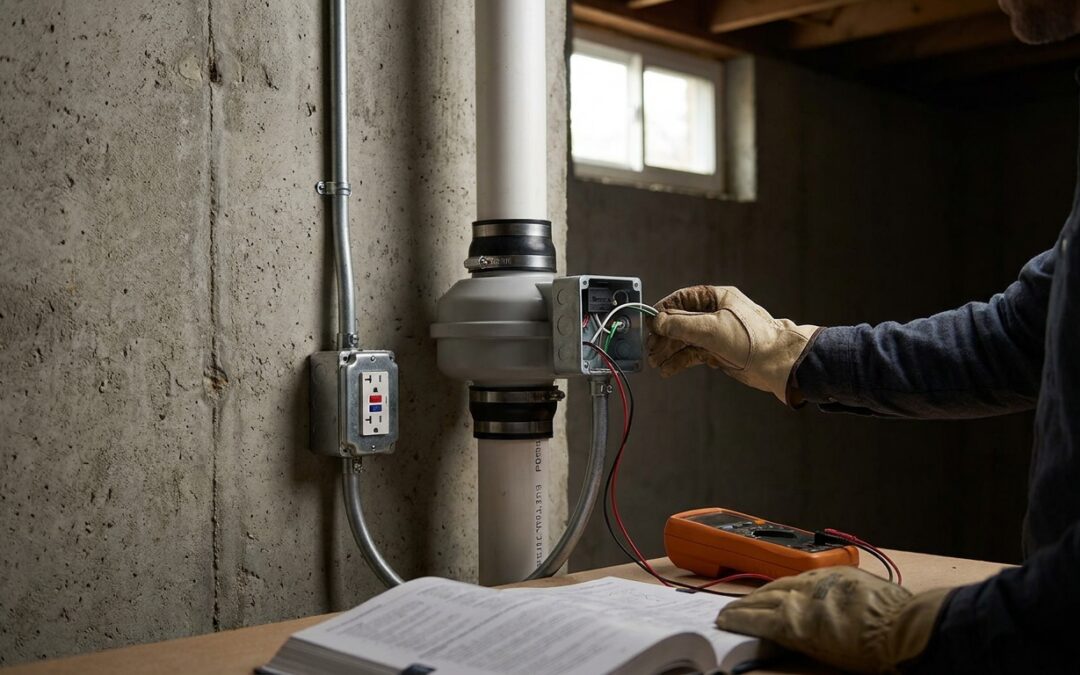
A radon mitigation fan is a permanent electrical appliance, not a plug-in accessory, and Michigan inspectors treat it that way. Get the wiring wrong and you're looking at a failed inspection, a redo, or a fire risk sitting in your attic.
- Radon fans need a dedicated 120-volt circuit and a disconnect within sight of the unit — buy this right the first time.
- Cord-and-plug installs are only code-compliant with GFCI protection at an accessible outlet, never a routine attic splice.
- Michigan Radon Control wires every fan to meet radon fan electrical code requirements and passes local electrical inspection on the first visit.
- The most common failure point NRPP inspectors flag in 2026 is an attic-mounted fan on an unprotected household outlet.
- A U-tube manometer must stay visible after the electrical work is finished — hiding it behind wiring runs is a common install mistake.
Why this matters
A radon fan runs continuously, 24 hours a day, 365 days a year, pulling soil gas from under your slab and venting it above the roofline. That kind of duty cycle means the wiring has to hold up to years of vibration, heat, and moisture exposure without becoming a hazard.
Michigan follows the National Electrical Code (NEC) for radon fan installations, layered with EPA guidance under the Radon Resistant New Construction (RRNC) standard. Local jurisdictions in Metro Detroit and the Lansing area typically require an electrical permit and inspection any time a fan is hardwired or a new circuit is added. Skip that step and you risk a stop-work order during a home sale, or worse, an insurance denial after an electrical fire traced back to an unlicensed splice.
If you're a homeowner overseeing a DIY-adjacent project, or a realtor trying to explain a home inspection callout, knowing the actual radon fan electrical code requirements saves you a second visit and a second invoice.
What you'll need
- A radon fan rated for continuous duty, typically drawing under 3 amps on a 120-volt circuit
- A dedicated 15- or 20-amp circuit, or confirmation the fan is on an existing circuit with headroom
- A disconnect switch or breaker lockout within sight of the fan
- GFCI protection if the fan sits in an attic, crawlspace, garage, or any damp or exterior location
- Weatherproof, UV-rated wiring and connectors for any exterior fan mounting
- A licensed electrician or an NRPP-certified mitigation contractor who coordinates electrical work as part of the install
- A local electrical permit, pulled before work starts, not after
The steps
1. Confirm the fan's electrical draw before you touch a wire
Check the nameplate on the fan for voltage and amperage. Most residential radon fans run on a standard 120-volt circuit and draw well under 3 amps, but larger sub-slab depressurization systems on homes with radon levels above 4 pCi/L sometimes need a higher-capacity fan with a heavier draw. Undersizing the circuit is the single most common reason a system trips breakers within the first month.
Expected outcome: you know exactly what circuit capacity the fan needs before any wiring goes in.
Common mistake: assuming every radon fan pulls the same amperage. They don't — check the label every time.
2. Choose hardwired or cord-and-plug, and follow the rule for each
NEC allows two wiring methods for radon fans: a permanent hardwired connection through a junction box, or a cord-and-plug connection into a dedicated, GFCI-protected receptacle that stays accessible after installation. What NEC does not allow is a cord run through a wall cavity or a splice buried behind insulation — that's the violation inspectors catch most often.
Expected outcome: a wiring method that's inspectable and accessible without opening drywall.
Common mistake: running the fan's cord through a finished wall to hide it, which turns a legal cord-and-plug setup into a code violation.
3. Install a disconnect within sight of the fan
Every radon fan needs a way to shut off power without leaving the room — a breaker lockout, a switch, or the plug itself if it stays visible and reachable. This protects anyone doing maintenance or replacing the fan later from getting shocked by a live circuit they can't see.
Expected outcome: a clearly identifiable shutoff at or near the fan location.
Common mistake: relying on a breaker in a panel two floors away with no labeling — technically a disconnect, practically useless.
4. Add GFCI protection anywhere the fan sits in a damp or unconditioned space
Attics, crawlspaces, garages, and exterior mounts all require GFCI protection under NEC rules for wet or damp locations. Radon fans in Michigan get installed in attics and exterior wall runs constantly because of how common basement and crawlspace foundations are here, which makes this the step most often skipped by unlicensed installers trying to save time.
Expected outcome: a GFCI breaker or GFCI receptacle protecting the fan circuit.
Common mistake: installing the fan on a standard household outlet in an attic with no ground-fault protection at all.
5. Keep the fan and its exhaust point out of occupied space
Code and EPA guidance both require the fan to sit above the highest occupied floor — usually the attic — and the exhaust point to clear the roofline by at least 10 feet horizontally from any window, door, or air intake. This isn't strictly an electrical rule, but electricians and inspectors check it during the same visit, and getting it wrong forces a full relocation.
Expected outcome: fan and exhaust placement that passes both electrical and mechanical inspection in one visit.
Common mistake: mounting the fan in a conditioned basement mechanical room where fan noise and radon leaks reach living space.
6. Keep the U-tube manometer visible after the wiring is finished
The manometer confirms the system is under active vacuum. It has to stay visible for the homeowner to check it monthly, which means wiring runs, conduit, and disconnects need to route around it, not over it.
Expected outcome: a manometer you can read at a glance without moving anything.
Common mistake: running new wiring directly across the manometer during a fan swap, blocking the reading permanently.
7. Schedule the electrical inspection alongside your radon system inspection
Most Michigan municipalities require a separate electrical permit and inspection for hardwired radon fan circuits, distinct from any radon-specific inspection. Michigan Radon Control coordinates both on the same appointment so you're not scheduling two separate visits for one install.
Expected outcome: signed-off electrical permit plus a working radon system, verified in one trip.
Common mistake: treating the radon inspection as a substitute for the electrical inspection — they check different things.
Get your fan wired up to code
NRPP-certified installation with electrical work done right the first time.
Troubleshooting
- The fan keeps tripping the GFCI. Usually a moisture-related ground fault at the connector — check for condensation inside the junction box before replacing the breaker.
- The circuit breaker trips under normal operation. The fan is likely sharing a circuit with other appliances. Move it to its own dedicated circuit rated for its actual amperage draw.
- An inspector flagged exposed wiring in the attic. Any exposed NM cable outside a wall cavity needs conduit or a properly rated fixture whip — this is a quick fix, not a full rewire.
- The disconnect isn't within sight of the fan. Add a local switch or accessible breaker lockout rather than relying on a distant panel.
- The manometer reads zero after electrical work. Check for a pinched or disconnected tube first — it's rarely the wiring, but it's worth ruling out before assuming fan failure.
- You're not sure if your current fan is even wired correctly. If the fan is more than a few years old or was installed by a previous owner, checking whether your radon mitigation fan needs replacing is faster than guessing at the wiring history.
Tools and resources
- Best radon mitigation fans for Michigan homes — compare current fan models before you commit to a wiring plan
- How to maintain your radon mitigation system — keep the electrical and mechanical sides working together long-term
- How to verify a radon mitigation contractor's NRPP certification — confirm whoever touches your wiring is qualified to do it
- Radon mitigation system installation for Michigan homes — see how a full install, electrical work included, actually runs start to finish
What to do next
If your system is already installed and you're not sure the electrical work was done to code, don't wait for a home sale inspection to find out. A quick verification now costs far less than a redo during closing week.
FAQ
What electrical code applies to a radon mitigation fan?
Radon fans in Michigan follow the National Electrical Code (NEC) requirements for continuous-duty appliances, plus local permit and inspection rules. This covers dedicated circuits, GFCI protection in damp locations, and accessible disconnects near the fan.
Does a radon fan need a dedicated circuit?
Most radon fans need a dedicated 15- or 20-amp, 120-volt circuit sized to the fan’s actual amperage draw, which is typically under 3 amps. Sharing a circuit with other appliances is a common cause of nuisance breaker trips.
Can a radon fan be plugged into a regular outlet?
Only if that outlet is GFCI-protected and stays accessible after installation — a standard, unprotected household outlet does not meet code for attic, crawlspace, or garage locations. Hardwiring through a junction box is the more common compliant option.
Does a radon fan need GFCI protection?
Yes, in any damp or unconditioned location such as an attic, crawlspace, garage, or exterior wall mount. GFCI protection is one of the most frequently missed requirements in DIY and unlicensed installs.
Who is responsible for electrical code compliance on a radon fan?
The installing contractor or electrician is responsible for pulling permits and meeting code, though the homeowner is on the hook if an uncertified installer skipped that step. Verifying NRPP certification before hiring is the simplest way to avoid this.
What happens if a radon fan fails electrical inspection?
The inspector issues a list of corrections, usually covering missing GFCI protection, an inaccessible disconnect, or exposed wiring, and the system can’t be signed off until they’re fixed. This is common during home sales when a previous installer cut corners.
Can I install a radon fan myself?
You can mount the fan yourself in some cases, but the electrical connection generally requires a licensed electrician or a permit-pulling contractor to meet code. DIY electrical work on a radon fan is one of the top reasons systems fail resale inspections.
How much does it cost to bring a radon fan up to code?
Cost depends on whether it’s a simple GFCI upgrade or a full rewire with a new dedicated circuit, and pricing varies by contractor and scope. Budgeting guidance for a full mitigation install, electrical work included, is covered in a dedicated cost breakdown.
One last thing
The fan itself rarely fails first — the electrical connection around it does. A fan swapped in 2026 on a circuit wired correctly the first time will likely outlast two or three fans installed on a shared, unprotected outlet that keeps stressing the connection every time it trips.
Related guides
- Best radon mitigation fans for Michigan homes
- How to tell if your radon mitigation fan needs replacing
- How to maintain your radon mitigation system
- How to verify a radon mitigation contractor's NRPP certification
- Radon mitigation system installation for Michigan homes