
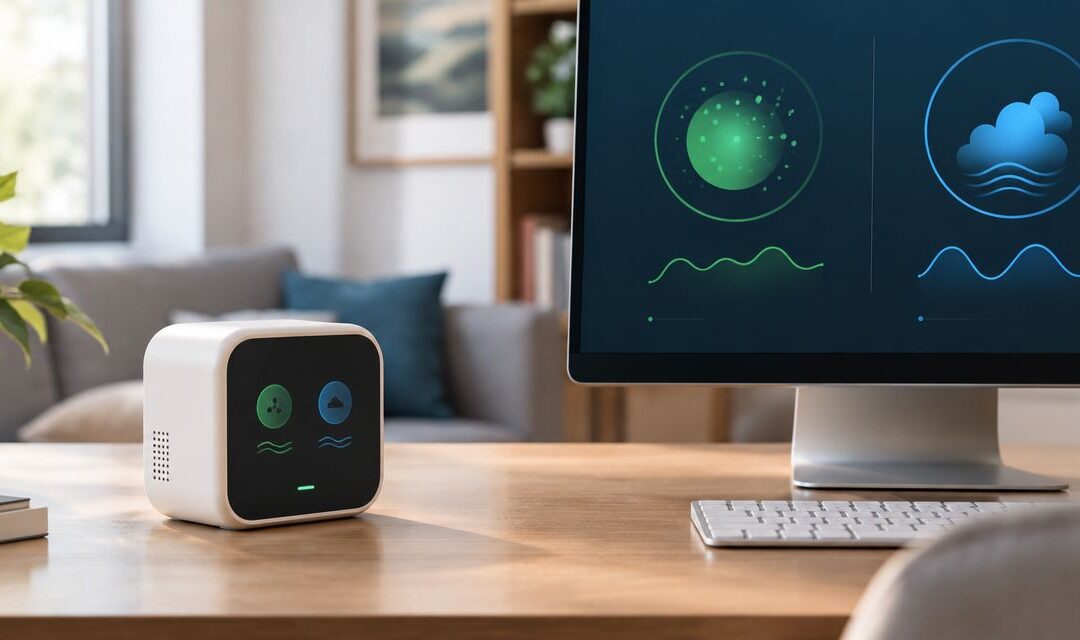
Yes. One monitor can measure both radon and carbon dioxide if it contains separate sensors for each gas. A co2 and radon detector must explicitly list both measurements; a CO2 reading, an estimated CO2 value, or a general air-quality score cannot tell you your radon level.
- A co2 and radon detector needs separate radon and carbon dioxide sensors; one reading cannot substitute for the other.
- Choose a combined monitor for shared-room tracking, or separate monitors when placement needs differ.
- Michigan Radon Control provides professional radon testing, not a substitute for carbon dioxide monitoring.
- Keep carbon monoxide alarms: CO2, CO, and radon require different detection methods.
Can one monitor test for both radon and CO2?
Yes, but the sensor list matters more than the device name. A monitor advertised as an indoor air-quality monitor does not necessarily measure radon, and a radon monitor does not necessarily measure CO2. Check the exact model's specifications before choosing a device in 2026.
If your immediate concern is whether your home has elevated radon, start with how to test your home for radon. You do not need to settle every air-quality question before arranging a radon test.
| Testing setup | Best for | Main advantage | Main limitation |
|---|---|---|---|
| Combined monitor | Tracking radon and CO2 in the same room | Keeps both measurements together | One location must suit both measurements |
| Separate monitors | Measuring radon and CO2 in different locations | Lets you place each sensor where it belongs | Requires managing separate devices and records |
| Professional radon test | Homeowners or realtors who need a documented radon assessment | Uses a defined testing procedure | Does not measure CO2 unless that service is separately included |
Choose the setup around the question you need answered, not the number of readings on the screen. A combined monitor is convenient, but separate devices are the better fit when your basement and upstairs bedroom need different measurements.
Why this matters
It's completely natural to worry when you discover another gas your home needs checked. The reassuring part is that radon and CO2 are measurable, and their readings answer different questions. You do not have to interpret them as one combined danger score.
Radon is a radioactive gas that can enter buildings from the ground. Long-term exposure increases lung cancer risk. Carbon dioxide comes from sources including people breathing and combustion; indoor CO2 measurements help assess ventilation in occupied spaces, but they do not measure every indoor pollutant.
A low CO2 result does not establish that radon is low. A low radon result does not establish that a crowded room has enough outdoor air. Treat each result separately, even when the same device displays both.
What should a co2 and radon detector actually measure?
A suitable combined device needs a radon measurement system and a dedicated CO2 sensor. Those are different jobs. Radon instruments detect radioactive decay, while many direct-reading CO2 monitors use nondispersive infrared, or NDIR, sensing.
Look for these details in the manufacturer's documentation:
- Radon measurement: Radon must appear as its own measured parameter, not as an inferred risk.
- Direct CO2 measurement: Look for a stated CO2 sensor technology, rather than only an estimated value.
- Separate units: Radon commonly appears in pCi/L or Bq/m³; CO2 commonly appears in parts per million, or ppm.
- Averaging periods: Understand whether each value represents a recent interval or a longer average.
- Operating instructions: Check placement, startup, calibration, and environmental requirements for each sensor.
Some air-quality devices display estimated carbon dioxide, often labeled eCO2. That estimate can be derived from other sensor signals rather than a direct measurement of carbon dioxide. Do not treat eCO2 as evidence that the device directly measures CO2.
For a 2026 purchase, read the specifications for the exact model, not a general description of the manufacturer's product family. Similar-looking monitors can measure different pollutants. An app that displays several devices together also does not mean one physical monitor measures everything.
Combined monitor: best for shared-room tracking
A combined monitor makes sense when you want ongoing radon and CO2 readings from one suitable location. You can review the measurements together without switching devices. That makes routine checks simpler.
The limitation is placement. Your radon assessment might focus on the lowest level suitable for occupancy, while your CO2 concern is a bedroom or office elsewhere in the house. One monitor cannot measure both rooms at the same time.
A combined monitor also remains a measuring tool, not a treatment system. It does not remove radon, provide outdoor air, or replace a carbon monoxide alarm. Choose a combined monitor when both measurements belong in the same room and its instructions support that location.
Separate monitors: best for different rooms
Separate monitors let you match each device to the space you need to assess. You can track radon in a lower-level living area while checking CO2 in a frequently occupied bedroom. You do not need to move a device back and forth and interrupt its record.
The trade-off is administration. You will have separate instructions, maintenance requirements, and measurement histories. Label each record with its room and dates so you do not compare unrelated readings.
Separate devices are not automatically more accurate than a combined monitor. Accuracy depends on the instrument, its condition, and how you use it. Choose separate monitors when independent placement matters more than having one display.
Why radon and CO2 readings vary
Radon and CO2 can change for different reasons, even inside the same house. These factors explain why a single snapshot is not a whole-home assessment:
- Occupancy: People exhale CO2, so a room's CO2 level responds to how many people use it. Occupancy does not provide a direct measurement of radon entering from soil.
- Outdoor-air ventilation: Bringing in outdoor air affects indoor gas concentrations. It does not establish a dependable relationship between radon and CO2.
- Soil entry and pressure: Foundation openings and pressure differences affect how soil gas enters a building. A CO2 sensor does not measure that entry.
- Weather and season: Changing weather and building conditions influence radon concentrations and how you operate your home.
- Placement and averaging: A sensor near an open window, a supply vent, or someone's breathing zone can produce an unrepresentative reading. Different averaging periods also produce different-looking results.
For your 2026 monitoring plan, record the room, measurement period, and relevant changes in household conditions. A reading without that context is harder to interpret. Avoid assuming that two lines rising together on an app prove that one gas predicts the other.
How do you set up a combined monitor correctly?
Start with the device instructions and the purpose of the test. A casual ventilation check and a radon test for a property transaction are not interchangeable. Follow the relevant radon testing protocol rather than improvising around an app.
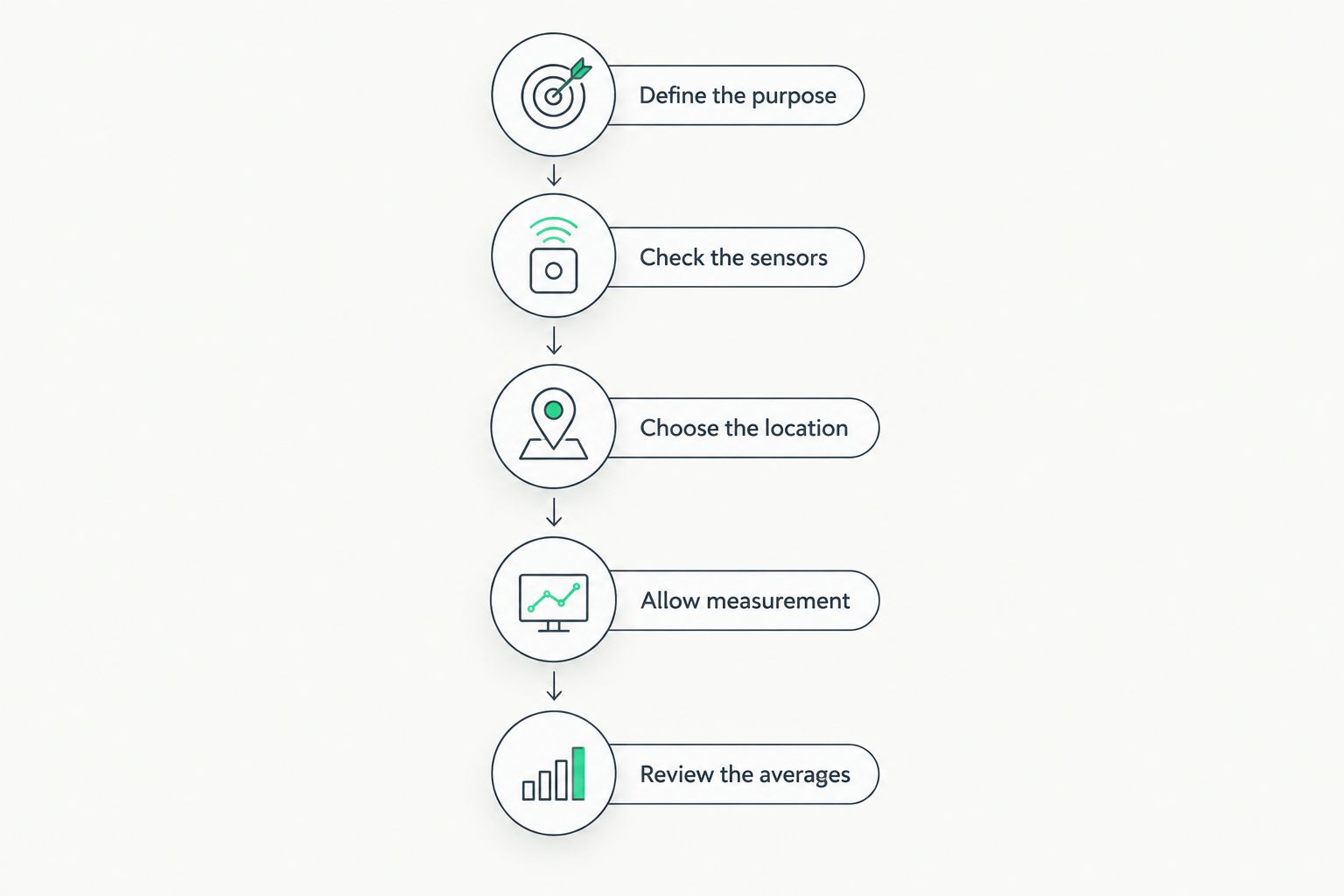
- Define the purpose. Decide whether you need ongoing household monitoring, an initial radon assessment, or a documented test for a transaction.
- Check the sensors. Confirm that the exact device measures radon and directly measures CO2.
- Choose the location. Follow radon placement guidance and the manufacturer's instructions. If the CO2 question concerns another room, use a separate sensor there.
- Allow measurement. Follow the required startup and measurement periods. Keep the device in place rather than moving it to investigate every changing number.
- Review the averages. Compare readings with the same units and averaging periods. Save the location and test dates with the results.
Do not place a monitor beside someone's face just to see the CO2 value rise. Exhaled breath is not a representative room sample. Likewise, do not open windows during a radon test that requires closed-house conditions simply to improve the display.
What radon number should prompt action?
4 pCi/L is the EPA action level for fixing a home with elevated radon. That is approximately 148 Bq/m³. EPA guidance also recommends considering mitigation when results fall between 2 and 4 pCi/L; a result below the action level is not a guarantee of zero risk.
For decisions in 2026, the EPA's A Citizen's Guide to Radon distinguishes short-term testing from long-term testing. Short-term tests run from 2 to 90 days, depending on the method; long-term tests run for more than 90 days. Follow the appropriate confirmation and action guidance for your result rather than treating a momentary digital value as a completed test.
The display's time window matters. A recent reading and a long-term average are not equivalent, even when both use pCi/L. The guide to reading your radon test results explains how to put the number into context.
There is no CO2 reading that clears a home of radon. Keep the EPA radon action level separate from any CO2 ventilation target you use.
Can a CO2 detector detect radon?
No. A CO2 detector cannot detect radon unless the device also contains a separate radon sensor. CO2 is measured as a gas concentration, while radon measurements describe radioactive activity in air.
A device's general air-quality score is not a substitute. Before relying on it, find an explicit radon measurement and the units used to report that measurement.
Is a CO2 monitor the same as a carbon monoxide alarm?
No. CO2 means carbon dioxide; CO means carbon monoxide. A monitor that measures CO2 does not detect CO unless it includes a separately specified carbon monoxide sensor and the appropriate alarm function.
Keep properly installed carbon monoxide alarms according to their instructions and applicable requirements. If a CO alarm sounds, leave the building and contact emergency services from outside; do not use a CO2 or radon reading to decide whether to stay.
Can one monitor replace professional radon testing?
Not automatically. A consumer monitor can help you track radon over time, but a property transaction or other formal assessment can require specific equipment, procedures, and documentation. Confirm those requirements before starting a test.
Michigan Radon Control is best suited to Metro Detroit and Lansing homeowners and realtors who need NRPP-certified radon testing and mitigation services. Michigan Radon Control radon testing addresses the radon question; it does not turn a household air-quality monitor into a CO2 assessment service.
Professional testing has a defined scope. Ask what the report covers, and arrange separate CO2 monitoring when ventilation is also a concern.
Request a radon assessment
Discuss radon testing for your home or property transaction in Metro Detroit or Lansing.
FAQ
What’s the best co2 and radon detector setup for my house?
Choose a combined monitor when radon and CO2 need measuring in the same room. Choose separate monitors when your radon testing location and your occupied-room ventilation concern are in different places.
Can a normal CO2 reading mean my radon level is safe?
No. A normal CO2 reading cannot establish your radon level because the gases have different sources and require different sensors.
Does a radon detector also detect carbon monoxide?
Not unless it explicitly includes a carbon monoxide sensor and the appropriate alarm function. Keep carbon monoxide alarms separate from assumptions about what an air-quality monitor measures.
What radon level needs fixing in 2026?
4 pCi/L is the EPA action level for fixing a home with elevated radon. EPA also recommends considering mitigation between 2 and 4 pCi/L; follow the appropriate testing and confirmation guidance.
How long does a radon test need to run?
Short-term radon tests run from 2 to 90 days, depending on the testing method, according to EPA guidance. Long-term tests run for more than 90 days; follow your device instructions and the testing protocol.
Will opening a window fix both radon and CO2?
Opening a window is not a dependable radon mitigation plan. Outdoor air affects indoor concentrations, but temporary changes do not prove that either issue has been resolved.
Can Michigan Radon Control help if my monitor shows elevated radon?
Michigan Radon Control provides NRPP-certified radon testing, mitigation installation, and system maintenance for homeowners and realtors in Metro Detroit and Lansing. Save your monitor’s readings, averaging periods, and location to discuss during your assessment.
One last thing
The extra sensor is useful only if you understand the extra reading. Before choosing a monitor in 2026, write down the room you want to measure and the decision you will make from each result. If those rooms or decisions differ, separate devices can be the simpler choice.
Keep the radon question concrete: measure radon, interpret the correct average, and act on the result. A reassuring CO2 display cannot do that job for you.
Related guides
- Best continuous radon monitors for Michigan homes
- Radon mitigation as part of a whole-home air-quality plan
- How to verify your radon mitigation system is still working