
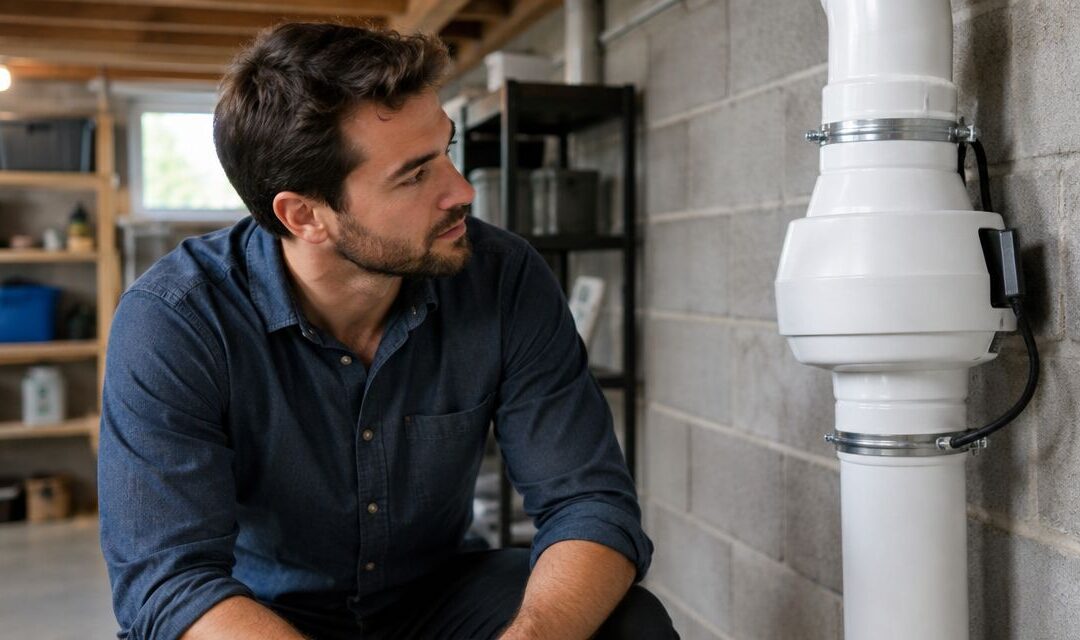
Yes. A radon fan in an active mitigation system should run 24 hours a day, 7 days a week, including overnight and while you are away. Turning it off stops the suction that helps keep radon-containing soil gas out of your home; a low test result does not mean the fan is no longer needed.
- Does radon fan run all the time? Yes—active radon mitigation requires continuous operation.
- A pressure gauge shows system suction, not your home’s radon concentration.
- Keep the fan running during radon testing to measure protection under normal conditions.
- Address noise or electricity concerns through system assessment, not scheduled shutdowns.
Does a radon fan need to run all the time?
An active soil-depressurization system needs continuous fan operation because it controls radon entry rather than removing the source underground. The fan pulls soil gas through collection piping and discharges it outdoors through the system's vent. That protection depends on maintaining suction.
You do not need to hear a loud motor to confirm operation. Check the system's operating indicator and follow the installer's instructions; this guide explains how to read a radon mitigation system's pressure gauge.
| System condition | What it means | What you should do |
|---|---|---|
| Fan runs continuously | Expected operation for an active system | Leave it powered and check the operating indicator |
| Fan cycles on a timer | Suction stops during scheduled shutdowns | Have the installer correct the control arrangement |
| Fan stops unexpectedly | Active suction is interrupted | Check accessible indicators and arrange service |
| Passive system has no fan | Venting relies on natural pressure differences | Use radon testing to determine whether it provides enough reduction |
Continuous operation is normal; continuous operation alone does not prove that indoor radon is low. You need both a functioning system and radon measurements.
Why this matters
It's completely natural to worry when equipment runs without a break. A radon fan is different from a bathroom fan or a furnace blower: it does not wait for someone to use a room or for a thermostat to call for heating.
Radon forms naturally in soil and rock. Pressure differences draw soil gas through foundation openings, so an empty home or a finished basement does not remove the need for mitigation. The fan maintains a pressure difference beneath the slab or a sealed crawl-space membrane that helps redirect that gas outdoors.
For your 2026 home-maintenance plan, treat radon mitigation as an ongoing control system, not a completed cleanup. A successful test shows the system was reducing radon during the test; it does not establish that the same result will continue after shutdown.
Active and passive systems work differently
Active mitigation is best for homes that need fan-assisted soil-gas control. Its advantage is sustained suction beneath the foundation or membrane. Its limitation is that it depends on electricity, sound installation, maintenance, and follow-up testing.
Passive mitigation is best suited to homes where testing confirms that natural-draft venting provides adequate reduction. It has no operating fan, but its performance depends on natural pressure differences. The presence of a vent pipe alone does not establish that indoor radon is adequately controlled.
| System type | How gas moves | Main benefit | Main limitation |
|---|---|---|---|
| Active mitigation | A continuously operating fan creates suction | Maintains fan-driven soil-gas collection | Requires power and operating checks |
| Passive mitigation | Natural pressure differences move gas through a vent | Operates without a fan | Testing must confirm whether reduction is sufficient |
If your home already has an active system, unplugging the fan does not establish that it can work adequately as a passive system. Leave the installed system operating unless a qualified professional directs a temporary shutdown for service.
Why fan sound, suction, and radon readings vary
The need for continuous operation stays the same even when the system's sound or measurements change. Different observations tell you different things.
- Foundation layout: Separate slabs, crawl spaces, and additions affect how suction reaches the areas beneath your home.
- Soil conditions: The ease with which air moves beneath a slab affects airflow and the pressure the system develops.
- Weather: Wind, temperature differences, and soil moisture affect radon entry and system conditions.
- Pipe arrangement: Pipe routing, supports, and contact with framing affect how vibration reaches living spaces.
- System condition: A failing fan, disconnected pipe, or obstruction changes operation and needs attention.
- Building changes: Foundation work, basement remodeling, and changes to heating or ventilation can alter conditions that affect radon control.
Do not adjust fan operation to chase a particular gauge reading. A higher pressure reading is not automatically better, and there is no universal correct reading for every house. Compare the indicator with the installer's documented operating range.
How do I check whether my radon fan is working?
Use a simple observation routine. You do not need to open the fan housing, disconnect piping, or handle electrical wiring.
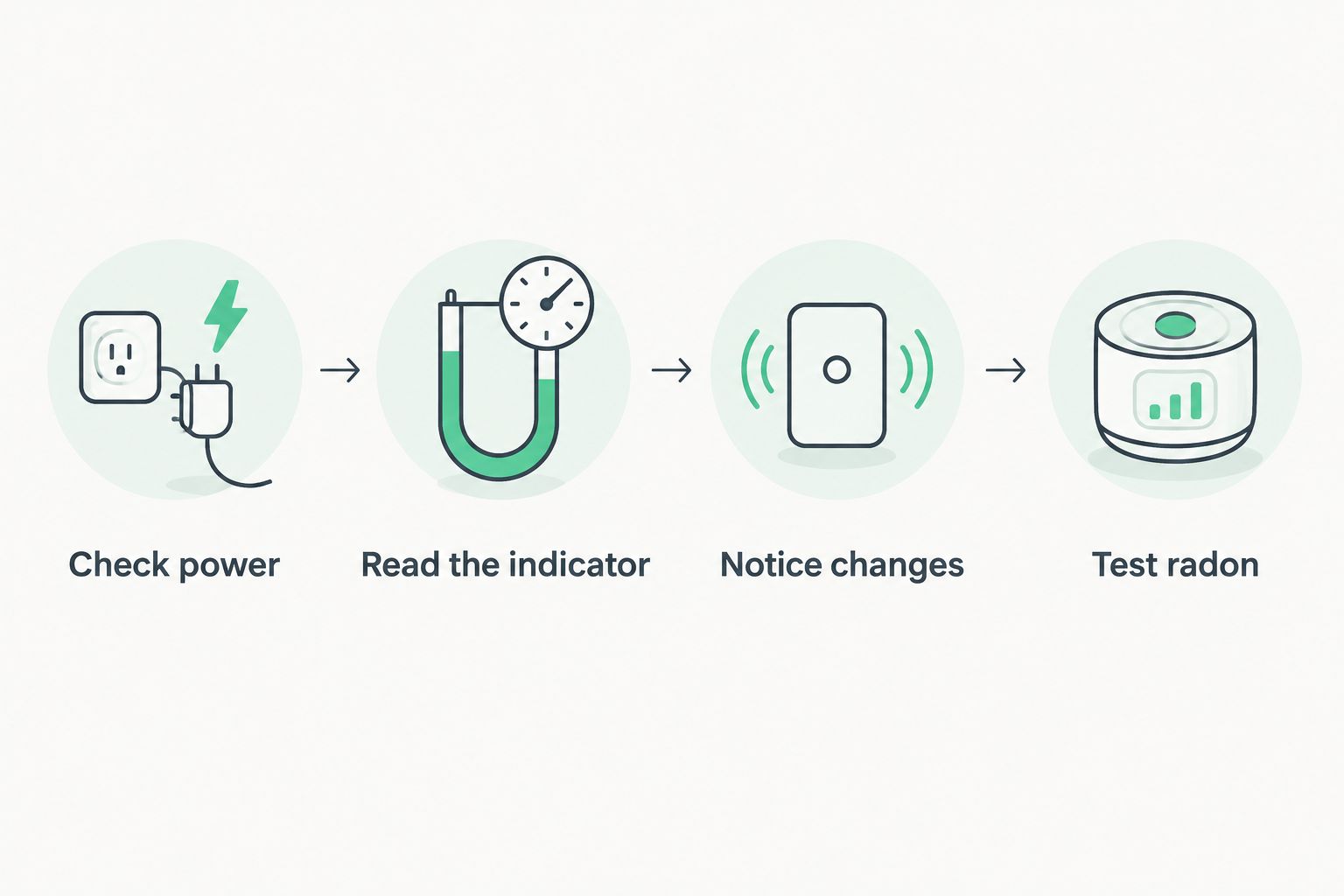
- Check power. Look for an obvious loss of electricity or an accessible switch that was accidentally turned off. Do not open electrical enclosures.
- Read the indicator. Compare the pressure gauge or operating indicator with the instructions and baseline supplied for your system.
- Notice changes. Record new rattling, grinding, unusual vibration, an alarm, or a sudden change from the normal gauge position.
- Test radon. Use a properly conducted radon measurement to confirm the indoor concentration, even when the fan appears to operate normally.
A liquid-filled U-tube gauge usually shows a pressure difference through unequal liquid levels while suction is present. Equal levels call for attention, but they do not identify the cause by themselves. A fan problem, lost power, or an issue with the gauge tubing needs different corrective work.
Keep a photo of the normal gauge reading with your installation paperwork. Add a dated observation to your 2026 maintenance record when you notice a change, so the technician has a useful comparison rather than a description from memory.
What should I do if my radon fan stops?
Arrange service promptly and avoid assuming that the previous low radon result still applies. A stopped fan interrupts the active pressure control, but the speed and extent of any radon increase depend on the home.
Start with safe, accessible checks. Confirm whether your home has power and whether an obvious switch or plug has been disturbed, following the system's instructions. If a breaker repeatedly trips, do not keep resetting it; have the electrical fault assessed.
During a utility outage, leave the system's normal controls in their intended operating position. Once power returns, confirm that the fan and operating indicator return to normal. Do not assume that restored lights prove the radon system restarted correctly.
For a 2026 outage checklist, record the interruption, the restart, and any continuing alarm or abnormal reading. There is no universal number of fan-off hours that establishes a home is safe. Radon is a long-term exposure concern, and the practical response is to restore control rather than guess the indoor concentration.
Can I turn the fan off at night or on vacation?
Keep the fan running 24 hours a day, including when you sleep or leave home. Radon entry does not follow your household schedule, and turning the system off allows the pressure conditions beneath the home to change.
A vacant home still needs ongoing radon control. When you return, an operating fan sound does not tell you what happened to indoor radon during the shutdown. Avoid timers, occupancy-based controls, and smart-plug schedules that interrupt the fan.
Temporary shutdown for repair is different from routine cycling. Let the service professional manage that interruption and explain how to verify operation afterward.
Should I switch the fan off because it is noisy?
No—keep the fan running 24 hours a day unless a fault requires a safe shutdown for service. New noise deserves inspection, not a nightly off switch.
A steady operating sound differs from grinding, rattling, or vibration that has recently appeared. Note where you hear the noise, whether it travels through walls, and whether the gauge reading changed at the same time. Those observations help a technician distinguish mounting or pipe-support issues from a fan problem.
If you notice smoke, a burning electrical smell, or damaged wiring, do not touch the equipment. Follow appropriate electrical and fire-safety procedures and obtain professional help. Continuous-operation guidance does not mean ignoring an immediate equipment hazard.
Does continuous operation waste electricity?
Continuous power use is part of how an active mitigation system works. You should not reduce runtime to reduce electricity consumption, because scheduled shutdowns also interrupt suction.
For an electricity review in 2026, use the installed fan's actual wattage and your utility's billing information rather than a generic estimate. The guide to how much electricity a radon mitigation fan uses explains the information to check.
Ask for an operating assessment before changing equipment. Fan selection depends on the pressure and airflow the foundation needs; choosing a smaller fan solely for its electrical rating does not establish that it will control radon adequately.
How often should I test with the fan running?
Keep the fan operating throughout routine radon testing. You want to measure the home under its normal protected conditions, not deliberately interrupt the mitigation system.
For your 2026 testing calendar, EPA homeowner guidance recommends retesting at least every 2 years after mitigation. Retesting also matters after significant changes to the home or work that affects the system. Follow the test device's placement and operating instructions, including any required closed-house conditions.
EPA residential guidance recommends fixing homes at 4 pCi/L or higher and considering reduction between 2 and 4 pCi/L. A result below 4 pCi/L is not a zero-risk threshold. Review the measurement with your radon professional rather than treating a single low reading as permission to disconnect the fan.
When should I request professional help?
Request an assessment when the fan stops, an alarm sounds, the pressure indicator departs from its documented range, or new noise develops. Also seek help when follow-up testing shows that radon remains elevated despite an apparently operating fan.
Michigan Radon Control is best for Metro Detroit and Lansing homeowners and realtors seeking NRPP-certified radon testing, mitigation installation, and system maintenance. Michigan Radon Control provides radon mitigation services, but a running fan still requires testing to establish the indoor result. Service does not replace ongoing homeowner checks.
Before the appointment, gather the previous radon report, installation paperwork, gauge photos, and a short description of the change. Ask Michigan Radon Control to explain the normal operating indicator, what requires a service call, and whether follow-up testing is needed after the work.
Request a system assessment
Discuss fan operation, maintenance, or radon testing for your Metro Detroit or Lansing home.
FAQ
Does my radon fan need to run all the time?
Yes. A fan in an active radon mitigation system should run 24 hours a day, 7 days a week. Continuous suction helps keep radon-containing soil gas from entering the home.
Can I put my radon fan on a timer?
No. A timer interrupts the suction an active radon system needs. Keep the fan continuously powered rather than scheduling it around occupancy or electricity use.
Does a low radon result mean I can unplug the fan?
No. A low result with the fan running shows conditions while the mitigation system was operating. It does not establish that radon will remain low after the fan stops.
Will my radon fan restart after a power outage?
Check the fan and operating indicator after power returns rather than assuming the system restarted. Arrange service if the fan remains off, an alarm continues, or the indicator does not return to its normal range.
Does the pressure gauge tell me my radon level?
No. A pressure gauge indicates a pressure difference in the mitigation system, not indoor radon concentration. You need a radon test to measure radon in the home’s air.
Should I leave the fan running during a radon test?
Yes. Leave the mitigation fan running during routine follow-up testing so the result reflects normal system operation. Follow all instructions for the test device and testing conditions.
Who can check a radon fan in Metro Detroit or Lansing?
Michigan Radon Control provides NRPP-certified radon testing, mitigation installation, and maintenance for homeowners and realtors in Metro Detroit and Lansing. Request an assessment for a stopped fan, changed operating indicator, or unusual noise.
One last thing
A quiet fan is not proof of failure, and a loud fan is not proof of protection. The useful combination is a normal operating indicator plus a properly conducted radon test. Save both records together so your next maintenance decision rests on measurements, not sound.
Related guides
- How to schedule radon testing after mitigation installation
- How to maintain your radon mitigation system
- How to fix a noisy radon mitigation fan