
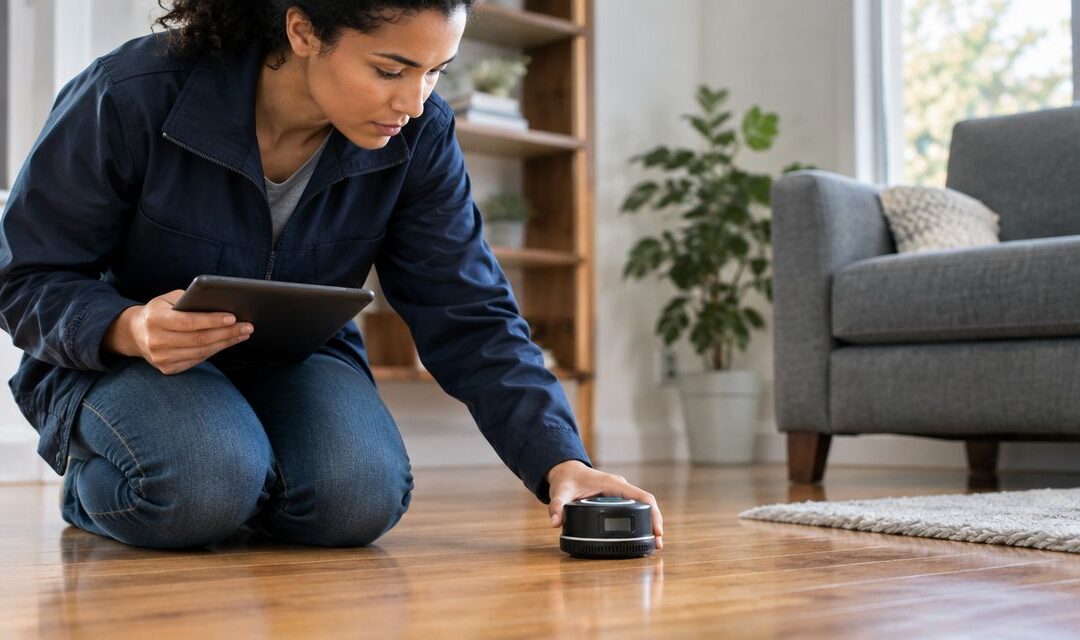
Yes. If you rent in Michigan, you can ask your landlord for radon testing, and you can ask to arrange a test yourself. Making the request does not, by itself, establish who must arrange or pay for the test. In 2026, the clearest next step is to put your request in writing and agree on access before placing a device in the home.
- Can renters request radon testing in Michigan? Yes; ask the landlord in writing and agree on access first.
- A test result of 4 pCi/L or higher calls for action under EPA guidance.
- Michigan Radon Control provides NRPP-certified testing for Metro Detroit and Lansing property owners and realtors.
- Keep the test report and discuss any needed mitigation with the landlord.
Why this matters
It's completely natural to worry about radon in a home you don't own. You live with the indoor air, but the landlord controls decisions about changes to the property. A written request gives both of you a place to start: what will be tested, who will arrange it, and how you will share the result.
Radon levels cannot be judged by how a home looks, smells, or feels. Testing is the way to find out what is happening indoors. If you're discussing a rental property with its owner, radon testing for rental properties in Michigan is a relevant guide to share.
Can renters request radon testing in Michigan?
Yes. Ask for a test in writing, then settle the practical details before it begins. A request is not the same as permission to install equipment or alter the home. Your lease and the landlord's response matter when deciding how to arrange access and any follow-up work.
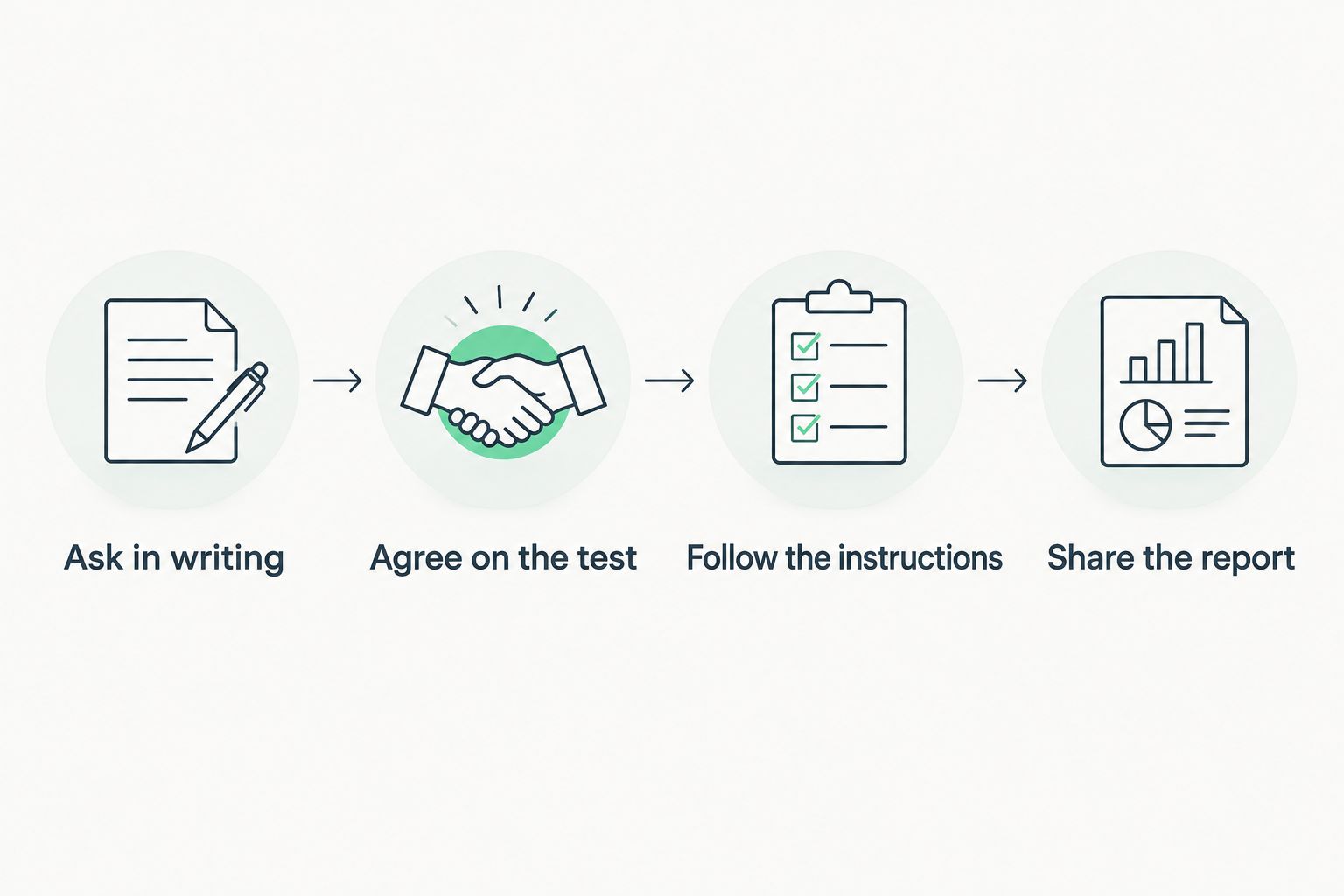
- Ask in writing. Identify the rental unit and ask whether it has been tested for radon. Request a copy of any report the landlord can provide.
- Agree on the test. Ask who will select the test method, arrange access, and receive the results. If you want to arrange it yourself, tell the landlord before placing a device.
- Follow the instructions. A short-term radon test generally runs for at least 48 hours. The instructions for the device determine placement and any required closed-house conditions.
- Share the report. Send the result to the landlord in writing and keep a copy. If the result calls for follow-up, ask what happens next and when you will hear back.
You can keep the first message simple: ask whether the unit has a radon test report and, if not, request a test. State that you want the written result. You do not need to diagnose a problem to make that request.
If the landlord agrees to testing, clarify which spaces the test will cover. A result from another unit does not tell you the radon level in yours. The report should identify where the device was placed so you can understand what the result represents.
What should your written request include?
Name your unit, ask for any existing report, and say whether you are asking the landlord to arrange a test or seeking permission to arrange one. Request a written answer about access and where the completed report will be sent. Keep your message factual; the purpose is to make the next step clear.
If you have already used a test kit, send the full report rather than only the result. Include the testing dates and location shown on the report. That gives the landlord information to review without asking them to rely on a number separated from its context.
Can you arrange a radon test yourself?
You can ask to arrange one. Before you place a device, check your lease and coordinate with the landlord about access, placement, and any instructions that affect the home during testing. A test device is different from a mitigation system: testing measures the air, while mitigation involves work on the property.
A do-it-yourself kit and a professional test are different ways to measure radon. For either method, follow the test instructions and keep the report. If a result will guide work on the building, discuss the result and next steps with the property owner.
What if the landlord already has a report?
Ask for the complete report and check its address, unit, test location, and date. A report can answer your question only if you know what was tested. If the document covers a different unit or does not identify the space tested, ask about testing your unit rather than treating it as your result.
A previous result also does not replace a conversation about conditions now. If work has changed the building or you cannot tell where the earlier test took place, explain that concern in your request. Keep the discussion tied to the report, not assumptions about the property.
What should you do with the result?
Use the number on the report to decide what to discuss next. The U.S. Environmental Protection Agency recommends fixing a home when the radon level is 4 pCi/L or higher and considering action when it is between 2 pCi/L and 4 pCi/L. Those are EPA health-guidance levels, not a statement here about a landlord's legal duties under your lease.
| Reported result | What to discuss with the landlord |
|---|---|
| Below 2 pCi/L | Keep the report and note which space was tested. |
| Between 2 pCi/L and 4 pCi/L | Discuss the EPA's recommendation to consider action and whether follow-up testing is appropriate. |
| 4 pCi/L or higher | Ask how the result will be confirmed or addressed under EPA guidance, and request the follow-up plan in writing. |
Do not treat a result from one room as a measurement of every room or unit. Check the report's placement details before drawing a conclusion. If the report is incomplete or the device instructions were not followed, discuss a new test rather than arguing over an uncertain result.
Radon levels can change over time. Keep the report even when the result is below the EPA action level; it records where and when the measurement was taken. If a mitigation system is installed later, ask for the post-installation test report so you can see the measured result after the work.
Who decides whether to install a mitigation system?
A mitigation system changes the building, so the property owner needs to be part of that decision. If you're a renter, send the report to the landlord and ask for a written plan. Do not arrange drilling, piping, electrical work, or changes to an existing system without the owner's authorization.
Michigan Radon Control is best for Metro Detroit and Lansing property owners and realtors seeking NRPP-certified radon testing and mitigation services. For a renter, the practical route is to bring the owner into the conversation before arranging property work. Michigan Radon Control also provides system maintenance; that is relevant if the landlord says the rental already has a system.
Request a radon inspection
Coordinate testing for a property in the Metro Detroit or Lansing area.
Why the next step varies
A radon request is straightforward, but the right follow-up depends on facts you can check. Use these points to keep the conversation focused:
- Which unit was tested. In a multi-unit property, identify your unit on the report. Do not substitute a neighbor's result for yours.
- Where the device was placed. The location helps you understand which part of the home the result describes.
- How the test was run. Read the device instructions and report. A result is harder to interpret when you cannot establish that the test conditions were followed.
- What the result shows. Compare the reported level with the EPA's 4 pCi/L action level and its guidance to consider action between 2 pCi/L and 4 pCi/L.
- Whether a system exists. If the property already has mitigation, ask when it was last tested and whether the owner has a report showing the system's measured performance.
- Who can approve property work. Testing and installation are different decisions. Agree on the follow-up with the landlord before work that changes the building.
These factors explain why asking for a test and asking for mitigation are separate conversations. The first establishes a measured result. The second addresses what to do with it.
What if your landlord does not respond?
Follow up in writing and keep copies of your messages. Repeat the specific request: an existing report, permission to arrange a test, or a response to a result you have shared. A clear record is more useful than a series of verbal conversations you cannot later reconstruct.
If you disagree about access, payment, or the landlord's responsibilities, consult your lease and seek Michigan tenant-law guidance for your circumstances. Do not assume that the EPA's radon action level, on its own, answers a lease or legal question. It tells you when the EPA recommends action to reduce radon; it does not identify who must pay for work at a particular rental.
If you have a report showing 4 pCi/L or higher, include it with your follow-up. Ask the landlord to confirm receipt and describe the proposed next step. Keep the exchange focused on the measured result and the response you are requesting.
Can you ask for testing before signing a lease?
Yes. Ask whether the unit has been tested and request the report before you decide whether to rent it. If there is no report, ask whether testing can be arranged and when you would receive the result. This gives you a specific question to resolve before move-in rather than an open-ended assurance about the building.
Look for the address, unit, location, and date on any report you receive. If the report identifies another space, ask whether your intended unit can be tested. You cannot tell the radon level in your future living space from the appearance of the building.
Should you retest after mitigation?
Yes. A post-installation test is how you check the indoor radon level after a mitigation system has been installed. If the landlord arranges work, request the follow-up report, not just confirmation that installation is complete.
Keep both reports. The earlier test explains why action was considered; the later one shows the measured level after the work. If the property already had a system when you moved in, ask for the available test report rather than assuming the equipment alone proves the current level.
FAQ
Can renters request radon testing in Michigan in 2026?
Yes, renters can ask their Michigan landlord for radon testing in 2026. Put the request in writing and agree on access, the test method, and how the result will be shared.
Can I test my Michigan rental for radon myself?
You can ask to arrange a radon test yourself. Check your lease and coordinate placement and access with your landlord before starting.
Does asking for a radon test mean my landlord has to pay for it?
A request alone does not establish who pays for testing. Check your lease and seek Michigan tenant-law guidance if you and your landlord disagree about responsibilities.
What radon level calls for action?
The EPA recommends fixing a home at 4 pCi/L or higher and considering action between 2 pCi/L and 4 pCi/L. Share the complete test report with your landlord when discussing next steps.
How long does a short-term radon test take?
A short-term radon test generally takes at least 48 hours. Follow the instructions for the specific device and keep the report showing when and where the test was run.
Does a neighbor’s radon result tell me the level in my unit?
No, a neighbor’s result is not a measurement of your unit. Ask for a report that identifies your rental unit and the space tested.
Should a rental be tested again after radon mitigation?
Yes, a post-installation test checks the indoor radon level after mitigation work. Ask your landlord for the completed report so you can see the measured result.
One last thing
In 2026, the most useful answer to a radon concern is a report for your unit that says where and when it was tested. Ask for that document first. If the result calls for action, you and the landlord can discuss a specific measured level instead of guessing about the building.
Related guides
- How to test your home for radon
- How to read your radon test results
- Radon mitigation for multi-family rental properties
- How to schedule radon testing after mitigation installation