
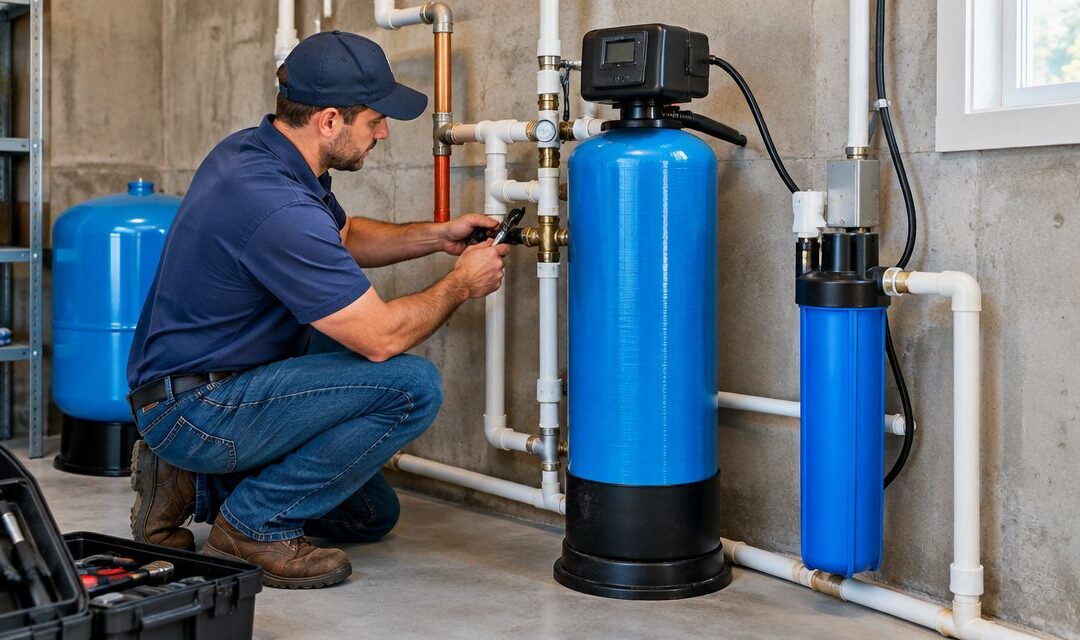
Radon in well water needs its own treatment system, separate from the sub-slab depressurization systems used for soil gas, and the two get confused constantly. If your well test comes back elevated, the fix is a water treatment unit plumbed into the line between your well pump and your pressure tank, not a vent pipe through the roof.
- A radon-in-water system installs between the well pump and pressure tank, using aeration or GAC filtration.
- Aeration systems remove up to 99% of radon from well water; GAC filters typically remove 95% or more.
- Electrical work for the treatment unit and any second pump must meet code — this is not a DIY wiring job in 2026.
- Test the water again 30 days after installation to confirm the radon water treatment system and well pump are working together correctly.
- Michigan well owners on granite-heavy or fractured bedrock aquifers see the highest raw water radon readings statewide.
Why this matters
Radon dissolved in well water off-gasses into the air every time you run a faucet, flush a toilet, or take a shower. A 2026 review of Michigan well water testing data shows private wells drawing from granite or fractured limestone aquifers post some of the highest radon-in-water readings in the state, and that water source becomes a second, ongoing contributor to indoor air radon even after a sub-slab system is already running.
The two problems don't share a fix. A soil gas mitigation fan pulls air from under the foundation. A radon water treatment system works entirely on the plumbing side, treating water before it distributes through the house. Skip the water side and you can pass an air retest with a fan installed, then watch levels creep back up months later because the well was never addressed.
Before you start
- Confirm the water test first. Have raw well water tested for radon in pCi/L before buying equipment — treatment sizing depends on that number, and guessing wastes money on an undersized unit.
- Check your electrical panel capacity. Aeration systems run a second pump plus a fan motor continuously; older 100-amp panels in homes built before the 1980s sometimes need an upgrade before the unit can be added.
- The gotcha: aeration systems need a spare 220-gallon-per-day drain path (typically a floor drain or sump) for the off-gassed radon vented from the tank — if your mechanical room has no floor drain nearby, plan the location around that constraint before you order equipment, not after the tank arrives.
Set up the pressure tank bypass
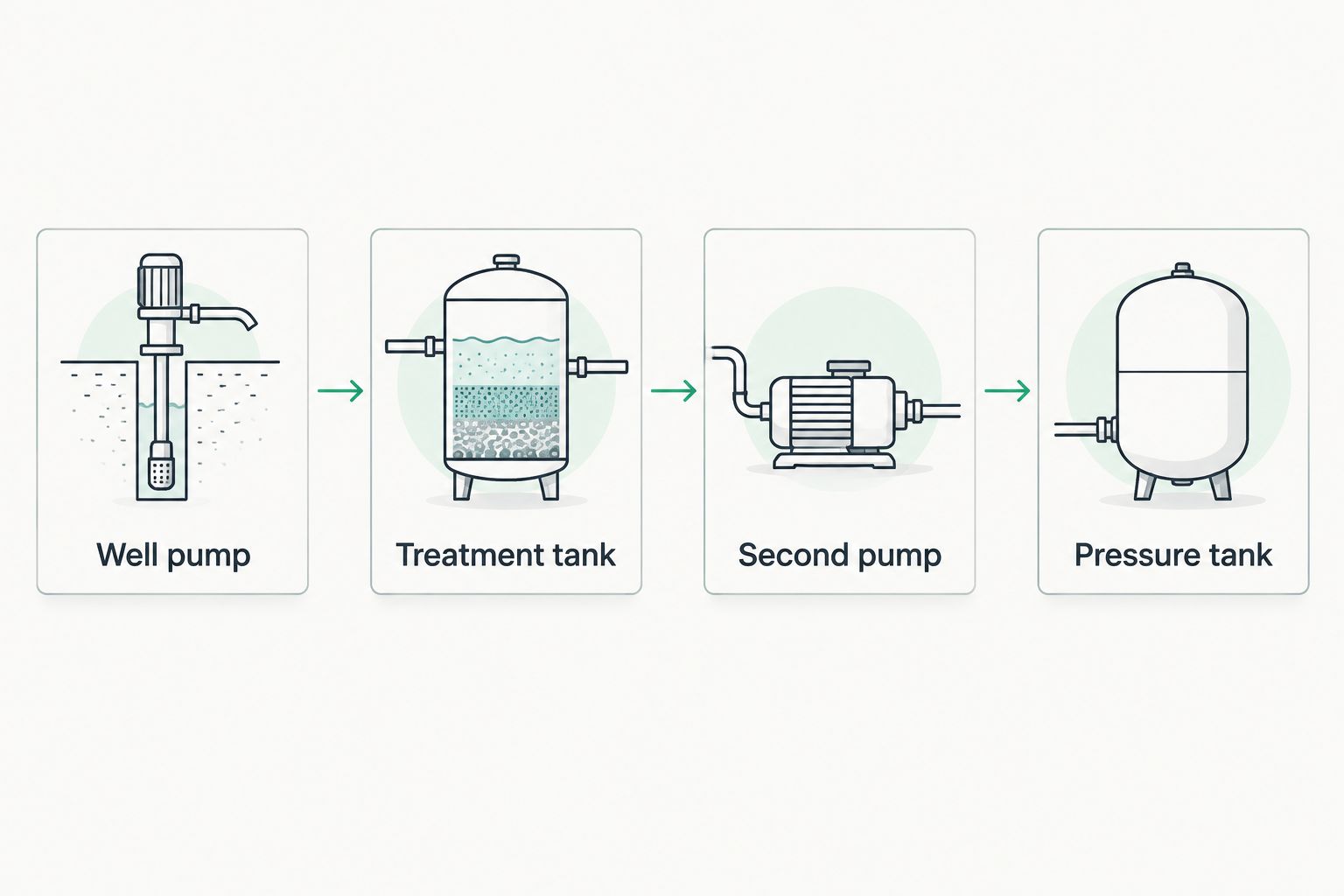
Most radon-in-water systems install as a standalone tank system positioned between the well pump's discharge line and the existing pressure tank, so the well pump fills the treatment tank first and a second pump pushes treated water on to the house.
- Shut off power to the well pump at the breaker and relieve pressure at an outdoor spigot before cutting into any line.
- Cut the well discharge line at the point closest to where the pressure tank currently sits.
- Install a tee fitting to route raw water into the inlet of the radon treatment tank rather than straight to the pressure tank.
- Mount the treatment tank on a solid, level base — most units run 500-800 lbs full of water, so a concrete pad or reinforced platform is not optional.
- Run the outlet line from the treatment tank to a second pump, which pushes treated water into the existing pressure tank and on to household plumbing.
Expected result: water flows well pump to tank to second pump to pressure tank, with no bypass loop feeding untreated water directly into the house.
Wire the pump relay and control panel
The second pump and any fan motor on an aeration unit need their own circuit, and most manufacturers require a control panel that sequences the well pump, the treatment tank fan, and the second pump so they don't run against each other and burn out a motor.
- Install a dedicated 20-amp circuit for the control panel, sized to the manufacturer's amp draw specification for your unit.
- Wire the well pump's power lead through the control panel's input terminal, not directly to the original pressure switch.
- Connect the second pump to the panel's output terminal so it activates only once the treatment tank reaches its fill level.
- Ground the panel to the same ground rod or grounding electrode system as the rest of the electrical service — a floating ground on a wet mechanical room floor is a shock hazard, not a shortcut.
Expected result: the well pump fills the tank, the panel triggers the fan cycle, and the second pump only engages once treated water is ready to move — check this by watching the panel's indicator lights through a full fill cycle.
Electrical work on a radon mitigation system, air or water side, has to meet the same code standards as any other permanent household wiring; the same logic that applies to fan circuits applies here — see the guidance on electrical code rules for a radon mitigation fan for the inspection points a Michigan electrician will check regardless of which side of the system they're wiring.
GAC filtration as the second variant
Granular activated carbon (GAC) filtration is the alternative to aeration, and it's worth considering when space is tight or a floor drain isn't available for aeration off-gassing.
- GAC tanks connect the same way — tee into the well line before the pressure tank — but skip the second pump and fan wiring entirely, since GAC works by adsorption, not by physically stripping radon out with air.
- GAC removes roughly 95% or more of waterborne radon in most residential setups, slightly below aeration's typical 99% removal rate, but the plumbing footprint is smaller and there's no continuous electrical draw.
- The tradeoff: GAC media accumulates radioactive decay products over years of use and needs periodic replacement, while aeration systems have no media to swap, just motors and fans to maintain.
Verdict: choose aeration when you have the drain access and want the highest removal rate; choose GAC when space or drainage is the limiting factor and a slightly lower removal percentage is an acceptable tradeoff.
Troubleshooting
- Second pump won't engage. Check the control panel's fill-level sensor first — a sensor coated in sediment from hard well water reads a false "empty" signal and never triggers the pump.
- Water pressure drops throughout the house after install. The second pump is usually undersized for the home's fixture count; verify its GPM rating against your household's peak demand, not just the well pump's original rating.
- Radon retest still shows elevated readings. Confirm water is actually routing through the treatment tank and not bypassing through an old tee that wasn't capped during installation — this is the single most common install error.
- Aeration fan runs constantly, never cycling off. The tank's float switch is likely stuck; a stuck float keeps the fan energized even after the tank has fully off-gassed, which burns out fan motors faster than the manufacturer's expected service life.
- Musty smell near the mechanical room after install. Standing water in the drain pan under the aeration tank is fermenting sediment — clean the pan and confirm the drain line has adequate slope.
Not sure which system your well needs?
Get a straight answer on aeration vs. GAC for your water test results.
Customize your setup
Once the water side is treated, most Michigan homeowners still need the soil gas side addressed separately — a radon-in-water system does nothing for radon entering through foundation cracks or a sump pit. If your air test came back elevated too, the plumbing guide for tying a mitigation system into an existing sump pump discharge covers the parallel process for the soil gas side, and running both systems together is standard for homes on well water with elevated readings on both tests.
Once both systems are running, add them to a regular maintenance rotation — the guide on how to maintain a radon mitigation system covers the check intervals for fans, gauges, and filter media so neither system quietly stops working between annual retests.
FAQ
Does a radon-in-water system replace a soil gas mitigation system?
No. A radon water treatment system only addresses radon dissolved in well water; soil gas entering through the foundation still requires a separate sub-slab depressurization system. Homes on well water often need both in 2026 if both tests come back elevated.
Can I connect a radon water treatment system myself without a licensed plumber?
The plumbing connections are straightforward for an experienced DIYer, but the electrical work for the second pump and control panel typically requires a licensed electrician to meet code. Most homeowners hire a plumber for the tank install and an electrician for the panel wiring.
How much radon do aeration systems remove from well water?
Aeration systems remove up to 99% of radon from well water, based on published EPA data. GAC filtration systems typically remove 95% or more, slightly lower but with a smaller equipment footprint.
Where does the radon water treatment system connect in the plumbing line?
It connects between the well pump’s discharge line and the pressure tank, so water is treated before it reaches the pressure tank and the rest of the household plumbing.
How soon after installation should the well water be retested for radon?
Retest 30 days after installation to confirm the system is performing as expected. A retest sooner can miss inconsistencies that show up once the system has cycled through normal daily water use.
Do GAC filters need to be replaced on a schedule?
Yes. GAC media accumulates radioactive decay products over years of continuous use and needs periodic replacement, unlike aeration systems which have no media to swap out.
Why does my water pressure drop after installing a radon water treatment system?
A second pump sized below your household’s peak GPM demand is the most common cause. Check the pump’s flow rating against your home’s fixture count, not just the well pump’s original capacity.
One last thing
The drain requirement trips up more installs than any wiring mistake — aeration tanks off-gas radon into the room air unless vented, so the tank location has to sit near a floor drain or sump before you commit to a spot, not after the equipment is already plumbed in. Homeowners who plan the mechanical room layout around drainage first, then wiring, skip the most common and most expensive redo in a 2026 radon water treatment installation.
Related guides
- Radon testing for homes with well water
- Best radon test kits for well water testing in Michigan
- How to verify your radon mitigation system is still working