
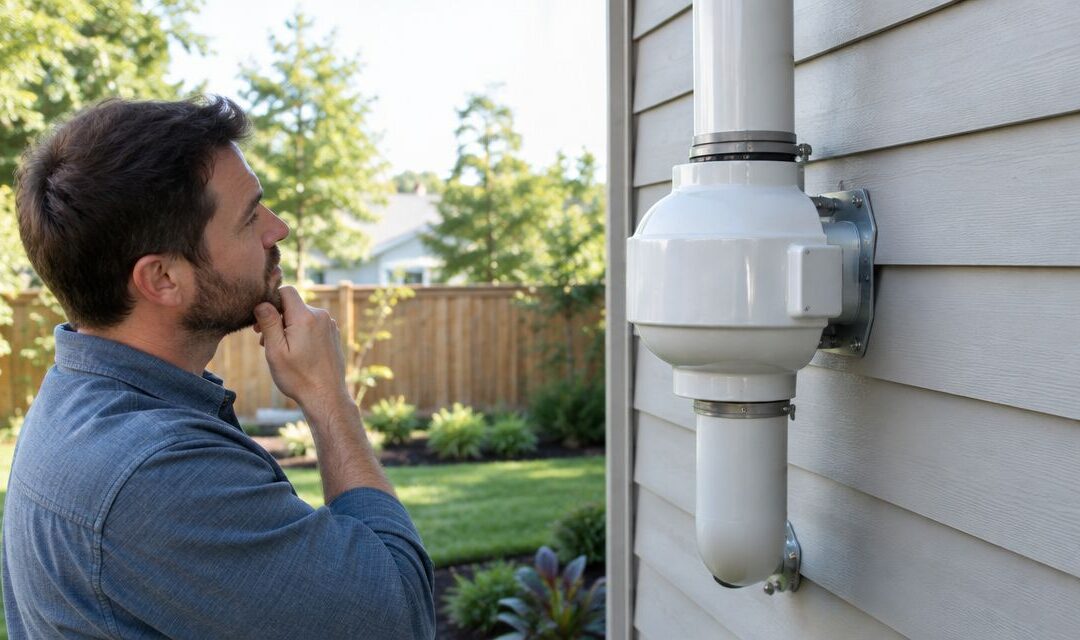
A radon mitigation fan’s electricity use depends on its running wattage and how long it operates. In 2026, a 50-watt fan running continuously uses 1.2 kilowatt-hours (kWh) per day, or 36 kWh over a 30-day month; a 100-watt fan uses 72 kWh over the same month. Those are calculation examples, not measurements of your fan. Check its actual power draw before using either figure to understand your electricity use.
- How much electricity does a radon fan use? A 50-watt example uses 36 kWh in 30 days of continuous operation.
- A 100-watt example uses 72 kWh over the same period; neither figure identifies your fan’s actual draw.
- Michigan Radon Control is best for Metro Detroit and Lansing homeowners who need certified radon system installation or maintenance.
- Keep the fan running as intended, and test indoor radon to check whether the system is reducing exposure.
Why this matters
It’s completely natural to worry when you learn that a radon system runs continuously. You want to know what it adds to your electricity use without compromising the system you rely on. The calculation is simple once you know the fan’s running wattage; deciding whether the system is working requires a different check.
A pressure gauge helps you check whether the system is creating suction, but it does not tell you the fan’s electrical consumption or your indoor radon level. If you are unsure what its reading means, see how to read a radon mitigation system’s pressure gauge. Treat the gauge, the fan’s power information, and a radon test as answers to separate questions.
How much electricity does a radon mitigation fan use?
Multiply the fan’s running watts by its hours of operation, then divide by 1,000 to get kWh. For a fan running all day, the daily calculation uses 24 hours. Multiply that daily result by the number of days you want to assess.
| Illustrative running draw | Use in 24 hours | Use in 30 days | What the example shows |
|---|---|---|---|
| 50 watts | 1.2 kWh | 36 kWh | Lower electricity use, but wattage alone cannot establish whether a fan suits your system. |
| 100 watts | 2.4 kWh | 72 kWh | More electricity use; the higher draw does not prove better radon reduction. |
These rows compare illustrative power draws, not specific fan models or recommendations. They assume the stated wattage stays constant throughout continuous operation. Your fan’s measured draw is the number to use for a household estimate.
The same calculation works for any reading: watts × hours ÷ 1,000 = kWh. If you are reviewing a bill in 2026, match the calculation to that bill’s actual number of days rather than assuming every billing period covers 30 days. A whole-home bill cannot isolate the radon fan on its own because it includes the home’s other electricity use.
50-watt example: 36 kWh in 30 days
At a steady 50 watts, the fan uses 0.05 kWh each hour. Over 24 hours, that becomes 1.2 kWh; over 30 days, it becomes 36 kWh. Best for: understanding the calculation when your fan’s confirmed running draw is 50 watts. The advantage is a lower calculated energy total than the 100-watt example; the limitation is that low wattage tells you nothing by itself about radon levels in your home.
100-watt example: 72 kWh in 30 days
At a steady 100 watts, the fan uses 0.1 kWh each hour. Continuous operation adds up to 2.4 kWh per day and 72 kWh in 30 days. Best for: estimating use when your fan’s confirmed running draw is 100 watts. The calculation captures the higher electricity draw, but it does not show that the fan is the right choice for your foundation or that mitigation is effective.
Neither example is a target wattage. Do not choose a radon fan from an electricity-use table alone. A working mitigation system must reduce radon in the occupied space; a low calculated kWh total cannot demonstrate that result.
How do you calculate your own fan’s electricity use?
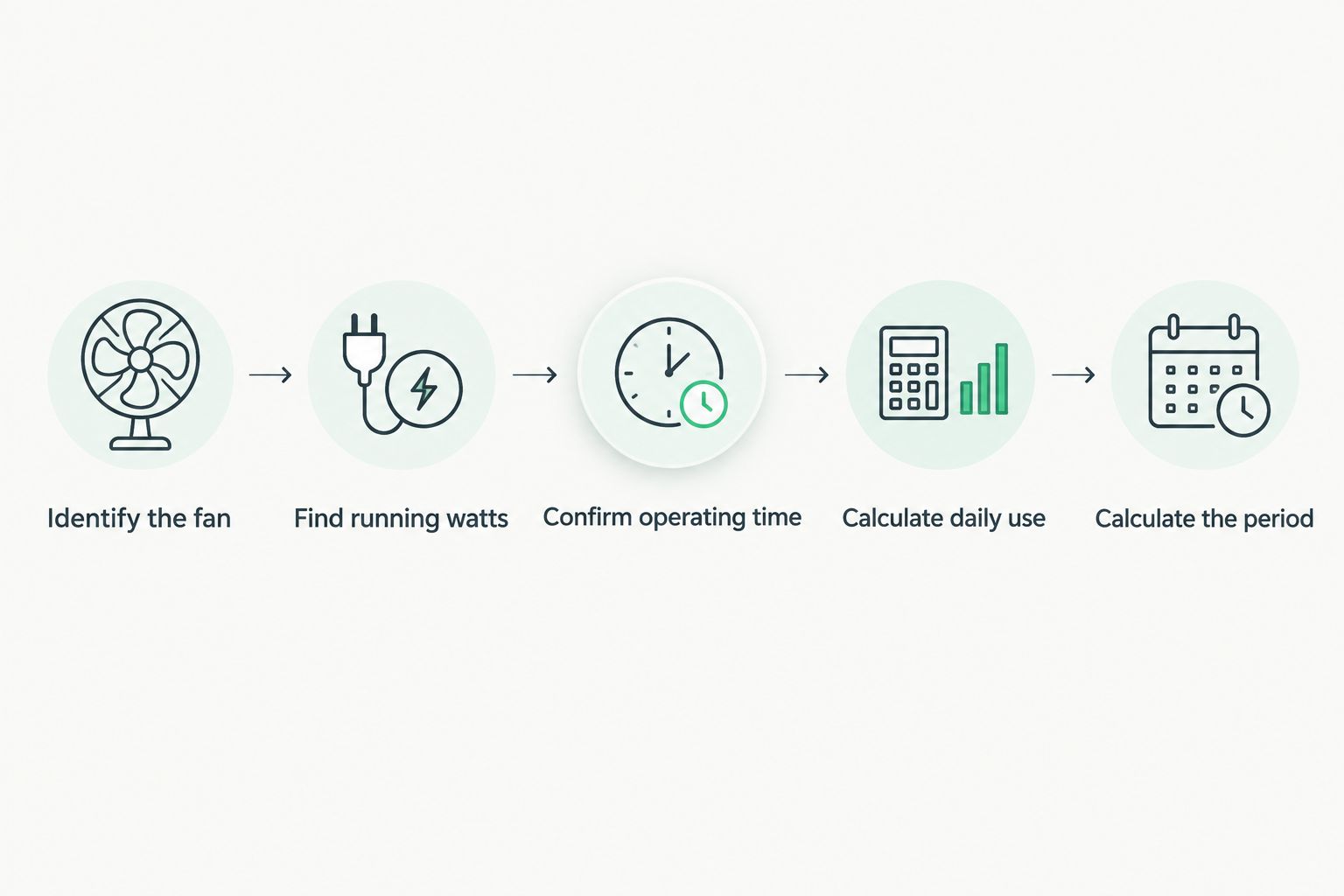
Use the fan’s actual running power, not a guess based on its size or sound. This sequence keeps the estimate tied to your system instead of to an example:
- Identify the fan. Find its model and electrical information without opening wiring or disturbing the installation.
- Find the running watts. Use a stated running-wattage figure when available, or have the power draw measured safely. A label that lists other electrical ratings is not automatically a reading of running watts.
- Confirm the operating time. A continuously running fan operates for 24 hours per day. If it has stopped, address that as a system issue rather than treating the interruption as an electricity-saving feature.
- Calculate daily use. Multiply running watts by 24 and divide by 1,000. The result is kWh per day.
- Calculate the period you care about. Multiply daily kWh by the days in your billing period. Keep the answer in kWh so it can be compared with electricity-use information on the bill.
For example, the 50-watt row gives 50 × 24 ÷ 1,000 = 1.2 kWh per day. Multiplying 1.2 kWh by 30 days gives 36 kWh. This arithmetic is useful in 2026 whether you are checking a newly installed system or revisiting an older one; the input must still reflect the fan that is actually installed.
If the label does not give you a clear running-wattage figure, stop short of treating it as a measurement. Do not unplug a radon fan, open its electrical connection, or alter its wiring just to fill in a spreadsheet. A qualified professional can help identify or measure the draw without interrupting the system unnecessarily.
Why radon fan electricity use varies
Two homes can have running radon fans and still show different electricity use. The calculation changes with these inputs:
- Running wattage. At the same operating time, a higher measured wattage produces a higher kWh total. The table shows the arithmetic, not which fan a home needs.
- Operating hours. More hours mean more electricity used. A fan that is not running also needs attention because the system is no longer operating as intended.
- Length of the period. A daily figure and a billing-period figure answer different questions. Use the number of days on the bill you are reviewing.
- Number of fans. If a property has more than one operating fan, calculate each fan’s kWh and add the results. Do not apply a single fan’s wattage to the entire setup.
- The wattage figure you use. A measured running draw, a clearly specified running-wattage figure, and an illustrative example are not interchangeable. Label your calculation so you know which one produced it.
For a 2026 household estimate, the most useful improvement is replacing an assumed wattage with the installed fan’s real running draw. That makes the electricity calculation more accurate. It still does not answer whether radon levels are low.
Does lower electricity use mean better radon mitigation?
No. Electricity use measures energy consumption, not radon reduction. A lower-wattage fan has the benefit of a lower calculated kWh total when operating hours are equal. Its drawback is that wattage alone cannot tell you whether the system creates the suction your home needs. A higher-wattage fan uses more electricity under the same assumptions, but its draw alone cannot prove that it performs better.
That distinction matters when you are concerned about a system that seems loud or appears on your electricity bill. Reducing its operating time changes the arithmetic, but it also interrupts mitigation. Keep the system operating as intended and investigate the concern directly instead of using the switch as a test of effectiveness.
A post-installation radon test addresses the question the power calculation cannot: what is happening to radon in the home. Michigan Radon Control provides NRPP-certified radon testing, mitigation installation, and system maintenance for homeowners and realtors in Metro Detroit and the Lansing area. Michigan Radon Control is best for local homeowners who need those services; it is not a substitute for checking the installed fan’s actual wattage when calculating electricity use.
Check your radon system
Ask about radon testing or maintenance for a home in Metro Detroit or the Lansing area.
Can you use your electricity bill to check the fan?
Your bill reports electricity used by the household, not a separate radon-fan reading. Compare a calculated fan total with the bill’s kWh only as context. A change in whole-home use does not identify the radon fan as its cause.
Start with the billing dates and the fan’s confirmed wattage. Calculate use for those same days, then keep the figure separate from your household total. In 2026, as in any billing period, a 30-day example is only a match if the period you are examining actually spans 30 days.
If you suspect the fan has stopped or is drawing power abnormally, do not rely on a bill comparison for diagnosis. Check the system’s visible indicators and arrange a professional assessment when something looks wrong. Electricity use and radon test results serve different purposes: one tells you about power consumption; the other tells you about indoor radon.
Related questions
How much electricity does a radon fan use per day?
A 50-watt fan running for 24 hours uses 1.2 kWh per day in the calculation example. Substitute your fan’s actual running watts for 50 to calculate its own daily use.
How much electricity does a radon fan use in a month?
A 50-watt fan running continuously uses 36 kWh in 30 days; a 100-watt fan uses 72 kWh in 30 days. Those are examples, so use your fan’s running wattage and the actual number of days in the period.
Should I turn off my radon fan to use less electricity?
No. Turning it off reduces electricity use because it stops the fan, but it also interrupts the mitigation system. If its operation concerns you, have the system checked rather than switching it off to manage the bill.
FAQ
How much electricity does a radon fan use in 2026?
A 50-watt fan running continuously uses 36 kWh in a 30-day calculation example; a 100-watt fan uses 72 kWh. Check your installed fan’s running watts for an estimate specific to your home.
How do I find my radon fan’s running wattage?
Check the installed fan’s electrical information for a clearly stated running-wattage figure, or have its draw measured safely. Do not assume that every number on the label is its running wattage.
Does a radon fan run all day?
A continuously operating radon mitigation fan runs 24 hours per day. If yours has stopped, treat that as a system concern rather than an electricity-saving setting.
Does a lower-wattage radon fan reduce radon just as well?
Wattage alone cannot establish how effectively a fan reduces radon in your home. A radon test checks the indoor result; the electricity calculation does not.
Can I tell how much my radon fan uses from my electric bill?
A whole-home electricity bill does not separate the radon fan’s use from other household use. Calculate the fan’s kWh from its running watts and the number of hours it operates.
Is the pressure gauge an electricity meter?
No. A radon system’s pressure gauge indicates suction, not watts or kWh. It also does not measure the home’s indoor radon level.
Should I turn off my radon fan when I am away?
No. Turning the fan off interrupts operation of the mitigation system. Ask a qualified professional to assess an operating concern instead of stopping the fan.
One last thing
The most useful number is not the fan’s kWh total; it is the radon test result after the system is operating. The kWh calculation answers a fair household question, but it cannot confirm protection. For a Metro Detroit or Lansing homeowner, Michigan Radon Control’s radon testing and system maintenance services address that separate check. Keep both records: the fan information for your electricity estimate and the test result for your indoor radon assessment in 2026.
Related guides
- How to verify your radon mitigation system is still working
- How to tell if your radon mitigation fan needs replacing
- How to fix a noisy radon mitigation fan
- How to schedule radon testing after mitigation installation