
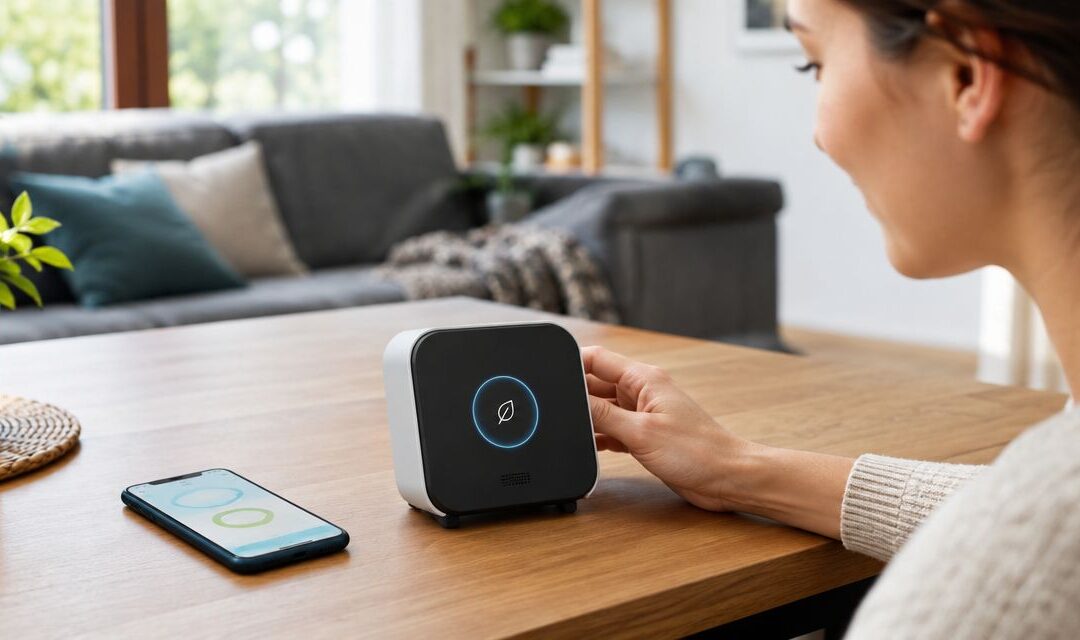
Yes, you can rent a radon detector instead of buying one for a temporary measurement, but renting equipment is not the same as hiring a professional to conduct a radon test. You remain responsible for correct placement, test conditions, and interpreting the results unless the rental agreement explicitly includes those services.
- Can you rent a radon detector? Yes; choose equipment rental for temporary measurement, not automatic professional certification.
- EPA guidance distinguishes short-term radon testing from long-term measurements lasting more than 90 days.
- Buying a continuous radon monitor suits ongoing tracking; renting suits a defined testing period.
- Michigan Radon Control provides NRPP-certified radon testing for Metro Detroit and Lansing homeowners and realtors.
Can you rent a radon detector instead of buying one?
Yes. Rent for a defined measurement period; buy for ongoing monitoring; hire a professional when you need someone to manage the test. The right choice depends on what you need the result to establish, not simply whether you want to own another device.
Before choosing equipment in 2026, review how to test your home for radon. A capable detector cannot correct an unsuitable location or a test interrupted by open windows.
| Testing option | Best for | Main advantage | Main limitation |
|---|---|---|---|
| Rented electronic detector | A defined, temporary measurement | You use a reusable instrument without keeping it | You must establish who handles setup, calibration documentation, and reporting |
| Purchased continuous monitor | Ongoing household tracking | You can observe changes over time | Ownership does not make a homeowner-run test independent |
| Laboratory-analyzed test kit | A measurement without reusable electronics | You receive a result for the exposure period | You must follow exposure, sealing, and mailing instructions |
| Professional radon test | Managed testing and documented results | A testing professional handles the measurement process | You must coordinate access and maintain the required household conditions |
These options answer different questions. A temporary measurement can help you decide what to do next, while ongoing monitoring helps you see changes after the initial test.
Why this matters
It's completely natural to worry about radon, especially when you are buying a home or deciding whether your basement is suitable for everyday use. You do not need to become an equipment expert. You need a valid measurement and a clear next step.
Radon levels change with weather, ventilation, and building conditions. A brief reading is not a complete picture of long-term exposure, and a detector's first displayed number is not automatically a completed test.
For a 2026 testing plan, separate three decisions: who owns the instrument, who conducts the test, and who accepts the report. Renting answers only the first.
Renting a detector: best for temporary measurement
A rental fits a homeowner who wants to use an electronic detector for a defined period without keeping it afterward. The benefit is temporary access to equipment. The trade-off is responsibility for using it correctly.
Ask for written instructions before accepting the device. Establish whether the instrument records an average over the entire test, whether you can export the data, and how previous measurements are cleared or separated from your home's results.
Use this checklist when evaluating a rental arrangement in 2026:
- Device identity: Ask for the manufacturer, model, and instructions.
- Measurement suitability: Confirm that the device is intended for the type of test you need.
- Calibration records: For instruments requiring calibration, request documentation consistent with the manufacturer's requirements.
- Reporting: Establish whether you receive a downloadable report, raw readings, or only a display average.
- Responsibilities: Identify who places the instrument, retrieves it, and explains an interrupted test.
Do not assume a rental includes professional interpretation. Choose rental equipment only when you can follow the complete testing procedure and the result fits your intended use.
Buying a monitor: best for ongoing tracking
Buying a continuous radon monitor makes sense when you want to track your home beyond a single testing period. You keep the instrument and can observe trends through seasonal changes or changes in how you use the house.
The limitation is easy to miss: a stream of readings still needs context. Moving the device between rooms, resetting it frequently, or comparing averages from different periods makes the information harder to interpret.
Before buying in 2026, check the manufacturer's instructions for measurement duration, calibration or replacement requirements, data storage, and operating conditions. Do not treat phone connectivity or a detailed graph as proof that the device meets a particular transaction's testing requirements.
Choose ownership for repeated observation, not as a substitute for a properly conducted initial test. Keep a record of where the detector sits and when each measurement period begins.
Using a test kit: best for a defined exposure period
A laboratory-analyzed radon test kit is another route when you do not need reusable electronics. You expose the kit according to its instructions, seal it, and send it for analysis.
The advantage is a measurement without managing an electronic instrument. The drawback is that handling matters: exposure timing, placement, sealing, and mailing all form part of the procedure.
EPA's A Citizen's Guide to Radon, which addresses residential testing, describes short-term tests as lasting 2 to 90 days, depending on the device. Long-term tests remain in place for more than 90 days and better represent the home's year-round average.
Choose a kit whose testing period matches your decision and deadline. Do not shorten the exposure period to get an answer sooner.
Professional testing: best for a managed process
Professional testing suits homeowners who want help with placement, operating conditions, and understanding the result. It also deserves consideration when a home purchase requires independent documentation.
Michigan Radon Control is best for Metro Detroit and Lansing homeowners and realtors seeking NRPP-certified radon testing. Michigan Radon Control also provides mitigation installation and system maintenance services.
The service does not remove your role. You still need to provide access, leave the equipment undisturbed, and follow the tester's instructions about windows, doors, and ventilation.
For a 2026 home purchase, ask the parties handling the transaction what testing procedure and documentation they require before arranging the measurement. Do not assume a homeowner-operated rental will satisfy them.
Why the right testing choice varies
The same detector arrangement does not suit every household. Focus on these factors rather than choosing equipment first:
- Purpose: Personal screening, ongoing monitoring, a home purchase, and post-mitigation verification have different documentation needs.
- Measurement period: A short-term test answers a different question from a long-term average.
- Setup responsibility: Renting requires you to understand who selects the location and maintains test conditions.
- Instrument records: Calibration documentation and an identifiable device matter when assessing the measurement process.
- Report requirements: A display reading, exported data, and an independently prepared report are not interchangeable.
- Follow-up: The result must lead to an appropriate next step, including additional testing or mitigation when indicated.
Choose the testing method around the decision you need to make. Owning, borrowing, or renting the instrument is secondary.
How do I use a rented radon detector correctly?
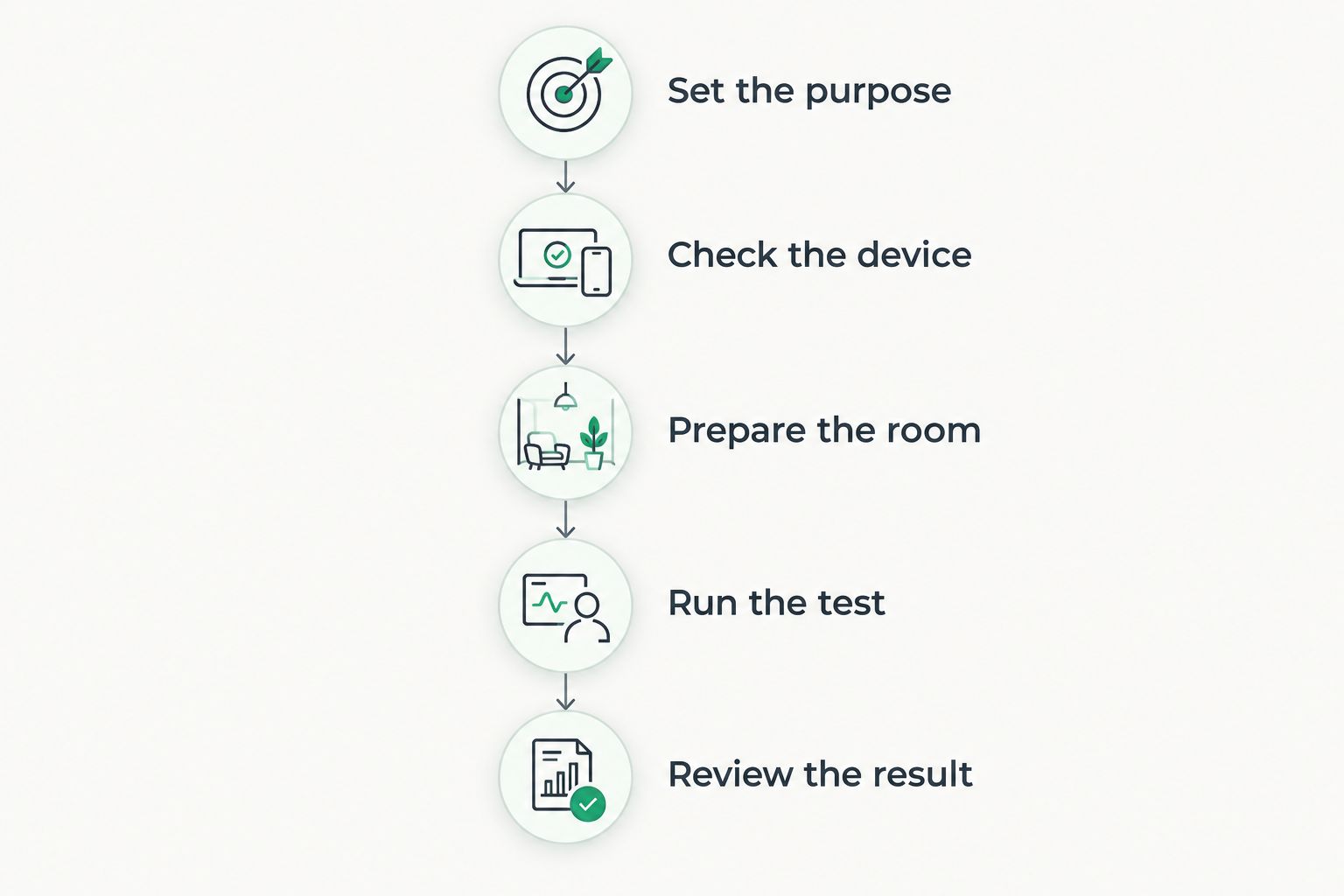
Start with the specific device instructions and the testing protocol that applies to your purpose. The following sequence helps you organize the process; it does not replace those instructions.
- Set the purpose. Decide whether you need household screening, ongoing observation, or a report for another party.
- Check the device. Confirm its identity, required measurement period, operating instructions, and relevant calibration records.
- Prepare the room. Select an appropriate location and establish the required closed-house conditions.
- Run the test. Leave the detector undisturbed for the full required period and record anything that interrupts the procedure.
- Review the result. Save the report and determine whether additional testing or mitigation is the next step.
A valid process connects all these steps. Starting the device is only one part of the job.
For residential screening, EPA guidance places the test on the lowest lived-in level of the home, away from drafts, high heat, high humidity, and exterior walls. It specifies placement at least 20 inches above the floor. Real estate testing can use different placement criteria, so tell the tester why you need the result.
For a short-term test lasting less than 4 days, EPA guidance calls for closed-house conditions for at least 12 hours before testing and throughout the test. Normal entry and exit are allowed; opening windows to air out the house is not consistent with those conditions.
How long should I keep a rented radon detector?
Short-term radon tests last 2 to 90 days, depending on the device and protocol. Your rental period must accommodate the required measurement, any device-specific preparation, and the handoff process.
Do not confuse the time needed for an instrument to begin displaying readings with the time needed for a valid test. Ask which average belongs in the final report and when that measurement period ends.
If your goal is a year-round estimate, EPA guidance favors a long-term measurement lasting more than 90 days. Choose the testing method around that goal rather than extending an unsuitable short-term arrangement.
What should I do if the detector shows high radon?
4 pCi/L is EPA's residential action level for taking steps to fix a radon problem. EPA's testing guidance uses the initial result and follow-up measurements to guide the decision; a single fluctuating display value is not the same as a completed test average.
EPA also recommends considering radon reduction for levels between 2 and 4 pCi/L. A result below 4 pCi/L does not mean there is no risk.
Keep the full report, note the test location and dates, and discuss the appropriate follow-up. Do not open windows during a test to produce a lower number, and do not use continued monitoring to postpone addressing an established problem.
FAQ
Can you rent a radon detector instead of buying one?
Yes, you can rent a radon detector for a temporary measurement instead of buying one. Establish who handles placement, device documentation, reporting, and interpretation before beginning.
Is renting a radon detector the same as professional radon testing?
No, renting equipment does not by itself include professional testing. A professional test includes responsibility for conducting and documenting the measurement, while an equipment-only rental leaves those tasks to you.
Is it better to rent or buy a radon detector?
Renting suits a defined measurement period; buying suits ongoing tracking. Neither option removes the need to follow the device instructions and the testing protocol appropriate to your purpose.
Can I use a rented radon detector when buying a house?
A rented detector does not automatically produce an acceptable real estate test. Confirm the required procedure, independence, and documentation with the parties handling the transaction before arranging the test.
How long does a radon test need to run?
Short-term radon tests run for 2 to 90 days, depending on the device, according to EPA residential guidance. Long-term tests last more than 90 days; follow the instructions for your particular test.
Should I open the windows during a radon test?
No, keep windows closed when the test requires closed-house conditions. For short-term tests lasting less than 4 days, EPA guidance calls for those conditions for at least 12 hours beforehand and throughout testing.
What radon reading means I need to take action?
4 pCi/L is EPA’s residential action level, with follow-up testing used as directed to guide the decision. EPA also recommends considering reduction between 2 and 4 pCi/L.
Does Michigan Radon Control rent radon detectors?
Contact Michigan Radon Control to ask about equipment rental. Its stated services include NRPP-certified radon testing, mitigation installation, and system maintenance for homeowners and realtors in Metro Detroit and Lansing.
One last thing
A radon mitigation system's pressure gauge does not measure indoor radon concentration. It indicates pressure in the system, so a normal-looking gauge cannot replace a radon test.
If your reason for renting is to check an existing mitigation system, plan an actual measurement. The useful result is a valid radon reading—not simply confirmation that the fan is running.
Related guides
- How long a radon test needs to run
- How to prepare your basement for a radon test
- How to read your radon test results