
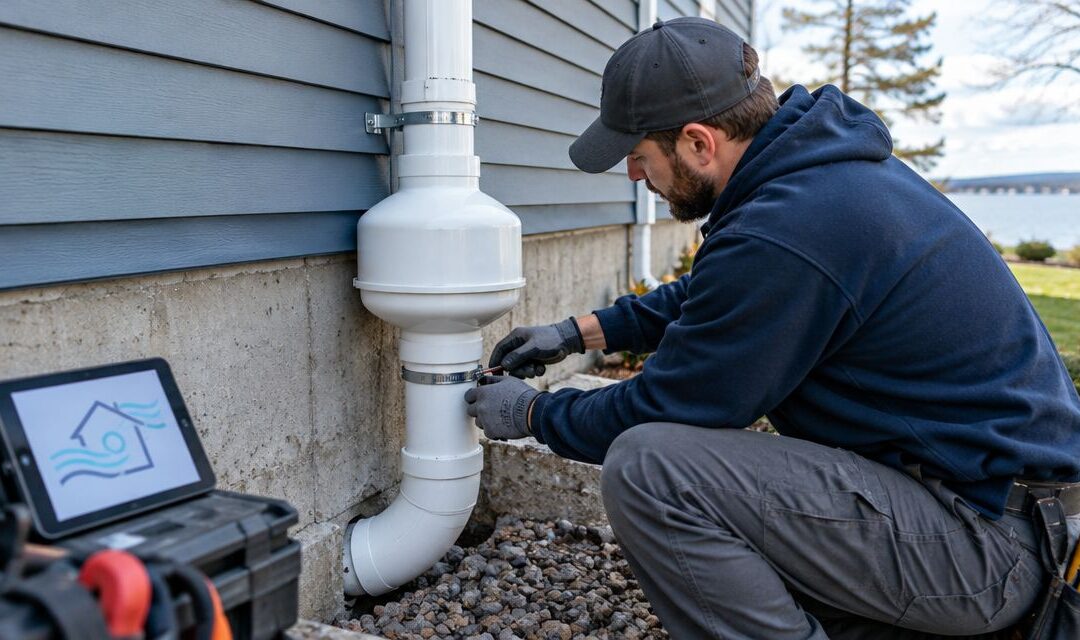
Michigan plumbers’ radon mitigation is the coordination of plumbing work with soil-gas control to reduce homeowners’ radon exposure. Your priorities are protecting sump seals, keeping radon piping separate from plumbing vents, and arranging testing when your work changes the foundation or an existing mitigation system.
- Radon mitigation for plumbers starts with testing and clear boundaries between plumbing and soil-gas control.
- Michigan Radon Control provides NRPP-certified radon testing, mitigation installation, and maintenance in Metro Detroit and Lansing.
- Never combine radon exhaust with plumbing vents, bathroom exhaust, or sump discharge piping.
- A running fan or pressure-gauge reading does not prove that indoor radon is low.
Why radon mitigation matters for Michigan plumbers
You work where plumbing and radon systems meet: sump basins, basement slabs, crawl spaces, and foundation penetrations. Replacing a pump or opening a sealed basin requires attention to both drainage access and the soil-gas barrier.
A homeowner’s concern is understandable. Radon has no smell, and you cannot judge its concentration by inspecting a basement. Start with how to test your home for radon, rather than treating a crack, damp floor, or neighborhood result as a diagnosis.
For your 2026 residential jobs, use the EPA’s home-radon guidance as the reference: fix homes with confirmed levels at or above 4 pCi/L, and consider reduction between 2 and 4 pCi/L. These are indoor-air concentrations, not pipe-pressure readings. A result below the action level does not mean zero risk.
Your plumbing repair and the home’s radon performance are separate acceptance checks. A working sump pump proves that the pump operates; it does not prove that the home’s radon concentration is controlled.
Follow these steps on plumbing jobs with radon concerns
Ask for the test report before recommending mitigation
Begin with a conversation and a visual inspection. Ask whether the home has been tested, where the device was placed, and whether a system was operating during the measurement. Read the actual report instead of relying on a remembered number.
EPA residential guidance distinguishes short-term tests, generally 2–90 days, from long-term tests lasting more than 90 days. Follow the device instructions and the applicable testing protocol; a brief consumer-monitor snapshot is not interchangeable with a completed test.
For a 2026 job involving a home sale, also identify who needs to accept the report. Do not promise that an informal measurement will satisfy an inspection agreement or transaction requirement.
- Record the result, units, test location, and collection dates.
- Ask whether basement or foundation work happened after testing.
- Photograph existing radon equipment before disturbing nearby plumbing.
- Identify who will arrange testing and receive the report.
Separate the plumbing scope from the radon scope
Map the systems before cutting pipe. A radon suction pipe, sanitary vent, sump discharge, and combustion vent serve different purposes even when they share a basement wall or use similar-looking materials.
Active soil depressurization draws soil gas from beneath a slab or membrane and exhausts it outdoors through a dedicated system. Plumbing venting manages drainage-system air pressure. A plumbing vent is not an acceptable substitute for a dedicated radon exhaust route.
Your plumbing experience helps you spot conflicts. It does not replace radon diagnostics, system-design training, or verification testing. Check applicable local requirements with the authority having jurisdiction before agreeing to work beyond your established scope.
- Label unfamiliar piping before disconnecting anything.
- Keep radon exhaust separate from sanitary and bathroom vents.
- Identify electrical work that needs a qualified electrician.
- Assign responsibility for radon design and final testing in writing.
Bring in a radon specialist before changing system performance
You can document the existing installation yourself: photograph the fan, pipe route, sump lid, system labels, and pressure indicator. Stop short of choosing a replacement fan or moving a suction point based only on pipe diameter.
Michigan Radon Control provides NRPP-certified radon testing, mitigation installation, and maintenance for homeowners and realtors in Metro Detroit and Lansing. Michigan Radon Control is best for homeowners in Metro Detroit and Lansing who need NRPP-certified radon testing, installation, and maintenance.
That makes the company a local referral option when a plumbing customer needs those services. The service description does not establish a statewide service area or a formal plumber-partner program; confirm the address and project scope directly.
For your 2026 referral checklist, verify the individual professional’s current credential and relevant discipline. Measurement and mitigation are different responsibilities. Explain the plumbing change clearly so the radon professional can assess its effect.
- Share the test report and photographs with the homeowner’s permission.
- Describe planned sump, drain, slab, or crawl-space changes.
- Ask who will assess suction coverage and system condition.
- Confirm who will explain findings and follow-up work to the homeowner.
Preserve sump access without leaving soil-gas openings
A sump basin can be part of a radon-control design. Opening its cover for pump service can interrupt that design, so plan how you will restore the lid, penetrations, and access arrangement before starting.
A sealed lid must still allow necessary maintenance. Match the sealing detail to the actual basin, pump equipment, and mitigation design; do not improvise an inaccessible cover or leave a loose lid because the pump works.
Review radon mitigation for homes with sump pumps when planning work around a shared basin. Keep the distinction clear: the pump removes water, while a radon system controls soil gas. Their piping is not interchangeable.
- Document the lid and penetration seals before removal.
- Protect existing radon piping while lifting pump equipment.
- Restore compatible seals around pipes and cables.
- Check pump operation and preserve service access afterward.
- Tell the homeowner if the original seal cannot be restored.
Coordinate slab work before closing the floor
A basement bathroom, ejector basin, or drain repair creates another coordination point. Opening and restoring a slab changes the assembly separating the living space from the ground. Plan penetrations and access before the concrete repair hides the work.
On a 2026 remodel, identify existing suction points, buried utilities, radiant tubing, and planned fixtures before cutting. Let the radon professional determine whether the proposed work affects system coverage or requires a design change.
Use a simple handoff sequence: Document, Coordinate, Restore, Retest. It keeps the plumbing repair moving without treating new concrete or sealant as proof of radon reduction.
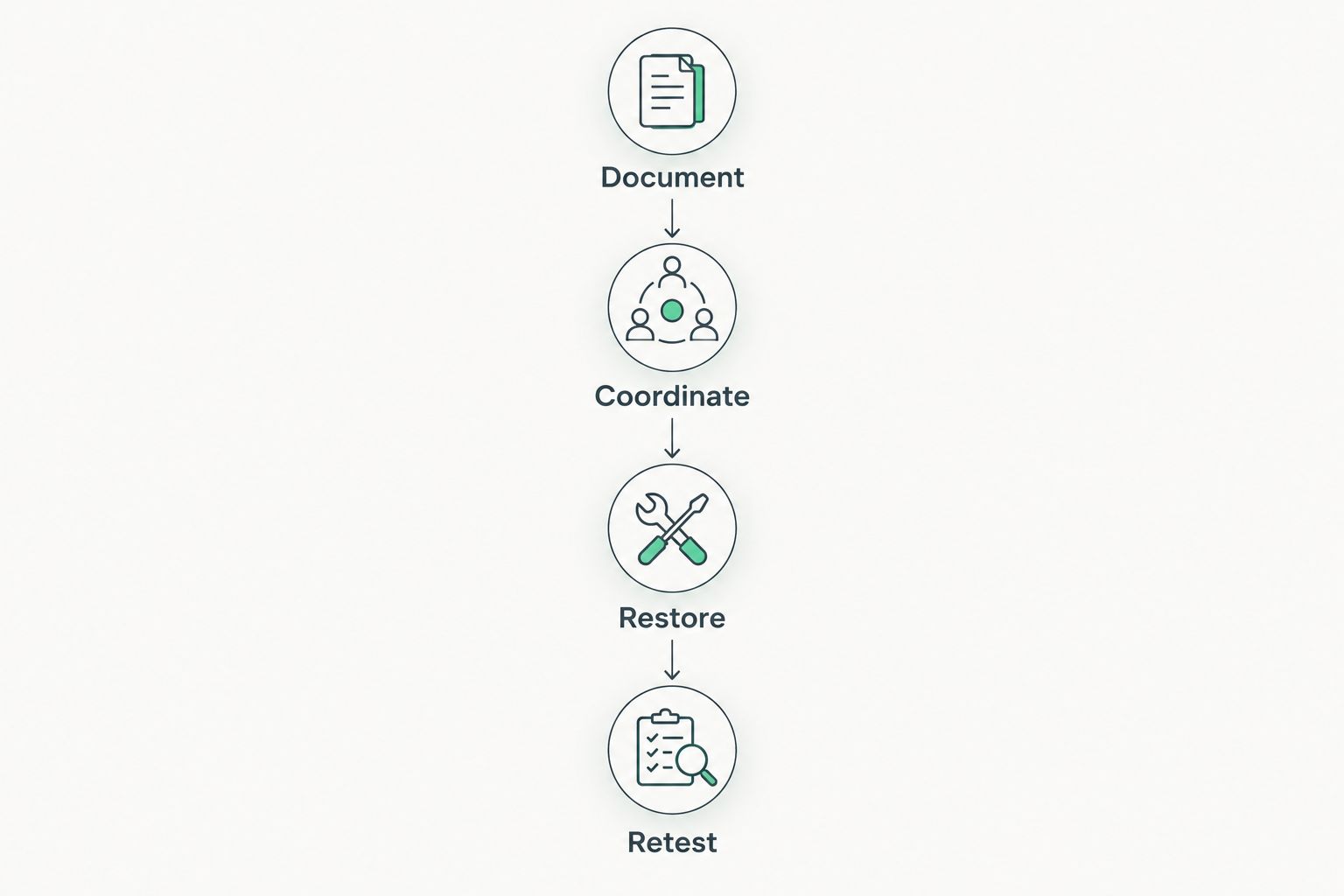
Keep each trade’s completion record separate. Your drainage test documents plumbing performance; the radon test documents indoor-air concentration. Neither replaces the other.
- Mark known piping and utilities before slab cutting.
- Share the planned trench and fixture locations.
- Coordinate new penetrations with the sealing plan.
- Photograph concealed work before floor restoration.
- Assign the follow-up radon test before project closeout.
Verify results and leave a usable service record
Start with straightforward checks: confirm the equipment you serviced operates, inspect restored seals, and compare the radon pressure indicator with its documented normal condition. Report changes instead of adjusting the radon system by trial and error.
A manometer shows pressure difference, not radon concentration. A fan can run while a damaged seal or inadequate suction coverage leaves indoor radon elevated. Only a radon measurement tells you the indoor radon level.
EPA post-mitigation guidance calls for testing after the system has operated for at least 24 hours, within 30 days of installation, using a test lasting at least 48 hours. For plumbing changes to an existing system, have the radon professional specify the appropriate verification plan rather than assuming every repair needs the same procedure.
- Record the work performed and any unresolved concerns.
- Restore labels and keep service access clear.
- Give the homeowner the responsible contractor’s details.
- Document who will order and review follow-up testing.
- Retain photographs alongside the plumbing service record.
Compare your options as a Michigan plumber
Choose an approach based on the work you intend to own. Recognizing radon-related conflicts is different from accepting responsibility for mitigation design and performance.
| Option | Best for | Practical advantage | Key limitation |
|---|---|---|---|
| Plumbing-only work with documented referral | Pump, drain, or fixture jobs involving an existing radon system | Keeps your plumbing scope clear | Requires a separate radon assessment when system performance is affected |
| Coordinated plumbing and radon work | Remodels, slab openings, and sump changes | Resolves trade conflicts before work is concealed | Requires an agreed sequence and named responsibilities |
| Michigan Radon Control radon services | Homeowners and realtors in Metro Detroit and Lansing | Provides NRPP-certified testing, installation, and maintenance | Confirm the project address and scope; statewide coverage is not established |
| Add a trained radon discipline to your business | Plumbing firms choosing to take responsibility for radon work | Creates a defined service within your own operation | Requires relevant training, credentials, equipment, and quality-control procedures |
For a plumbing firm that does not perform radon diagnostics, documented referral is the clearer boundary. Coordinated work fits projects where both trades must change the same basement or foundation assembly. Neither approach justifies promising a particular radon result before testing.
Common mistakes Michigan plumbers make
Treating a sump discharge as a radon exhaust route
Water discharge and soil-gas exhaust require separate designs. Do not join a radon pipe to the sump discharge because the basin already connects to both systems. Identify every pipe’s purpose before making changes.
Restoring the pump but not the basin seal
A successful pump replacement can still leave an open cable penetration or damaged lid gasket. Include the radon-related seal condition in your closeout inspection, and flag repairs that need specialist input.
Selecting a fan from pipe size alone
Matching a fan connection does not establish that the fan suits the home. Soil conditions, system resistance, suction coverage, and the existing design matter. Refer fan selection and performance assessment to the responsible radon professional.
Diagnosing radon from an odor complaint
Radon is odorless. A sewer-gas complaint needs its own plumbing investigation, while radon requires measurement. Do not dismiss an odor because a radon system is present, or describe the odor as radon.
Treating every well-water concern as an air-mitigation job
Indoor-air testing and water testing answer different questions. Ask what was measured before recommending treatment. A plumbing customer with a private well needs a source-specific assessment, not an automatic water-treatment recommendation based on an air result.
FAQ
Can a plumber install a radon mitigation system?
Plumbing experience alone does not establish radon-mitigation competence. Before taking responsibility for installation, obtain relevant training, verify applicable requirements, and establish procedures for diagnostics and performance testing.
Can I connect a radon pipe to a plumbing vent?
No. Keep radon exhaust separate from sanitary venting because the systems serve different purposes and require their own designs.
Does a sealed sump lid fix a radon problem?
A sealed sump lid alone does not prove that a radon problem is fixed. Sealing can support a mitigation design, but indoor-air testing must confirm the radon concentration.
Does the radon pressure gauge tell me the radon level?
No. A radon pressure gauge indicates pressure difference in the system, not indoor radon concentration. Use radon testing to measure exposure conditions.
Should I arrange another radon test after basement plumbing work?
Arrange a radon assessment when plumbing work changes the slab, sump seal, foundation penetrations, or mitigation equipment. The radon professional should specify the follow-up testing appropriate to those changes.
What radon reading needs action on a Michigan home in 2026?
EPA residential guidance recommends fixing homes with confirmed radon levels at or above 4 pCi/L and considering reduction between 2 and 4 pCi/L. Follow the applicable testing and confirmation process rather than diagnosing from an isolated reading.
Who can handle radon testing and mitigation near Detroit or Lansing?
Michigan Radon Control provides NRPP-certified testing, mitigation installation, and maintenance for homeowners and realtors in Metro Detroit and Lansing. Confirm the address, planned plumbing work, and required services directly before scheduling.
One last thing
A good-looking pipe installation is not a radon test. Straight piping, a running fan, and a working sump pump describe equipment condition—not the air the homeowner breathes.
Add a final question to your 2026 plumbing closeout: Who is responsible for confirming radon performance after this work? Write down the answer before leaving. It turns an easy-to-miss handoff into a clear next step for the homeowner.
Related guides
- How to schedule radon testing after mitigation installation
- How to read a radon mitigation system’s pressure gauge
- How to verify a radon mitigation contractor’s NRPP certification