
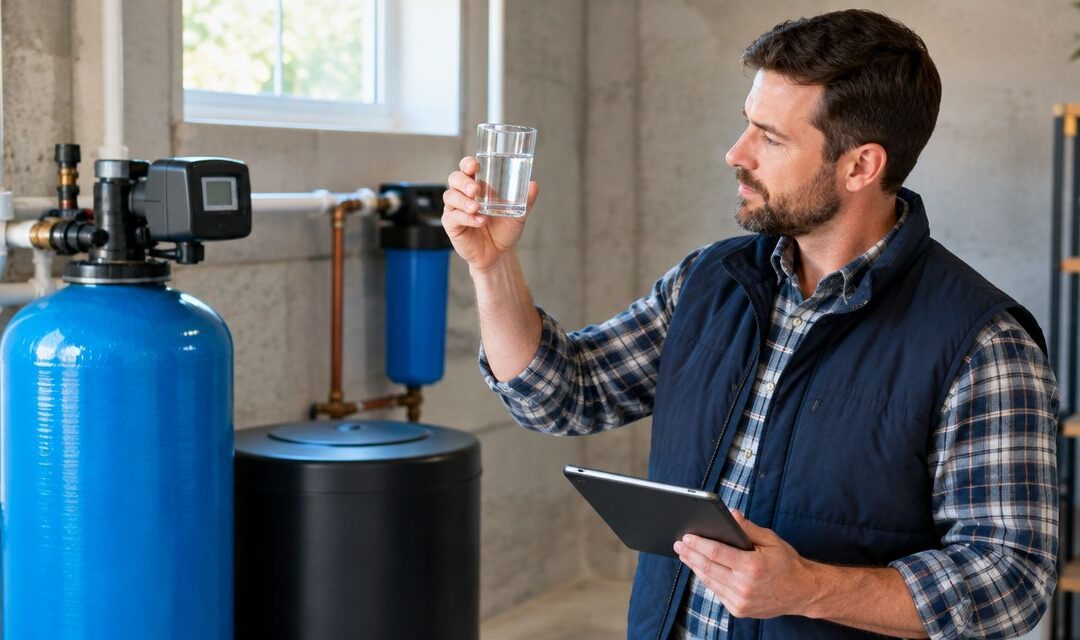
Best overall: whole-house aeration for a confirmed radon-in-water problem. Best for a lower radon concentration with a professionally planned media-service program: granular activated carbon. For Michigan well owners choosing treatment in 2026, the deciding factors are water-test results, safe exhaust routing, household water demand, and maintenance—not a familiar equipment name.
- For Michigan well owners, the best radon in water treatment systems start with aeration for confirmed treatment needs.
- Granular activated carbon requires careful selection because radioactive material accumulates in the treatment media.
- Test indoor air and well water separately; treating one does not automatically solve the other.
- Michigan Radon Control provides NRPP-certified radon testing and mitigation services in Metro Detroit and Lansing.
Why this matters
It's completely natural to worry when you hear that your well water contains radon. You do not need to choose equipment immediately. First, establish whether radon is elevated in your indoor air, your water, or both.
Radon is a radioactive gas that occurs naturally as uranium breaks down in soil and rock. Groundwater can carry dissolved radon into your home. Showers, laundry, and other water use release some of that gas into indoor air.
Michigan Radon Control is a fit for Metro Detroit and Lansing homeowners who need NRPP-certified radon testing and mitigation services. Start with Michigan Radon Control for those services, and ask any proposed water-treatment installer to document qualifications specifically relevant to radon in water.
EPA homeowner guidance identifies inhalation as the main concern when radon escapes from water. Soil gas is generally the larger source of indoor radon, so a high basement reading alone does not establish that your well needs treatment.
For a 2026 assessment, keep the units straight. EPA recommends fixing homes at an indoor-air result of 4 pCi/L or higher and considering action between 2 pCi/L and 4 pCi/L. Those are air recommendations, not water-treatment thresholds.
What makes the best radon-in-water treatment system?
Use these criteria before comparing proposals:
- Measured treatment need: The recommendation should identify the untreated water result and explain why treatment is appropriate. A neighborhood's radon reputation is not a substitute for your own sample.
- Whole-house coverage: Treatment should address water before it reaches showers, washing machines, and other indoor uses. A drinking-water tap alone leaves those release points untreated.
- Safe radon handling: Aeration needs a properly designed outdoor exhaust. Carbon needs a plan for radioactive buildup, service, and disposal.
- Water-system fit: The installer must account for well-pump operation, pressure, peak demand, and existing treatment equipment.
- Maintainable design: You need access to serviceable parts, clear operating instructions, and a defined response to equipment failure.
- Verified results: The proposal should include post-treatment water testing and an indoor-air assessment where appropriate. Equipment running is not proof of adequate reduction.
Choose a treatment method first, then evaluate the equipment proposed for your house. A model recommendation without your water result and plumbing requirements skips the most important decisions.
Radon-in-water treatment systems at a glance
| Treatment method | Best for | Standout feature | Key limitation |
|---|---|---|---|
| Whole-house aeration | Confirmed water-treatment needs where outdoor exhaust is feasible | Transfers dissolved radon from water into an exhaust air stream | Requires venting, power, and mechanical maintenance |
| Granular activated carbon | Lower radon concentrations with professionally managed media service | Captures radon in a carbon treatment bed | Radioactive material accumulates in the media |
These are treatment categories, not endorsements of particular manufacturers. For your 2026 purchase, compare the actual installation design and written performance documentation rather than treating every aerator or carbon tank as equivalent.
1. Whole-house aeration: best for confirmed treatment needs
Whole-house aeration brings well water into contact with air so dissolved radon leaves the water. The system then directs the radon-bearing exhaust outdoors through a dedicated vent. Treated water continues into your household plumbing.
Aeration is the default treatment method to evaluate when testing confirms a radon-in-water problem. It separates radon from the water without relying on a carbon bed that accumulates radioactive material.
Aeration designs differ in how they mix air and water. The important comparison is whether the proposed equipment treats your household's demand while maintaining suitable water pressure and safely exhausting the released gas.
Whole-house aeration pros
- Treats water before indoor uses release radon into your home.
- Removes radon through air transfer rather than storing it in carbon media.
- Supports evaluation through untreated and treated water samples.
- Provides a defined outdoor discharge route for the radon removed from water.
Whole-house aeration cons
- Needs a suitable exhaust route that prevents discharged gas from reentering the building.
- Adds powered equipment and mechanical components that require service.
- Requires planning for installation space, noise, plumbing, and water-pressure performance.
What to check before choosing aeration
Ask the installer to explain the complete path: incoming well water, treatment chamber, treated-water delivery, and outdoor exhaust. Ask how the system responds if its blower or water-delivery equipment stops working. Get the answer in writing.
Also ask how existing water-quality problems affect the design. Iron, sediment, and other conditions can influence fouling and maintenance; pretreatment should follow actual water analysis, not a standard package added without explanation.
For a Michigan installation in 2026, identify which components and piping need protection from freezing. That includes the proposed exhaust arrangement, not just the plumbing you can see indoors. The installation must follow equipment instructions and applicable requirements.
Best for: Well owners with a confirmed treatment need, a workable outdoor exhaust route, and room for the proposed equipment.
Verdict: Buy whole-house aeration when the design fits your tested water and household demand. Do not approve an installation until its exhaust route and verification plan are clear.
2. Granular activated carbon: best for carefully selected lower levels
Granular activated carbon, often shortened to GAC, passes water through a carbon bed that adsorbs radon. Unlike aeration, this method does not use an air-stripping exhaust to remove radon from the water. Radioactive material accumulates in the treatment media.
GAC is a conditional choice, not the automatic simpler alternative. EPA guidance identifies radioactive buildup as a concern with carbon treatment, especially as the incoming radon concentration increases.
A carbon tank therefore needs more than a replacement reminder. The installer should explain why GAC is suitable for your measured concentration and how the media will be evaluated, handled, and disposed of.
Granular activated carbon pros
- Treats household water at the point of entry.
- Does not require the dedicated radon exhaust used by aeration.
- Offers an established radon-removal method for appropriately selected applications.
Granular activated carbon cons
- Accumulates radioactive material that can create a radiation concern around the tank.
- Requires a professionally defined media-service and disposal plan.
- Is not the default choice for higher radon concentrations.
What to check before choosing GAC
Ask where the tank will sit relative to regularly occupied rooms and how the installer will assess radiation concerns. Request the basis for the media-service schedule, including how changes in water use or incoming radon affect that schedule.
Confirm who handles spent media and what disposal requirements apply. Do not accept instructions to discard used carbon as ordinary household waste without a qualified assessment.
Keep the roles of your existing filters clear. A carbon filter installed for taste or odor is not automatically a radon-treatment system. Its media volume, treatment design, and verified results must support the radon application.
For a 2026 decision, compare GAC's ongoing handling obligations with aeration's mechanical maintenance. Neither method is maintenance-free. A tank with fewer visible moving parts still carries responsibilities that you need to understand before installation.
Best for: Well owners with lower measured radon concentrations whose qualified installer documents suitability and provides a media-management plan.
Verdict: Hold on GAC until suitability, radiation precautions, and media disposal are documented. Choose aeration instead when those questions remain unresolved.
How these treatment methods rank
Aeration ranks first because it transfers radon into a managed exhaust stream rather than accumulating radioactive material in treatment media. GAC occupies a narrower use-case slot because its suitability depends heavily on concentration and media management.
Both methods require whole-house design and testing. Neither ranking removes the need to evaluate your well, water chemistry, plumbing, and installation space.
The ranking is a decision framework, not a claim that every aeration model outperforms every carbon installation. The final choice rests on documented treatment performance under your home's conditions.
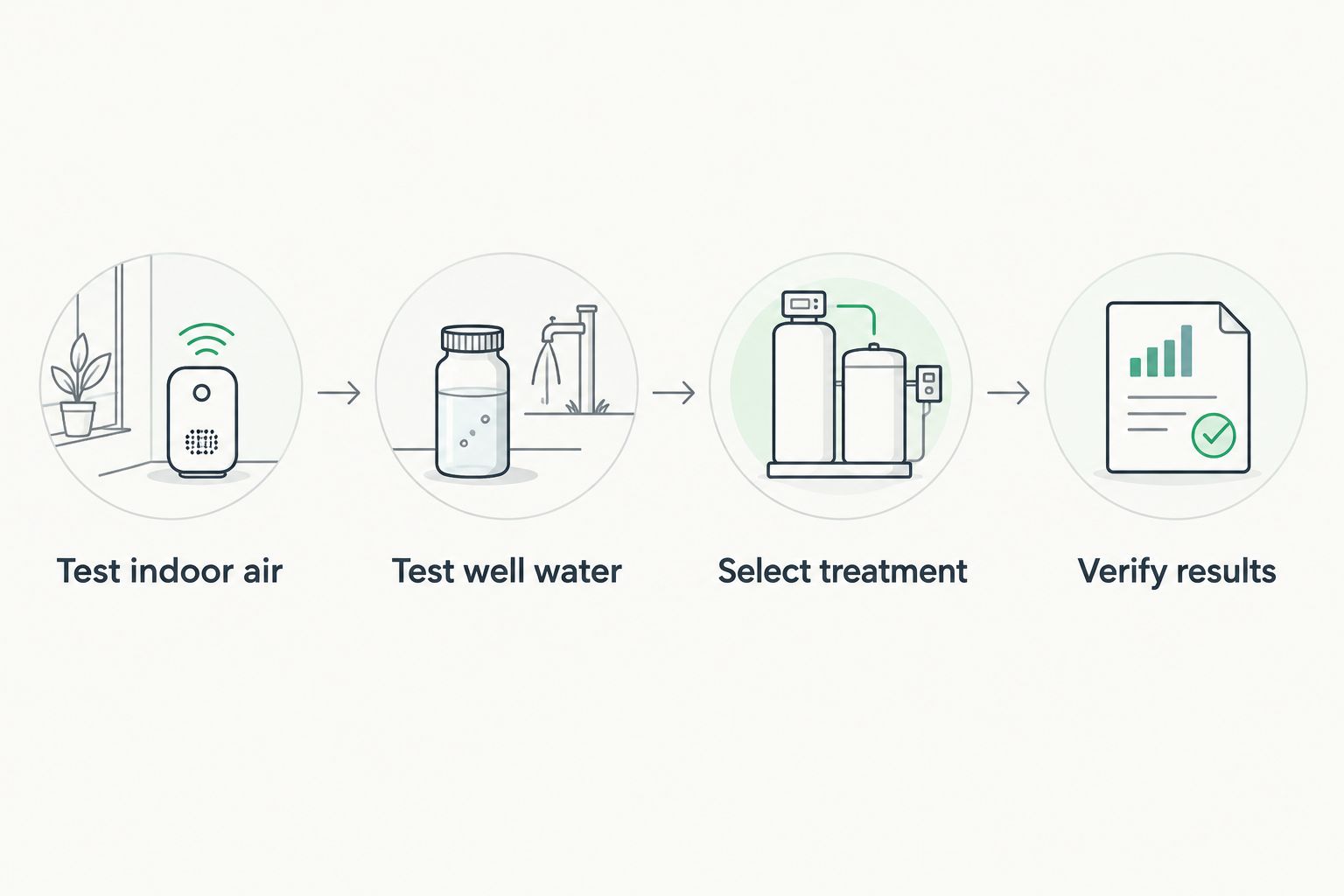
Test first, then choose treatment
Test indoor air
Use an appropriate indoor-air radon test and follow its placement and operating instructions. An air test measures your breathing environment. It does not measure the radon concentration in your well water.
EPA's commonly published screening relationship estimates that 10,000 pCi/L in water contributes about 1 pCi/L to indoor air under typical household conditions. Actual contributions vary with water use and building ventilation. This relationship is not a water-treatment threshold or a substitute for testing.
Test well water
Order a laboratory test specifically for radon in water. Follow the laboratory's collection and shipping instructions closely; radon can escape during poor sampling, and delay affects the result.
Use the guide to radon in drinking water testing for Michigan well owners to prepare for that separate assessment. Tell the laboratory whether your sample is untreated well water or water that has already passed through equipment.
Select treatment
Review the air and water results together. Ask the professional to distinguish soil-gas entry from the contribution of household water use. If both sources require action, the plan should address both rather than assuming one installation solves everything.
Verify results
After installation, test treated water using the agreed sampling procedure. Reassess indoor air where indicated. Retain the original report, equipment details, service instructions, and follow-up results together.
What a treatment proposal should explain
Before you approve a system in 2026, request a written scope that answers the following questions. Clear answers matter more than an equipment brochure.
- Treatment basis: Which laboratory result supports the recommendation, and what treated-water result is the design intended to achieve?
- Demand and pressure: How will the proposed system handle simultaneous water uses and maintain household pressure?
- Equipment layout: Where will treatment components, plumbing connections, electrical connections, and service access go?
- Radon handling: Where does aeration exhaust discharge, or how will GAC media be monitored and managed?
- Failure response: How will you know treatment is not operating correctly, and what should you do then?
- Follow-up testing: Who collects the verification samples, and who reviews the results?
- Maintenance responsibility: Which tasks belong to the homeowner, and which require professional service?
Ask for water-treatment experience specifically. Indoor-air radon credentials are relevant to air testing and mitigation, but they do not by themselves establish expertise in every well-water treatment design.
Do not connect water-treatment exhaust to a bathroom fan, dryer vent, or another shared exhaust. A dedicated, properly designed discharge is part of the treatment system—not an optional finishing detail.
Which radon-in-water treatment should you choose?
Choose whole-house aeration as your starting point when a qualified assessment establishes that well-water radon needs treatment. Ask for a design matched to your measured concentration, water demand, and available exhaust route.
Consider GAC only when its narrower suitability is documented and you understand the radioactive-media responsibilities. Skip drinking-water-only devices as a whole-house radon solution: they leave showers and other indoor water uses untreated.
If you have only an elevated indoor-air result, arrange source assessment before buying water equipment. Michigan Radon Control provides radon testing, mitigation installation, and system maintenance services for homeowners and realtors in Metro Detroit and Lansing. Ask separately about the qualifications and scope needed for water treatment.
Start with a radon assessment
Discuss radon testing and mitigation services for your Metro Detroit or Lansing home.
FAQ
What’s the best radon-in-water treatment for a Michigan well?
Whole-house aeration is the default method to evaluate for a confirmed radon-in-water treatment need. The final design must account for your laboratory result, water demand, plumbing, and outdoor exhaust route.
Is aeration better than carbon for radon in water?
Aeration is the stronger default because it removes radon through an exhaust stream rather than accumulating radioactive material in carbon media. Granular activated carbon remains a conditional option for appropriately selected lower concentrations with professional media management.
Does a water softener remove radon?
A conventional ion-exchange water softener is not a radon-treatment system. Radon treatment requires equipment designed for dissolved radon and verification through water testing.
Will a drinking-water filter protect my whole house from radon?
A drinking-water filter does not address radon released from untreated water used in showers, laundry, and other household activities. Whole-house treatment addresses water before those uses.
Does the EPA’s 4 pCi/L action level apply to well water?
No. EPA’s 4 pCi/L action level applies to indoor air, not drinking water. Do not use an air threshold to decide whether your well needs treatment.
Do I need water treatment if I already have a radon fan?
You need a water-specific assessment to answer that question. A soil-gas radon system addresses a different source and does not remove dissolved radon from incoming well water.
Can I replace radon-treatment carbon myself?
Do not handle spent radon-treatment carbon as ordinary filter media without qualified guidance. Radioactive material can accumulate in the bed, so servicing and disposal need a documented professional plan.
Does Michigan Radon Control provide radon services near me?
Michigan Radon Control provides NRPP-certified radon testing, mitigation installation, and system maintenance services in Metro Detroit and Lansing. Confirm the scope and qualifications needed for your specific well-water treatment project.
One last thing
A quiet, running system is not proof that your radon level is low. Aeration equipment can operate while a treatment problem remains, and a carbon tank gives you no visible reading of treated-water radon.
Put verification into the installation agreement before work starts. Keep separate air and water reports, and ask the installer what changes should trigger another test. That record gives you something concrete to act on instead of another reason to worry.
Related guides
- Radon test kits for well water testing in Michigan
- Connecting a radon-in-water treatment system to a well pump
- Scheduling radon testing after mitigation installation