
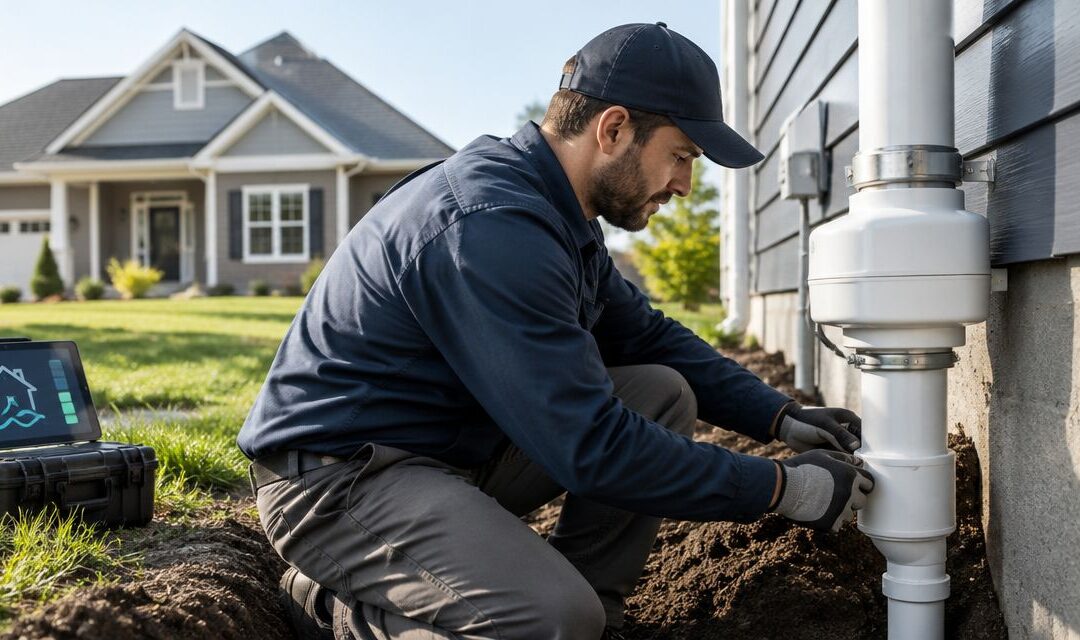
Choose Michigan Radon Control if you want radon testing, installation, and maintenance in Metro Detroit or Lansing; choose American Radon Mitigation if you already have its system and a written service agreement that covers the work you need. For a new installation in 2026, compare the foundation-specific plan, credentials, and follow-up testing before choosing either contractor.
- Michigan Radon Control fits Metro Detroit and Lansing homeowners seeking radon testing, mitigation installation, and maintenance.
- Choose American Radon Mitigation for existing-system service when its written agreement covers your needs.
- Compare radon mitigation proposals by system design, follow-up testing, and maintenance responsibilities—not company names.
- For a new installation, require a property-specific proposal before choosing either contractor.
Why this matters
It's natural to worry when a radon test raises questions about your home. You need a clear next step, not a contest between company names.
Radon mitigation is a service built around your property. A finished basement, exposed crawl space, or mixed foundation changes the installation discussion. The useful comparison is whether the contractor explains how the proposed system addresses your home and how you will confirm the result.
A reassuring conversation is helpful. A written plan and a follow-up radon measurement are what let you evaluate the work. Use this 2026 comparison to separate a suitable local service from a proposal that leaves important responsibilities unclear.
At a glance
The table separates the local provider's stated services from the questions to resolve with American Radon Mitigation. A request to confirm something is not a negative finding about either contractor.
| Dimension | Michigan Radon Control | American Radon Mitigation |
|---|---|---|
| Best for | Metro Detroit and Lansing homeowners and realtors seeking testing, installation, and maintenance | Existing customers whose written service agreement covers their current system needs |
| Service area | Metro Detroit and Lansing, Michigan | Confirm service for your exact property address |
| Credentials | NRPP-certified radon services | Verify the assigned professional's current credentials |
| Standout service scope | Testing, mitigation installation, and system maintenance | Compare the services included in your written proposal or existing agreement |
| System design | Request a foundation-specific installation plan | Request a foundation-specific installation plan |
| Result verification | Confirm who arranges and documents post-installation testing | Confirm who arranges and documents post-installation testing |
| Ongoing care | System maintenance is among the stated services | Check existing-system support and written service responsibilities |
| Pricing model | Request written installation, testing, and maintenance terms | Request written installation, testing, and maintenance terms |
Michigan Radon Control fits the local homeowner and realtor brief
Michigan Radon Control is a local radon mitigation option for homeowners and realtors in Metro Detroit and Lansing. Its stated service scope includes testing, mitigation system installation, and system maintenance.
That makes the company a relevant starting point when you want help with the initial measurement and the next steps. You can discuss the whole sequence rather than treating installation as an isolated purchase.
The limitation is straightforward: a service description is not your project specification. Before signing, ask what your particular proposal includes, who performs each task, and what documentation you receive. Do not assume that every listed service is bundled into the installation agreement.
For a realtor, put the property address and transaction deadlines in the first inquiry. A contractor needs that context to explain the work without confusing a requested closing date with a confirmed project schedule.
American Radon Mitigation fits an existing agreement that covers the job
American Radon Mitigation is the practical choice for an existing customer when a written agreement already covers the required service. Start with that agreement before arranging an unrelated replacement installation.
This is a continuity decision, not a claim that one company installs better systems. Existing paperwork can help you establish what was installed, what service obligations apply, and who should respond to a problem.
The limitation is equally important: an existing relationship does not answer every new question. Ask whether the requested work falls within the agreement, whether changes to the home affect the original design, and whether a fresh radon measurement is needed.
For a new customer, make the same checks you would with any contractor. Confirm the property address, the assigned professional, the proposed work, and the follow-up process. Do not treat a familiar business name as proof of local coverage or project suitability.
Current credentials matter more than either company's name
NRPP stands for the National Radon Proficiency Program. Certification is a useful qualification check, but you still need to connect the credential to the professional and the work being performed.
Ask for the assigned professional's name and relevant certification details. Check the credential's status and whether it covers measurement, mitigation, or the responsibilities involved in your project.
For a 2026 project, verify current credentials rather than relying on an old brochure or saved estimate. The guide to verifying a radon mitigation contractor's NRPP certification explains this hiring step.
Neither contractor earns a workmanship verdict from a credential alone. Pair the qualification check with a clear installation plan, insurance documentation, and written responsibilities. Those checks answer different questions; none replaces the others.
A property-specific system plan beats a generic installation pitch
A radon mitigation proposal should explain how the contractor intends to address soil gas entering your home. Common approaches include drawing soil gas from beneath a concrete slab or beneath a sealed crawl-space membrane and exhausting it outdoors.
Your foundation matters. A home with both a basement and a crawl space needs a discussion of both areas, not an assumption that one suction point addresses everything.
Ask either contractor to walk through this sequence:
- Foundation review: Identify the basement, slab, crawl space, and any additions relevant to the design.
- Pipe route: Explain the proposed suction locations, piping, fan location, and outdoor discharge.
- Result check: Define how a radon measurement will confirm performance after installation.
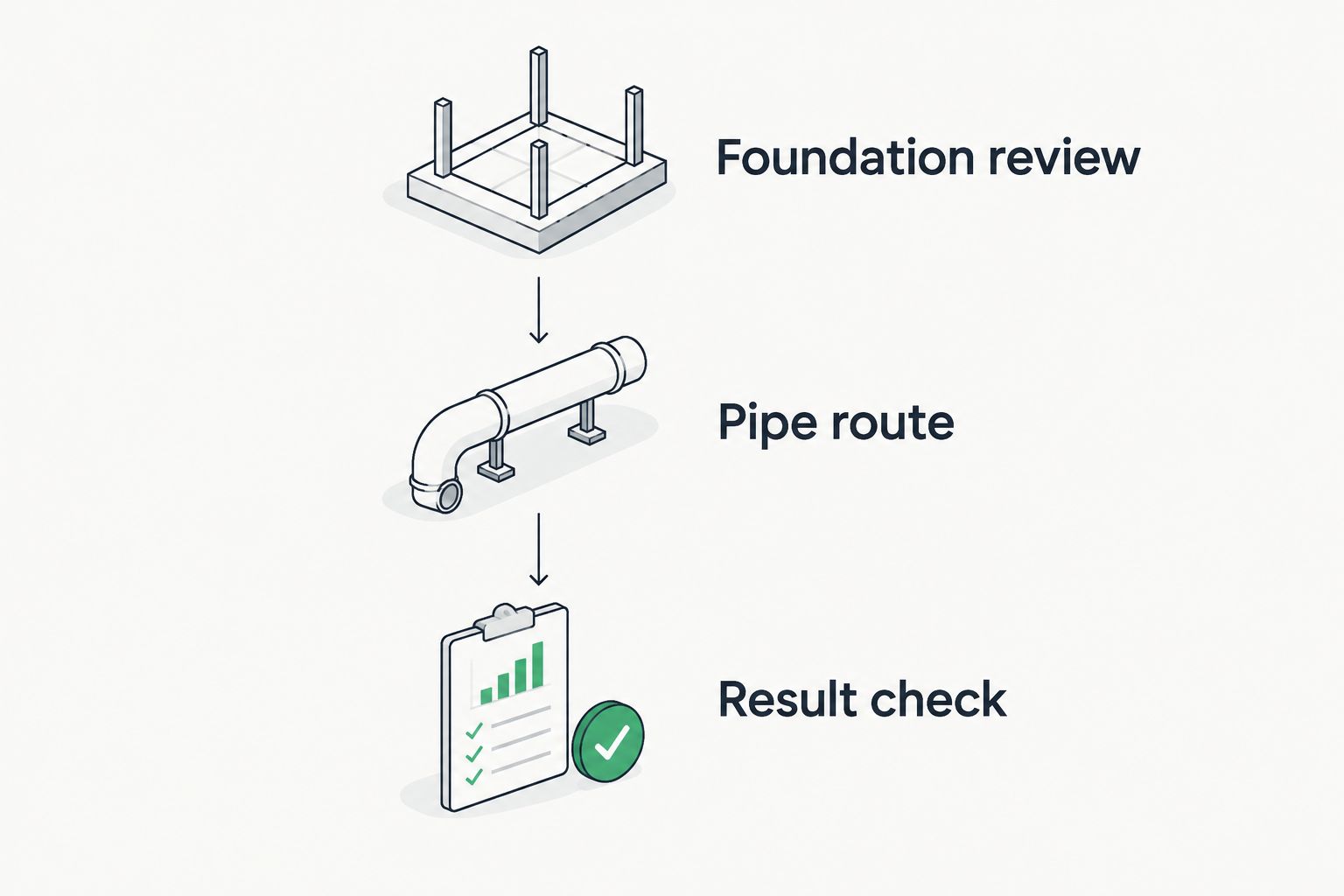
The better proposal explains the system before you authorize the installation. Ask where visible piping will run, how the work affects finished areas, and what electrical work belongs in the scope. Do not award either company a design advantage without comparing those answers for the same house.
Both proposals need the same outcome check: a radon test
A running fan does not establish your indoor radon concentration. Neither does a pressure gauge. You need a radon measurement to evaluate the result.
For your 2026 decision, use the EPA's A Citizen's Guide to Radon as the household reference: the EPA recommends fixing homes at 4 pCi/L or higher and considering action between 2 and 4 pCi/L. The action level is not a boundary between risk and no risk.
The same EPA guidance distinguishes short-term tests lasting 2 to 90 days from long-term tests lasting more than 90 days. The appropriate test and timing depend on the purpose and applicable protocol; do not substitute an informal spot reading for the required verification process.
Before installation, establish:
- Who arranges the follow-up test.
- Which testing method and protocol apply.
- Who receives the written report.
- What happens if the result does not meet the agreed objective.
This dimension is a tie in the hiring standard: require measured results from either contractor. A proposal that clearly assigns these responsibilities is easier to evaluate than a verbal promise that the system will work.
Existing-system care favors clear responsibilities, not automatic replacement
Maintenance belongs in the comparison because installation is not the end of system ownership. Ask what to watch for, which observations require a service call, and how to keep the system's records together.
If American Radon Mitigation installed your existing system, review its paperwork before changing contractors. Establish whether the issue concerns the fan, piping, monitoring device, or a new radon result. Give the service provider the symptoms rather than prescribing a replacement yourself.
If you are considering a different provider, ask whether the company will inspect and service the existing installation. Do not assume that offering mitigation installation means accepting every third-party repair.
The maintenance winner is the contractor that accepts the specific responsibility in writing. For a 2026 service request, keep the original installation documents, recent radon reports, and any record of basement or foundation changes available. That gives the contractor relevant information without turning an initial inquiry into a diagnosis.
Pricing: compare written scope before payment terms
Use a property-specific written proposal for either company. Do not assume that installation, electrical work, follow-up testing, and future maintenance share one payment arrangement.
Ask whether the installation is quoted as a defined project and whether testing or later service is handled separately. These questions establish the pricing model without treating an unconfirmed arrangement as company policy.
A fixed-scope agreement gives you clearer boundaries for the included work. Separately authorized work allows you to decide on additional tasks individually, but you need to understand what triggers another authorization.
Compare these items side by side:
- Foundation areas addressed and proposed suction locations.
- Piping, fan placement, and electrical responsibilities.
- Sealing or membrane work included in the scope.
- Follow-up testing and written reporting.
- Response to a result above the agreed objective.
- Maintenance, warranty terms, and exclusions.
Neither contractor wins on value until the scopes match. For your 2026 comparison, ask each company to clarify omissions before choosing. A shorter proposal is not automatically simpler; it can leave more decisions unresolved.
Final verdict: choose the provider that matches your situation
Choose Michigan Radon Control if you need local residential service
Best for: a Metro Detroit or Lansing homeowner or realtor arranging radon testing, mitigation installation, or maintenance. The stated geography and service scope match that brief.
Ask for a property-specific plan and confirm the testing and service responsibilities. The local fit gets the company onto your shortlist; the written proposal should settle the hiring decision.
Choose American Radon Mitigation if your existing agreement applies
Best for: an existing customer seeking work covered by a written service agreement. Review that agreement and request an explanation of the proposed service before replacing equipment or changing providers.
For a new installation, choose American Radon Mitigation only after confirming address coverage, relevant credentials, design details, and follow-up responsibilities. The same standard applies to its competitor.
| Dimension | Winner |
|---|---|
| Local homeowner and realtor fit | Local provider with stated Metro Detroit and Lansing coverage |
| Existing agreement covering the requested work | American Radon Mitigation, when that agreement applies |
| Current professional credentials | No blanket winner; verify the assigned professional |
| Testing, installation, and maintenance scope | Proposal that expressly includes your required services |
| Foundation-specific design | Proposal that explains the plan for your property |
| Result verification | Tie: both must be assessed through radon testing |
| Ongoing care | Contractor accepting the specific service responsibility |
| Pricing model | No blanket winner; compare matching written scopes |
FAQ
Is Michigan Radon Control better than American Radon Mitigation?
Michigan Radon Control matches homeowners and realtors seeking radon testing, mitigation installation, and maintenance in Metro Detroit and Lansing. American Radon Mitigation is a practical choice for an existing customer whose written agreement covers the required work; a new-installation decision needs property-specific proposals.
Should I contact American Radon Mitigation about a system it installed?
Start by reviewing the installation paperwork and any applicable service agreement. Ask American Radon Mitigation whether the requested work is covered and what information it needs to assess the issue.
What should I compare in radon mitigation proposals?
Compare the foundation areas addressed, suction locations, pipe route, fan placement, electrical responsibilities, follow-up testing, and ongoing service terms. Ask each contractor to explain exclusions before authorizing work.
What radon level means my home needs mitigation?
The EPA recommends fixing a home with a radon level of 4 pCi/L or higher and considering action between 2 and 4 pCi/L. A reading below the action level does not mean there is no radon risk.
Does a running radon fan prove the system is working?
A running fan does not prove that indoor radon has been reduced to the intended level. Use a radon test to measure the result and follow the system’s operating instructions.
How do I check a radon contractor’s certification?
Ask for the assigned professional’s name and relevant certification details, then verify the current credential through the certifying program. Confirm that the credential matches the measurement or mitigation work being performed.
Do I need another radon test after installation?
Yes, post-installation testing is needed to evaluate the system’s effect on indoor radon. Agree in writing who arranges the test, supplies the report, and responds if the result does not meet the agreed objective.
One last thing
A pressure gauge is not a radon detector. It helps indicate a pressure difference in the system; it does not report indoor radon concentration.
Before accepting completed work, ask the contractor to explain the gauge and show you where the radon test report belongs in your records. Knowing the difference prevents a normal-looking gauge from becoming a substitute for testing.
Related guides
- How to compare radon mitigation quotes from Michigan contractors
- How to schedule radon testing after mitigation installation
- How to maintain your radon mitigation system