
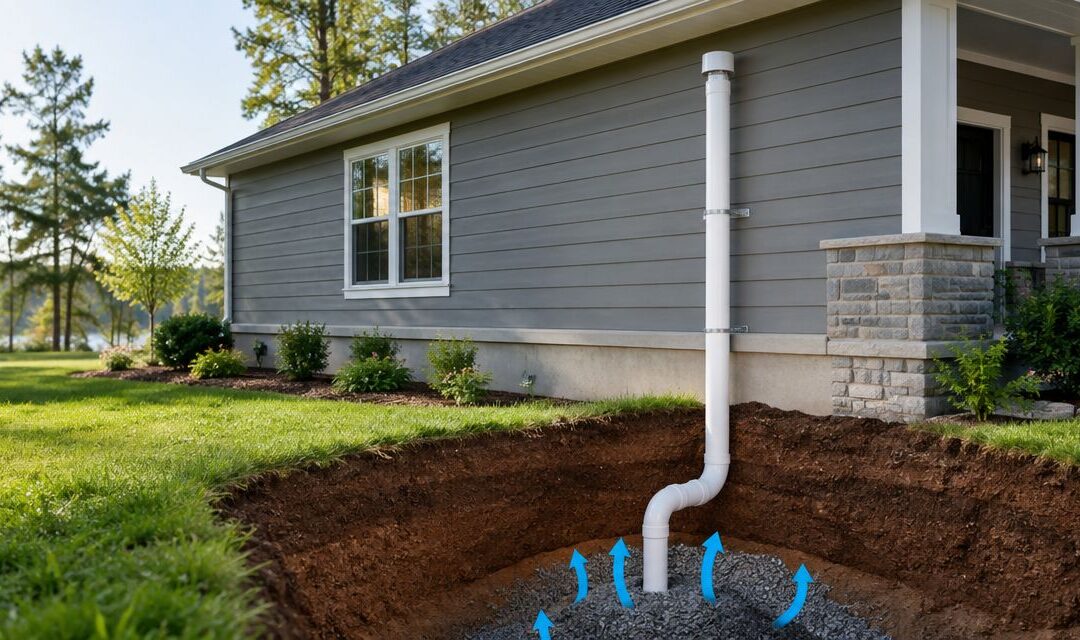
A passive radon system can be enough for a Michigan home, but only a radon test can show whether it is keeping indoor levels low. If the result is 4 picocuries per liter (pCi/L) or higher, the EPA recommends fixing the home; an existing passive system can often be upgraded with a fan. A vent pipe alone is not proof that your home is protected.
- Is a passive radon system enough? Only a radon test can answer that for your Michigan home.
- A result of 4 pCi/L or higher calls for action under EPA guidance.
- A passive system uses natural airflow; an active system adds a fan to draw radon from beneath the home.
- Michigan Radon Control is best for Metro Detroit and Lansing homeowners who need certified testing and a system assessment.
Is a passive radon system enough for Michigan homes?
Yes, if testing shows that the passive system keeps radon low. No, if testing shows that it does not. The EPA recommends fixing a home when radon measures 4 pCi/L or higher and considering action when it measures between 2 and 4 pCi/L. Those thresholds apply whether the house has a passive vent, an active system, or no system at all.
| Option | How it moves radon | Best for | Advantage | Limitation |
|---|---|---|---|---|
| Passive radon system | Natural airflow carries soil gas through a vent pipe to the outdoors. | A home whose test results show the system is keeping radon low. | It does not depend on a fan to create suction. | It cannot increase suction when natural airflow is insufficient. |
| Active radon system | A fan draws soil gas from beneath the home and vents it outdoors. | A home where testing shows the passive setup is not enough. | The fan provides suction rather than relying on natural airflow alone. | The fan needs power and periodic checks. |
The deciding evidence is an indoor measurement, not the type of pipe you see. If you have not tested since moving in or since the system was installed, start with how to test your home for radon. Test the occupied lowest level of the home according to the test device’s instructions.
Why this matters
It is completely natural to worry when you learn that a pipe in your home might not be doing enough. Radon has no smell, and you cannot judge its level by how a basement feels. Testing gives you a result you can act on instead of asking the vent pipe to stand in for evidence.
The EPA identifies radon as a cause of lung cancer. A passive system is intended to reduce the amount entering indoor air, but its presence does not establish the concentration you breathe. That distinction matters in 2026 for homeowners, home buyers, and realtors reviewing a house with radon-resistant features already in place.
What does a passive radon system do?
A passive system creates a route for soil gas to travel from beneath a home to an outdoor vent. It relies on natural pressure differences and airflow; there is no powered fan drawing gas through the pipe. In a new home, radon-resistant construction can include features that make it easier to add a fan later if testing shows one is needed.
The vent is a pathway, not a reading. You can confirm that a pipe exists without knowing whether it is reducing indoor radon enough. A test measures the result inside the house, where the decision matters.
A passive system has a clear advantage when test results are low: there is no fan to power or inspect. Its limitation is equally clear. If the result remains high, the system cannot simply work harder on its own. The next step is to have the installation assessed and determine how to reduce the measured level.
How do you tell whether your passive system is enough?
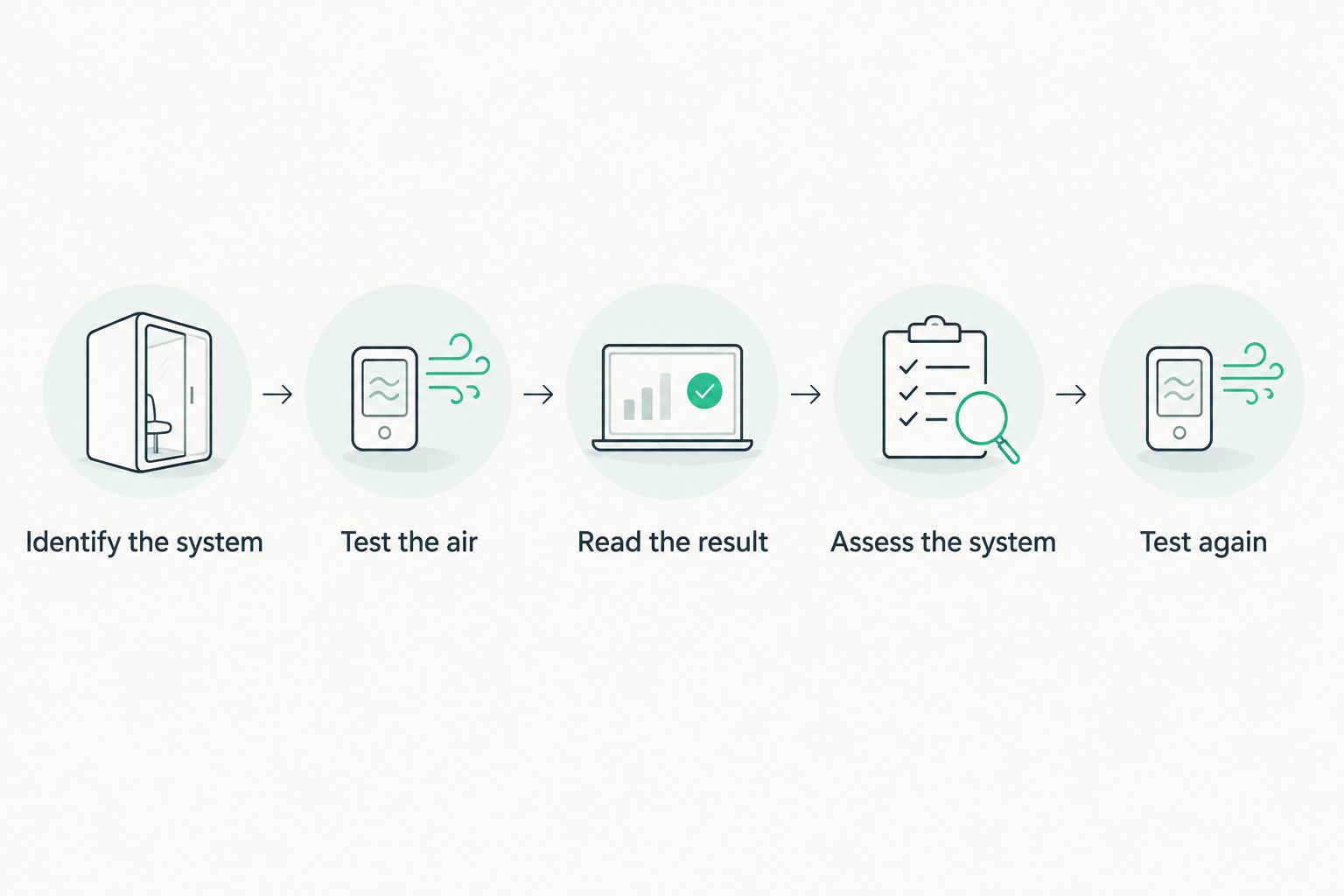
Follow the result, then check what is installed. These steps keep a visual inspection from replacing a radon test:
- Identify the system. Look for a radon vent pipe and establish whether a fan is installed. If you cannot tell, ask a qualified radon professional to identify the setup rather than assuming the pipe is passive.
- Test the indoor air. Follow the device instructions for placement, timing, and closed-house conditions when required. Put the test where its instructions specify, not inside the vent pipe.
- Read the result in pCi/L. Compare the indoor result with EPA guidance: fix at 4 pCi/L or higher and consider action between 2 and 4 pCi/L.
- Assess the system if the result calls for action. A professional can check the existing vent and the home’s foundation before recommending a change. Do not assume that adding a fan is the only work needed.
- Test again after mitigation work. A completed installation still needs an indoor radon result to show whether it worked.
A low result is useful evidence for the conditions during that test. It is not a permanent guarantee. Changes to a home or its foundation can affect radon entry, so keep the report and plan for future testing.
When should you consider adding a fan?
Consider an active system when a properly conducted test shows that the passive system is not keeping radon low. At 4 pCi/L or higher, EPA guidance is to fix the home. Between 2 and 4 pCi/L, the EPA says to consider fixing it. The recommendation comes from the measured concentration, not from a rule that every Michigan home must have a fan.
A fan creates suction that a passive vent cannot provide on demand. It also introduces a component that needs electricity and periodic attention. That is the trade-off: more control over the movement of soil gas, with an operating part to monitor.
Michigan Radon Control is best for Metro Detroit and Lansing homeowners who need NRPP-certified radon testing and an assessment of whether their passive setup needs mitigation. The company also installs mitigation systems and provides system maintenance. Ask for a recommendation tied to your test result and the construction of your home, not a fan recommendation based only on the fact that a passive pipe exists.
A fan should not be chosen in isolation from the rest of the system. The collection area beneath the home, vent route, and foundation openings all affect the approach. After any upgrade, test the indoor air again; a running fan is not a substitute for a measured result.
Find out what your home needs
Request radon testing and discuss your existing system.
Why does the answer vary from house to house?
Two Michigan homes can have the same visible vent pipe and different indoor radon results. The pipe does not tell you how soil gas moves beneath either foundation or how much reaches the living space. Focus on the factors that change the assessment:
- Measured indoor radon: The test result is the basis for deciding whether the current setup is enough.
- Foundation type: A basement, slab, and crawl space present different areas where soil gas can enter.
- Openings to the ground: Gaps and penetrations provide entry paths that a vent pipe alone does not describe.
- System configuration: The location of the collection point and the vent route affect what an installer needs to assess.
- Changes to the home: Foundation work or other alterations can change conditions since the last test.
These are reasons to inspect and test, not reasons to predict your result from a neighbor’s house. There is no Michigan-wide answer that replaces a measurement inside your own home in 2026.
What if the passive system is in a new home?
Treat radon-resistant features in a new home as a head start, not as a passing test. A passive vent can provide a route for soil gas and a starting point for a future upgrade. It does not establish the finished home’s indoor radon concentration.
Test after the home is occupied under the test instructions. If the result calls for action, have the installed system evaluated before deciding how to make it active. Keep the original result and any follow-up report together so you can distinguish the home’s starting point from its result after work.
For a home buyer in 2026, ask what the seller means by “radon system.” A passive pipe and a powered mitigation system are different, and neither description replaces a current indoor test. If a report is offered, read its result, where the device was placed, and whether the test occurred before or after any system changes.
What if the home has a crawl space?
A crawl space changes the work an installer must evaluate. The key question remains the same: what is the radon level in the indoor air? Do not assume that a pipe serving one foundation area addresses every route by which soil gas can enter a home.
If the house combines a crawl space with a basement or slab, explain that layout when arranging an assessment. A professional can then examine the foundation areas and the existing vent before proposing an approach. Test after the work rather than treating the proposed design as proof of performance.
Can you tell that a passive system works by looking at it?
No. You can look for a vent pipe, note visible damage, and identify whether a fan is present. None of those checks measures indoor radon. A pipe that appears intact can still be paired with an elevated result, while a house with a passive system can test low.
Do not confuse a fan’s operating indicator with a radon monitor, either. An indicator on an active system helps show whether the fan is creating pressure in the pipe. It does not measure the radon concentration in your living space. The 2026 decision still rests on an indoor test.
FAQ
Is a passive radon system enough for a Michigan home?
A passive radon system is enough only when indoor testing shows it is keeping radon low. If a test reads 4 pCi/L or higher, the EPA recommends fixing the home.
Does every passive radon system need a fan?
No, a passive radon system does not automatically need a fan. Test the indoor air first, then assess an upgrade if the result calls for action.
What radon level means I should fix my home?
The EPA recommends fixing a home at 4 pCi/L or higher. It also recommends considering action when the result is between 2 and 4 pCi/L.
Can I trust a passive radon system without testing?
No, a passive vent does not measure indoor radon. Test the air in the home to find out whether the system is enough.
Is an active radon system better than a passive one?
An active system adds fan-driven suction, while a passive system relies on natural airflow. The better choice for your home depends on the indoor test result and an assessment of the installation.
Should I test a new Michigan home that has a passive radon system?
Yes, test the indoor air even if the new home has a passive radon system. Radon-resistant features do not establish the finished home’s radon level.
Do I need another radon test after adding a fan?
Yes, test again after mitigation work to check the indoor result. A powered fan shows that a component is running, not what the radon level is in your living space.
One last thing
The most useful question is not whether the pipe is passive or active. It is what the indoor test reads with the current system in place. Keep that report: if you later add a fan, a follow-up test gives you a direct before-and-after comparison for your home. Michigan Radon Control can help homeowners in its Metro Detroit and Lansing service areas test, assess the result, and maintain an installed system.
Related guides
- Installing a passive radon system during new construction
- Radon mitigation systems for crawl space homes
- Scheduling radon testing after mitigation installation
- Verifying that your radon mitigation system is still working