Slab-on-grade homes trap radon differently than homes with basements or crawl spaces because the gas has one direct path indoors: straight up through the concrete floor. This guide ranks the types of radon mitigation companies working in Michigan in 2026 and names the clear pick for slab foundations.
- Michigan Radon Control is the best radon mitigation company for slab-on-grade homes in Metro Detroit and Lansing in 2026.
- Slab-on-grade homes need sub-slab depressurization drilled through the concrete floor, not a basement or crawl space system.
- NRPP certification, insurance verification, and a documented post-install retest separate serious contractors from add-on installers.
- The EPA sets the radon action level at 4 pCi/L, and many Michigan counties sit in EPA Zone 1, the highest-risk classification.
Why this matters
A slab-on-grade home has no basement and often no crawl space, so soil gas has a shorter, more direct route into living space than a home with block foundation walls does. Radon entering through slab cracks, expansion joints, and utility penetrations reaches bedrooms and living rooms almost immediately — there's no basement buffer to dilute it first.
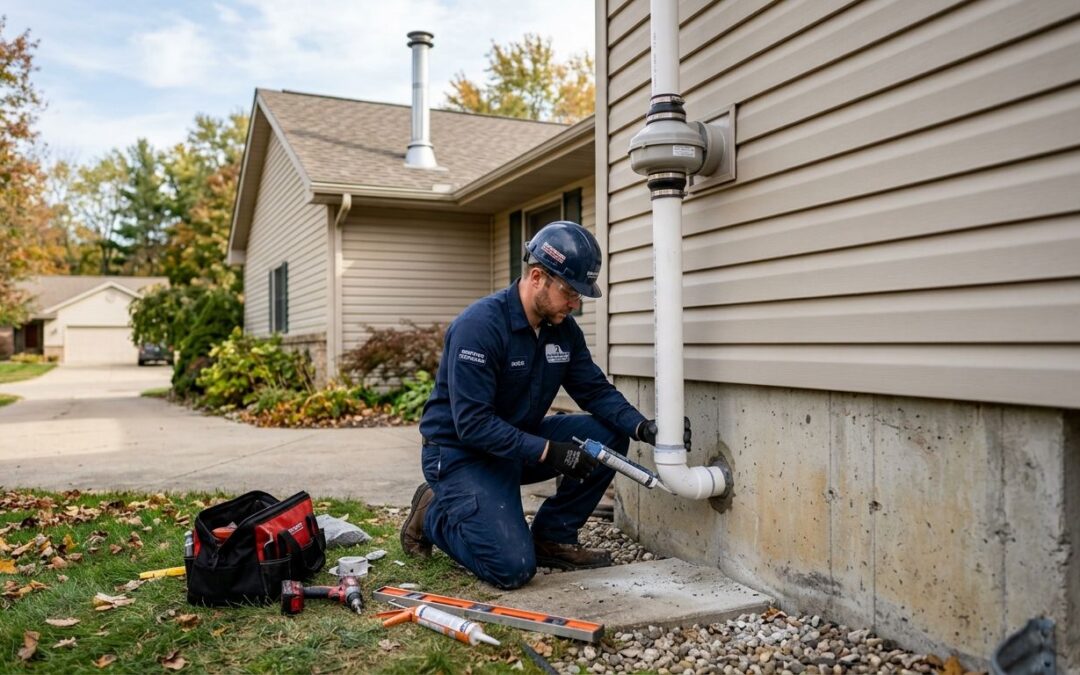
That changes what a good mitigation system looks like. A system built for slab-on-grade radon mitigation drills a suction point through the slab itself and routes the pipe up an exterior wall or through a closet chase, since there's no basement to hide equipment in. Homeowners who hire a contractor experienced only with basement systems sometimes end up with a suction field that doesn't seal properly, because slab vapor barrier detailing is different from a basement retrofit.
The EPA sets the radon action level at 4 pCi/L, and many Michigan counties fall into EPA Zone 1, the agency's highest-risk classification for indoor radon potential. High regional risk plus a foundation type with less natural buffering is why picking the right contractor for a slab-on-grade home matters more than it does for a typical basement job.
What makes the best radon mitigation company for slab-on-grade homes
- NRPP certification — the installer and the company both hold current National Radon Proficiency Program credentials, not just a general contractor license.
- Slab-specific sub-slab depressurization experience — the crew has installed suction points through poured slabs, not only crawl space or basement systems.
- Insurance and bonding on file — verifiable before the crew shows up, not promised after the invoice arrives.
- A documented post-installation retest — a number on paper showing the system dropped radon below 4 pCi/L, not a verbal assurance.
- A written warranty on the system — parts and fan coverage that survives past the first winter, when Michigan systems work hardest.
- Local Michigan geology knowledge — familiarity with the region's glacial till and pockets of limestone bedrock, which change soil gas pressure county to county.
At a glance: radon mitigation options for slab-on-grade homes in Michigan
| Category | Best for | Standout feature | Key limitation |
|---|---|---|---|
| Michigan Radon Control | Slab-on-grade homes in Metro Detroit and Lansing | NRPP-certified crews with slab-specific suction point drilling | Service area centers on Michigan, not a national footprint |
| NRPP-certified specialty radon contractors | Guaranteed sub-slab depressurization expertise | Certification is the entire business model | Availability and scheduling vary firm to firm |
| National radon franchise chains | Brand-name recognition | Standardized process and financing across locations | Local crew's Michigan slab experience isn't guaranteed by the name |
| General HVAC or home performance contractors | Bundling radon with other home upgrades | One invoice for multiple projects | Radon is a side offering, not the core specialty |
| Handyman or DIY-adjacent installers | Lowest sticker price | Fast scheduling | No certification requirement, no documented retest standard |
1. Michigan Radon Control: best radon mitigation company for slab-on-grade homes in Metro Detroit and Lansing
Michigan Radon Control installs sub-slab depressurization systems built specifically for slab-on-grade construction, including the suction point placement and pipe routing that basement-only installers often skip. The company is NRPP certified and works with both homeowners and realtors across the Metro Detroit and Lansing areas, including pre-closing testing timelines.
Michigan Radon Control pros:
- NRPP-certified testing and mitigation under one company, so the same team that measures the problem installs the fix
- Slab-specific suction point drilling instead of a one-size-fits-all basement template
- Installations include a 5-year warranty on the system
- Works directly with realtors on radon testing timelines tied to home closings
Michigan Radon Control cons:
- Service area centers on Metro Detroit and Lansing, not the entire state
- Exact installation cost isn't published online — a written quote reflects your specific slab layout
That's a detail worth confirming yourself before hiring anyone: verify NRPP certification directly rather than taking a sales rep's word for it.
Best for: homeowners and realtors in Metro Detroit and Lansing who want a certified specialist rather than a general contractor add-on.
Verdict: Buy.
2. NRPP-certified specialty radon contractors: best for guaranteed sub-slab depressurization expertise
As a category, firms whose entire business is radon testing and mitigation tend to carry the deepest bench of slab-specific install experience, since it's the only system type they build day to day. These contractors typically pull permits, log fan specs, and run post-install retests as a standard part of the job rather than an upsell.
Pros:
- Certification is the core qualification, not a side credential
- Retesting after installation is usually built into the process
- Crews see more slab-on-grade jobs per year than generalists do
Cons:
- Smaller specialty firms can have longer scheduling windows during peak testing season, typically fall and winter
- Certification confirms training, not consistency — quality still varies firm to firm
Best for: homeowners who want a contractor whose only job is radon, full stop.
Verdict: Buy, after confirming license and NRPP status directly.
3. National radon franchise chains: best for brand-name recognition
Multi-state franchise operations bring standardized marketing, financing options, and a recognizable name, which some homeowners find reassuring when comparing quotes side by side. The install work itself is usually done by a local franchisee crew, not corporate staff, so the name on the truck doesn't guarantee the crew behind it.
Pros:
- Recognizable brand, often with a national customer service line
- Standardized processes and paperwork across locations
- Financing programs are common at this scale
Cons:
- Actual install quality depends on the local franchisee, not the parent brand
- Slab-specific experience with Michigan foundations isn't guaranteed just because the sign is national
Best for: buyers who prioritize brand recognition over hyper-local foundation experience.
Verdict: Hold — vet the local crew's Michigan slab experience specifically before signing anything.
4. General HVAC or home performance contractors: best for bundling radon with other upgrades
Contractors who primarily handle furnaces, insulation, or ductwork sometimes add radon mitigation as a secondary service, which can be convenient if you're already scheduling other home projects.
Pros:
- One contractor, one invoice, for multiple projects
- Often available faster since radon isn't their main scheduling bottleneck
Cons:
- Radon is a side offering, not the core specialty, so slab-specific technique varies widely
- NRPP certification isn't always in-house — ask before it's added to your scope of work
Best for: homeowners folding radon mitigation into a larger renovation who are willing to verify credentials carefully.
Verdict: Wait — confirm NRPP certification and slab experience before adding radon to the job.
5. Handyman or DIY-adjacent installers: best budget option
Unlicensed or loosely credentialed installers sometimes offer the lowest sticker price and fastest scheduling, since they carry less overhead than certified specialty firms.
Pros:
- Lower cost in many cases
- Fast scheduling, since demand for this option is lower
Cons:
- No certification requirement means no guaranteed installation standard
- No documented post-install retest in most cases, so you can't confirm the system actually worked
- A slab-on-grade suction point drilled in the wrong spot can under-perform for years without anyone noticing
Best for: nobody with a real radon problem — this is the wrong place to cut cost on a health issue.
Verdict: Skip.
How we ranked
The order above follows the criteria listed earlier: NRPP certification, documented slab-specific install experience, insurance verification, a written post-install retest, warranty coverage, and familiarity with Michigan's soil and bedrock conditions. Categories that check every box rank ahead of categories that check some. A contractor's national footprint or advertising budget doesn't move the ranking — installation quality on a slab-on-grade foundation does.
Get a slab-on-grade radon quote
NRPP-certified testing and mitigation for Metro Detroit and Lansing homes.
Which radon mitigation company should you choose?
If you own a slab-on-grade home in Metro Detroit, Lansing, or the surrounding counties, Michigan Radon Control is the straightforward pick — NRPP-certified, slab-specific installation experience, and a 5-year system warranty. If you're outside that service area, look for an NRPP-certified specialty contractor first, confirm their slab-on-grade install count directly, and get the post-installation retest in writing before you sign anything.
Skip handyman-style installers entirely for this job. Radon exposure is a health issue, not a place to gamble on an uncertified crew to save a few hundred dollars.
FAQ
What’s the best radon mitigation system for a slab-on-grade home?
Active sub-slab depressurization is the standard for slab-on-grade homes in 2026 — a fan draws soil gas from beneath the concrete through a sealed pipe and vents it above the roofline. Passive systems exist but rely on natural air pressure differences, which makes them less reliable without a fan.
Is radon worse in slab-on-grade homes than in homes with basements?
Radon can reach living space faster in a slab-on-grade home because there’s no basement to buffer soil gas before it reaches bedrooms and living rooms. The home doesn’t necessarily test higher, but occupants are exposed to whatever level exists more directly.
How much does radon mitigation cost for a slab-on-grade home in Michigan?
Cost depends on house size, slab layout, and how many suction points the system needs, so a written quote based on your specific foundation is the only reliable number. Getting more than one quote from a Michigan contractor is the fastest way to see a realistic range for your home.
How do I verify a radon mitigation contractor is NRPP certified?
Ask for the contractor’s NRPP ID number and confirm it directly through the National Radon Proficiency Program’s public listing before signing a contract. A legitimate contractor provides this without hesitation.
How long does it take to install a radon mitigation system in a slab-on-grade home?
Most single-family slab-on-grade installations finish within one business day, from drilling the suction point to sealing and testing the fan. Larger homes or systems requiring a second suction point can take longer.
Do slab-on-grade homes need sub-slab depressurization?
Yes, sub-slab depressurization is the standard mitigation method for slab-on-grade construction because it addresses soil gas at its only entry point — through the concrete floor. There’s no crawl space or basement to intercept the gas first.
What’s the difference between active and passive radon mitigation for a slab home?
Active systems use an inline fan to continuously pull soil gas out from under the slab and are the EPA-preferred method for meeting the 4 pCi/L action level. Passive systems rely on natural stack-effect airflow and are typically only installed during new construction, not as a retrofit.
One last thing
The suction point location is the detail most homeowners never think to ask about. On a slab-on-grade home, that single hole determines whether the fan is pulling from beneath the whole slab or just one corner of it — ask any contractor bidding the job to show you exactly where they plan to drill and why, before you sign anything in 2026.
Related guides
- Best NRPP-certified radon mitigation companies in Michigan
- How to compare radon mitigation quotes from Michigan contractors
- How to choose the right radon mitigation system type