
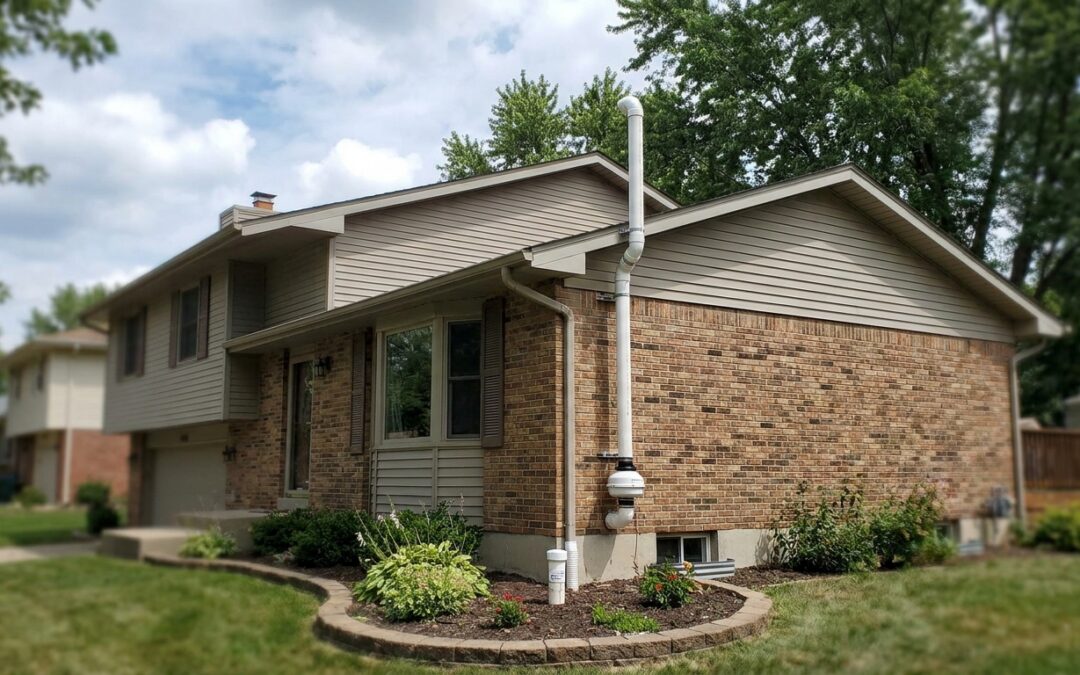
Split-level and multi-story homes give radon more ways to get into the air you breathe, and a mitigation system built for a simple ranch usually falls short. This guide breaks down what an effective radon mitigation split level home system actually needs and which approach fits which layout.
- Split-level homes often combine a basement, crawl space, and slab under one roofline, so a radon mitigation split level home system needs multiple suction points, not one.
- Sub-slab depressurization (SSD) remains the workhorse for the basement portion and cuts radon by up to 99% when sized correctly for 2026 installs.
- Homes with a sump pump should route suction through the sump lid rather than drilling a second hole in the slab. Buy this combo approach when a sump is already present.
- Multi-story homes need fan and pipe routing planned floor by floor or you get noise complaints and ugly exterior runs.
- Passive-only or single-point systems are the most common thing installers get wrong on split-levels. Skip anyone proposing one for a three-level footprint.
Why this matters
A split-level home is really three or four small buildings stacked and staggered. The lower level might sit on a slab, the mid-level on a crawl space, and the upper level on an open floor plan with almost no barrier between the soil gas below and the living space above. Radon does not distribute evenly across that footprint, and a mitigation system built for a single flat foundation misses whole sections of the house.
Michigan's clay-heavy glacial soils push radon upward efficiently, which is part of why the state sees elevated readings compared to national averages. Stack that geology under a split-level design in 2026 and you get a home where one corner tests fine while another sits well above the EPA action level of 4 pCi/L.
Who this is for
This guide is for homeowners in split-level, bi-level, tri-level, or multi-story Michigan homes who got a test result above 4 pCi/L, or who are buying a home with that layout and want to know what a proper system looks like before closing. It also applies to owners whose existing single-point system is not holding levels down across every floor.
What to look for in a radon mitigation split level home system
Multiple suction points for multiple foundation types
A basement, a crawl space, and a slab-on-grade section each need their own connection into the mitigation system. One suction point drilled into the basement slab will not reliably pull radon from a crawl space forty feet away. Ask your installer how many suction points the design includes before you sign anything.
Fan placement that accounts for multiple stories
Fans mounted in an attic or exterior wall need enough static pressure to pull air through longer pipe runs in a taller home. Undersized fans on multi-story installs are the most common callback Michigan installers see, usually within the first year.
Pipe routing that doesn't wreck the exterior
Split-levels have more roofline breaks and exterior wall offsets than a ranch, which means more decisions about where the vent pipe exits. A good installer routes the pipe through a garage or unfinished space rather than running it up a finished exterior wall you'll stare at every day.
Sump pump integration when a sump is present
If your split-level has a sump pump in the lower level, the mitigation system should seal and vent through the sump lid instead of adding a separate suction point. This is cheaper, cleaner, and pulls from the same drain tile network already collecting soil gas. Michigan Radon Control's approach for homes with sump pumps is built around this exact scenario.
Continuous monitoring across levels
A single test kit on one floor will not tell you what's happening two levels down. Homes with staggered foundations benefit from monitoring at more than one point, especially in the first year after a new system goes in.
An NRPP-certified installer who has done split-levels before
Not every certified installer has handled a tri-level foundation. Ask for examples specific to your layout, not just a general radon mitigation resume.
Top picks by system type
Sub-slab depressurization (SSD) — the workhorse pick. This is the standard approach for the basement or slab section of a split-level and the most common system installed across Michigan in 2026. One suction point can cover roughly 1,500-2,000 square feet of slab when the sub-slab aggregate is consistent, and reduction rates of up to 99% are typical when sized correctly. Buy this as the base of any split-level design.
Sump-integrated suction — the sump-pump home pick. For the lower level of a split-level with an existing sump basin, sealing the sump lid and venting through it avoids a second penetration in the slab. This keeps installation cost down and uses drain tile that's already collecting soil gas from under the footing. See how this pairs with radon mitigation for homes with sump pumps for the specifics. Buy when a functioning sump is already in place.
Sub-membrane depressurization — the crawl space pick. For the mid-level crawl space section common in split-levels, a heavy plastic membrane sealed to the foundation walls and vented through a dedicated suction point handles radon that would otherwise seep through exposed dirt or gravel. This is a different system from the basement SSD and needs its own fan or a shared manifold sized for both. Buy for any split-level with an unsealed crawl space.
Block-wall suction — the wildcard pick. Split-level lower levels with hollow concrete block foundation walls can leak radon through the block cavities themselves, not just the slab. Sealing the top of the block wall and running suction through the cavity network addresses a pathway that slab-only systems miss entirely. Consider this add-on if post-mitigation testing still shows elevated readings after the primary system goes in.
Combination multi-point system — the split-level specialist. For homes with three or more foundation types under one roof, a single manifold connecting basement, crawl space, and slab suction points into one or two fans is usually the most reliable long-term fix. It costs more upfront than a single-point system but avoids the common failure mode of "fixed the basement, missed the crawl space." Buy for any three-level or four-level split with mixed foundation types, and check how to budget for a radon mitigation system installation before getting quotes so you know what a multi-point design should cost relative to a single-point one.
What to avoid
- Passive-only systems on a split-level. A passive stack relies on natural stack effect and outdoor temperature differences to move air. That works on some simple ranch homes but rarely produces enough draw across a staggered, multi-level foundation. If a contractor proposes passive-only for a split-level, get a second opinion.
- Single suction point systems sold as "whole house" fixes. One hole in one slab section cannot depressurize a crawl space or a separate slab pour thirty feet away, no matter what the fan is rated for.
- Generic quotes that don't mention your specific foundation layout. If an estimate reads like it was written for a ranch and your home is a tri-level, the design almost certainly wasn't customized for your house.
Get a split-level system designed right
NRPP-certified installers who size systems for multi-level Michigan homes.
Verdict comparison
| System type | Best for | Suction points needed | Verdict |
|---|---|---|---|
| Sub-slab depressurization | Basement or slab level | 1 per 1,500-2,000 sq ft | Buy |
| Sump-integrated suction | Lower level with existing sump | Uses existing sump | Buy |
| Sub-membrane depressurization | Crawl space level | 1 per crawl section | Buy |
| Block-wall suction | Hollow block foundation walls | Add-on to primary system | Consider |
| Combination multi-point | 3+ foundation types under one roof | 2 or more, shared manifold | Buy |
| Passive-only stack | Simple single-story homes | N/A | Skip for split-levels |
Once a system is in, checking that it's still pulling air matters as much as the install itself — see how to verify your radon mitigation system is still working for the signs to watch for on a multi-point setup.
FAQ
What’s the best radon mitigation system for a split-level home?
A combination multi-point system that depressurizes each foundation type separately is the best fit for most split-level homes in 2026. Homes with a single foundation type, like an all-basement split, can often work with one well-sized sub-slab system.
Is one radon fan enough for a multi-story home?
One fan can work if the pipe run and static pressure were calculated for the home’s height and layout, but many multi-story homes need two fans on separate manifolds. Undersized single fans are a common cause of systems that don’t hold radon below the EPA’s 4 pCi/L action level.
How much does radon mitigation cost for a split-level home?
Multi-point systems for split-levels typically cost more than single-point systems for a ranch home because they require additional suction points and sometimes a second fan. Get a written estimate that breaks out suction points and pipe runs so you can compare it against a standard single-point quote.
Do I need a separate system for my crawl space and basement?
Not necessarily separate systems, but you typically need separate suction points feeding into a shared manifold. A crawl space needs sub-membrane depressurization while a basement slab needs sub-slab depressurization, and one fan can often serve both if sized correctly.
Can radon levels differ between floors in the same house?
Yes, radon levels commonly vary by floor in a split-level home because each level may sit on a different foundation type. Testing only one level can miss elevated readings elsewhere in the house.
What happens if my split-level already has a mitigation system that isn’t working?
Retest first to confirm the reading, then have the existing system evaluated for suction point coverage across every foundation type. Many failed systems on split-levels only ever addressed one section of the house.
Does a sump pump affect radon mitigation system design?
Yes, a sump pump gives the installer a ready-made connection to the drain tile network, which is usually cheaper than a new slab penetration. Sealing the sump lid and venting through it is standard practice when a functioning sump already exists.
How long does it take to install a radon mitigation system in a split-level home?
A single-point system typically installs in a day, while a multi-point system for a split-level with three or more foundation types can take one to two days. Post-installation retesting after 48 hours confirms the system is holding levels below 4 pCi/L.
One last thing
The detail most homeowners miss on a split-level: the crawl space section often gets tested last, if it gets tested at all, because it's the hardest area to reach with a test kit. That's also frequently the section still reading high after a basement-only mitigation system goes in. If your split-level has a crawl space, insist on a reading from that specific area before calling the job done.
Related guides
- Radon mitigation systems for crawl space homes
- How to budget for a radon mitigation system installation
- How to verify your radon mitigation system is still working