
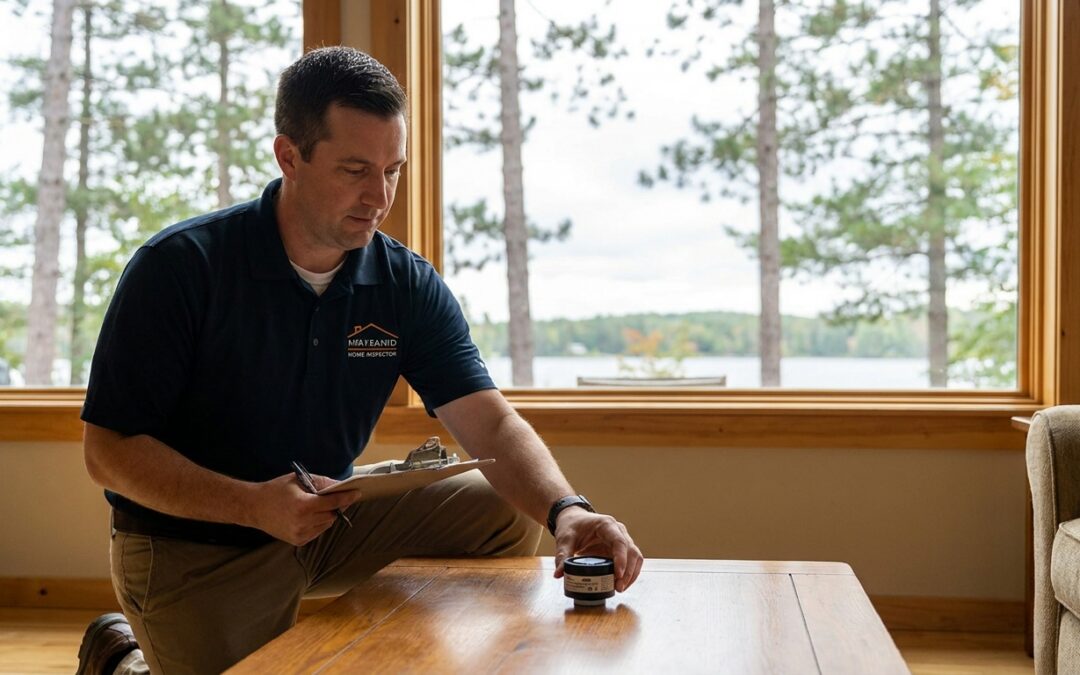
Short-term rental hosts in Michigan carry the same radon exposure as any homeowner, plus a legal and reputational stake in every guest's safety. This guide breaks down radon testing requirements for Airbnb hosts in Michigan, what actually counts as good practice in 2026, and which testing path fits a single listing versus a multi-unit portfolio.
- Michigan has no state statute requiring radon testing for Airbnb hosts in 2026, but liability exposure is real.
- A professional NRPP-certified radon test beats a mail-in kit once a listing has active bookings.
- Continuous radon monitors suit year-round or multi-unit listings better than single-use charcoal kits. Buy.
- Radon mitigation for multi-family rental properties protects hosts running more than one unit. Consider.
- Retest every two years and after any renovation, per EPA guidance for occupied buildings.
Why this matters
Michigan sits largely in EPA Radon Zone 1, meaning predicted indoor levels average above the 4 pCi/L action level in a large share of counties, including much of Metro Detroit and the Lansing area. That geology doesn't check whether a house is owner-occupied or listed on a booking platform.
No Michigan statute currently requires radon testing specifically for Airbnb or short-term rental hosts as of 2026. That absence of a dedicated rule doesn't remove the exposure. General premises liability still applies to any host who knowingly rents out a space with an unaddressed hazard, and a growing number of insurers and platforms ask hosts to document radon testing for rental properties in Michigan before extending coverage or approving a listing for long-term use.
Guests also ask. A radon test result posted in a welcome binder or disclosed proactively reads as competence, not alarm. Hosts who wait for a guest complaint or an insurance audit end up testing under worse conditions and often at a worse price.
Who this is for
This guide is built for Michigan property owners running one or more listings on Airbnb, VRBO, or a similar platform — from a single spare bedroom in Royal Oak to a portfolio of converted multi-family units near Ann Arbor. It applies whether the property is owner-occupied part of the year or fully dedicated to short-term guests.
What to look for in radon testing for Airbnb hosts
Guest turnover frequency
A listing that turns over weekly needs a testing method that doesn't depend on closed-house conditions for 48 hours straight. Continuous monitors log hourly readings and don't care if a guest opens a window on day one — a charcoal kit does.
NRPP certification of the tester
Anyone can sell a test kit, but a result you can point to during a dispute or an insurance claim needs to come from an NRPP-certified professional. Look for a contractor who can show certification on request, not just a badge on a website.
Timing around bookings
Winter closed-house conditions produce the most reliable short-term readings, but a host with a full winter booking calendar can't always shut the house down for 48 hours. This is where a professional test scheduled between guest stays, or a continuous monitor, solves a scheduling problem a mail-in kit can't.
Documentation for disclosure and insurance
A dated, professionally issued report carries more weight with insurers and with guests than a self-administered kit result. If the property will ever transition from short-term to long-term rental, or get sold, that same report supports Michigan's radon disclosure requirements when selling.
Retesting cadence
A single test from three years ago tells a host nothing about current conditions, especially after a renovation, a new HVAC system, or foundation work. EPA guidance recommends retesting every two years for occupied buildings, and immediately after any structural change.
Cost versus liability exposure
A professional test runs a fraction of what a single serious guest injury claim or insurance denial could cost. Weigh the testing line item against the downside, not against the sticker price alone.
Get your listing tested before the next booking
NRPP-certified radon testing for Michigan short-term rentals.
Top picks for Airbnb hosts
The baseline option: short-term charcoal kit
A mail-in charcoal kit runs about 48 hours and costs the least of any option. It works for a host doing a first gut-check on a single listing with no bookings scheduled during the test window. It doesn't hold up as documentation for insurers or guests, and it fails outright on a property that never sits empty for two full days. Verdict: Consider for a first check only, not for ongoing documentation.
The safe pick: professional NRPP-certified test
Radon testing services for Michigan homeowners delivered by a certified technician produces a dated report a host can hand to an insurer, a guest, or a future buyer without qualification. It's the version of a radon test that actually functions as proof, not just information. Verdict: Buy for any host with active or upcoming bookings.
The between-guests option: continuous radon monitor
Best continuous radon monitors for Michigan homes log readings hour by hour instead of averaging over one 48-hour window. That matters for a listing where guests come and go and doors open constantly — a spike from a furnace short-cycling or a sump pump running shows up in the data instead of getting smoothed out. Verdict: Buy for any host with weekly or more frequent turnover.
The multi-unit option: mitigation for multi-family rental properties
Hosts running a converted duplex, triplex, or full multi-family building need a system sized for shared foundations and multiple units, not a single-family fix. Radon mitigation for multi-family rental properties addresses that at the building level instead of unit by unit. Verdict: Buy if any unit in the building has tested above 4 pCi/L.
The hands-off option: property manager testing program
A host scaling past two or three listings starts losing track of retest dates manually. Radon testing programs for Michigan property managers put testing on a recurring schedule so no listing quietly goes three years without a fresh result. Verdict: Consider once a portfolio crosses three or more units.
What to avoid
- A kit placed near an HVAC return or a window. It reads low and gives a false sense of security — placement matters as much as the test itself.
- A test result from before a renovation. Foundation work, a new sump pump, or an HVAC swap can change radon levels enough to make an old report meaningless.
- Treating "no Michigan law requires it" as "no exposure exists." The absence of a specific Airbnb statute in 2026 doesn't remove premises liability or insurer expectations.
“A dated professional radon report costs less than one denied insurance claim.”
Verdict comparison
| Option | Test Window | Best For | Verdict |
|---|---|---|---|
| Charcoal kit | 48 hours | First gut-check, no bookings | Consider |
| Professional NRPP test | 48 hours, closed-house | Documentation for insurers/guests | Buy |
| Continuous monitor | Ongoing, hourly | Weekly turnover listings | Buy |
| Multi-family mitigation | System install | Multi-unit buildings above 4 pCi/L | Buy |
| Property manager program | Recurring | Portfolios of 3+ listings | Consider |
FAQ
Do Airbnb hosts in Michigan have to test for radon?
No Michigan statute requires radon testing specifically for Airbnb hosts as of 2026. General liability exposure and insurer expectations still make testing a practical necessity.
What radon level is dangerous for a rental property?
The EPA action level is 4 pCi/L. A result at or above that number means mitigation is recommended for any occupied building, including short-term rentals.
Is a continuous radon monitor better than a test kit for a rental?
For listings with frequent guest turnover, yes. A continuous monitor logs hourly data instead of relying on a single closed-house window, which fits how short-term rentals actually get used.
How often should a rental property get retested for radon?
EPA guidance recommends retesting every two years, and immediately after any renovation, new HVAC installation, or foundation work.
Does homeowners insurance require radon testing for short-term rentals?
Requirements vary by insurer and policy. Some carriers now ask for documented radon testing before covering a short-term rental, which makes a professional report worth having on file.
Can a guest sue a host over radon exposure?
Premises liability law generally holds property owners responsible for known hazards. A radon level above 4 pCi/L that goes untested or unaddressed carries real exposure regardless of platform-specific rules.
What’s the fastest way to get radon test results in Michigan?
Turnaround depends on the lab and method used. A professional NRPP-certified tester can usually schedule and complete a short-term test within days.
Should a multi-unit rental building get one radon test or one per unit?
Each unit should get its own test, since radon entry points vary by foundation section and floor level even within one building.
One last thing
The listings most likely to skip radon testing altogether are the ones converted from long-term rentals into short-term ones without any new inspection — the assumption is that if the house was fine for a tenant, it's fine for a guest. Radon levels shift with seasons, HVAC changes, and even snow cover blocking soil venting, so a converted listing deserves its own fresh test in 2026, not a hand-me-down assumption from its old use.
Related guides
- Radon testing for rental properties in Michigan
- Radon mitigation for townhouses and condos in Michigan
- How to verify your radon mitigation system is still working
- Radon testing guidance for Michigan real estate agents