
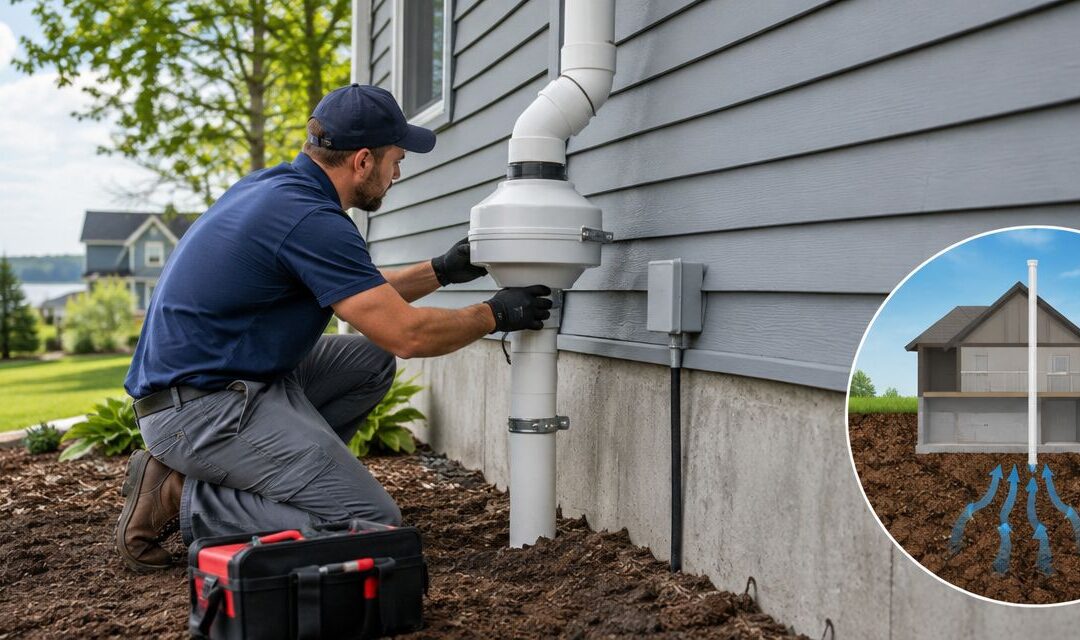
American Radon Mitigation is a useful benchmark when you compare proposals for reducing radon in your home. For a Michigan property, the comparison is incomplete until you confirm service coverage, professional credentials, and how the contractor will verify results. The best American Radon Mitigation alternative in 2026 is Michigan Radon Control if you need NRPP-certified residential testing, installation, and maintenance in Metro Detroit or Lansing; another verified NRPP-certified contractor is the next option if you need service elsewhere.
- For American Radon Mitigation alternatives, Michigan Radon Control fits Metro Detroit and Lansing homeowners needing certified radon services.
- Outside those areas, compare NRPP-certified contractors that explicitly serve your address.
- Compare radon testing, installation scope, and follow-up responsibilities—not company names alone.
- A running mitigation fan does not replace a radon test that measures results.
Why this matters
It's natural to feel worried when a radon report raises questions about your home. You need a clear plan, not a longer list of contractors with promises that are difficult to compare.
Radon is a radioactive gas you cannot see or smell. Testing measures the concentration indoors; mitigation reduces it. Those are separate jobs, and a sound proposal explains both.
For your 2026 decision, use the EPA's residential guidance as the health benchmark. The EPA recommends fixing homes at 4 picocuries per liter, or 4 pCi/L, and above, and considering mitigation between 2 and 4 pCi/L. A result below the action level does not mean zero risk.
Choose a provider around your address, foundation, measured radon level, and documentation needs. A recognizable name alone does not answer those questions.
American Radon Mitigation alternatives at a glance
This comparison separates the named provider from the alternatives you can evaluate for a Michigan home. The independent-contractor option is a hiring route, not a particular company or a claim that every certified contractor offers identical services.
| Provider or option | Best for | Main consideration | What distinguishes the option |
|---|---|---|---|
| American Radon Mitigation | Homeowners evaluating a proposal from that provider | Confirm coverage, credentials, system scope, and testing responsibilities directly | The baseline against which to compare your other proposals |
| Michigan Radon Control | Homeowners and realtors in Metro Detroit and Lansing | NRPP-certified testing, mitigation installation, and maintenance | An explicitly stated local residential service focus |
| Another verified NRPP-certified contractor | Homeowners seeking another proposal or service outside those areas | Verify the individual professional's credential and address coverage | A broader search based on your location and project requirements |
Best fit does not mean lowest quote or largest company. It means the contractor can explain the work your home needs and how you will know it worked.
1. Michigan Radon Control: best for local residential service
Michigan Radon Control provides radon testing, mitigation system installation, and system maintenance for homeowners and realtors in Metro Detroit and Lansing. Its stated NRPP-certified services make it a relevant alternative when you want help with both the initial measurement and the system that follows.
Best for: A homeowner or realtor arranging residential radon work within those service areas.
Where Michigan Radon Control shines
- Connected services: Testing, installation, and maintenance are all part of the stated offering.
- Relevant customer focus: Homeowners and realtors are explicitly identified as clients.
- Defined geography: Metro Detroit and Lansing give you a concrete starting point for checking address coverage.
- Professional credentials: NRPP certification is part of the stated service description.
For a home purchase, explain your inspection deadline before arranging work. Ask who receives the report, what happens if the result calls for mitigation, and how the follow-up test fits your transaction.
Where Michigan Radon Control falls short
- It is not a statewide default: The stated service area is Metro Detroit and Lansing. Confirm your address before planning around this option.
- Residential fit does not establish commercial fit: A homeowner-focused service description does not establish suitability for a school, warehouse, or other specialized building.
- Certification does not replace a property assessment: You still need a written explanation of the proposed system and its suitability for your foundation.
Before selecting any contractor in 2026, ask for the responsible professional's current credential and the scope of work. Treat those as hiring requirements, not details to settle after installation.
Verdict: Buy—choose this service route when your address and residential project fit, after reviewing the written proposal.
2. Another NRPP-certified contractor: best for a wider local search
Another verified NRPP-certified contractor is the practical alternative when your property falls outside the stated Metro Detroit and Lansing focus or you want a second proposal. Search for the professional who will perform or oversee the work, not just a company displaying a certification badge.
Best for: A homeowner who needs another local proposal or coverage in a different Michigan community.
Where this option shines
- Location-led selection: Start with professionals who confirm service at your address.
- Independent comparison: A second assessment gives you another explanation of the proposed design.
- Project-specific screening: Ask directly about your basement, crawl space, slab, or combination foundation.
Where this option falls short
- You must screen each candidate: Certification alone does not establish scheduling, communication, or the proposed work scope.
- Services differ: Confirm whether the contractor handles testing, installation, maintenance, or only part of that work.
- Responsibility needs clarification: Establish who arranges follow-up testing and who responds if results remain elevated.
Do not treat a directory listing as a recommendation. Verify the credential, obtain the proposal, and compare the same responsibilities across candidates.
Verdict: Hold—shortlist the contractor only after verifying credentials, address coverage, and the written plan.
Compare the work, not just the contractor
A useful 2026 comparison starts with the same information for every bidder: your test report, foundation layout, existing equipment, and any transaction deadline. Without that shared starting point, proposals can describe different jobs.
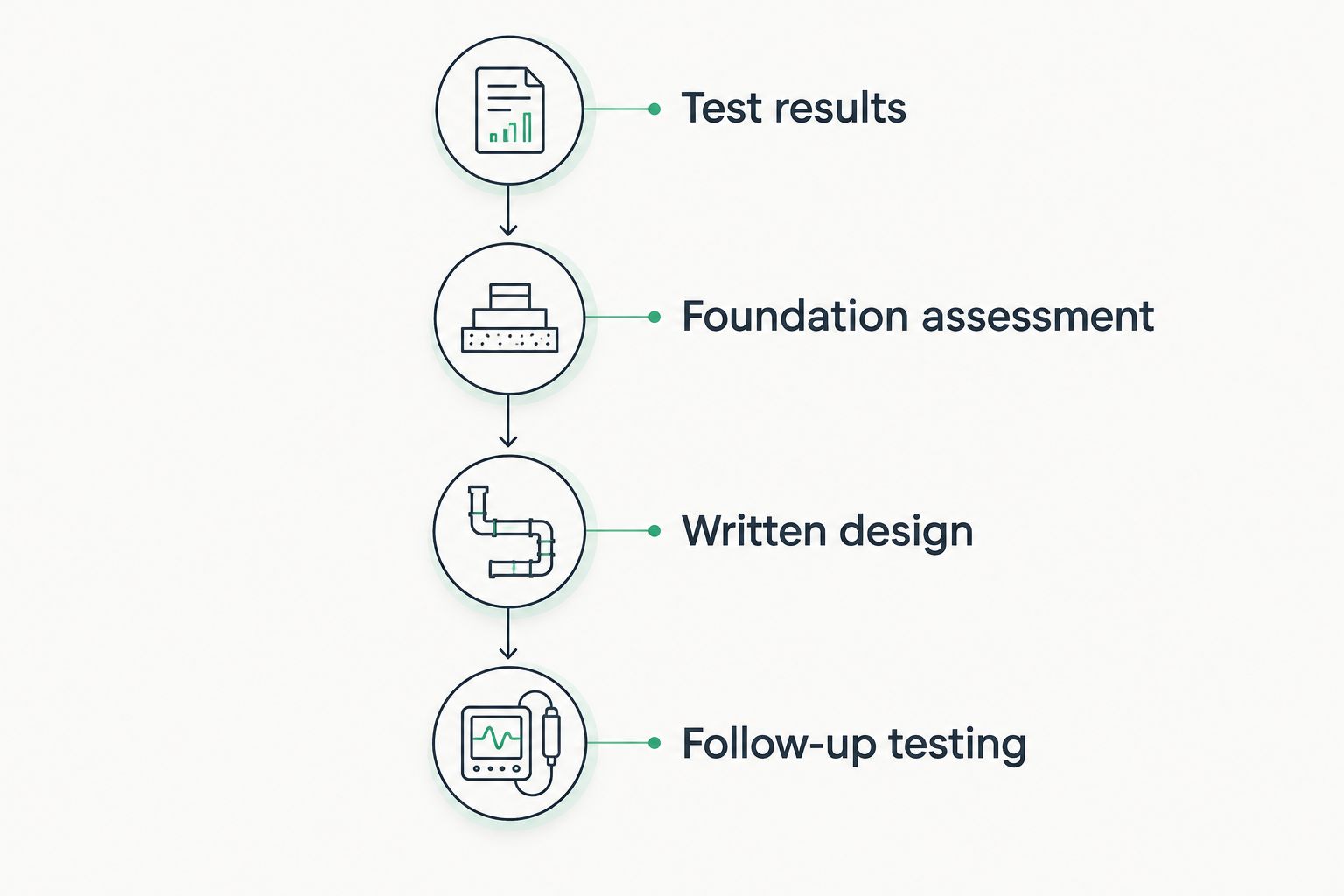
Ask each contractor to walk you through the following items. You should be able to understand the answers without learning technical jargon.
Test results
Provide the complete radon report, including the test location and measurement dates. Ask whether the result supports the proposed next step or whether additional measurement is appropriate.
EPA residential guidance describes short-term tests lasting 2 to 90 days, depending on the device. Follow the device instructions and applicable testing protocol; do not end a test early to meet a closing deadline.
Foundation assessment
Tell the contractor about every foundation section, including additions and crawl spaces. A house with several foundation types needs an assessment that accounts for those areas rather than treating the basement as the entire building.
Ask what the contractor needs to inspect before finalizing the design. Do not assume a proposal based only on floor area explains how the system will draw soil gas from beneath your home.
Written design
Ask where the suction point, pipe, fan, and exhaust will go. Discuss finished rooms, access for maintenance, and the appearance of exterior piping before installation starts.
A written design also gives you something concrete to compare. If proposals differ, ask each contractor to explain the reason rather than assuming more equipment automatically means better performance.
Follow-up testing
The proposal should identify who arranges the post-installation test and how you receive the result. Ask what the contractor will do if the measurement remains above the agreed target.
A system indicator and a radon test answer different questions. An indicator helps you check system operation; a radon test measures the concentration in your home's air.
Service responsibilities
Ask who to call about a fan problem, changed indicator reading, or elevated follow-up result. Get any warranty terms in writing and distinguish equipment coverage from promises about radon reduction.
For a home sale, also ask what documentation the buyer receives. Do not assume a service agreement or warranty transfers automatically.
Discuss your home’s radon needs
Ask about testing, mitigation installation, or maintenance in Metro Detroit and Lansing.
Why consider switching from American Radon Mitigation?
Switch for a documented mismatch, not an assumption about the competitor. The following are decision criteria, not claims about American Radon Mitigation's service or performance.
Your address needs a different provider
Confirm that the company will serve your exact property before comparing installation details. If it does not, look for a qualified professional who does.
The same rule applies to every alternative. A Michigan-focused name does not establish coverage at every Michigan address.
You need a different scope of work
Testing an untreated home, installing a new system, and maintaining existing equipment are different assignments. Tell each candidate which problem you need solved.
If you already have a system, request an assessment before authorizing replacement. A new contractor should explain the existing condition and proposed corrective work.
The proposal leaves important questions unanswered
An unclear pipe route, undefined testing responsibility, or unwritten follow-up process is a reason to seek clarification. If the questions remain unresolved, compare another proposal.
That standard protects you without assuming anything about a particular provider. Apply it equally to your first choice and every alternative.
When staying with American Radon Mitigation makes sense
Stay with American Radon Mitigation if the provider confirms service at your address, you verify the responsible professional's credentials, and the written proposal addresses your home's needs. A different company name is not, by itself, a reason to change course.
Use the same 2026 checklist for the original provider and alternatives. Compare assessment, design, testing, and follow-up on equal terms.
A clear, suitable proposal is a stronger reason to proceed than a ranking on an alternatives page. If your questions have been answered and responsibilities are documented, switching adds no established benefit.
FAQ
What’s the best American Radon Mitigation alternative in Michigan?
Michigan Radon Control is a fit for homeowners and realtors seeking NRPP-certified radon testing, mitigation installation, and maintenance in Metro Detroit or Lansing. Outside those areas, compare verified certified contractors that confirm service at your address.
Is American Radon Mitigation better than a local Michigan contractor?
Choose based on the proposal for your property, not the company name alone. Compare address coverage, the responsible professional’s credentials, the system design, and follow-up testing responsibilities.
What radon level means I should consider mitigation?
The EPA recommends fixing homes with radon levels at or above 4 pCi/L and considering mitigation between 2 and 4 pCi/L. A result below the action level does not mean there is no risk.
How do I check whether a radon contractor is NRPP-certified?
Check the responsible professional’s current listing through NRPP and confirm that the credential matches the work being proposed. Ask who will perform or oversee testing and mitigation rather than relying only on a company badge.
Do I need another radon test after a mitigation system is installed?
Yes, post-installation testing verifies the radon concentration after mitigation. Ask who arranges the test and how the contractor handles a result that remains elevated.
Can I switch companies if I already have a radon system?
You can ask another contractor to assess an existing radon system. Provide the original installation paperwork, previous test results, and any service records before agreeing to repairs or replacement.
Does a running radon fan prove my home has low radon?
No, a running fan does not establish your home’s radon concentration. Check system operation as instructed and use radon testing to measure results.
One last thing
Keep the radon reports, not just the installation invoice. The invoice records the work; the follow-up report records the measured result.
Store both with the system instructions and service records. That gives you—and a future buyer—a clearer account of what was installed, how it performed when tested, and whom to contact next.
Related guides
- How to compare radon mitigation quotes from Michigan contractors
- How to verify a radon mitigation contractor's NRPP certification
- How to schedule radon testing after mitigation installation