
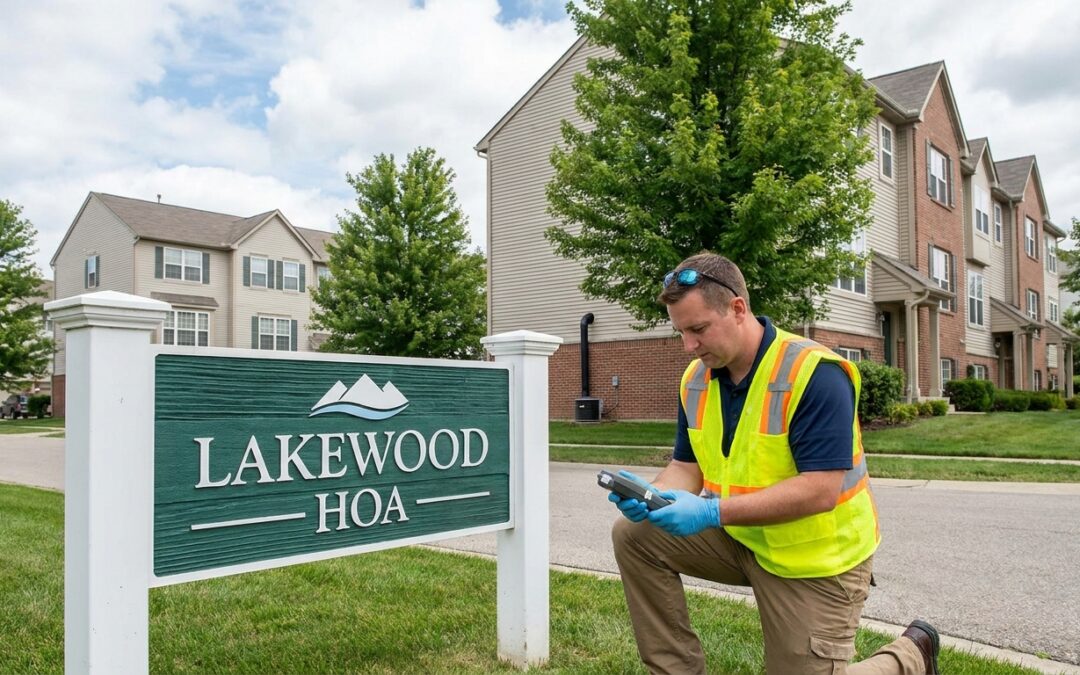
Radon doesn't stop at a unit's shared wall, and neither should the testing plan. HOA boards in Michigan managing condos, townhouses, and multi-building communities are discovering that a single radon reading from one unit tells you almost nothing about the other forty units next to it.
- Radon testing for HOA communities in Michigan needs per-unit results, not one building-wide sample.
- Sub-slab depressurization handles attached townhouse rows; crawl space buildings need encapsulation first.
- EPA’s action level is 4.0 pCi/L — any single unit above that needs mitigation, regardless of the building average.
- Budget mitigation in phases against HOA reserve funds instead of one lump special assessment.
- Verdict: test every unit individually in 2026 before the board signs one mitigation contract for the whole property.
Why this matters
Michigan sits on glacial soils and bedrock that release radon gas at higher rates than most of the country, and that geology doesn't care whether a building has one unit or thirty. A board that tests one model unit and assumes the result applies across the community is making a decision with incomplete data, and in a shared-wall property, that gap creates real liability.
Radon levels vary unit to unit even in identical floor plans because foundation cracks, sump pit seals, and HVAC pressure differences are never identical from one slab to the next. The EPA action level is 4.0 picocuries per liter (pCi/L), and any single unit that crosses it needs mitigation — the building average doesn't matter to the family living above that slab.
Boards that skip proper radon testing for HOA communities in Michigan face two costs later: a special assessment nobody budgeted for, and disclosure headaches when a unit owner tries to sell. Michigan Radon Control sees both patterns repeat across Metro Detroit and Lansing-area communities every closing season.
Who this is for
This guide is written for HOA board members, property managers, and condo association treasurers in Michigan who are deciding how to test and mitigate radon across a shared-wall community — not a single detached home. If you're managing a townhouse row, a garden-style condo building, or a mixed-use multi-family property, the testing and budgeting rules below are built around your situation, not a single-family checklist.
What to look for in radon testing for HOA communities in Michigan
Per-unit testing protocols, not one building-wide sample
A single test in a model unit or the leasing office tells the board nothing about the unit three doors down with a cracked slab. Every ground-contact unit in the building needs its own short-term (48-hour minimum) or long-term test before the board makes a mitigation decision.
Shared foundation and airflow modeling
Attached units on one continuous slab share soil gas pathways even when they don't share HVAC. A contractor who understands how one fan's suction radius interacts with the unit next door prevents the board from paying for redundant systems.
NRPP-certified contractor with multi-unit experience
Certification alone doesn't guarantee HOA experience. Ask for references from other Michigan condo or townhouse associations — a contractor who's only mitigated detached homes will underestimate the complexity of shared-wall airflow.
Reserve fund and cost allocation clarity
Boards need a written plan for how mitigation costs get split — per unit, per building, or through a general assessment — before the first test result comes back. Waiting until levels come back high turns a budget line into an emergency vote.
Documentation for meeting minutes and future disclosure
Michigan's radon disclosure expectations at resale mean every test result and mitigation record needs to sit in board files, not in one manager's inbox. A community that can hand a buyer's agent a clean testing history avoids closing delays.
Get a community-wide radon testing plan
NRPP-certified testing and mitigation for Michigan HOA and condo communities.
Top approaches for HOA-managed communities
Sub-slab depressurization for attached townhouse rows. This is the standard fix for buildings on one continuous foundation slab. One fan typically covers 2,000 to 3,000 square feet of slab, so a row of six attached units might need two or three coordinated systems instead of six separate ones. Verdict: Buy for most attached-slab communities — see how it's applied to townhouses and condos in Michigan.
Unit-by-unit testing across multi-family buildings. Before any system gets designed, every ground-contact unit needs its own 48-hour test. Skipping this step is the single most common mistake boards make, because it looks like it saves money and instead guarantees a callback. Verdict: Buy — non-negotiable, and the process for multi-family rental properties applies the same way to owner-occupied HOA buildings.
Crawl space encapsulation for garden-style condo buildings. Buildings on crawl spaces need a vapor barrier and dedicated venting before a fan system goes in, and contractors who default to slab methods on a crawl space building end up redoing the work. Verdict: Consider — review the crawl space mitigation approach before the board approves a bid.
Reserve-fund budgeting and phased rollout. Mitigating an entire community at once is rarely realistic on an HOA reserve schedule. Boards that phase installation by building or by test result, starting with the units above 4.0 pCi/L, avoid the special-assessment fight. Verdict: Buy — budgeting guidance that maps directly onto a multi-building rollout for 2026.
“One central mitigation system doesn’t fix twelve separate stack effects in twelve separate units.”
What to avoid
- One test result applied to the whole building. A single low reading in one unit does not clear the building — EPA protocol and NRPP guidance both call for testing every ground-contact unit, not a sample.
- Hiring a contractor without verifying multi-unit experience. A license alone doesn't mean shared-foundation experience. Boards vetting a contractor should compare options against a resource like the best radon testing companies for Metro Detroit realtors before signing.
- Skipping written documentation for board minutes. Verbal approval of a mitigation plan with no paper trail creates disclosure problems the next time a unit sells, and Michigan buyers' agents ask for records more often than boards expect in 2026.
Comparison: approaches at a glance
| Approach | Best For | Key Consideration | Verdict |
|---|---|---|---|
| Sub-slab depressurization | Attached townhouse rows on one slab | Fan coverage ~2,000-3,000 sq ft each | Buy |
| Unit-by-unit testing | Any multi-unit building before mitigation | 48-hour minimum per unit | Buy |
| Crawl space encapsulation | Garden-style condo buildings | Vapor barrier before venting | Consider |
| Phased reserve-fund rollout | Communities with 10+ units | Start with units above 4.0 pCi/L | Buy |
FAQ
Does one radon test cover an entire HOA building?
No. Radon levels vary unit to unit even in identical floor plans, so one test result cannot represent an entire building. Every ground-contact unit needs its own short-term or long-term test before a board makes a mitigation decision.
Who pays for radon mitigation in a Michigan condo association?
Cost allocation depends on the association’s governing documents, but most boards split mitigation costs per unit or through a phased reserve-fund assessment. Get the allocation plan in writing before test results come back.
What radon level requires mitigation in an HOA community?
The EPA action level is 4.0 pCi/L, and any single unit above that number needs mitigation regardless of the building average. Levels between 2 and 4 pCi/L are worth monitoring but aren’t a mandatory action threshold.
Can one mitigation system serve multiple attached townhouse units?
Sometimes. Units on one continuous slab can sometimes share a coordinated fan system, but airflow modeling needs to confirm coverage before the board approves a single-system bid over separate units.
How long does radon mitigation installation take for a multi-unit building?
A single-unit system typically installs in a day, but a multi-building HOA rollout is phased over weeks or months depending on the number of units testing above 4.0 pCi/L and contractor scheduling.
Is radon testing required before selling a condo in Michigan?
Michigan disclosure practices favor sellers who can show a recent radon test at resale, and HOA boards with documented community-wide testing histories avoid delays when a unit owner lists their property.
Do crawl space condo buildings need a different mitigation system than slab buildings?
Yes. Crawl space buildings typically need vapor barrier encapsulation and dedicated venting before a fan system goes in, while slab buildings go straight to sub-slab depressurization.
How often should an HOA retest units after mitigation is installed?
Verify each mitigated unit within days of system startup, then retest on a recurring schedule — many boards align retesting with the winter heating season since radon readings run higher during closed-house months.
One last thing
The board decision that saves the most money isn't picking the cheapest contractor — it's testing every unit before writing any contract. A community that tests first and mitigates by the numbers spends less in 2026 than one that guesses based on a single model-unit reading and ends up redoing work unit by unit for the next three years.
Related guides
- Radon mitigation for townhouses and condos in Michigan
- Radon mitigation for multi-family rental properties
- Radon mitigation systems for crawl space homes
- How to budget for a radon mitigation system installation
- Best radon testing companies for Metro Detroit realtors