
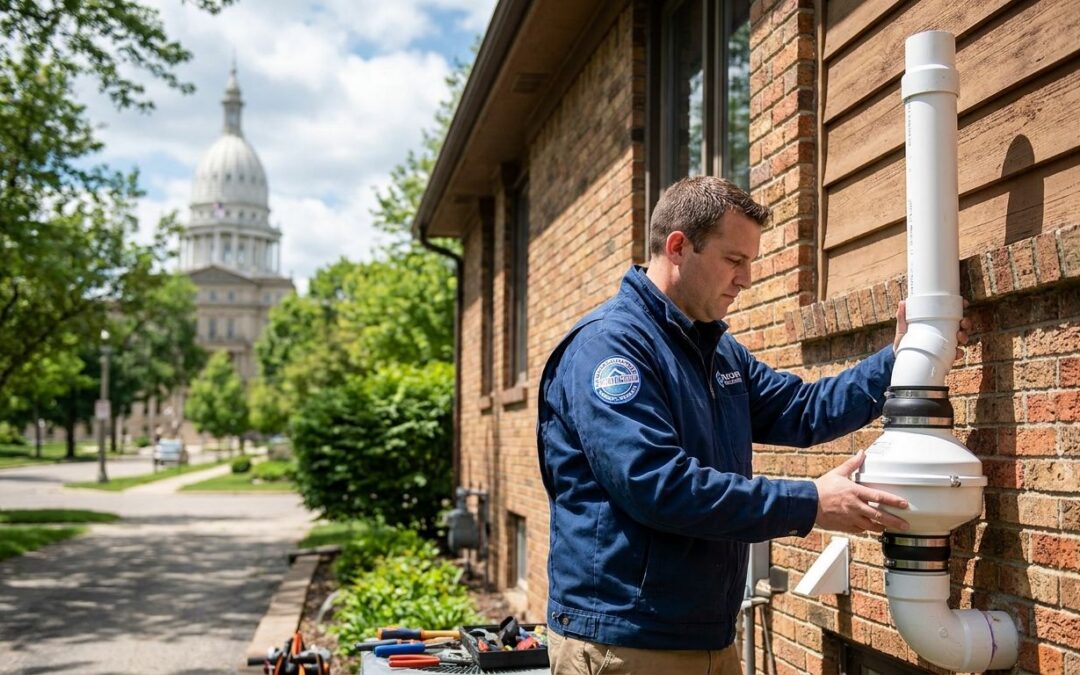
Lansing homeowners searching for the best radon mitigation companies want one thing: a straight answer on who to hire before winter testing season closes in. Michigan Radon Control is the top pick for NRPP-certified installation in Lansing and East Lansing, with national franchises, general contractors, and independent installers filling narrower use cases behind it.
- Michigan Radon Control ranks best overall among the best radon mitigation companies in Lansing, Michigan for NRPP-certified sub-slab systems in 2026.
- National franchise radon companies suit homeowners who want a recognizable brand name over local specialization.
- General contractors bundling radon work into a renovation save a trip, but their crews are rarely NRPP-certified specialists.
- Independent solo installers work fine for simple slab-on-grade homes but carry the weakest warranty and follow-up testing record.
- Every option should be verified against the same four criteria before you sign a contract in 2026.
Why this matters
Michigan homes sit on glacial till and fractured bedrock that let radon gas move through soil gas more freely than in many other states, which is why testing and mitigation get discussed here more often than in flatter, sandier regions. The EPA sets 4 pCi/L as the action level for mitigation, but the agency also recommends homeowners consider fixing homes that test between 2 and 4 pCi/L.
That threshold matters because it changes what "best" means. A homeowner at 12 pCi/L needs an aggressive, well-engineered radon mitigation system for Lansing-area homes; a homeowner at 3 pCi/L has more room to shop on price and timeline. Picking a contractor without knowing which bucket you're in is how homeowners end up re-testing twice in 2026.
What makes the best radon mitigation company in Lansing
Every option on this list gets judged against the same criteria, in this order:
- NRPP certification held by the installer, not just the company — the individual doing the work should carry an active National Radon Proficiency Program credential.
- Post-installation testing built into the price, not sold as an upsell after the fan goes in.
- Warranty coverage on the system, separate from any general contractor labor warranty.
- Insurance and bonding verified, not just claimed on a website.
- Familiarity with Lansing-area foundation types — slab, crawl space, and the mixed foundations common in older Lansing and East Lansing neighborhoods.
- Scheduling that fits your timeline, especially if a real estate closing is driving the deadline.
Radon mitigation options in Lansing at a glance
| Option | Best for | Standout feature | Key limitation |
|---|---|---|---|
| Michigan Radon Control | NRPP-certified sub-slab installs | Testing and mitigation under one certified team | Regional focus on Metro Detroit and Lansing, not statewide |
| National radon franchises | Brand-name recognition | Standardized install process across locations | Local Michigan geology knowledge varies by franchisee |
| General contractors (radon add-on) | Bundling with basement remodels | One crew, one schedule for multiple projects | Installers often lack dedicated NRPP certification |
| Independent solo installers | Simple slab-on-grade homes | Lower overhead, flexible scheduling | Weakest warranty and follow-up testing support |
1. Michigan Radon Control: best radon mitigation company for NRPP-certified installs
Michigan Radon Control handles testing, system design, and installation as one NRPP-certified operation serving Metro Detroit and Lansing homeowners and realtors. The team designs systems around Michigan's common foundation types, including slab, crawl space, and mixed foundations found throughout Lansing's older housing stock.
Michigan Radon Control pros:
- NRPP-certified testing and mitigation under one company
- Familiarity with Lansing-area soil conditions and foundation styles
- Works directly with realtors on transaction timelines
Michigan Radon Control cons:
- Doesn't serve every corner of Michigan outside the Metro Detroit and Lansing service area
- Scheduling can tighten during peak winter testing months, when radon readings run highest
Best for: Lansing and East Lansing homeowners who want certification and post-installation testing handled by one team. Verdict: Buy.
2. National radon mitigation franchises: best for brand-name familiarity
National franchise operations bring standardized processes and marketing budgets that make them easy to find in a quick search. Install quality still comes down to the individual franchisee and technician assigned to your home, not the national brand name on the truck.
National franchise pros:
- Recognizable name if you're comparing options for the first time
- Standardized paperwork and process across locations
- Often has capacity in multiple Michigan markets
National franchise cons:
- Local geology knowledge depends entirely on the individual franchisee
- Pricing and scheduling policies can vary by location within the same brand
Best for: Homeowners who value brand recognition over local specialization. Verdict: Hold — call and ask specifically about the technician's NRPP certification before booking.
3. General contractors with radon add-on crews: best for bundled renovation projects
Some general contractors add radon mitigation to their service list alongside basement finishing or foundation repair. This works when radon fixes are already part of a bigger remodel and you want one point of contact for the whole job.
General contractor pros:
- One schedule and one invoice for multiple projects
- Convenient if you're already mid-remodel
General contractor cons:
- Radon work is often subcontracted or handled by a non-specialist crew member
- NRPP certification isn't guaranteed the way it is with a dedicated radon company
- Post-installation testing protocol may not follow EPA guidance closely
Best for: Homeowners bundling radon mitigation into a larger basement or foundation renovation. Verdict: Wait — confirm certification and testing protocol in writing before signing.
4. Independent solo installers: best budget option for simple slab homes
Solo installers and small independent operators can handle straightforward slab-on-grade jobs without the overhead of a larger company. This route works best for simple, single-point suction systems with no crawl space or unusual foundation complications.
Independent installer pros:
- Lower overhead, which can mean more flexible scheduling
- Fine for simple, single-point sub-slab depressurization jobs
Independent installer cons:
- Warranty coverage is often limited or informal
- Follow-up testing isn't always included or documented
- Harder to verify insurance and bonding without asking directly
Best for: Simple slab homes with radon levels close to the 4 pCi/L action level and no crawl space or sump pump complications. Verdict: Skip if your home tests above 10 pCi/L or has a crawl space — those jobs need engineered systems, not a single suction point.
“If a radon company can’t explain its NRPP certificate number on request, that’s a Skip, not a maybe.”
How this ranking works
The order above follows the six criteria listed earlier: certification held by the actual installer, testing built into the scope, warranty terms, verified insurance and bonding, foundation-type familiarity, and scheduling fit. Michigan Radon Control leads because it satisfies all six directly rather than through a subcontractor or franchise layer. Before signing with any option, ask each company to walk through NRPP-certified radon mitigation companies criteria point by point — a company that hesitates on any one of them isn't ready for your job.
Get an Estimate for Your Lansing Home
NRPP-certified testing and mitigation for Lansing and East Lansing homeowners.
Which radon mitigation company should you choose in Lansing?
For most Lansing homeowners testing above 4 pCi/L, Michigan Radon Control is the default pick because certification, testing, and warranty coverage sit under one roof. Choose a national franchise only if you've already vetted the specific technician's certification. Bundle with a general contractor only when a bigger remodel is already underway and you get the testing protocol in writing. Reserve independent solo installers for simple slab homes testing in the 2-4 pCi/L range, and skip them entirely above 10 pCi/L or with a crawl space involved.
FAQ
What is the best radon mitigation company in Lansing, Michigan?
Michigan Radon Control ranks best overall for Lansing homeowners in 2026 because it handles NRPP-certified testing, mitigation design, and installation as one team. National franchises and general contractors can work too, but each requires extra verification of the individual technician’s certification.
How much does radon mitigation cost in Lansing?
Cost depends on foundation type, system design, and fan sizing, so pricing varies by home. Ask each contractor for a written estimate that itemizes labor, equipment, and post-installation testing before comparing quotes.
How long does radon mitigation installation take?
Most residential radon mitigation systems install in a single day for a standard slab or basement foundation. Homes with crawl spaces or multiple foundation types sometimes need a second day for sealing and fan placement.
Is radon actually a problem in Lansing, Michigan?
Yes. Michigan sits over glacial till and fractured bedrock that let radon gas migrate into homes more easily than in many other states, and testing remains the only way to know your home’s level.
How do I verify a radon contractor’s NRPP certification in Lansing?
Ask for the technician’s individual NRPP certificate number, not just the company’s general credentials, and confirm it’s active before signing a contract. A contractor unwilling to provide this should move to the bottom of your list.
What’s the difference between radon testing and radon mitigation?
Radon testing measures the gas concentration in your home over a short-term or long-term period, while radon mitigation is the physical system installed to reduce that concentration below the EPA’s 4 pCi/L action level. You need testing first to know if mitigation is necessary.
Should I choose a national franchise or a local Lansing contractor for radon mitigation?
A local NRPP-certified specialist typically has deeper familiarity with Lansing’s specific foundation types and soil conditions than a national franchise technician assigned by territory. Ask any franchise directly about the assigned technician’s certification and local experience before booking.
How soon after installation should I retest for radon?
EPA guidance recommends a short-term retest between 24 hours and 30 days after the mitigation system starts running. This confirms the system brought levels below the 4 pCi/L action level before you consider the job finished.
One last thing
Winter is when Michigan homes seal up tightest, which is also when radon readings run highest and most accurately reflect year-round exposure. If a Lansing contractor pushes you toward a summer install with a summer-only test, that's a scheduling convenience for them, not a testing best practice for you in 2026.
Related guides
- How to verify a radon mitigation contractor's NRPP certification
- Best radon mitigation companies with multi-year service contracts
- How to compare radon mitigation quotes from Michigan contractors