
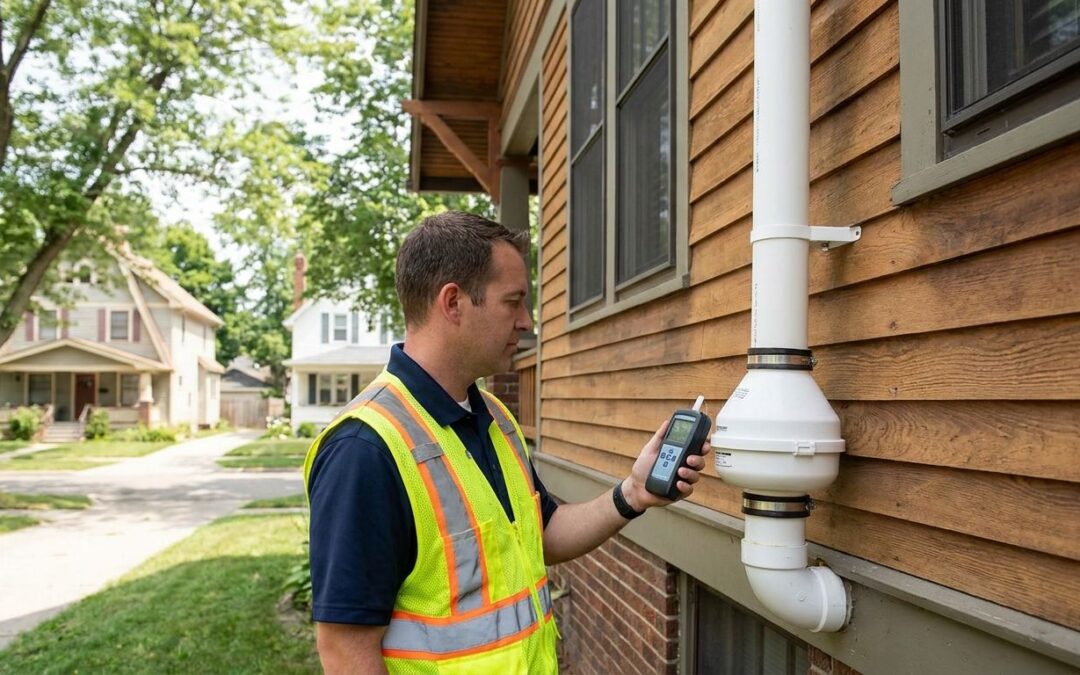
Grand Rapids radon mitigation is the installation of a vent system that pulls soil gas from beneath your foundation and exhausts it above the roofline before it collects in your basement or crawl space, and it matters here because West Michigan sits on the same glacial till and limestone-laced soil that pushes indoor readings above the EPA's 4 pCi/L action level in a meaningful share of Kent County basements. If you just got a test result back and you're staring at a number you don't understand, that reaction is normal — the fix is well understood and the systems are boring in the best way once they're installed correctly.
- Radon mitigation grand rapids projects usually mean a sub-slab or crawl space suction system tied to a sealed vent stack.
- EPA’s action level is 4 pCi/L — anything at or above that calls for mitigation, no debate.
- Foundation type (crawl space, block basement, slab) decides which system design fits your Grand Rapids home.
- Retest 24 to 48 hours after installation, not weeks later, to confirm the fan actually dropped your number.
- Michigan Radon Control installs and services NRPP-certified systems across West Michigan and Metro Detroit.
Why radon mitigation matters for Grand Rapids homeowners
Grand Rapids homeowners deal with a specific mix of housing stock: older craftsman and bungalow homes near East Grand Rapids and Heritage Hill with stone or block foundations, mid-century ranches with crawl spaces on the west side, and newer builds pushing into former farmland toward Cascade and Byron Center. Each of those foundation types traps soil gas differently, which is exactly why a one-size system doesn't work.
Radon doesn't announce itself. It has no smell, no color, and no symptom until it's already done long-term damage to lung tissue — which is why testing, not guessing, is the starting point every single time. A test result at or above 4 pCi/L is the line the EPA draws for recommending mitigation, and that number doesn't change based on how old your house is or how it looks from the street.
How to handle radon mitigation in Grand Rapids, step by step
Test your home before you assume you need mitigation
Don't skip straight to a mitigation quote. A short-term test gives you a real number in as little as 48 hours under closed-house conditions, and that number tells you whether you need a full system or just a follow-up long-term test.
- Run a short-term test kit for 2 to 7 days with windows and doors closed
- Place the test device in the lowest livable level, at least 20 inches off the floor
- Avoid testing during unusually high winds or storms, which can skew soil gas readings
- Follow up a borderline result (2 to 4 pCi/L) with a longer-term test before deciding
- Review how to test your home for radon if you want the full protocol before you buy a kit
Match the mitigation system to your foundation type
Grand Rapids housing stock is not uniform, and the system that works on a poured slab ranch will not work the same way on a fieldstone basement or an open crawl space.
- Sub-slab suction for poured concrete basements and slab-on-grade homes
- Crawl space depressurization with a sealed vapor barrier for homes without a basement
- Block wall suction for older homes with hollow cinder block foundation walls
- Sump pump cover systems where an active sump pit already exists
- A combination system when a home has a basement on one side and a crawl space addition on the other
Check radon mitigation systems for crawl space homes if your home has an unfinished or partially finished crawl space — the sealing step matters as much as the fan itself.
Get a written scope and a real budget number
Radon mitigation pricing depends on foundation size, fan placement, and how far the vent stack has to travel to clear your roofline. Don't accept a verbal quote over the phone.
- Ask for a written scope that names the exact system type (active sub-slab, crawl space, etc.)
- Confirm whether the price includes interior or exterior vent routing
- Ask what warranty terms apply and what voids them
- Get the fan model and stated airflow rating in writing, not just verbally
- Compare at least two quotes before signing
Read how to budget for a radon mitigation system installation before you call around — it saves you from comparing apples to oranges.
Schedule installation with an NRPP-certified contractor
NRPP certification means the installer follows EPA-referenced protocols for pipe sizing, sealing, and fan placement — not a guess based on what worked on the last job.
- Confirm active NRPP certification before signing anything
- Ask how the crew handles finished basements without tearing up drywall unnecessarily
- Ask where the exhaust point will land relative to windows and decks
- Confirm the install date accounts for Michigan's winter closed-house conditions if you're testing in the same season
Retest after installation to confirm the system works
A fan that's running isn't the same as a fan that's working. The only way to know your radon level actually dropped is a retest, not an assumption.
- Retest 24 to 48 hours after the system is turned on
- Use the same test location as your original test for a fair comparison
- Confirm the pressure gauge or manometer shows steady suction, not a flat reading
- Keep the retest result on file for real estate disclosure or appraisal purposes
If you're timing this around a sale or purchase, how to schedule radon testing after mitigation installation lays out the sequence buyers and sellers actually use.
Maintain the system year after year
A mitigation system isn't a one-time install and forget. Fans wear out, U-tube manometers drift, and settling can crack a seal at the slab penetration.
- Check the manometer gauge monthly for a steady reading in the manufacturer's target range
- Listen for changes in fan sound — a new hum or rattle usually means bearing wear
- Re-inspect sealed penetrations every year or two, especially after basement remodeling work
- Schedule a professional system check if you haven't had one in 2+ years
Radon mitigation system options for Grand Rapids homes
| System type | Best for | Key limitation |
|---|---|---|
| Sub-slab suction (active) | Poured concrete basements and slab-on-grade homes | Requires a clean slab penetration point; less effective on cracked or uneven slabs |
| Crawl space depressurization | Homes with unfinished or semi-finished crawl spaces | Needs a full vapor barrier seal to work, adding labor time |
| Block wall suction | Older homes with hollow cinder block foundation walls | Doesn't address soil gas entering through the slab itself |
| Sump pump cover system | Homes with an existing active sump pit | Only works if the sump pit is sealed and not also used for drainage overflow |
| Passive stack (new construction) | New builds installed with radon-resistant features from the start | Passive systems alone often don't reach sub-4 pCi/L without adding a fan later |
Common mistakes Grand Rapids homeowners make
- Testing during an open house or a windy week and trusting the number. Wind pressure and open doors both skew readings low, giving a false sense of security.
- Assuming a newer home doesn't need testing. Soil gas doesn't care about the build date — it cares about what's under the slab, and Kent County soil composition doesn't change by subdivision age.
- Choosing a system based on price alone without matching it to foundation type. A crawl space job priced like a simple basement suction job usually means the vapor barrier step got skipped.
- Never retesting after installation. A fan that's running quietly for three years with no retest could be working fine or could have a failed seal nobody caught.
- Ignoring a rising radon level near quarry or limestone-heavy areas. Some parts of West Michigan sit closer to limestone deposits, which can mean higher baseline soil gas than a home ten miles away.
Get a Radon Mitigation Estimate
NRPP-certified installers serving Grand Rapids and West Michigan homes.
FAQ
What’s the best radon mitigation system for a Grand Rapids crawl space home?
A crawl space depressurization system with a fully sealed vapor barrier is the standard fix for Grand Rapids homes without a basement. It pulls soil gas from under the sealed liner and vents it above the roofline, and the seal quality matters as much as the fan itself.
Is radon mitigation in Grand Rapids different from Metro Detroit?
The mitigation methods are the same, but Grand Rapids has more homes on crawl spaces and older block foundations compared to Metro Detroit’s mix of slab and basement construction. The system type gets picked based on foundation, not city.
How much does radon mitigation cost in Michigan in 2026?
Cost depends on foundation size, system type, and vent routing, so get a written scope before comparing numbers. A budget breakdown by system type is available on the mitigation budget guide.
How long does a radon mitigation system take to install?
Most single-system installs are completed in one day for a standard basement or crawl space. Complex homes with multiple foundation types can take longer if a combination system is needed.
Do I need to retest after installing a radon mitigation system?
Yes — retest 24 to 48 hours after the fan is turned on using the same test location as your original test. Skipping this step means you’re assuming the system works instead of confirming it.
What radon level requires mitigation in Michigan?
The EPA action level is 4 pCi/L, and any result at or above that level is a recommendation for mitigation. Results between 2 and 4 pCi/L are worth a longer-term follow-up test before deciding.
Can I install a radon mitigation system myself?
DIY kits exist, but improper sealing or incorrect fan sizing are the most common reasons a system fails to bring levels below 4 pCi/L. An NRPP-certified install with a documented retest is the way to confirm the fix actually worked.
Does radon mitigation affect home value in Grand Rapids?
A documented, working mitigation system with retest results on file generally reassures buyers and appraisers rather than raising concern. An undocumented or unverified system can slow down a sale during inspection.
One last thing
The manometer gauge on your system is the cheapest diagnostic tool you already own — a flat or zero reading means the fan stopped doing its job long before you'd notice anything else, and checking it takes ten seconds a month. Most homeowners never look at it after year one, which is exactly when a failed seal or a dying fan goes unnoticed the longest.
Related guides