
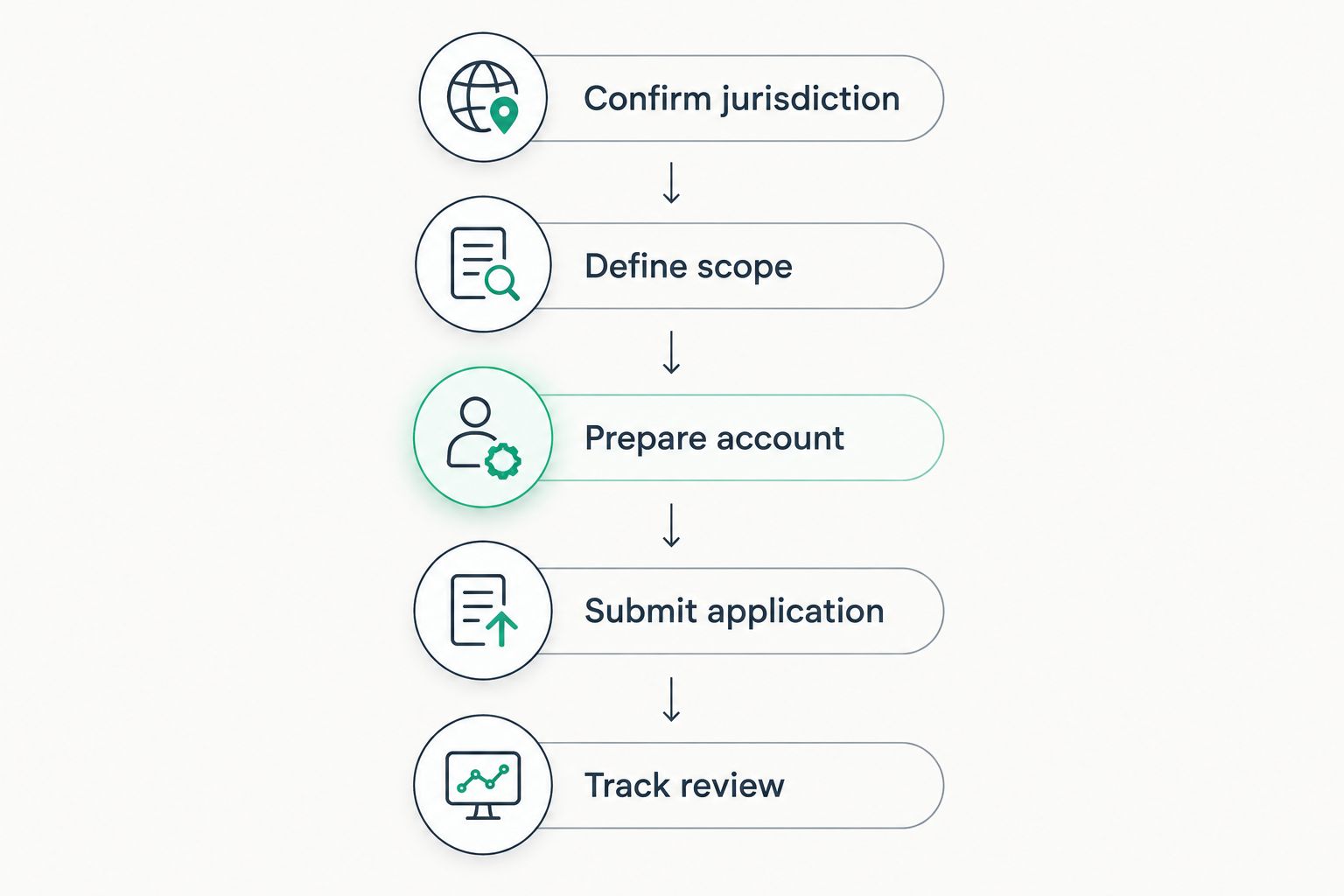
Instead of repeatedly emailing radon paperwork, confirm which agency handles permits for your Michigan property, then use that agency’s designated portal to submit and track the project. For a 2026 installation, the first step is identifying the correct permitting authority—not assuming every radon project belongs in a single statewide e-permitting system.
- For radon mitigation permit michigan e-permitting searches, start with the property’s enforcing agency, not a presumed statewide application.
- Michigan Radon Control provides NRPP-certified radon testing and mitigation services for Metro Detroit and Lansing homeowners and realtors.
- Confirm permit categories, applicant eligibility, and the submission portal before creating an application.
- Keep permit approval, inspection records, and post-installation radon results together; they answer different questions.
Why this matters
It’s natural to worry about radon and want installation started quickly. Filing in the wrong system adds another problem without addressing the original one. Confirm the agency and permit scope before entering an application.
Michigan construction permitting involves state and local enforcing agencies. The correct route depends on the property and the work involved, so an address alone is not a reason to assume a particular portal or permit category applies.
Start with the guide to whether a radon mitigation system needs a permit in Michigan. Then ask the enforcing agency to confirm the requirements for your actual installation.
Michigan Radon Control is best for homeowners and realtors seeking NRPP-certified radon testing and mitigation services in Metro Detroit and Lansing. Permitting decisions remain with the responsible agency; a contractor’s certification does not replace its approval.
Before you start
Gather these materials before opening a 2026 application:
- Property and project information: The installation address, owner’s contact information, available parcel information, and a description of the proposed system and electrical work.
- Applicant access: The agency’s designated portal instructions and confirmation of who must apply. Establish whether the homeowner, mitigation contractor, or electrical contractor is responsible for each submission.
- The jurisdiction check: Ask which agency administers each applicable permit. The non-obvious problem is assuming that the same agency or online account handles every part of the installation.
Do not share a contractor’s login or create an application under someone else’s identity. Ask the agency how an authorized representative should participate and how the owner can receive project updates.
Choose the correct submission route
These are routing choices, not interchangeable portals. Use the route the enforcing agency confirms for your address and scope.
| Submission route | Best for | Advantage | Limitation |
|---|---|---|---|
| State-administered permitting | Work under the state’s enforcement jurisdiction | Places the application with the responsible state office | Does not establish that locally administered work belongs there |
| Locally administered permitting | Work handled by a city, township, county, or other local enforcing agency | Follows the responsible agency’s submission process | Instructions and online services depend on that agency |
| Separate trade submissions | Projects whose confirmed requirements involve different trade permits or applicants | Makes responsibilities clear for each part of the work | Requires coordination across records and applicants |
Choose by jurisdiction, not by which website looks easiest to use. An account that accepts your registration does not establish that it accepts your project.
Permitting authority and project scope
Confirm the responsible office
- Contact the building department serving the property. Describe the proposed radon mitigation installation and ask which office enforces the applicable construction requirements.
- Describe the work beyond the words “radon system.” Include the planned suction point, pipe route, fan location, exterior penetrations, and proposed electrical connection.
- Ask which permit categories apply and whether another office handles any trade work. Do not select a mechanical, building, or electrical category by guesswork.
- Request the correct portal instructions and the permitted applicant role. Record the office, contact date, and guidance in your project folder.
Expected result: You know where to apply, what applications are required, and who is responsible for each one.
For your 2026 project notes, separate the agency’s instructions from your contractor’s proposed design. This makes it easier to resolve a question without treating a design preference as an official permit requirement.
Set the application scope
- Ask the installer for a plain-language description of the proposed work. Include the foundation type and whether the work affects a slab, crawl space, sump cover, or existing system.
- Identify who will perform any electrical work. Confirm the required applicant and contractor credentials with the enforcing agency rather than assuming radon certification covers every trade.
- List the documents the agency requests. Ask specifically about drawings, equipment information, owner authorization, and contractor information.
- Resolve unanswered scope questions before submission. If the agency needs more detail, send the proposed layout through its designated inquiry process.
Expected result: Your application describes the installation the contractor actually intends to perform.
A test report explains the radon measurement. It does not describe every construction detail an agency needs to review. Keep the report available, but submit it only where requested or relevant to the application.
Portal account and application record
Prepare your account
- Open the portal through the instructions supplied by the responsible agency. Confirm the agency name and jurisdiction before entering personal or contractor information.
- Register or sign in using the applicant identity the agency requires. Complete any account verification described in its instructions.
- Check that you are authorized to submit the required application type. If contractor verification is required, resolve it before building the application.
- Establish where official correspondence will go. Use an email address the responsible applicant checks and agree on how updates will reach the homeowner.
Expected result: The correct applicant can access the correct agency’s submission process.
Portal wording differs by agency and changes over time. Follow the current on-screen labels and official instructions rather than looking for an assumed statewide button called “Radon Permit.”
Create the project record
- Select only the application category confirmed by the enforcing agency. Stop and ask if the available categories do not match its instructions.
- Enter the property details consistently with the agency’s records. Check street direction, unit information, and parcel details where requested.
- Describe the approved submission scope clearly. Distinguish the mitigation equipment installation from any separately permitted electrical work.
- Upload the requested documents in the portal’s accepted formats. Use filenames that identify the document and revision without exposing unnecessary personal information.
- Review the application before submitting it. Check the applicant, property, work description, attachments, and contact details together.
Expected result: The submitted record represents the correct property, applicant, and proposed work.
For a 2026 submission, retain a dated copy of the documents you actually submitted. A working drawing on your computer is not necessarily the same revision attached to the agency’s record.
Review, approval, and closeout
Track review
- Save the application reference and submission confirmation. Add them to the same project folder as the submitted documents.
- Check the record for agency correspondence. Do not rely only on email, because a filtered message can leave a correction request unanswered.
- Respond to each requested correction specifically. Identify what changed and provide the revised document through the agency’s designated process.
- Confirm that the permit has been issued before work that requires it begins. A submission confirmation is not permission to start.
Expected result: You can distinguish an application awaiting review from an issued permit and explain any outstanding correction.
Avoid creating a second application simply because the first has not progressed. Ask the agency about the existing reference first; duplicate records make it harder to establish which submission is current.
Organize completion records
- Follow the issued permit’s inspection instructions. Coordinate access and scheduling with the responsible contractor and agency.
- Keep inspection outcomes and correction notices with the permit record. Resolve outstanding items through the process the agency specifies.
- Obtain the agency’s completion documentation where applicable. Do not treat an installer’s invoice as proof that required inspections are complete.
- Arrange post-installation radon testing separately from permit closeout. Save the resulting report with the installation and permit records.
Expected result: Your folder distinguishes permission to perform work, inspection outcomes, and evidence of radon reduction.
Electrical scope deserves particular attention. Review electrical code considerations for a radon mitigation fan with the contractor, then confirm the project-specific requirements with the enforcing agency.
Update an existing permit when the installation changes
Use the existing project record as your starting point when a proposed pipe route, fan location, or electrical arrangement changes. Ask whether the change requires a revision, another permit, or no additional submission before proceeding.
- Identify the existing permit and describe the proposed change to the responsible agency.
- Ask how to submit revised documents and whether affected work must wait for review.
- Provide the requested revision through the designated process. Clearly distinguish the revised scope from the earlier proposal.
- Retain the agency’s response and distribute the current documents to everyone performing the affected work.
Expected result: The installation team and enforcing agency are working from the same current scope.
Do not assume that uploading a revised drawing means it has been accepted. Check for the agency’s response and follow any instructions attached to it.
Troubleshooting
The portal cannot find the property
Check spelling, street direction, unit information, and any requested parcel identifier against the agency’s records. If the address still fails, ask the agency how to identify the property; do not select a neighboring address to continue.
There is no radon-specific application category
Return to the office that confirmed the permit requirement. Ask which category covers the described work and whether trade applications are separate. The absence of a radon label does not answer whether a permit is required.
The contractor cannot submit the application
Ask whether account verification, applicant eligibility, or contractor registration is blocking submission. Have the agency explain the required correction. Do not switch to a homeowner application merely to bypass a contractor requirement.
Revised documents are not visible to the reviewer
Check that the files were attached to the correct record and that any required submission action was completed. Ask the agency to confirm receipt using the application reference; saving a file and sending it for review are not necessarily the same action.
The record looks complete, but an inspection remains outstanding
Read the permit conditions and inspection correspondence together. Ask the agency what remains open and how to resolve it. A completed document upload does not establish that a required inspection has passed.
Customize your workflow
For a home sale, give the responsible parties a shared document checklist rather than shared account credentials. Include the permit references, installer’s completion information, applicable inspection documentation, and post-installation radon report.
For repeat projects, maintain a jurisdiction worksheet with the property, enforcing agency, applicant, required submissions, and current record references. Reconfirm the instructions for each address instead of copying the previous project’s route.
Michigan Radon Control provides radon testing, mitigation installation, and system maintenance. Ask about the proposed installation and establish permit responsibilities before work begins; do not assume permit filing is included without confirming the scope.
Discuss your radon installation
Ask Michigan Radon Control about testing, mitigation, and your proposed installation scope.
FAQ
How do I connect a radon permit to Michigan’s e-permitting portal?
First confirm which agency administers permits for the property and proposed work, then follow its designated online submission process. Do not assume there is a statewide radon-specific connection or application category.
Does every Michigan radon installation use the same portal?
Do not assume the same portal applies to every installation. State and local enforcing agencies administer construction permits, so confirm the route for the property and work involved.
Can I submit the permit application as the homeowner?
Ask the enforcing agency whether a homeowner application is allowed for the specific work. Applicant eligibility and responsibility must be confirmed before you submit.
Do I need an electrical permit for a radon fan?
Confirm the electrical permit requirements with the agency responsible for the proposed electrical work. Describe the connection being installed rather than asking only about the radon fan.
Does NRPP certification mean the permit is approved?
No. NRPP certification and permit approval serve different purposes. Michigan Radon Control provides NRPP-certified radon services, while the responsible agency determines applicable permit requirements and approvals.
Is a submitted application permission to begin installation?
No. Submission confirms that an application was sent, not that a permit was issued. Confirm issuance and any conditions before beginning work that requires the permit.
Does a passed inspection prove my radon level is low?
No. A construction inspection does not measure indoor radon concentration. Post-installation radon testing provides evidence of system performance.
One last thing
An issued permit is not a radon test result. For your 2026 project, keep construction approval and radon measurements as separate checks rather than treating either as a substitute for the other.
EPA guidance recommends fixing homes at 4 pCi/L, approximately 150 Bq/m³, and considering mitigation between 2 pCi/L and 4 pCi/L. These are radon concentration guidelines—not permit thresholds or a guarantee that a lower measurement carries no risk.
Related guides
- Schedule radon testing after mitigation installation
- Verify a radon contractor’s NRPP certification
- Maintain your radon mitigation system