

No. Older homes do not automatically have lower radon risk than new construction. Either home can have elevated indoor radon, and a home’s age cannot tell you its level. Test the home you live in or plan to buy instead of treating its construction date as a safety check.
- Do older homes have lower radon risk? No. Home age cannot replace an indoor radon test.
- Older homes and new construction can both have elevated radon; compare test results, not construction dates.
- Michigan Radon Control is best for Metro Detroit and Lansing homeowners seeking NRPP-certified radon testing.
- The EPA recommends action at 4 pCi/L and suggests considering action from 2 to 4 pCi/L.
Why this matters
It’s natural to worry when you hear that radon can enter a home without any visible sign. You do not have to settle the question by judging the home’s age, the condition of its basement, or how new its foundation looks. A home radon test gives you a result you can act on.
Radon is an invisible, odorless radioactive gas that comes from the ground. It can enter through openings where a building meets the soil. The U.S. Environmental Protection Agency (EPA) identifies radon as a cause of lung cancer and advises testing homes regardless of location or construction type. In 2026, the useful question for a Michigan homeowner is not whether an old house looks less exposed than a new one. It is whether the air inside that specific house has been tested.
Do older homes have lower radon risk than new construction?
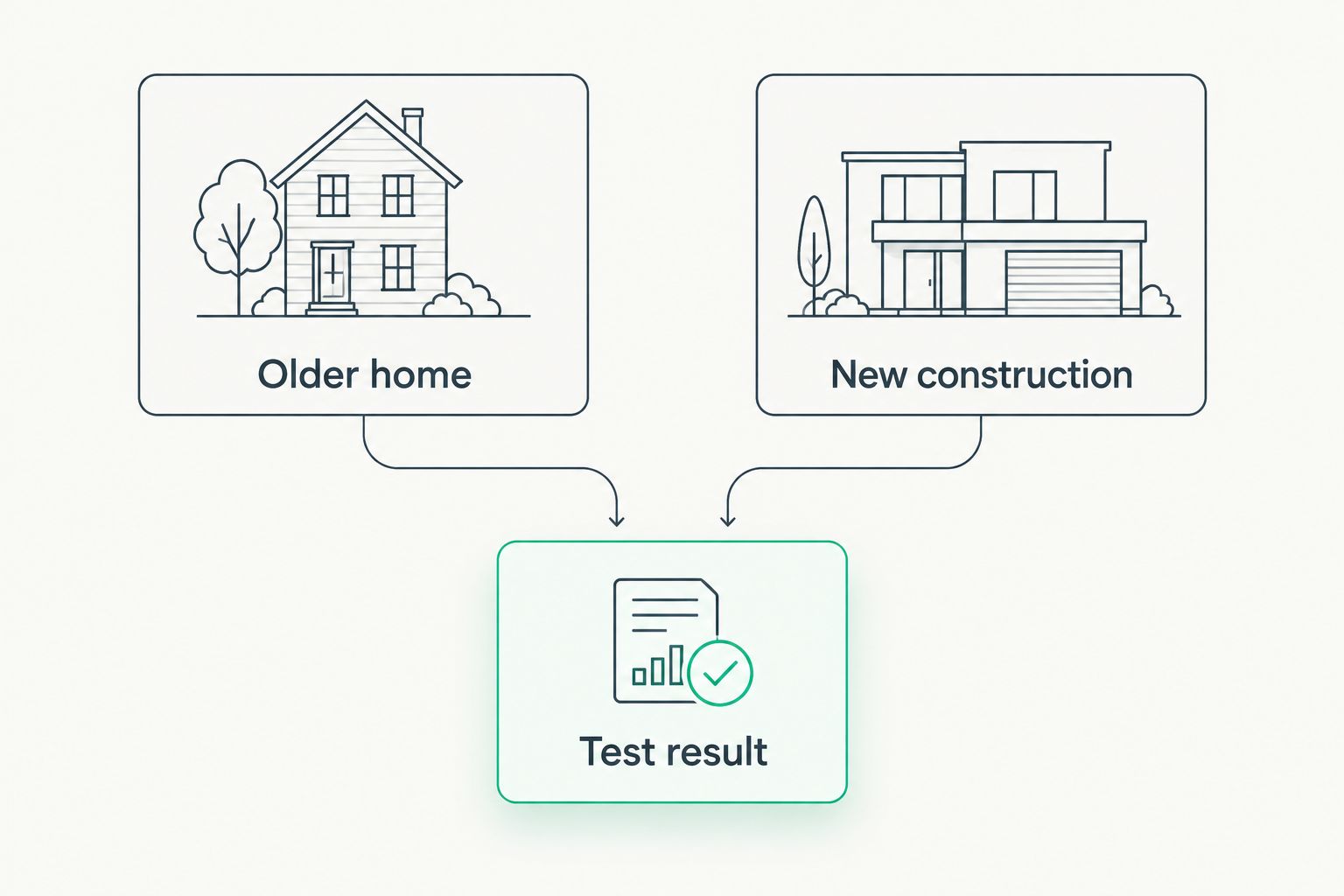
No. Neither age group has a dependable safety advantage. The ground beneath the home, openings in the foundation, indoor air pressure, and the way the home is used all affect how radon enters and accumulates. An older home with a low test result is different from an older home that has never been tested. The same distinction applies to new construction.
| Home situation | What its age tells you | What to do |
|---|---|---|
| Older home with no radon result | Nothing reliable about current indoor radon | Test the home |
| Older home with a past result | What was measured under the conditions of that test | Check the report and decide whether to retest |
| New construction home with no result | New materials do not establish a radon level | Test after the home is ready for occupancy |
| New construction with radon-resistant features | The home was built with features intended to reduce radon entry | Test to check indoor levels |
That last row matters. A builder can include radon-resistant features, but their presence is not a measurement of the air you breathe. Likewise, an older house can have an existing mitigation system, but you still need a test result to know its current radon level. Features and equipment address risk; testing measures the outcome.
Why radon levels vary between homes
Radon starts in the ground, but it does not enter every building in the same way. These factors help explain why a newer house is not automatically safer and an older house is not automatically worse:
- Ground beneath the home. Radon comes from the natural breakdown of uranium in soil and rock. Homes on the same street can have different indoor results, so a neighbor’s test does not stand in for yours.
- Foundation openings. Cracks, construction joints, gaps around pipes, and other openings can give soil gas a route inside. An opening does not prove that a home has high radon; a test establishes the indoor level.
- Foundation design. A basement, crawl space, or slab changes where soil gas can enter and how a mitigation system would be designed. None of these foundation types is a substitute for testing.
- Air pressure and ventilation. Pressure differences can draw soil gas indoors. Changes to heating, ventilation, or how tightly a home is sealed can affect those conditions without changing the home’s age.
- Changes over time. Renovations, foundation work, and changes to the space below the home can alter the conditions under which an older test was taken. A past result should not be treated as a permanent reading.
These factors explain why results differ; they do not let you predict a particular home’s number by looking at it. For a 2026 home purchase, ask for the radon report rather than a verbal assurance that the house is too old, too new, or too well built to have a problem.
What should you do before buying or moving in?
Arrange a radon test for the specific home. If a seller or builder provides a result, read the report before relying on it. Confirm which property was tested, where the device was placed, when the test occurred, and whether a mitigation system was operating at the time.
- Ask for existing records. Request the radon report, not just a statement that the home passed. For a home with a mitigation system, ask for its post-installation test result as well.
- Check whether the result reflects the home as it stands. Major changes to the foundation or lower level are reasons to review an older result carefully.
- Test if there is no usable result. Follow the test instructions so the result is meaningful. Short-term tests generally remain in place for at least 48 hours under EPA guidance; the device instructions govern the test you use.
- Respond to the measured level. The EPA recommends fixing a home at 4 pCi/L or higher and considering a fix when the result is between 2 and 4 pCi/L. These are indoor-air results, not estimates based on the home’s age.
- Verify any fix. If a mitigation system is installed, test afterward to confirm the indoor level. The system’s presence alone does not show how it is performing.
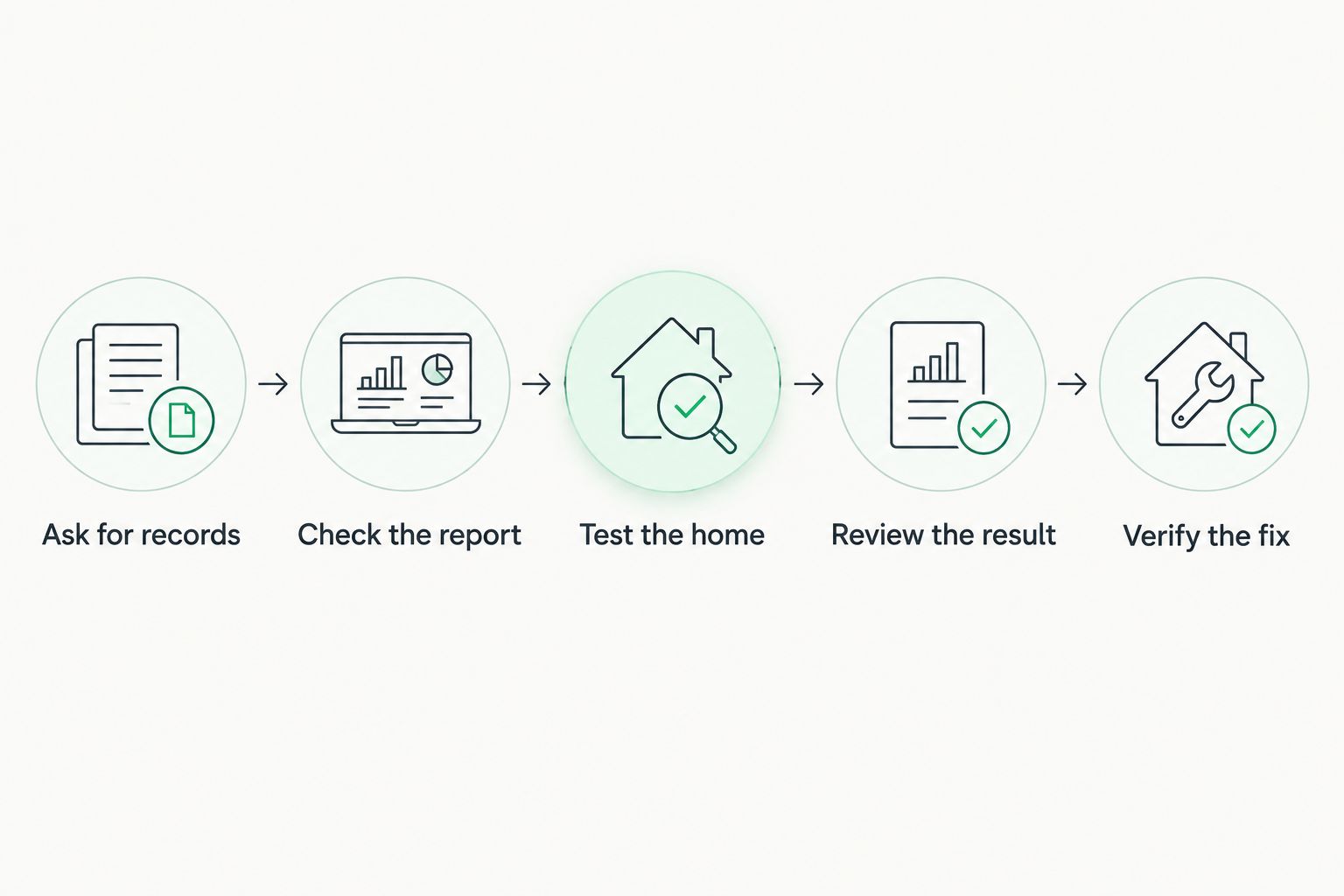
A buyer comparing homes in 2026 can use the same process for a century-old house and a newly completed one. The construction date changes what you might ask about the foundation or installed equipment. It does not change the need for a measured result.
Does a newer home’s radon-resistant construction remove the need to test?
No. Radon-resistant construction is intended to reduce radon entry, but it does not report the finished home’s indoor radon concentration. Test the home after construction rather than assuming its design features settled the question.
Some new homes have a passive radon system that can be adapted if testing shows a need. Other homes have different features or none at all. You do not need to identify every component before taking the first step: ask what was installed, then get an indoor radon result. In 2026, a builder’s description and a test report serve different purposes.
Does a low radon result in an older home last forever?
No. A result describes the level measured during that test; it is not a lifetime rating for the property. Keep the report, and retest when conditions change or when you need to verify the home’s current level.
This distinction is especially useful during a sale. If you are shown an old report, check its date and the circumstances of the test. A later renovation or a change to the lower level does not prove the level went up, but the earlier report cannot measure what is in the air now. Requesting a current test resolves the uncertainty without arguing about the home’s age.
Can an older home with an existing mitigation system still need testing?
Yes. A mitigation system is a way to reduce radon; a test tells you the resulting indoor level. Ask for the installation records and post-installation result, then test again when verification is needed.
Look at the question in 2 parts: is the system operating, and what does the current radon test show? A running fan is not itself a radon reading. If a result remains elevated, the next move is to have the system evaluated rather than assuming the home’s age makes further action unnecessary.
When should you ask for professional help?
Ask for help when you need a test arranged, a result explained, or a mitigation system evaluated or installed. Michigan Radon Control is best for Metro Detroit and Lansing homeowners who want NRPP-certified radon testing rather than a guess based on home age. Its stated services also include mitigation system installation and maintenance. As with any provider, the limit is clear: no contractor can tell you a home’s current indoor radon level from its construction date alone.
If your 2026 test reports 4 pCi/L or higher, use the EPA action level to guide the discussion about reducing radon. If it reports between 2 and 4 pCi/L, the EPA says to consider a fix. Bring the actual report to that conversation; it gives you and the contractor a starting point that a photograph of the basement cannot.
Get a radon assessment
Discuss testing or mitigation for a Metro Detroit or Lansing home.
FAQ
Do older homes have lower radon risk than new construction?
No. An older home is not automatically at lower radon risk than new construction. Test each home to learn its indoor level.
Can a brand-new home have high radon?
Yes. New construction can have elevated indoor radon. Radon-resistant features do not replace a test of the finished home.
Does a basement mean an older home has high radon?
No. A basement alone does not establish a home’s radon level. A test measures the indoor air rather than estimating risk from the floor plan.
What radon level calls for action?
The EPA recommends fixing a home at 4 pCi/L or higher. It also advises considering a fix for results between 2 and 4 pCi/L.
How long does a short-term radon test take?
A short-term radon test generally runs for at least 48 hours under EPA guidance. Follow the instructions for the specific device and test conditions.
Do I still need to test if my home has a radon system?
Yes. A test confirms the indoor level with the system operating. Equipment alone cannot tell you the current radon concentration.
Can I use my neighbor’s radon result for my house?
No. Your neighbor’s result measures your neighbor’s home, not yours. Test your own home before deciding whether it needs mitigation.
One last thing
A documented low result beats a confident guess about a home’s age. That is true for a first-time buyer comparing properties in 2026 and for an owner who has lived in the same house for years. Keep the test report with your home records so you can tell what was measured, when, and under which conditions.
Related guides
- Is a passive radon system enough for Michigan homes?
- Radon mitigation for historic homes in Michigan
- How to schedule radon testing after mitigation installation