
Building a new home in Michigan and wondering whether the builder's radon rough-in is enough on its own? It usually isn't, and the fix is straightforward once you know what to check for.
- Passive RRNC piping alone rarely keeps a Michigan new build under the EPA action level of 4 pCi/L – budget for fan activation. Buy.
- Active sub-slab depressurization with a continuous fan is the safest radon mitigation new construction system for basements and slabs in 2026. Buy.
- Homes with sump pumps need a sealed sump lid tied into the mitigation loop, not a bolt-on fan. Consider before you finish the basement.
- Post-occupancy radon testing at 90 days, not at closing, is the number that actually tells you if the system works.
Why this matters
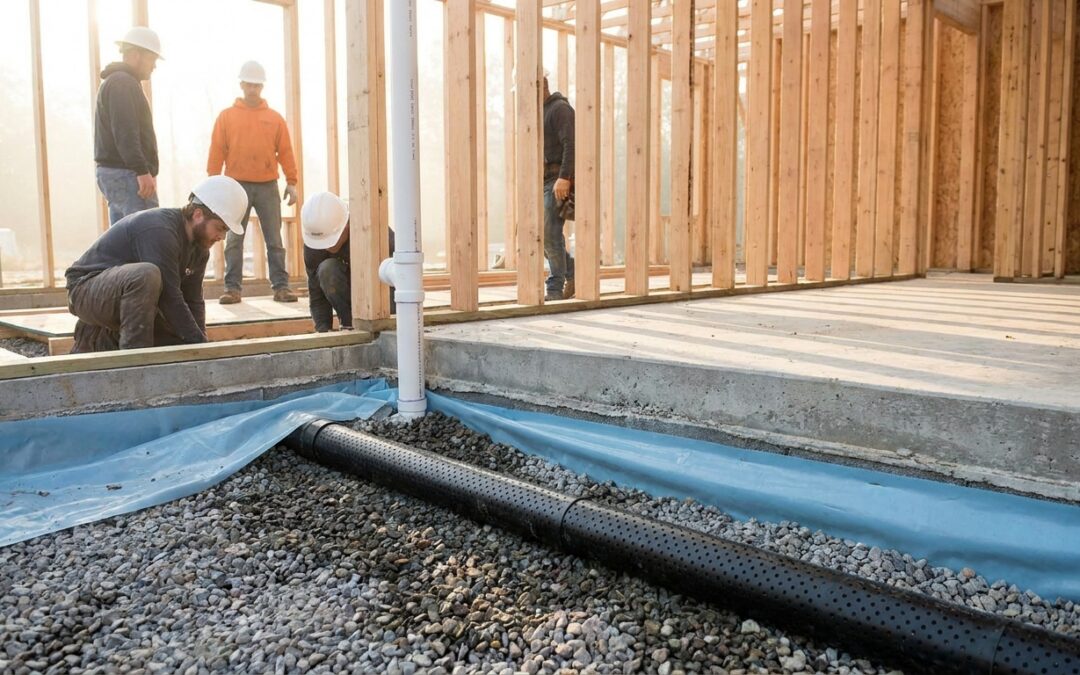
Michigan sits on glacial till and fractured bedrock that channel radon gas straight into foundations, and new construction doesn't automatically solve that. Since 2009, most Michigan municipalities have adopted IRC Appendix F radon-resistant new construction (RRNC) provisions, which require a passive vent stack, a sealed slab, and a vapor barrier during the build. That passive stack is a foundation, not a finished system.
The EPA sets the action level at 4 pCi/L, and a lot of new Michigan homes test above it in year one, especially in Oakland, Washtenaw, and Livingston counties where radon readings run higher than the state average. A passive system without a fan gets you partway there. Whether you need to activate it – or design for activation from day one – depends on foundation type, soil conditions, and how the builder routed the stack.
Who this is for
This guide is for homeowners closing on new construction in Michigan within the next 6 to 12 months, and for builders and GCs who want to spec radon mitigation correctly before drywall goes up instead of retrofitting after a failed test. If you're already past closing and just got a radon test result back above 4 pCi/L, you're in the right place too – the same criteria apply, you're just skipping straight to fan activation. A properly installed radon mitigation system installation at either stage runs on the same principles.
What to look for in radon mitigation for new construction
Foundation type drives the design
A basement, a slab-on-grade pour, and a crawlspace each need a different sub-membrane or sub-slab approach – there's no universal fan-and-pipe kit that works across all three. Get the foundation type confirmed before anyone quotes a system, because a design built for a basement won't seal a slab-on-grade home correctly.
Passive stack routing has to match future fan placement
The 3-inch or 4-inch PVC stack the builder installs during framing needs to run through conditioned space, not an exterior wall cavity, so a fan can be added later without tearing into finished walls. Builders who route the stack through an unheated garage or attic space create a retrofit headache that costs more than doing it right the first time.
Manometer placement and visibility
A U-tube manometer on the vent pipe is the only way to confirm the fan is running without opening an app or calling a technician. If the manometer is hidden behind a finished ceiling or inside a mechanical closet nobody checks, the system can fail silently for months.
Sealed sump lids and floor penetrations
Every floor drain, sump pit, and slab penetration is a potential radon entry point, and RRNC code requires them sealed as part of the passive system. A sump pump with an unsealed lid defeats the whole design regardless of how good the vent stack is.
NRPP certification on whoever signs off
Michigan doesn't license radon contractors at the state level, so NRPP (National Radon Proficiency Program) certification is the credential that actually means something. Ask for the certification number before signing a contract, not after the system is in the ground.
A retest plan built into the contract
A new construction radon system isn't done until it's been tested under closed-house conditions for at least 48 hours post-installation. If the quote doesn't include a retest, you're paying for equipment, not a verified result.
Top picks for new construction radon mitigation
1. Passive RRNC piping (builder-installed) – the baseline, not the finish line
Every new Michigan build under Appendix F gets this by code: a 3-inch PVC stack from sub-slab to roofline, sealed slab penetrations, and a vapor barrier. It costs little to add during framing but stalls out around 30-50% radon reduction on its own in 2026 field data from similar climates. Verdict: Buy as a baseline, but don't stop here.
2. Active sub-slab depressurization – the safe pick for basements
Adding a 40 to 80-watt inline fan to the passive stack creates continuous negative pressure under the slab and typically pulls readings under 2 pCi/L. This is the standard fix when a post-occupancy test comes back above 4 pCi/L. Verdict: Buy.
3. Sump-integrated system – built for homes with active sump pumps
A sealed sump lid with a dedicated suction point routes radon out through the same stack instead of leaving the pit as an open entry point. This matters most in homes where the sump runs seasonally and the pit stays wet, since a poorly sealed lid lets both moisture and radon through. Homes fitting this profile should look at sump pump radon systems specifically rather than a generic basement design. Verdict: Buy for sump-equipped basements.
4. Slab-on-grade dedicated membrane system – the one builders get wrong most often
Slab-on-grade homes need a sub-membrane depressurization design with suction points spaced every 500 to 1,000 square feet, since there's no basement void to pull from. Skipping this and using a basement-style single suction point is the single most common reason slab-on-grade new builds retest high. Homes on this foundation type should confirm the design against slab-on-grade radon mitigation specs before the pour, not after. Verdict: Buy – and confirm before the concrete goes down.
5. Crawlspace sub-membrane depressurization – workable but fussier
A sealed poly vapor barrier under the fan draws air from beneath the membrane rather than sub-slab, which works but needs the membrane seams taped and weighted correctly or the seal fails within a year. It's a reasonable option when a crawlspace can't take a sub-slab suction pit. Verdict: Consider, with a contractor who's sealed crawlspace membranes before.
What to avoid
- A passive-only system with no manometer check scheduled. It looks finished on inspection day and tells you nothing about actual performance six months later.
- Vent stack terminations near windows, decks, or soffit vents. Code requires clearance from openable windows, and a stack that vents too close to a bedroom window just moves the problem instead of solving it.
- Skipping the post-occupancy retest because the passive system "came with the house." Builder-installed doesn't mean tested, and a lot of new Michigan homes never get checked until a realtor asks for it at resale.
“A passive stack that’s never been tested is a bet, not a system.”
Verdict comparison
| System type | Foundation fit | Fan required | Verdict |
|---|---|---|---|
| Passive RRNC piping | All new construction | Not initially | Buy (baseline) |
| Active sub-slab depressurization | Basement | Yes | Buy |
| Sump-integrated system | Basement with sump pump | Yes | Buy for sump homes |
| Slab-on-grade dedicated membrane | Slab-on-grade | Yes | Buy |
| Crawlspace sub-membrane | Crawlspace | Yes | Consider |
Get your new build tested
Confirm your passive system is actually working before you finish the basement.
Getting the foundation-specific design right before the walls close up saves a redesign later – a crawlspace or slab-on-grade home that gets the wrong suction layout usually needs the membrane or slab penetrated again to fix it. If you're not sure which category your build falls into, walk the plans with whoever is doing the radon mitigation system installation before the foundation inspection, not after.
FAQ
What’s the best radon mitigation system for new construction homes in 2026?
Active sub-slab depressurization with a continuous fan is the strongest option for basements, typically pulling readings under 2 pCi/L. Slab-on-grade homes need a sub-membrane design with multiple suction points instead of a single basement-style pit.
Do new homes in Michigan need radon mitigation?
Most Michigan municipalities require passive radon-resistant construction (RRNC piping and sealed slabs) under IRC Appendix F, but that passive system doesn’t guarantee readings stay under 4 pCi/L. A post-occupancy test determines whether a fan needs to be added.
Is radon-resistant new construction (RRNC) required in Michigan?
Adoption varies by municipality, so it’s required in some Michigan jurisdictions and optional in others. Even where it’s not mandated, most builders include passive RRNC piping because activating it later is far cheaper than a full retrofit.
How much does it cost to activate a passive radon system?
Activating an existing passive stack with a fan and manometer costs less than a full retrofit because the piping and slab sealing are already in place. Get a written estimate specific to your foundation type before assuming a flat rate applies.
How soon after building can I test for radon?
Test under closed-house conditions once the home is fully enclosed and HVAC is running normally, typically within the first few weeks of occupancy. A short-term test needs a minimum of 48 hours to produce a reliable reading.
Can a sump pump interfere with a radon mitigation system?
Yes – an unsealed sump lid is one of the most common radon entry points in homes with basements. Sealing the lid and tying the sump into the mitigation system’s suction loop closes that gap.
What’s the difference between passive and active radon mitigation?
Passive systems rely on natural air pressure differences to vent radon through the stack with no fan. Active systems add a continuous fan that creates negative pressure under the slab, cutting radon levels far more reliably.
Do new construction radon systems need a permit in Michigan?
Permit requirements are set locally, so check with the municipal building department handling the new construction permit. Most jurisdictions that require RRNC also require the fan activation to be inspected if it’s added post-occupancy.
One last thing
The detail most new-construction buyers miss: a builder-installed passive system that tests clean at closing can drift above 4 pCi/L within the first year as the home settles, seals shift, and HVAC balance changes. Schedule a retest around the 90-day mark, not just at closing, and treat the first winter reading as the real baseline – radon levels run higher in cold months when windows stay shut and the house depressurizes more.
Related guides
- How to prepare your home for a radon mitigation system
- Radon testing for new home purchases in Michigan