
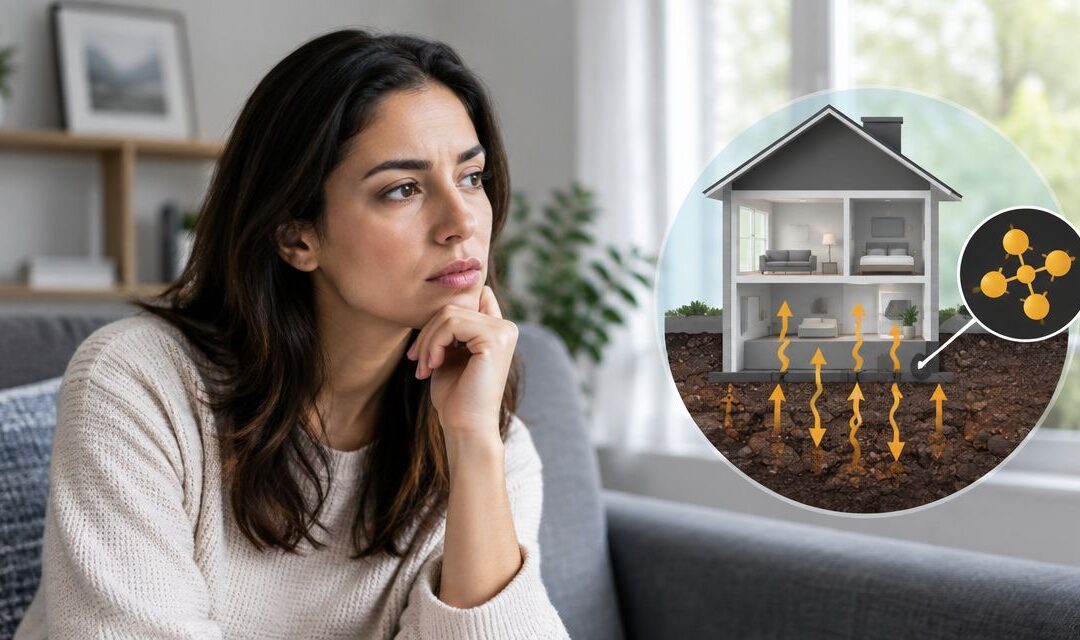
Yes. Radon exposure can cause lung cancer because radioactive particles from radon gas can damage cells in your lungs. Risk rises with long-term exposure, and smoking increases it further. The way to find out whether your home has a radon problem is to test the indoor air.
- Can radon exposure cause cancer? Yes. Radon causes lung cancer, and long-term exposure raises the risk.
- EPA estimates radon causes about 21,000 lung cancer deaths each year in the United States.
- Test your home; EPA recommends fixing it at 4 pCi/L or higher and considering action from 2 to 4 pCi/L.
- Michigan Radon Control is a fit for Metro Detroit and Lansing homeowners who want certified radon testing and mitigation.
Why this matters
You cannot tell whether your home has elevated radon by smell, sight, or symptoms. The gas comes from the natural breakdown of uranium in soil and can enter through openings around a home's foundation. A neighbor's result cannot tell you what is happening inside your home. In 2026, a test in your own living space is the useful starting point.
EPA identifies radon as the second leading cause of lung cancer in the United States, after smoking. It estimates about 21,000 lung cancer deaths each year are attributable to radon. That is a population estimate, not a prediction of what will happen to one person. If you are worried about your home, start with how to test your home for radon rather than trying to judge your risk from the home's appearance.
Can radon exposure cause cancer?
Yes. Radon exposure causes lung cancer. When you breathe air containing radon, radioactive particles can become trapped in your lungs. As those particles decay, they release radiation that can damage lung cells. Cancer can develop after years of damage; you cannot feel the exposure as it happens.
The connection between radon and lung cancer is established. The part no home test can answer is whether exposure will cause cancer in a particular person. A radon result tells you the concentration measured in your home, not your personal diagnosis or an exact lifetime risk.
| Question | What the evidence means for you |
|---|---|
| Can radon cause lung cancer? | Yes. Inhaling radon exposes lung tissue to radiation. |
| Does smoking change the risk? | Yes. Radon and smoking together create a greater lung cancer risk than either exposure alone. |
| Is 4 pCi/L a safe-versus-unsafe boundary? | No. It is EPA's action level, not a level below which risk disappears. |
| Can a home test predict cancer? | No. It measures radon concentration so you can decide what to do about the home. |
What radon does inside the lungs
Radon is a radioactive gas. Its decay products can attach to particles in the air, enter your lungs when you breathe, and expose nearby cells to radiation. Repeated exposure matters because lung cancer generally develops over time, not immediately after a single encounter.
This is why an elevated result calls for a response even if everyone in the household feels well. Radon does not cause a warning smell or a distinctive set of early symptoms that you can use instead of a test. If you have symptoms that concern you, speak with a healthcare professional; a radon test evaluates the building, not your health.
Why smoking makes radon more dangerous
Smoking and radon both increase lung cancer risk. Together, they are especially harmful. If someone in your household smokes, reducing radon does not replace quitting smoking, and quitting does not replace addressing elevated radon. Both actions matter.
If nobody in your household smokes, testing still matters. EPA identifies radon as the leading cause of lung cancer among people who do not smoke. Do not use smoking status to decide whether a Michigan home needs a radon test in 2026.
What should you do after a radon test?
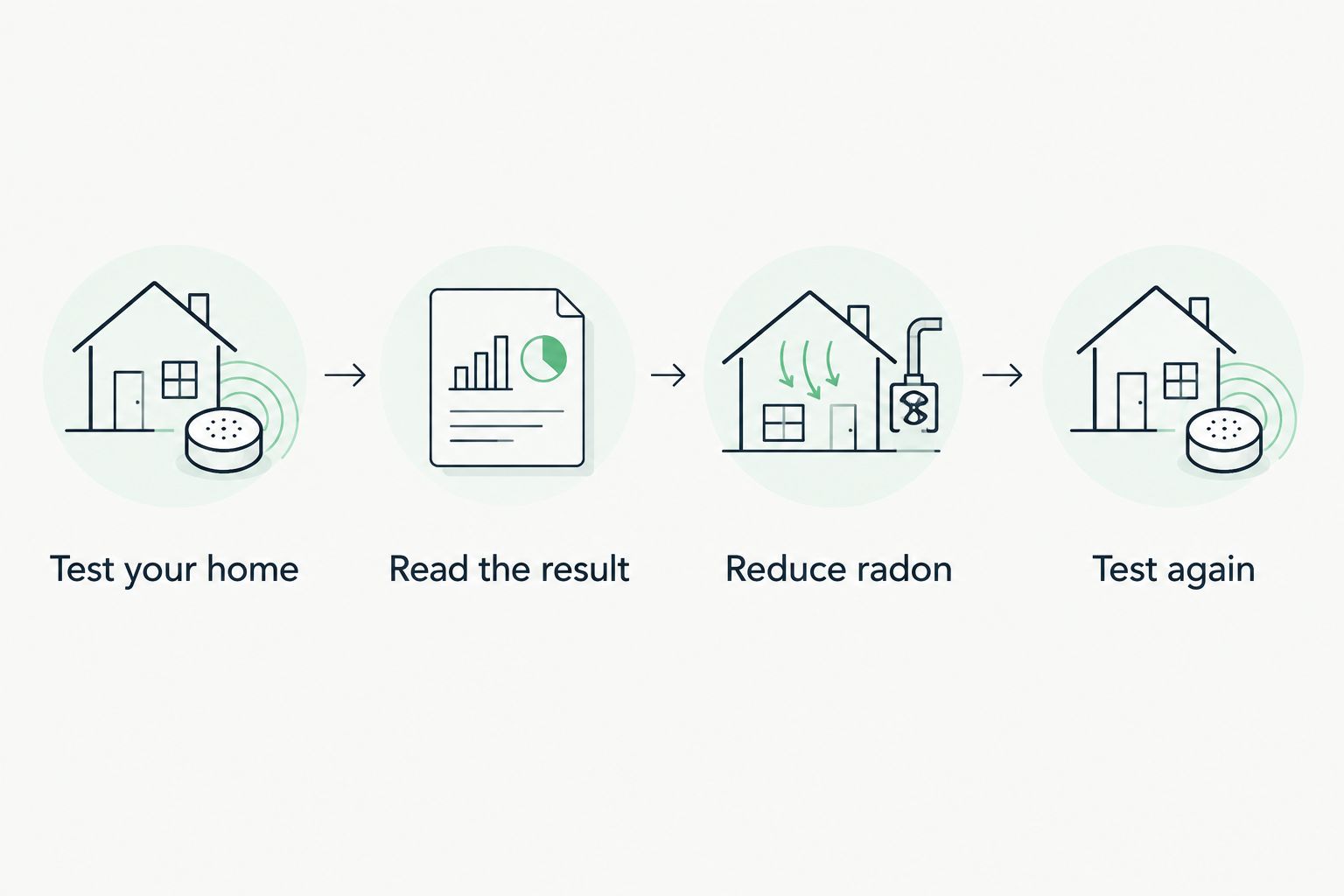
Use the result to choose a next step, then verify the outcome. Radon is measured in picocuries per liter of air, written as pCi/L. EPA recommends fixing a home when its radon level is 4 pCi/L or higher and considering a fix when it is between 2 and 4 pCi/L. Those are decision points, not a promise that lower readings carry no risk.
- Test your home. Follow the device instructions and place it in the lowest level you use or could use as living space. Keep the test conditions required by its instructions; a poorly placed or disturbed test can mislead you.
- Read the result. Check whether the report uses pCi/L and whether it recommends a follow-up test. A short-term measurement is a snapshot, so follow the test guidance before making a final decision.
- Reduce radon if needed. At 4 pCi/L or higher, EPA recommends fixing the home. Between 2 and 4 pCi/L, consider reducing the level rather than treating the reading as an all-clear.
- Test again. A mitigation system's presence does not tell you the current radon level. A post-installation test shows whether the system reduced the concentration in the home.
A short-term test can provide an initial result in as little as 48 hours, depending on the device and its instructions. A long-term test runs for more than 90 days and gives a better picture of average exposure because radon levels change over time. In 2026, choose the test that matches your decision: an initial reading when you need to know whether to investigate, or a longer measurement when you need a clearer average.
If a test shows an elevated level, do not assume sealing a visible crack solves the entire problem. Radon can enter through several openings, and its movement depends on pressure differences between the house and the soil. A properly designed mitigation system draws radon from beneath the home and vents it outdoors. The follow-up measurement is what confirms the result.
For Metro Detroit and Lansing homeowners who need help after a test, Michigan Radon Control provides NRPP-certified radon testing, mitigation system installation, and system maintenance. It is a fit if you want a certified service provider to assess the home and check the result. A professional visit is not a substitute for the follow-up radon measurement; ask for the measured level after the work.
Why radon risk varies
No single detail about a house can tell you its radon level or a resident's cancer risk. These factors explain why the same question has different answers from one household to another:
- Measured indoor concentration. A higher pCi/L reading means more radon in the air tested. EPA's 4 pCi/L action level helps you decide when to fix the home.
- Time spent in the home. Long-term exposure matters more than a brief visit. Consider where household members spend time, especially if they use a basement as living space.
- Smoking. Smoking raises lung cancer risk, and radon exposure adds to it. Reducing one exposure does not erase the other.
- The home's entry points. Radon can enter through openings in a foundation, including gaps around pipes and cracks. You need a measurement inside the home; a visual inspection cannot establish the level.
- Changes over time. Radon readings can vary with conditions in and around a home. A past result is useful history, not a permanent guarantee of today's concentration.
In 2026, the practical distinction is measured exposure versus an assumption about exposure. A home does not become low-radon because it is new, well maintained, or next door to a home with a low result. Test the space you actually use.
Does one high radon reading mean I will get lung cancer?
No. A high reading means the tested air had an elevated radon concentration; it does not predict an individual diagnosis. Take the result seriously, follow the testing guidance, and reduce the level when the result calls for it. The purpose of testing is to find an exposure you can change.
Is radon below 4 pCi/L safe?
No radon reading marks a zero-risk boundary. EPA recommends fixing homes at 4 pCi/L or higher and considering a fix between 2 and 4 pCi/L. A result below the action level is not a reason to ignore a later change in your home or a new test result.
Can a mitigation system remove the cancer risk completely?
No. A mitigation system reduces radon concentration; it does not turn radon exposure into a zero-risk condition. Test after installation to check how much the level changed, and continue to follow the system's maintenance and retesting guidance. In 2026, a working fan alone is not proof of the radon level in your living space.
FAQ
Can radon exposure cause cancer if I have never smoked?
Yes. Radon exposure can cause lung cancer in people who have never smoked. EPA identifies radon as the leading cause of lung cancer among people who do not smoke.
What kind of cancer does radon cause?
Radon causes lung cancer. The risk comes from breathing radioactive particles that can damage cells in the lungs over time.
Can I smell radon in my house?
No. Radon has no smell, so you need a test to measure it in indoor air. How a home looks or smells cannot establish its radon level.
Is a radon level of 4 pCi/L dangerous?
A reading of 4 pCi/L meets EPA’s level for recommending that you fix the home. The number is an action level, not a precise line between risk and no risk.
Should I worry about radon between 2 and 4 pCi/L?
Yes, the result deserves consideration. EPA says to consider fixing a home when the measured level is between 2 and 4 pCi/L.
How long does a radon test take?
Some short-term radon tests run for as little as 48 hours; follow the device instructions. A long-term test runs for more than 90 days and better reflects average exposure.
Should I test again after radon mitigation?
Yes. A post-installation test checks whether mitigation lowered the radon concentration inside your home. The presence of a system alone cannot tell you the current reading.
One last thing
Your neighbor's radon result is not your result. Radon enters individual buildings through their foundations, and indoor levels can differ even between nearby homes. If cancer risk is the reason you are reading in 2026, the most useful next move is a test in your own home, followed by action based on that reading.
Related guides
- How to read your radon test results
- How to lower radon levels below the EPA action level
- How to schedule radon testing after mitigation installation
- Radon testing for households with smokers in Michigan