

Yes. In 2026, you can generally stay home during radon mitigation installation if you keep clear of the areas where the installer is drilling, running pipe, or doing electrical work. Ask the installer which rooms need to be clear before work starts; if you cannot keep children or pets away from those areas, arrange for them to be elsewhere. Installation does not prove the radon level has fallen—a follow-up test does that.
- Yes: you can usually be home during radon mitigation installation if you stay out of the work areas.
- Keep children and pets away from drilling, tools, and open work areas; step out if you cannot separate them.
- Michigan Radon Control is best for Metro Detroit and Lansing homeowners seeking NRPP-certified installation and follow-up testing.
- A running system is not proof of a lower radon level. Confirm the result with a post-installation test.
Why this matters
It's completely natural to worry about staying home while someone works on a radon problem. The installation brings ordinary worksite hazards—noise, dust, tools, and electrical work—into parts of your home. Your decision is less about leaving the whole house and more about whether you can stay safely apart from the work.
The other concern is the radon already in your home. In 2026, the EPA's action level remains 4 pCi/L: at or above that level, the EPA recommends taking action to reduce radon. The EPA also advises considering action when results are between 2 pCi/L and 4 pCi/L. An installer starting work does not make either reading disappear immediately. You need a test after installation to check the result.
For a separate look at scheduling, see how long a radon mitigation system installation takes. The time needed for your home depends on the work involved; confirm the plan with your installer rather than assuming you must leave for the entire visit.
Is it safe to stay home during radon mitigation installation?
Yes, when you can avoid the active work areas. You do not need to treat every room as a construction zone. Before the installer begins, find out which spaces they need, where they expect to drill, and whether any part of the work calls for you to leave temporarily.
| Your choice | Best for | Advantage | Drawback |
|---|---|---|---|
| Stay home in a separate room | Adults who can keep clear of the work | You remain available for access questions and decisions | Noise can still interrupt your day |
| Step out during the disruptive work | People who need quiet or cannot avoid the work area | You avoid nearby drilling and dust | You must coordinate access and a return time |
| Arrange another place for children or pets | Households without a safe way to separate them from the work | They stay clear of tools and open work areas | It takes extra planning |
Michigan Radon Control is best for Metro Detroit and Lansing homeowners seeking NRPP-certified radon mitigation installation and follow-up testing. The practical downside of any installation is the temporary disruption in your home. Its success still needs to be checked with a radon test; the installer's credentials do not replace a measured result.
In 2026, make the stay-or-leave decision around your home's layout, not a blanket rule. If the installer needs the only room where your child can safely stay, make other arrangements. If the work is contained away from your living area, staying home is a reasonable choice.
What should you do before the installer arrives?
A short conversation before work begins settles most of the uncertainty. Ask for the work-area plan, then make sure everyone in the home knows which spaces are off-limits.
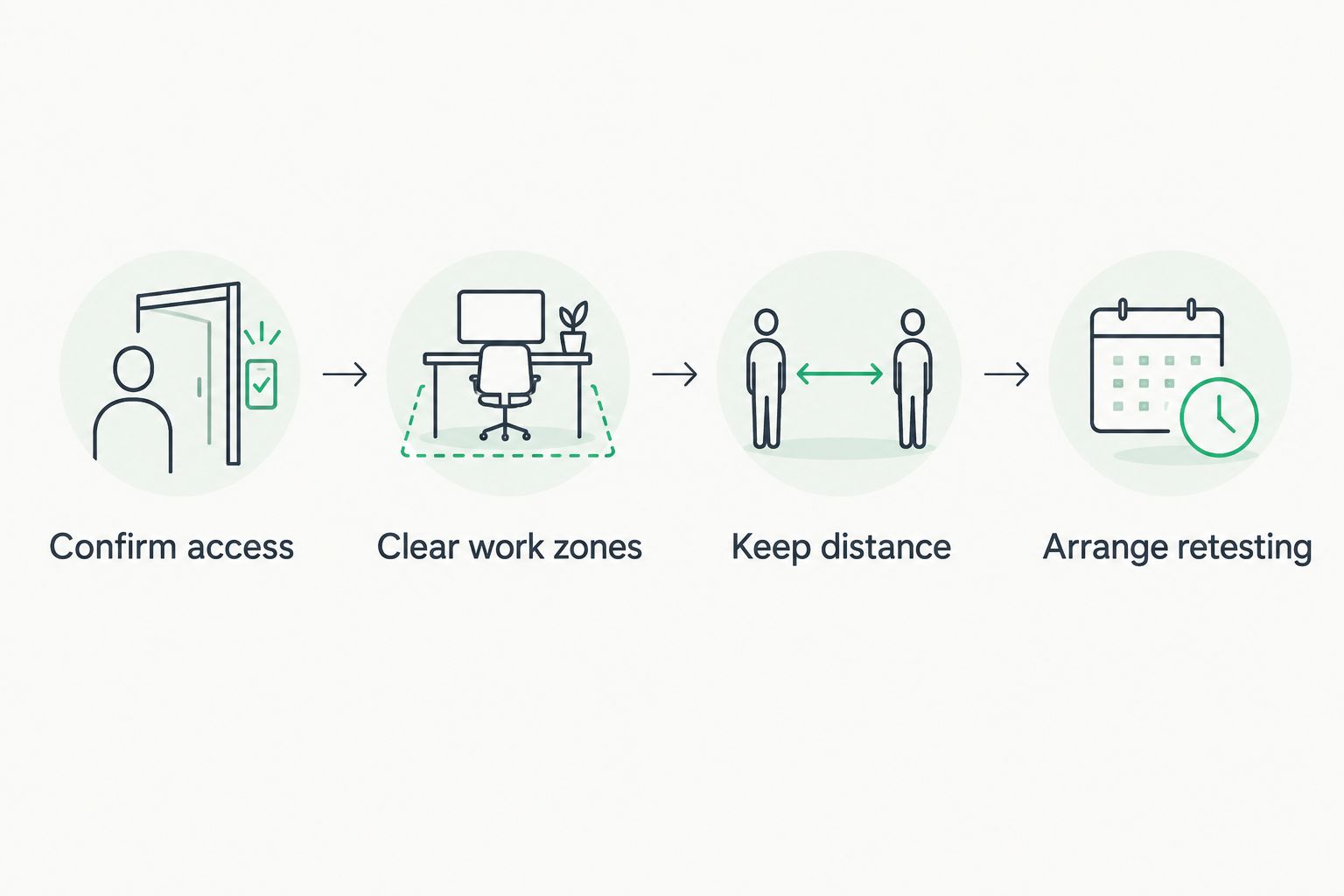
- Confirm access. Ask which rooms, basement areas, crawl spaces, or exterior areas the installer needs. Point out locked doors or stored belongings that block access.
- Clear work zones. Move people, pets, and movable belongings away from the places where work will happen. Let the installer identify what needs moving rather than guessing where equipment will go.
- Keep distance. Choose a room away from the work, or plan to step out during drilling. Tell the installer how to reach you if a decision is needed.
- Arrange retesting. Ask when the installed system will be checked and how the follow-up radon test will be scheduled. Put that step on your calendar before treating the job as finished.
If you work from home, tell the installer when you need quiet. Do not assume that closing an office door will block drilling noise. Decide whether you can pause calls or need to work elsewhere while the loudest tasks happen.
For 2026 installations, the most useful question is simple: Which areas must stay clear while you work? That answer is specific to your home. It is more useful than a general promise that installation will be quiet or dust-free.
Why does the answer vary from home to home?
The work area changes with the house and the installation plan. These are the factors to discuss before deciding whether everyone can stay:
- Where the installer needs access. Work near the room you normally occupy is harder to avoid than work in a separate area.
- Whether drilling is planned. Drilling creates noise and a reason to keep children and pets away from the immediate area.
- Whether electrical work is needed. Ask which space must remain clear while that work is underway; do not handle exposed work yourself.
- Your ability to separate pets and children. A closed room away from the job makes staying simpler. Without one, arrange another location for them.
- Your tolerance for disruption. If you need an uninterrupted call, sleep during the day, or cannot avoid the noise, leaving temporarily is the more practical choice.
- The route through the home. Ask whether the installer needs to pass through shared rooms so you can keep walkways open without standing in the work path.
None of these factors tells you the radon level after installation. They tell you how to manage the visit safely and comfortably. In 2026, keep the worksite decision separate from the testing decision: staying home answers the first question; a measured radon result answers the second.
Can children and pets stay home during installation?
Yes, if you can keep them out of the work areas throughout the job. Put pets in a room the installer does not need and make sure they cannot get through a door that will be opened for access. Give children a clear boundary rather than asking them to watch the work from nearby.
If you cannot maintain that separation, take them somewhere else for the active work. This is a worksite precaution, not a claim that simply being elsewhere in the house during installation exposes them to a new radon hazard. Tell the installer about anyone whose needs affect where the household can wait.
Should you leave while the installer drills?
Leave the immediate drilling area. You can stay elsewhere in the home if that keeps you away from the tools and dust. If the noise or room layout makes separation impractical, step out and agree on how the installer will contact you.
Ask before work begins which surfaces or rooms are involved. A finished basement used as a family room calls for a different household plan than an area you rarely enter. Do not move barriers, approach an opening, or let children inspect the work before the installer says the area is ready to use again.
Is the home safe as soon as the system is running?
A running system is not the same as a confirmed radon result. The fan and visible parts of a system show that equipment has been installed; a follow-up radon test shows what happened to the indoor level. Ask the installer what checks they will make at completion and how you will receive the test result.
Short-term radon tests can run for as little as 48 hours, depending on the test method and its instructions. Follow the test provider's directions, including any closed-house conditions, rather than changing windows or ventilation to try to influence a reading. If the result remains at or above the EPA action level of 4 pCi/L, discuss the result and the next steps with a qualified radon professional.
Michigan Radon Control provides NRPP-certified radon testing, mitigation system installation, and system maintenance for homeowners in Metro Detroit and Lansing. That combination is useful when you want the installation and the follow-up testing addressed together. Ask what test will document the result for your specific home; do not assume the system's appearance tells you whether it has met the goal.
What if you need to leave before work is finished?
Tell the installer before you go. Confirm which areas they still need to reach, who can make decisions if the plan changes, and how you will know when it is safe to reenter the work area. Leaving the house does not mean abandoning the job; it means keeping a clear way to communicate while you are away.
When you return, ask the installer to identify any areas that are still off-limits and to explain what was completed. Save the installation details and the follow-up test result together. If you are preparing for a home sale in 2026, a documented result is more useful to a buyer or realtor than saying that a system was installed.
Ask About Your Installation
Discuss work areas and follow-up testing with an NRPP-certified radon service provider.
FAQ
Is it safe to be home during radon mitigation installation?
Yes, you can usually stay home if you keep clear of active work areas. Ask the installer which rooms must remain clear and arrange another place for children or pets if you cannot separate them from the work.
Do I have to leave my house when a radon system is installed?
No, leaving the entire house is not a general requirement. Step out if drilling, access needs, or your home’s layout prevent you from staying away from the work.
Can my children stay home during radon mitigation installation?
Yes, if they can remain away from tools, drilling, and open work areas. If you cannot maintain that boundary, arrange for them to be elsewhere during the active work.
Should I take my pets out during radon mitigation installation?
Take pets out if you cannot keep them securely away from the installer and work areas. A separate room the installer does not need is another option.
Does installing a radon system make the house safe immediately?
Installation alone does not confirm a lower indoor radon level. A post-installation radon test measures the result and shows whether further action is needed.
What radon level calls for action in 2026?
The EPA recommends taking action at or above 4 pCi/L in 2026. It also advises considering action for readings between 2 pCi/L and 4 pCi/L.
How soon can a short-term radon test give a result?
Some short-term tests run for as little as 48 hours, depending on the method and its instructions. Follow the test provider’s directions and ask how the post-installation result will be documented.
One last thing
The easiest part of the 2026 safety decision is easy to overlook: ask where you should not be, not whether you must leave the whole house. Then ask how the completed installation will be tested. Michigan Radon Control can help Metro Detroit and Lansing homeowners address both the installation and the measured follow-up without treating a running fan as the final answer.
Related guides
- How to prepare your home for a radon mitigation system
- How to schedule radon testing after mitigation installation
- Can radon come back after mitigation?