
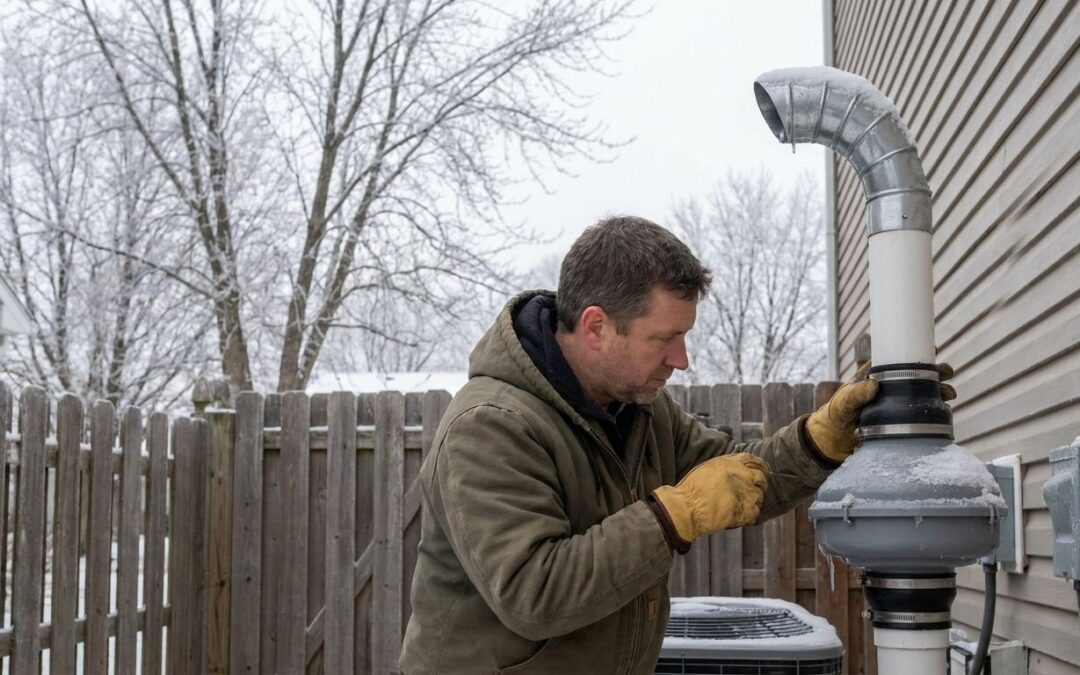
Winterizing a radon mitigation system in Michigan means checking three things before the first hard freeze: the vent pipe termination for snow and ice, the manometer reading, and any pipe run exposed through an unheated attic or garage. Skip these checks and a frozen or blocked vent pushes radon back into the house without tripping any alarm — these systems don't have one.
- Winterize a radon mitigation system in Michigan by checking the vent pipe, gauge, and exposed piping before the first freeze.
- Exterior vent pipes need clearance from snow and ice buildup; termination sits 10 feet above grade under ASTM E2121 rules.
- Attic-run pipes freeze or fog with condensation faster than any other section — insulate that run first.
- Winter 2026 is actually the best season to test, since closed-house conditions push Michigan radon readings higher.
Why this matters
A radon mitigation system runs on a simple continuous vacuum: a fan pulls soil gas out through a vent pipe before it ever collects under the slab. Michigan's freeze-thaw cycle interrupts that vacuum in ways a system in Georgia or Florida never has to deal with — ice sealing a vent cap, snow drifting against a low termination point, or a pipe run through an unheated attic losing enough heat to build up condensation and frost.
None of this means the system fails outright. It means airflow drops, radon creeps back up, and nobody notices until the next test comes back higher than expected. Regular system maintenance built around Michigan's actual winter conditions, not a generic checklist copied from a warmer state, is what keeps a mitigation system doing its job from November through March.
How do you winterize a radon mitigation system in Michigan?
Follow these five checks before temperatures settle below freezing for good, and repeat the vent and gauge checks after any major snowfall:
- Check the vent pipe termination. Walk the exterior of the house after a snowfall and look at the point where the pipe releases air above the roofline or through an exterior wall. Snow drifted against a low termination, or ice forming on the cap, blocks airflow the same way a blocked chimney flue does.
- Read the pressure gauge. The U-tube manometer on the interior pipe run shows whether the fan is still pulling a vacuum. A reading that's dropped to zero or moved outside its normal range signals a stalled fan or a blockage somewhere in the line, usually before you'd notice anything else.
- Insulate exposed pipe sections. Any run through an unheated attic, garage, or crawl space sees temperature swings the rest of the house never feels. Wrapping that section in standard pipe insulation cuts down on condensation freezing solid inside the line.
- Clear snow and ice from exterior fan housings. Homes with the fan mounted outside rather than in the attic need the housing and cap swept clear after every storm — packed snow around the base restricts airflow at the exhaust point.
- Test again once the cold settles in. A short-term test run during a sustained freeze, once the house is fully closed up for winter, shows whether the system is still holding radon levels down under real conditions instead of mild-weather conditions.
Exterior-mounted systems face the most exposure
A fan and pipe run mounted entirely outside the house has no shelter from wind, ice, or drifting snow. It also has the advantage of being easy to inspect — you can see the whole run without climbing into an attic. Verdict: check exterior units after every major snowfall through the 2026-2027 winter, not just once in November.
Attic-installed systems need condensation control, not just cold protection
A pipe running through an unconditioned attic sits in the coldest, most humid part of the house. Warm, moist air from the mitigation system meeting a cold pipe wall creates condensation that can freeze into a partial ice plug over a hard winter. Verdict: insulate the full attic run, not just the section nearest the roof penetration.
Why winterizing needs vary by home
No two Michigan homes lose vacuum the same way in winter. The factors that change what your system needs:
- Length of pipe run exposed outside the conditioned envelope
- Which side of the house the vent terminates on, and how much wind that side takes
- Whether the fan sits in the attic, garage, or fully outside
- Roof pitch and how much snow load builds up near the vent cap
- How much attic insulation separates the pipe run from living space
- Whether the home sits in a lake-effect snow band — west Michigan takes heavier, more frequent snow loads than the Detroit metro area
Get a winter system check
NRPP-certified inspection before the 2026 deep freeze sets in.
Can a radon mitigation fan freeze in a Michigan winter?
The fan motor itself rarely freezes solid, but condensation inside an exterior housing can ice over moving parts during an extended sub-freezing stretch. A fan running noticeably louder or slower after a cold snap is worth a manometer check the same day.
Does a blocked vent pipe raise indoor radon levels?
Yes — a blocked vent stops the fan from moving soil gas outside, and radon that would normally vent through the roof or wall backs up and re-enters the house at close to its original rate. This is exactly why the gauge check matters more in January than in July.
Should you test for radon during winter in Michigan?
Yes, and it's actually the ideal window: closed-house conditions in a Michigan winter produce the highest, most conservative radon readings of the year. Timing a test for accurate winter results confirms whether a mitigation system is holding levels below the EPA action level of 4 pCi/L under the worst-case conditions the house will see all year.
Should you cover a radon vent pipe for the winter?
No — covering or capping a vent pipe, even loosely, restricts the same airflow the system depends on to work at all. Leave the termination open and check it after storms instead of trying to shield it.
Michigan Radon Control's NRPP-certified technicians build winter checks into standard service visits, since a system that passed its post-install test in June can still lose vacuum by January if nobody's looked at the vent since fall.
FAQ
What temperature causes a radon vent pipe to freeze?
There’s no single temperature threshold — a pipe freezes when sustained sub-freezing air meets condensation inside an exposed or uninsulated section, which happens fastest in attic and exterior runs during Michigan’s coldest stretches.
How often should a radon mitigation system be checked in winter?
Check the manometer and vent termination after every major snowfall, plus once during any extended deep freeze in 2026. A quick visual check takes under five minutes.
Do all radon mitigation systems need winter maintenance?
Every system benefits from a winter check, but exterior-mounted fans and attic pipe runs need it most since they’re directly exposed to Michigan’s freeze-thaw cycle.
What radon level should a mitigation system keep a Michigan home under?
A working mitigation system should keep indoor radon below the EPA action level of 4 pCi/L year-round, including during winter’s closed-house conditions when levels tend to run highest.
Can ice damming affect a roof-mounted radon vent?
Yes — ice damming near a roof penetration can back water up around the vent pipe boot and, in bad cases, restrict the termination itself, so it’s worth checking the vent whenever you’re already checking for ice dams.
Is a louder fan sound normal in cold weather?
A slight change in fan pitch during extreme cold isn’t unusual, but a noticeably louder or grinding sound signals ice buildup or a fan issue that needs a look before it fails outright.
How long does a radon test take in Michigan winters?
A short-term test typically runs 48 hours with the house closed up, which lines up naturally with normal winter conditions when windows and doors stay shut anyway.
One last thing
Most Michigan homeowners assume winter is the riskiest season for a radon system to fail quietly — and they're right, but for a reason that cuts both ways. Closed-house conditions that make winter tough on an exposed vent pipe are the same conditions that make a winter radon test the most accurate one you'll get all year. A system that holds levels below 4 pCi/L in a January test has proven itself under the worst conditions Michigan throws at it, not just the easy months.
Related guides
- How to tell if your radon mitigation fan needs replacing
- How to verify your radon mitigation system is still working