
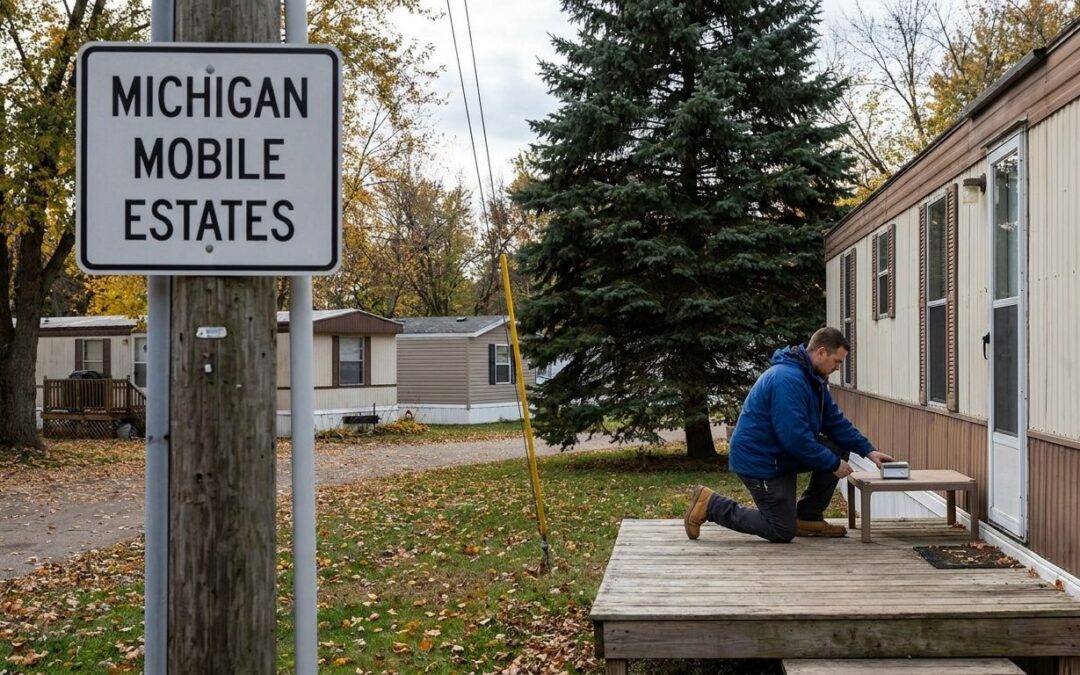
Manufactured and mobile homes sit differently on Michigan soil than site-built houses, and that difference changes how radon moves underneath them and how you should test for it. This guide breaks down what to look for, which mitigation setups actually work under a manufactured home, and what to skip in 2026.
- Radon testing mobile home Michigan setups must sample the lowest livable level, not the crawl space or belly cavity.
- Closed crawl spaces and slab-on-grade manufactured homes both respond well to sub-slab depressurization systems. Buy.
- Short-term kits confirm a problem exists; continuous monitors verify a mitigation system keeps working year-round. Consider.
- Skirting type changes radon entry more than square footage does for manufactured homes.
- EPA’s 4 pCi/L action level applies to manufactured homes exactly like it does to site-built houses.
Why this matters
Radon doesn't care what kind of foundation is under your house. It only cares about the path from soil gas to indoor air, and manufactured homes often have a shorter, leakier path than a poured basement. Belly boards puncture. Skirting gets removed for winter pipe access and never goes back on tight. Ductwork runs through the same cavity the soil gas wants to enter.
Michigan's glacial soils already push radon levels higher than the national average in a lot of counties, which is why Michigan Radon Control treats manufactured and mobile homes as their own category rather than a smaller version of a basement test. Get the setup wrong and you either miss a real problem or chase a false positive for months.
Who this is for
This guide is for owners of HUD-code manufactured homes, single-wide and double-wide mobile homes, and modular homes anywhere in Metro Detroit or the Lansing area who need to test your home for radon before buying, selling, or just settling in. It also applies if you manage a manufactured home community and need a repeatable testing standard across multiple units in 2026.
What to look for in radon testing for manufactured homes
Under-home configuration
A manufactured home on a closed, skirted crawl space behaves very differently from one on a slab or on open piers. Closed skirting traps soil gas the same way a basement does, while open or vented skirting can dilute it before it ever reaches the belly board. Know which one you have before you pick a test method or a mitigation approach.
Test placement in the living space
The test device goes in the lowest livable level of the home, not the crawl space or utility skirting area. Most manufactured homes are single-story, so that usually means a bedroom or main living area away from exterior doors, windows, and HVAC vents.
Belly board and vapor barrier condition
The belly board wraps insulation and ductwork underneath the floor, and it's rarely airtight after a few years of pipe repairs and pest access. A torn belly board or missing vapor barrier gives soil gas a direct route into the ductwork, which then distributes it through the whole home.
HVAC duct leakage
Manufactured homes route supply ducts through the belly cavity more often than site-built homes do. Leaky duct joints under negative pressure pull soil gas into the airstream directly, which is one reason mitigation contractors check duct sealing before recommending a system type.
Skirting ventilation
Open or louvered skirting versus a fully closed, insulated skirt changes the pressure relationship between the ground and the home. Closed skirting concentrates gas near the belly board; open skirting can lower readings but also lets in Michigan winter cold, which owners often close up seasonally without re-testing.
Testing timing
Winter closed-house conditions in Michigan tend to produce more accurate readings because doors and windows stay shut and the furnace runs, creating stronger pressure differentials that pull soil gas indoors. A test run during a mild October week with windows cracked will read lower than reality.
Get your manufactured home tested
Schedule an NRPP-certified radon test or get a mitigation cost estimate for 2026.
Top picks for manufactured and mobile home radon control
The safe pick: closed crawl space depressurization
If your manufactured home sits on a closed, skirted crawl space, sub-membrane depressurization is the standard fix and it mirrors what works under a basement. A fan draws soil gas from under a sealed membrane and vents it above the roofline before it ever reaches the belly board. Michigan Radon Control's crawl space mitigation systems page covers the membrane sealing detail that matters most under a manufactured home. Verdict: Buy.
The modern pick: slab-on-grade systems
Newer manufactured and modular installs in Michigan increasingly go on a poured slab instead of piers, which simplifies mitigation to a single sub-slab suction point. It's a cleaner install than crawl space work and usually a shorter job. Check the slab-on-grade mitigation approach if your home was set on a poured foundation rather than piers. Verdict: Buy.
The verification pick: continuous radon monitor
A one-time test tells you the level on the days you tested. A continuous monitor tells you whether your mitigation fan is still pulling its weight six months or two years later, which matters more under a manufactured home where skirting gets removed and reinstalled for seasonal maintenance. The continuous radon monitors built for Michigan conditions give readouts in as little as 24 hours after setup. Verdict: Consider.
The starting point: short-term charcoal or alpha-track kit
A 48-hour to 7-day short-term kit is the right first move for any manufactured home that hasn't been tested before. It's cheap and fast, but it's a snapshot, not a diagnosis, and it won't tell you whether a mitigation system installed later is still working in 2026 or 2028. Use it to decide whether you need a professional test and a mitigation quote, not as the final word. Verdict: Consider for first check, Skip as your only test.
What to avoid
- Passive stack pipe with no fan. A passive system relies on natural airflow and temperature differences alone. It can lower levels somewhat, but manufactured homes with tight, closed skirting often need active fan-driven suction to get under the EPA's 4 pCi/L action level.
- Testing right after removing winter skirting panels. Pulling panels for pipe access changes the pressure under the home immediately. Test after skirting is fully closed and stable for at least 12 hours.
- A generic basement-style system applied without checking the belly board. A contractor who doesn't inspect the belly board and duct sealing before quoting a system is guessing at the entry point, and manufactured homes fail more often on duct leakage than site-built homes do.
Verdict comparison
| Approach | Best for | Test/verify method | Verdict |
|---|---|---|---|
| Closed crawl space depressurization | Skirted pier homes with closed crawl | Short-term kit, then re-test | Buy |
| Slab-on-grade system | Newer manufactured/modular on poured slab | Short-term kit, then re-test | Buy |
| Continuous monitor | Any manufactured home post-mitigation | Ongoing digital readout | Consider |
| Short-term charcoal/alpha-track kit | First-time testing, pre-purchase | 48 hrs – 7 days | Consider (first step only) |
| Passive stack, no fan | Low-budget, low-priority cases | Short-term kit | Skip if levels near or above 4 pCi/L |
FAQ
What’s the best way to test a manufactured home for radon in Michigan?
Place a short-term test kit in the main living area, away from doors and vents, with skirting closed and stable for at least 12 hours before starting. This gives the most accurate reading for radon testing mobile home Michigan setups without capturing temporary pressure changes.
Is radon testing different for mobile homes vs traditional houses?
The device placement rule is the same, but the under-home configuration is not. Mobile homes on skirted crawl spaces or piers need attention to belly board condition and duct sealing that a basement test doesn’t require.
How long does a radon test take in a manufactured home?
A standard short-term test runs 48 hours to 7 days. A continuous monitor can give a first readout within 24 hours and then keeps tracking levels indefinitely.
What radon level is considered dangerous in Michigan?
The EPA action level is 4 pCi/L, and that threshold applies to manufactured homes exactly the way it does to any other home in Michigan. Levels above that call for mitigation.
Can a mobile home have a radon mitigation system installed?
Yes, mobile and manufactured homes can get sub-membrane depressurization under a closed crawl space or a sub-slab system if set on a poured foundation. The right choice depends on which foundation type the home sits on.
Do HUD-code manufactured homes require radon testing before sale?
Michigan doesn’t mandate radon testing statewide for any home type, but many lenders and buyers request it before closing. Check current disclosure expectations for the specific sale.
How much does radon mitigation cost for a manufactured home in Michigan?
Cost depends on foundation type, crawl space accessibility, and duct sealing needs, so it varies case by case. A written quote after an on-site inspection is the only reliable number.
Does skirting affect radon levels in a mobile home?
Yes, closed and sealed skirting traps soil gas near the belly board while open or vented skirting can dilute it before it enters the home. Removing skirting panels for winter maintenance and not resealing them fully changes test results.
One last thing
The belly board is the part almost nobody checks before testing, and it's usually the actual entry point once you trace a high reading back to its source. If your manufactured home has had any plumbing or duct work done underneath in the last few years, assume that vapor barrier has a gap until someone looks at it in 2026.
Related guides
- Radon mitigation for slab-on-grade homes
- Radon mitigation systems for crawl space homes
- Best continuous radon monitors for Michigan homes
- Radon testing services for Michigan homeowners
- How to test your home for radon